Nederlands
 Français
 Italiano






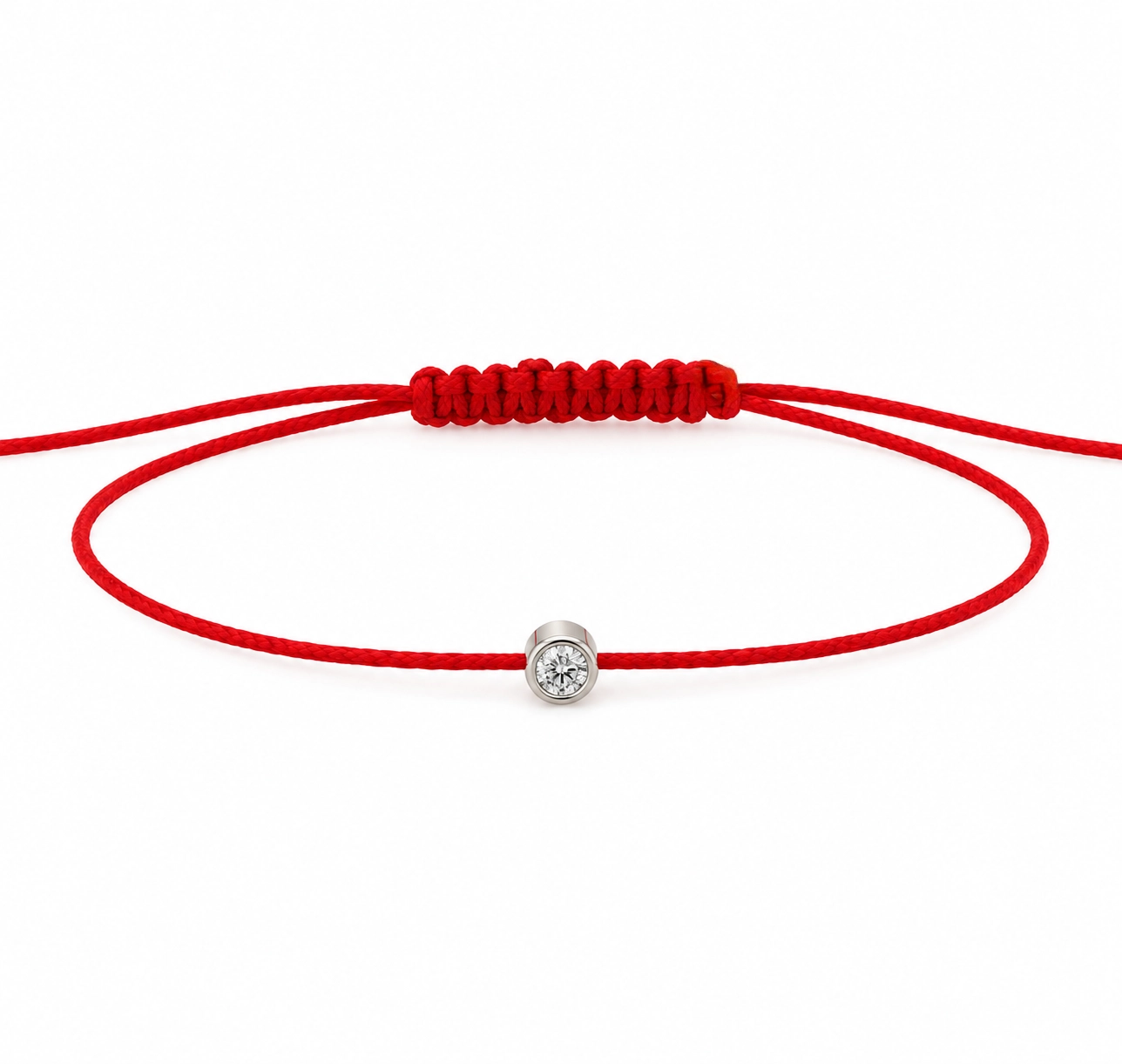

0.07 ct diamond in a bezel, on a red cord
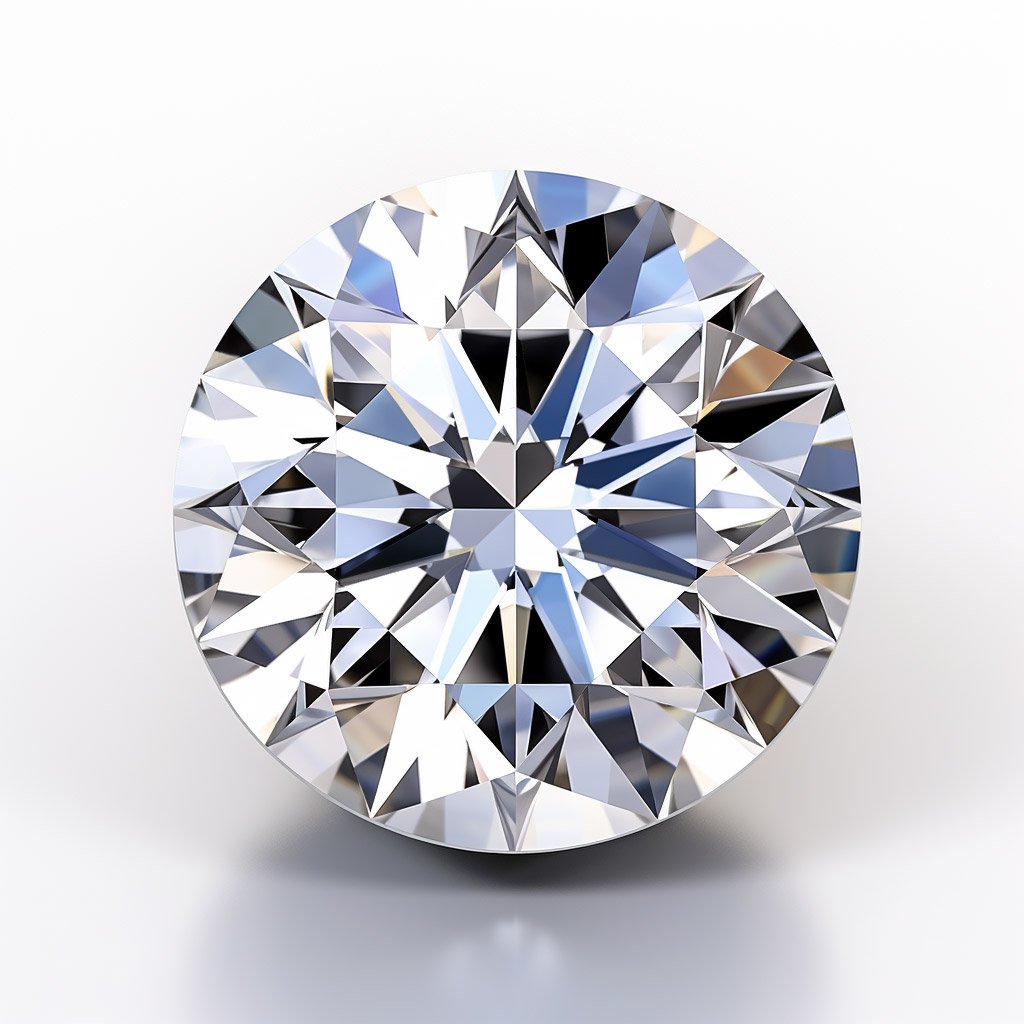
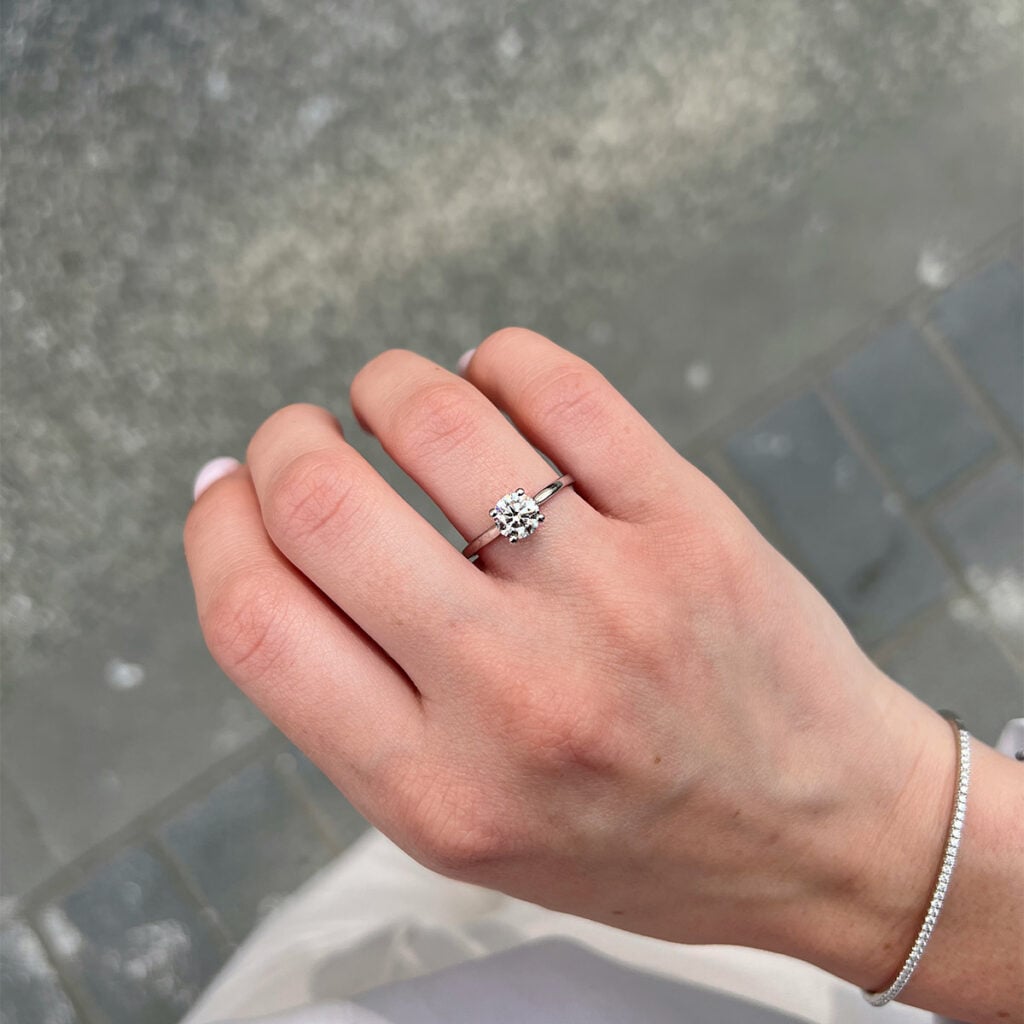
One natural round brilliant diamond of 0.07 carat, colour D–F, clarity VS, held in a bezel setting in 18K white gold, on a red cord with an adjustable slide knot.
Why a bezel and not claws
On a cord bracelet this is not a matter of taste but of construction, and it is the most important decision in this small piece.
Claws stand proud. On a ring, which sits on a rigid band and comes off at night, that is manageable. A cord bracelet is worn differently: it slides under a sleeve, goes through a jumper, catches in hair, stays on while you wash up and usually overnight as well. A raised claw hooks into knitwear and bends open; a stone hanging on four points on a moving cord loses one sooner or later. A bezel has nothing standing proud — the metal rim runs all the way round the stone and finishes flush.
There is an optical gain too, and it counts for more here than it would on a large stone. A diamond this size has little depth with which to generate brilliance of its own. The polished inner wall of the bezel throws light back into the stone from the side, and the rim enlarges the visible outline: the setting reads as part of the point of light. A small stone in a bezel looks larger and livelier than the same stone in claws. At two carats it would be the other way round, because there a bezel takes light away.
0.07 carat is about 2.6 millimetres
It is more useful to hear that as a measurement than as a weight. A stone of 2.6 millimetres is a point of light at arm’s length, not a recognisable diamond — and that is exactly what this piece sets out to be. The bracelet reads as a red thread with something that sparks on it, not as jewellery you deliberately put on.
D–F VS at this size, looked at honestly
At 2.6 millimetres nobody can see clarity, and colour is not visible as a grade either. VS here is comfortably beyond the reach of the eye.
There is one place where the colour grade does make a difference, and it is this one: the stone lies against a saturated red cord. Every surrounding puts something of its own colour into a diamond, and a stone with some warmth in it picks up red faster than a colourless one does. A D–F stays neutral against the cord. It is a small effect, but it is the one moment at which that grade earns its keep at this size.
The red cord
A red thread round the wrist is an old habit that recurs across cultures — in Jewish tradition, in South America, in parts of Asia — usually as protection, or as something one ties for somebody else. We sell it as what it is: a cord with a diamond on it. What meaning you attach is yours.
The slide knot is adjustable, so the bracelet fits any wrist and there is no clasp to break or lose. Be clear about what cord is, though: it is a wearing part. Worn daily it lasts a year or two and fades sooner. Re-cording is a small job and we do it in the workshop; the diamond and the setting last indefinitely.
The other cord bracelets
- Black cord with one diamond — the same idea, quieter cord
- Red cord with a line of diamonds — the same cord, a bar instead of one stone
- Single diamond cord bracelet
Made in Antwerp
Hand-set and hand-knotted in our workshop. Insured delivery free throughout Europe.