Nederlands
 Français
 Italiano
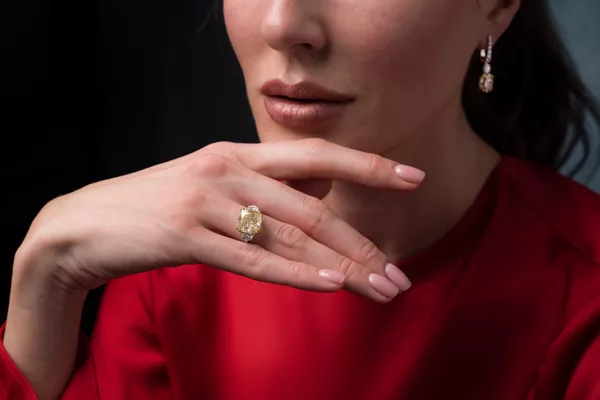

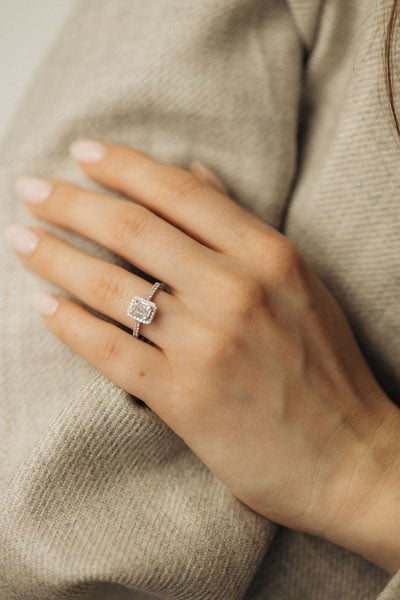





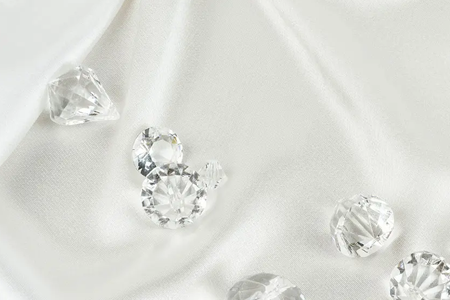
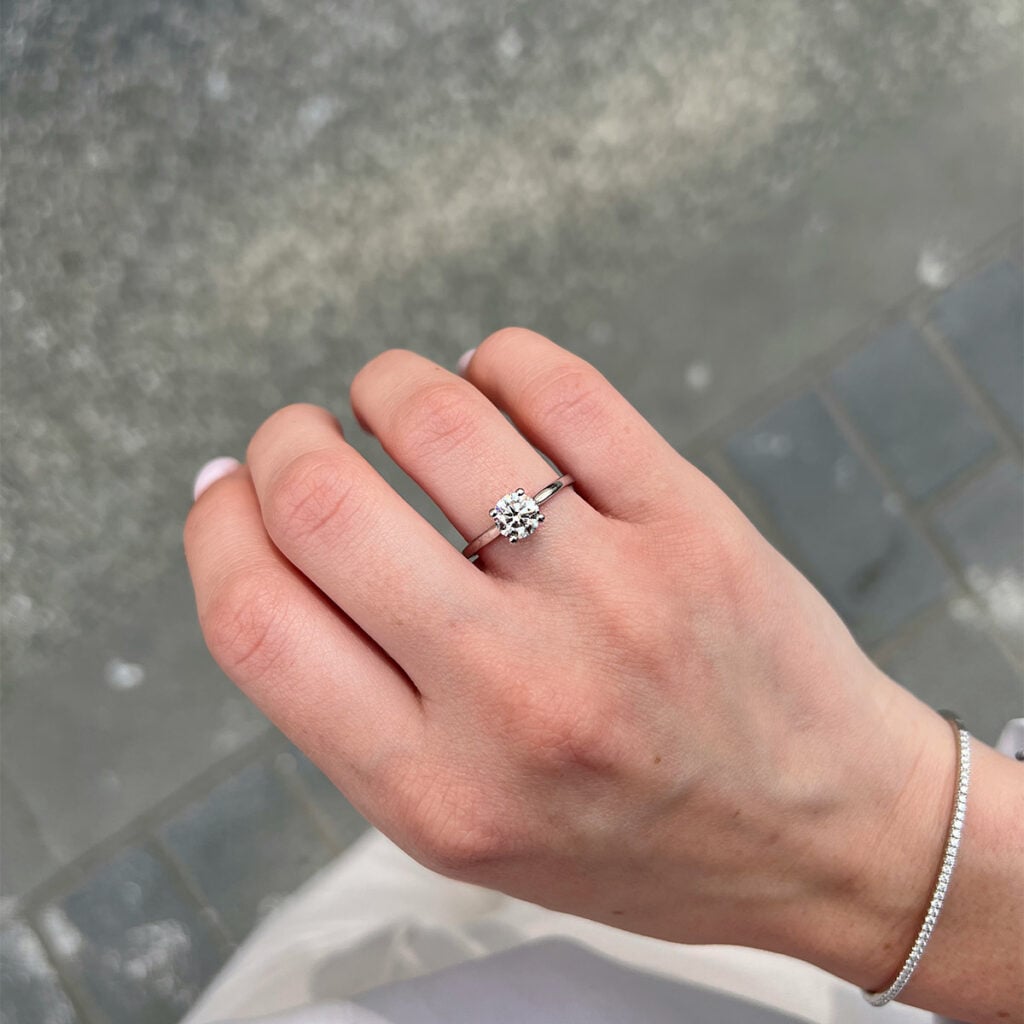
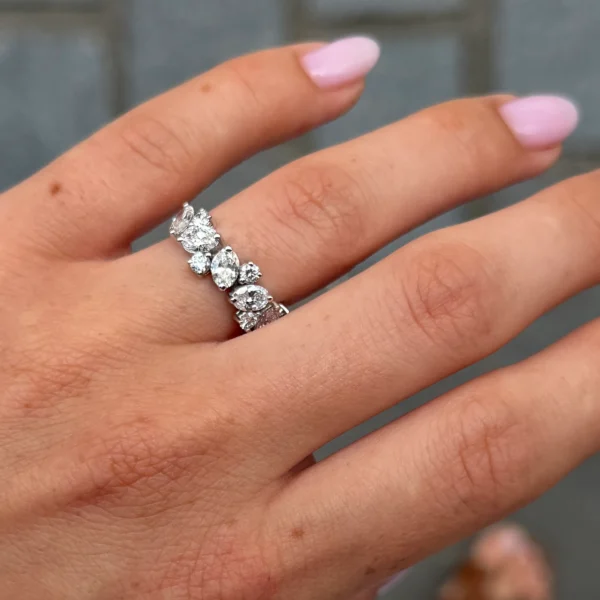
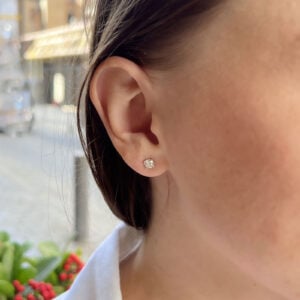
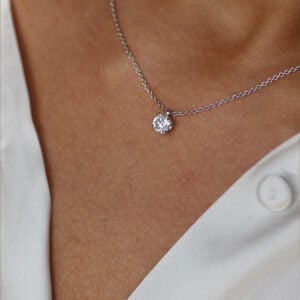
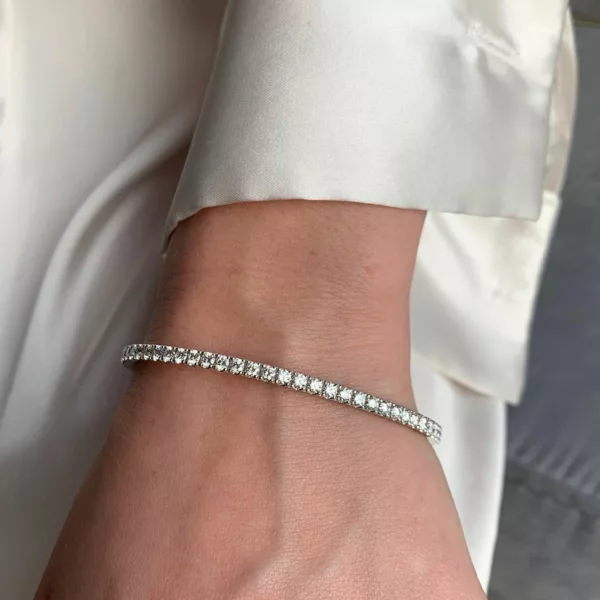


0.21 carats, F colour and SI1 clarity, surrounded by 0.08 carat of D–F round brilliants in 18K white gold.
Here is the arithmetic that explains why halos exist. A 0.21 ct round measures about 3.8 mm across. Ring it with small diamonds and the outer edge of that ring lands near 6 mm — and 6 mm is roughly the face-up diameter of a 0.85 ct stone. The eye reads the outline, not the centre, so the ring presents at something like four times the centre stone’s weight.
The honest half of that sentence is the word presents. This is apparent size, bought with labour and small stones rather than with one large crystal, and a jeweller will see the difference immediately. What it buys is real all the same: proportion on the hand, at a price a single stone of that diameter would not approach.
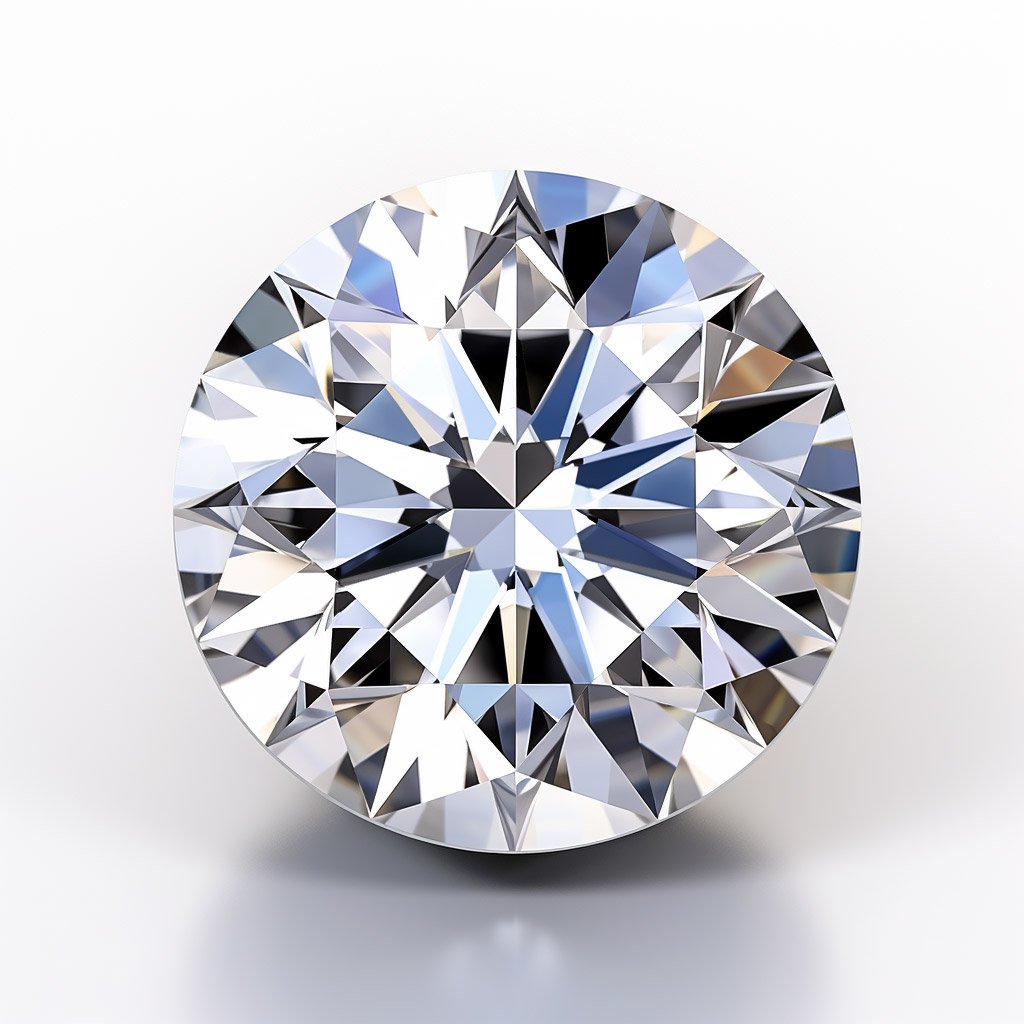
F holds the centre at the last colourless grade. SI1 is found at ten-power magnification, and inside a halo there is little quiet ground for the eye to search.
The same ring described by its total diamond weight: 0.29 ct tw halo and pavé. A larger centre, GIA certified: 0.30 ct G SI2.