Nederlands
 Français
 Italiano
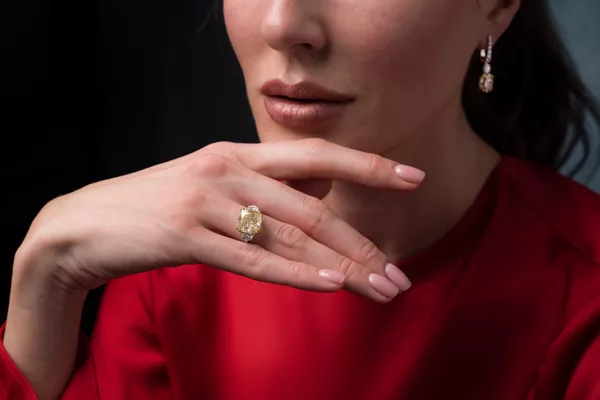

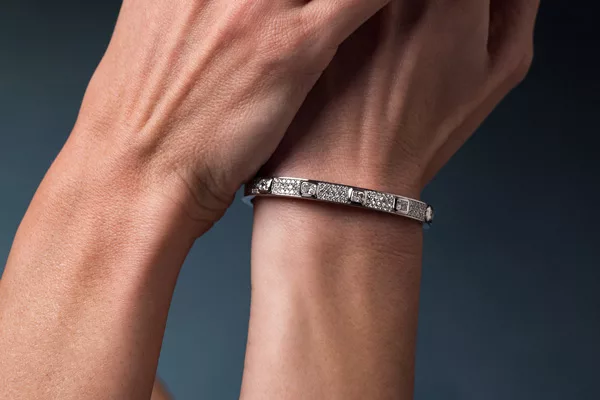
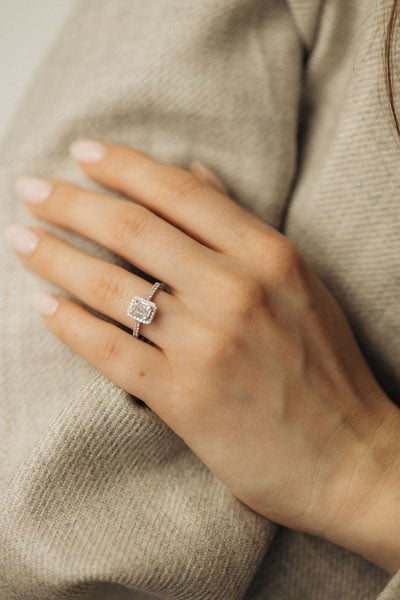


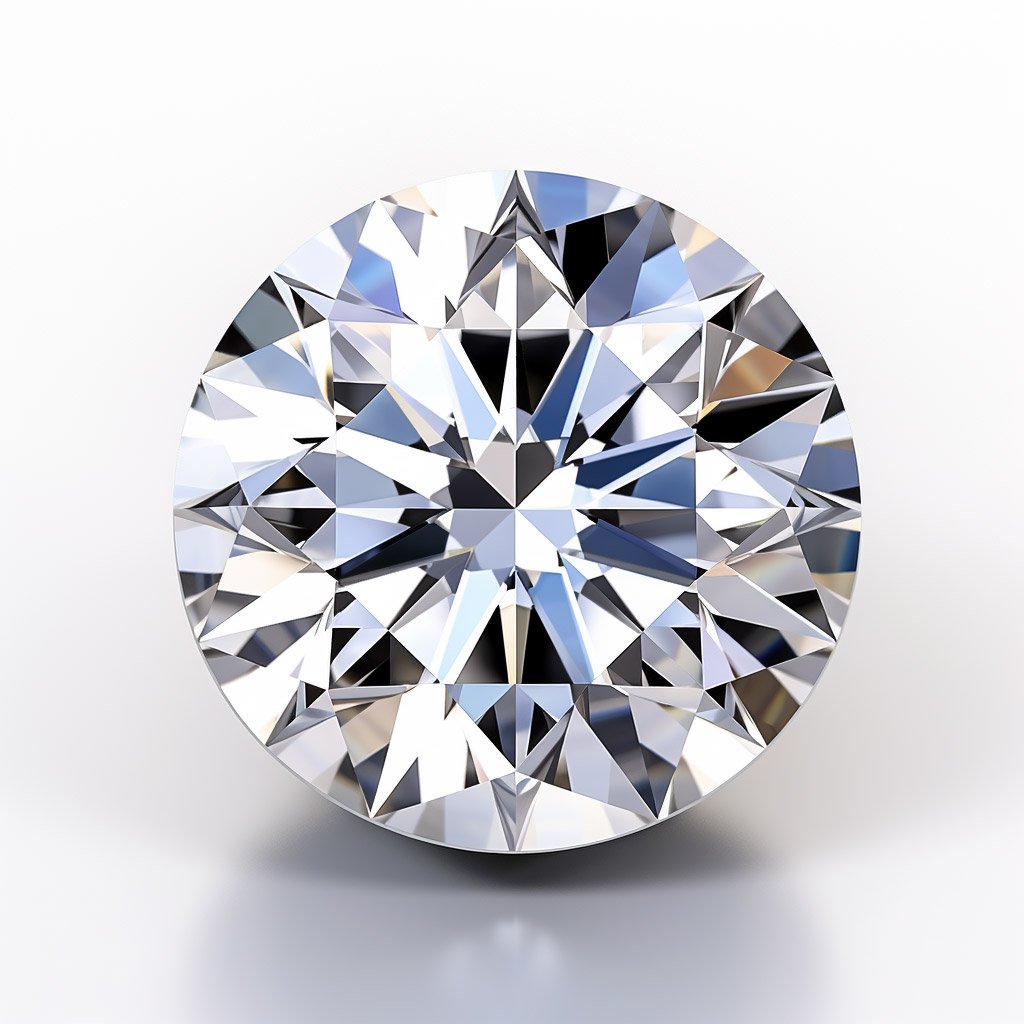



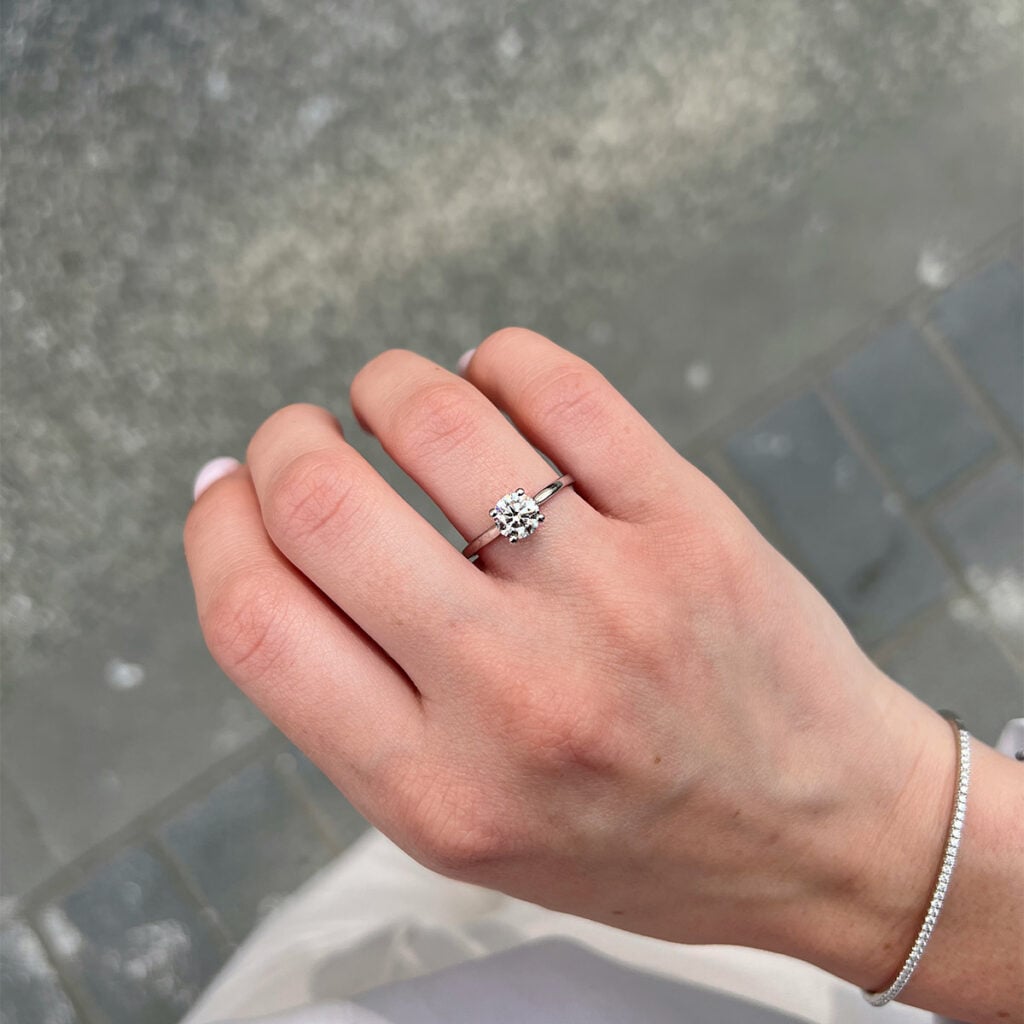


0.30 carats, GIA certified E colour and VS2 clarity, on an 18K white gold band carrying 0.06 carat of D–F pavé along the shoulders.
Six hundredths of a carat is a deliberately restrained pavé, and the restraint is the point. A short run of small stones marks the shoulders without turning the band into a second piece of jewellery competing with the centre. Look at the ring and you see a solitaire that happens to catch light along the shank; look at a heavier pavé and you see a pavé ring that happens to have a stone in it. Both are valid; they are not the same object.
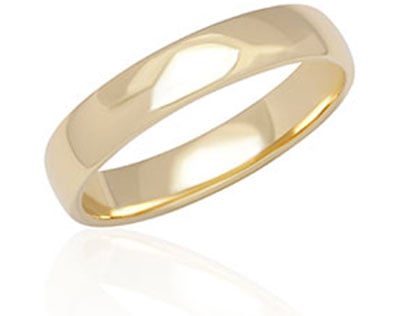
It is also the version that lives most easily alongside a wedding band. A short pavé run leaves the lower half of the shank plain, so a second ring sits flush against metal rather than against set stones — which is where rubbing wears claws over years of wear.
E VS2 holds the centre at the second colourless grade with clarity beyond the unaided eye.
The same idea in warm metal: 0.30 ct F VS2 in yellow gold. A much heavier pavé, on cathedral shoulders: 0.19 ct pavé version.