Nederlands
 Français
 Italiano


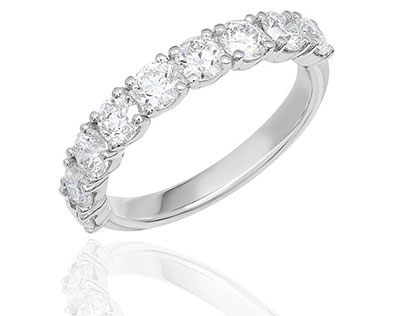

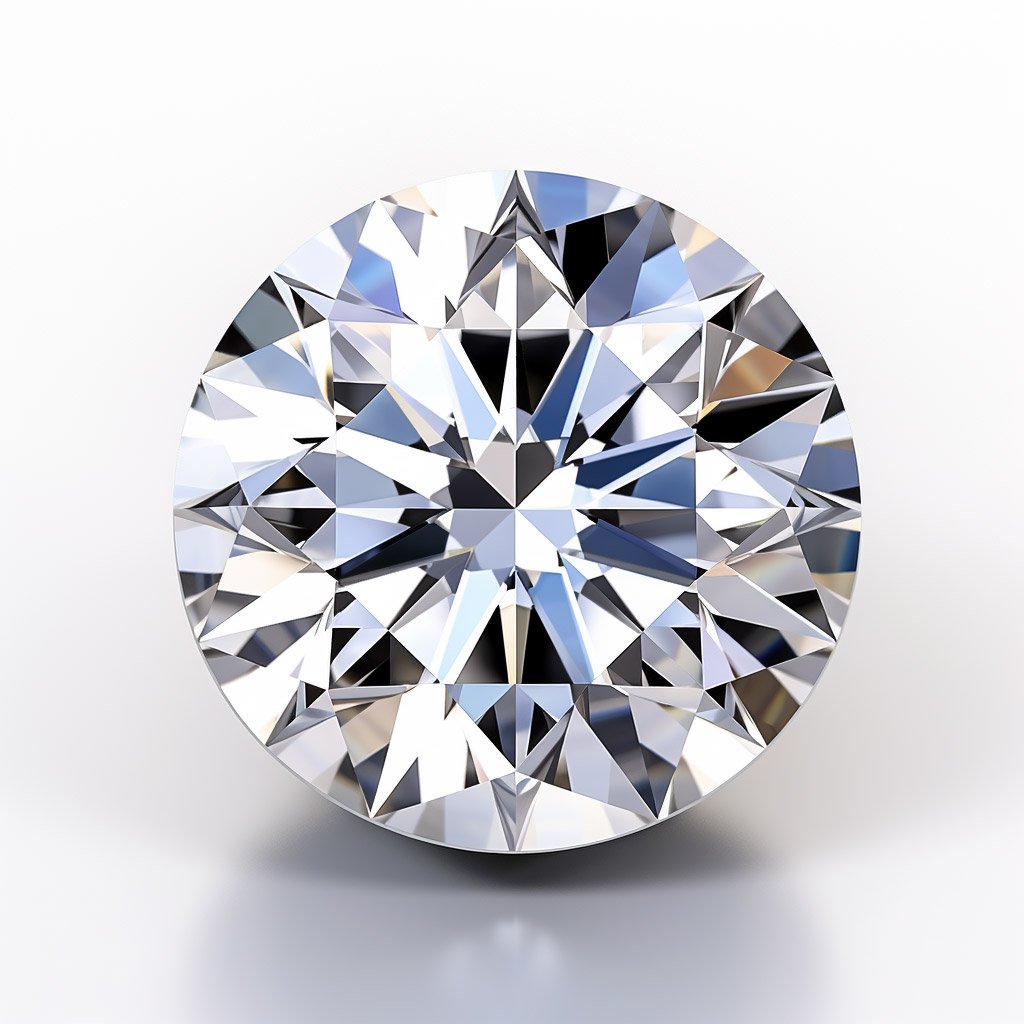



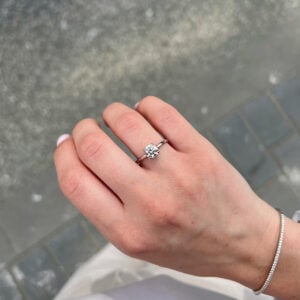


0.30 ct is not the cheap end of this design. It is where it works
A tension ring is not a setting you can scale freely. The band has to stay thick enough to generate and hold the spring pressure that grips the stone, and that thickness does not shrink just because the diamond does. Go much below three tenths of a carat and the proportions invert: the metal starts to dominate, the stone reads as an afterthought set into a bangle, and the whole illusion collapses.
Three tenths is the point where the two are in balance — a 4.3 mm stone against a band sized to hold it. The price follows from the carat weight, but the carat weight was chosen for the design, not the other way round.
Why this one is white gold
There are no claws here, no basket, no gallery. The only thing framing the diamond is the two ends of the band, and that makes the metal colour a far bigger decision than it is on a four-claw solitaire where the metal is mostly hidden behind the stone.
In white gold the band ends read as an extension of the diamond’s own light. The eye does not register a transition from metal to stone, which is what produces the floating effect the setting is famous for. The same ring in yellow gold is a different object: a gold sculpture with a diamond caught in it, warmer and more obviously jewellery. Neither is better. But if the floating effect is the reason you are looking at a tension ring, white metal is not a preference, it is part of the mechanism.
SI1 with nowhere to hide
On a claw-set stone, a setter can rotate a visible inclusion under a prong. On a bezel, the rim covers the girdle entirely. A tension setting offers neither. The diamond is exposed from above, from both sides, and from underneath; the only metal touching it is two small grooves at the girdle.
That makes the position of an inclusion matter more here than on almost any other setting. This stone is SI1 — inclusions findable under 10× magnification, typically invisible to the naked eye — and at 0.30 ct the table is small enough that there is very little area for anything to sit in. Even so, ask us for the clarity plot before you order. GIA report 7551526053. On a stone you can see all the way round, it is the one question worth asking.
Specification
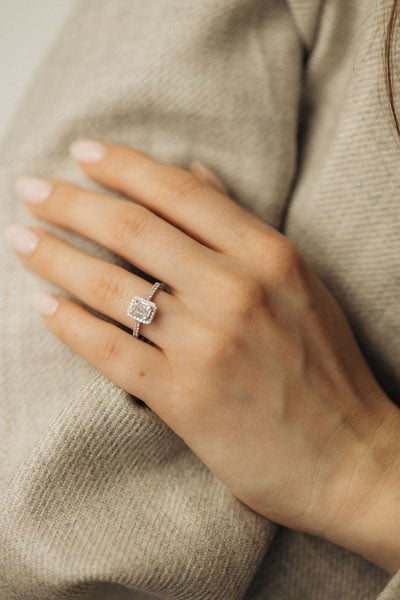
Centre stone 0.30 ct round brilliant, colour E, clarity SI1, GIA report 7551526053. 18K white gold, tension setting, no prongs. In stock in our Antwerp workshop.
One practical note: a tension ring is sized at the point of making, because the spring is calibrated to one circumference. Tell us the size before we start. Our 0.40 ct tension ring in yellow gold goes into what that means in detail, and the 0.50 ct in white gold is the same design a size up.