Nederlands
 Français
 Italiano
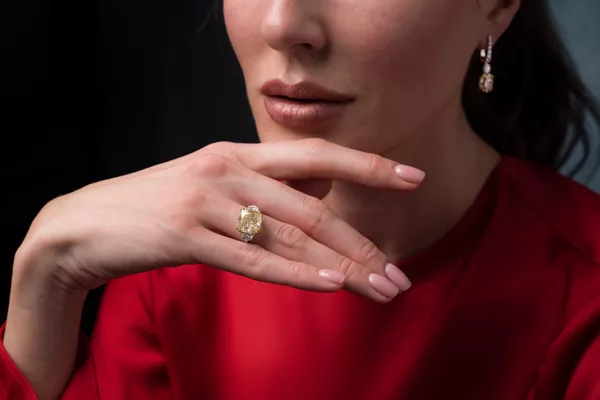

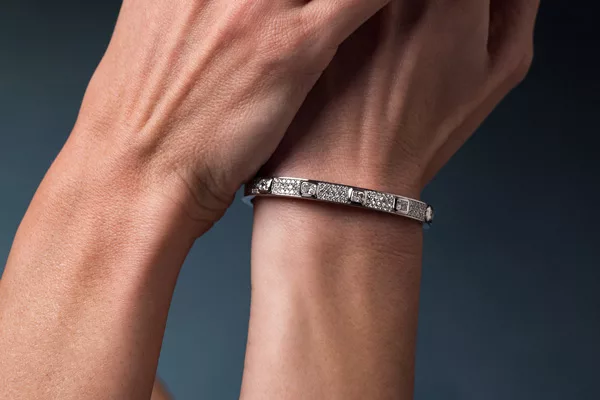
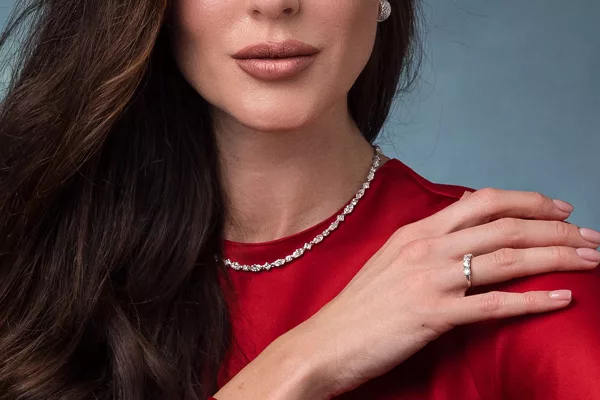
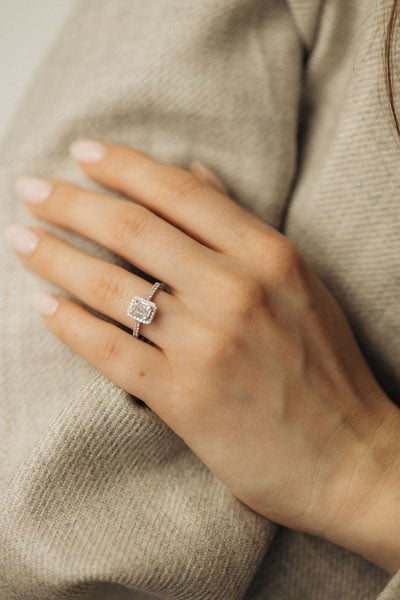

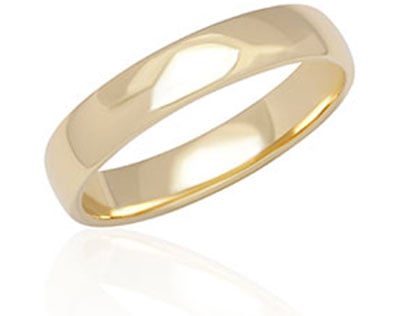
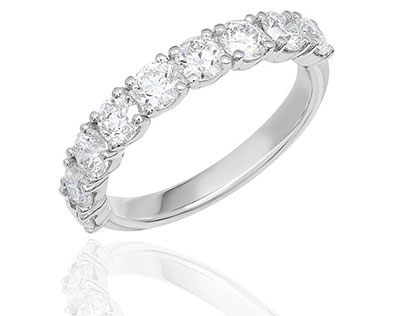

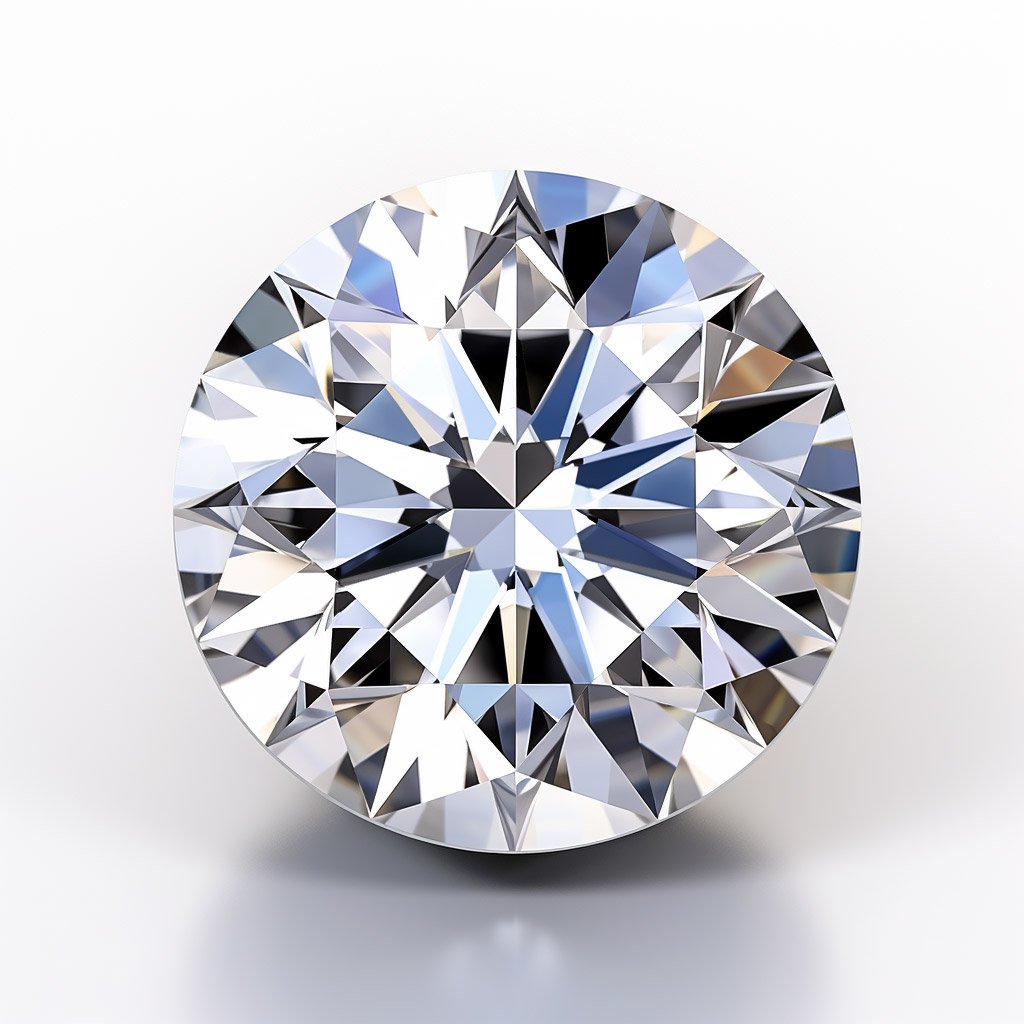



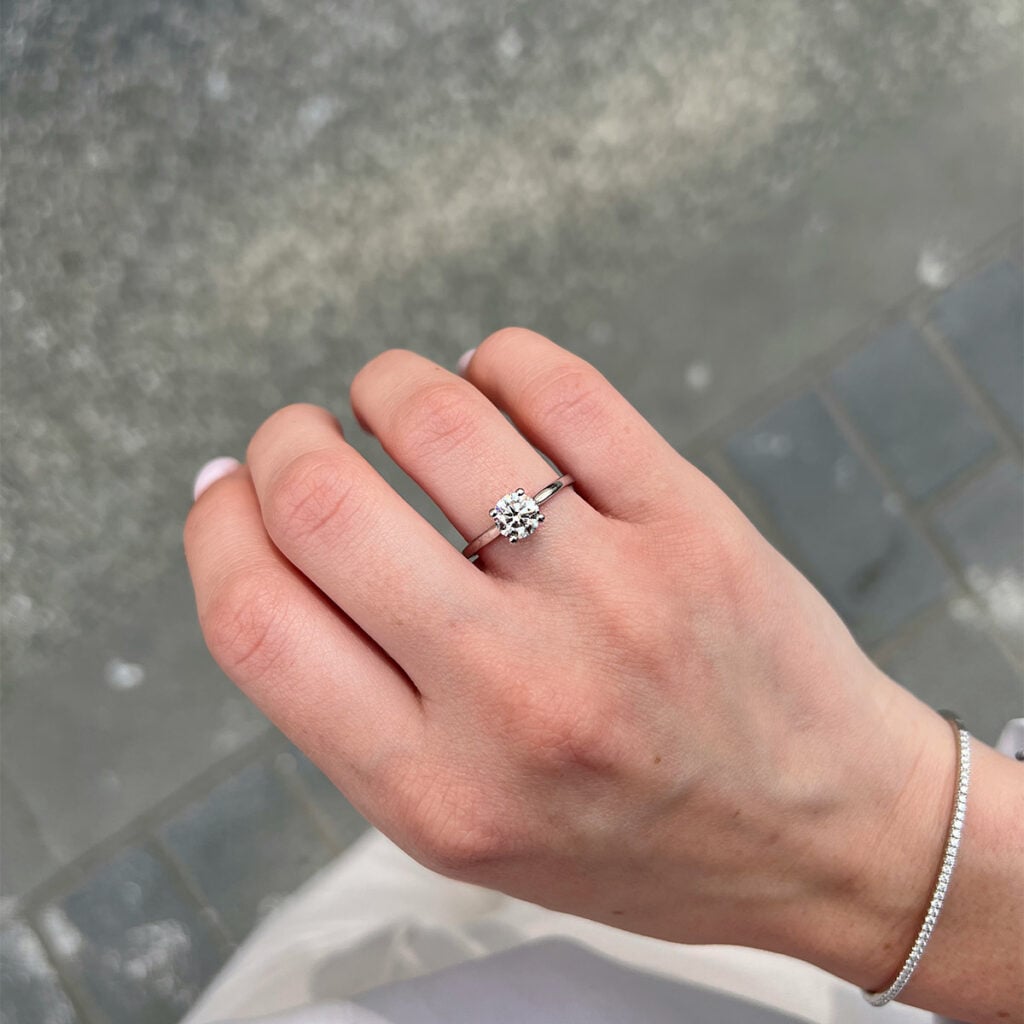
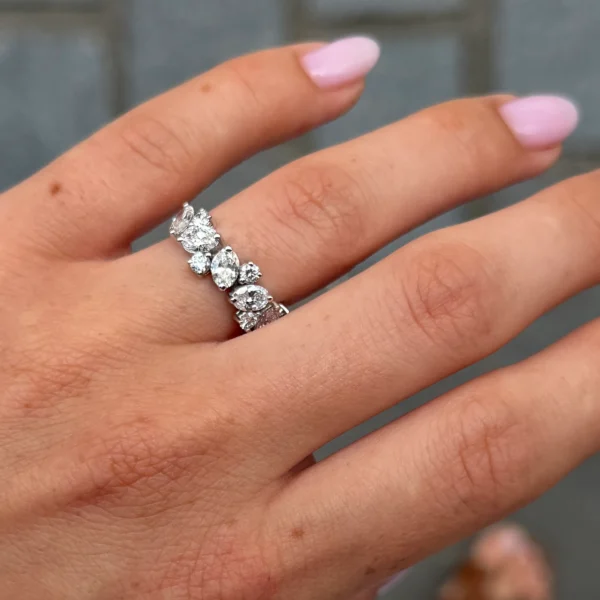

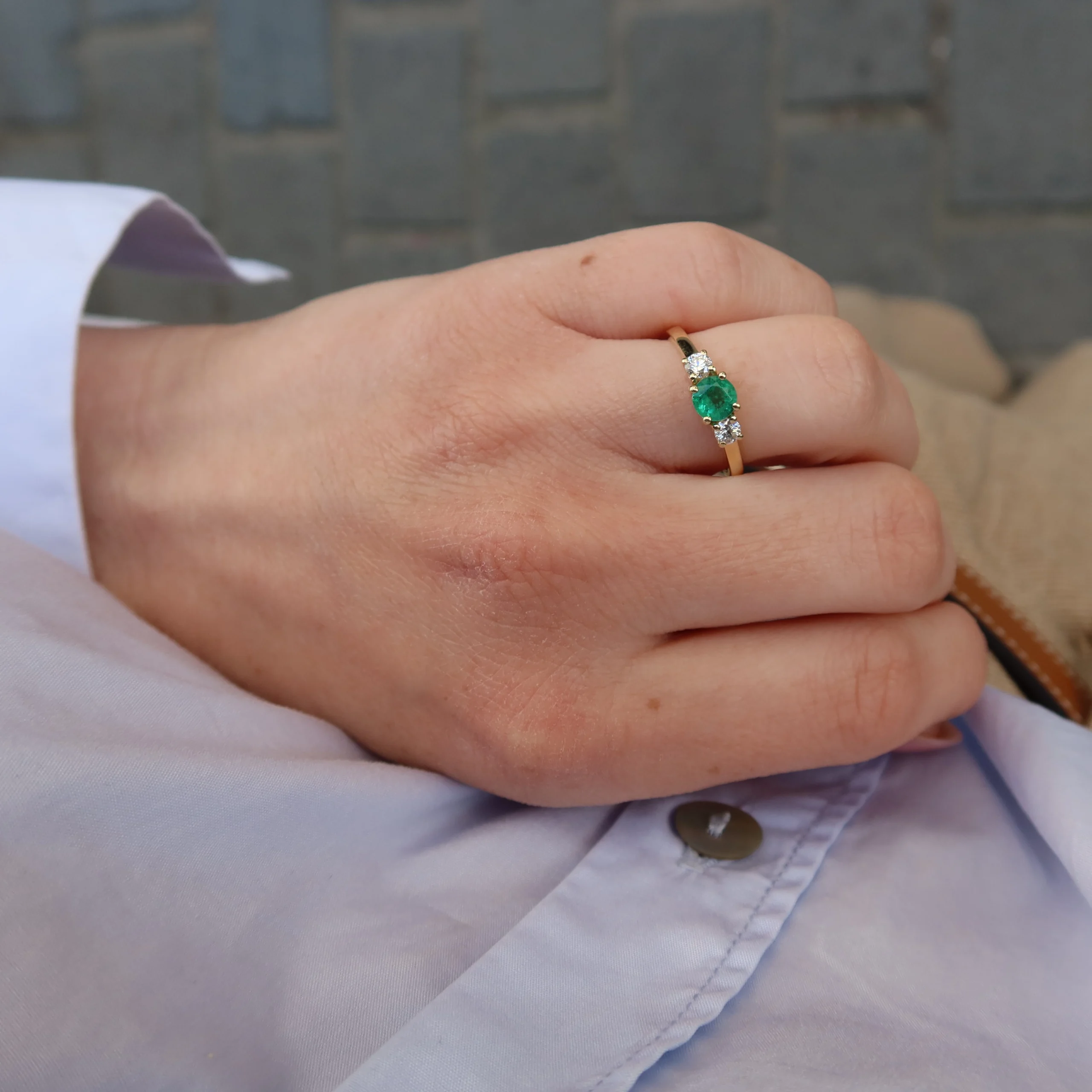
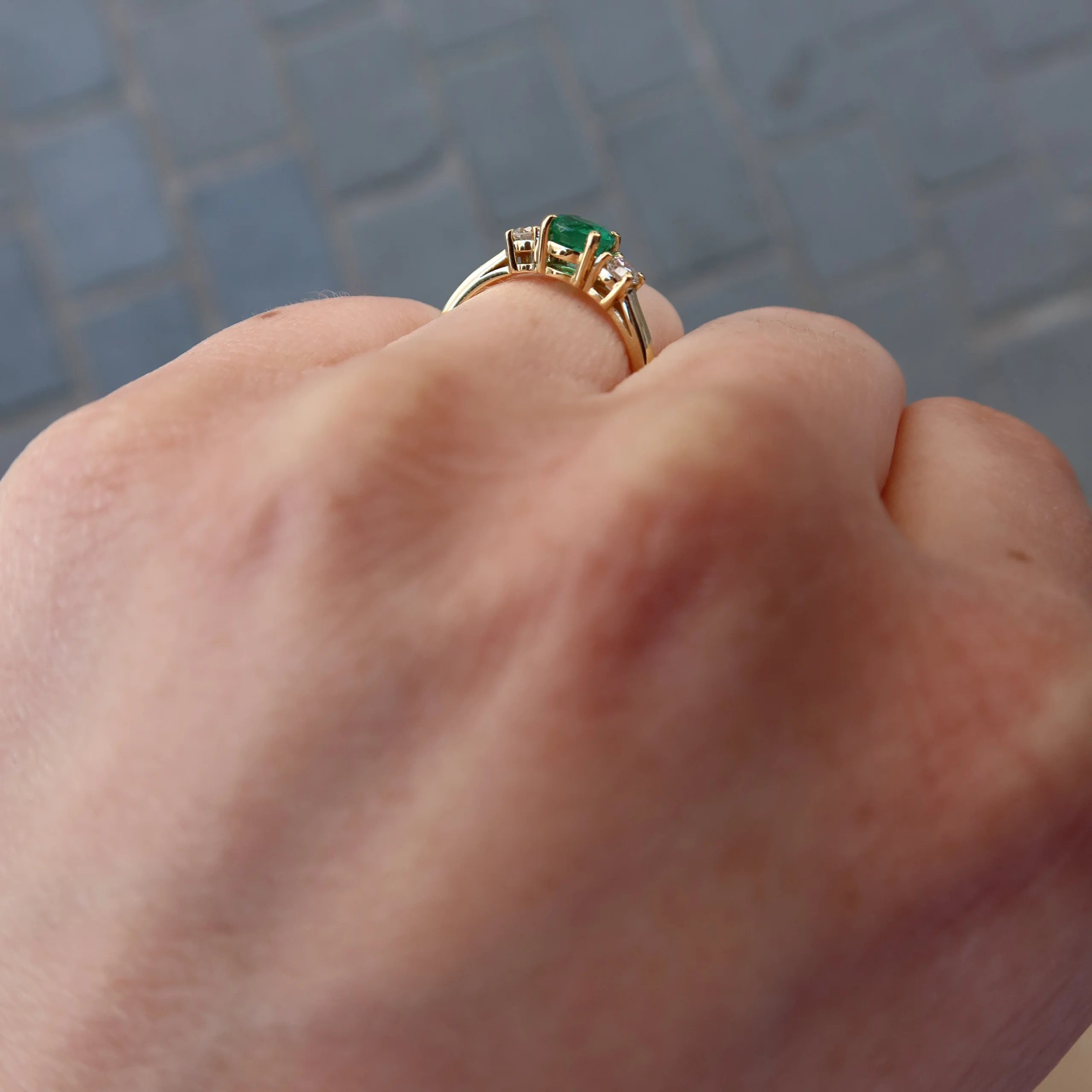
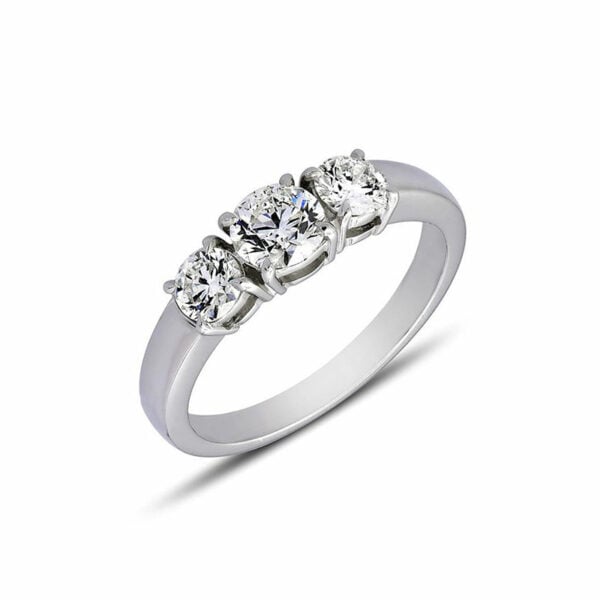
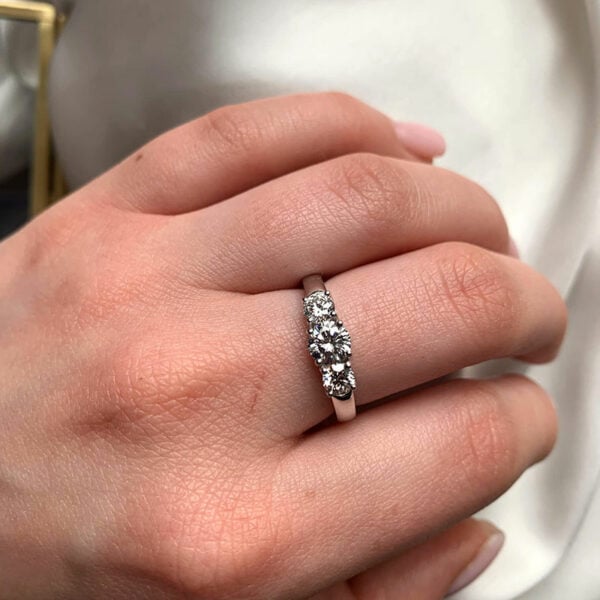
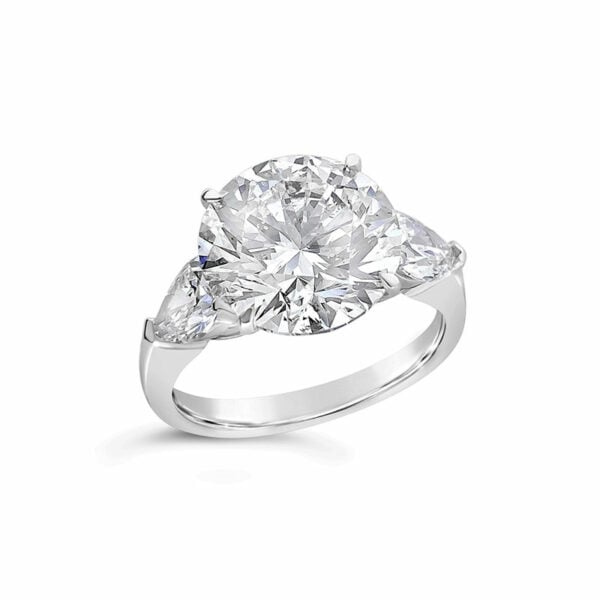
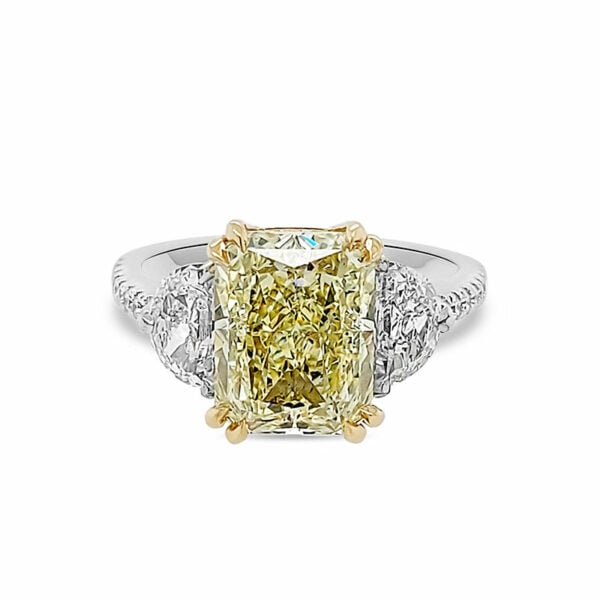
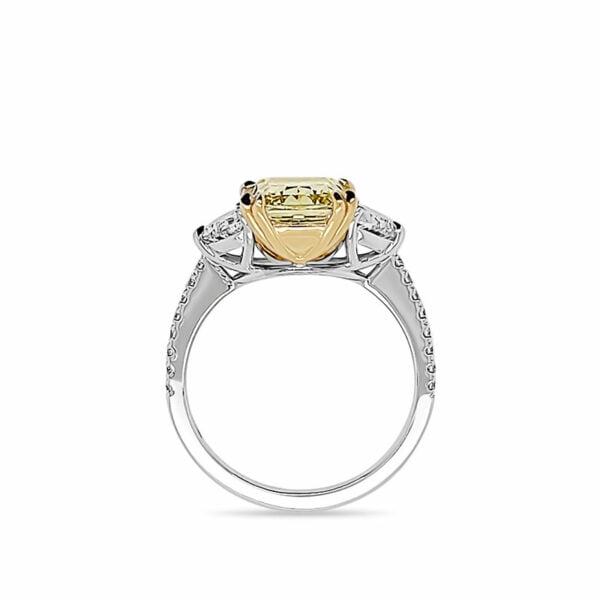
A 0.43 carat round emerald with 0.20 carat of D–F VS diamonds set either side, in 18K yellow gold.
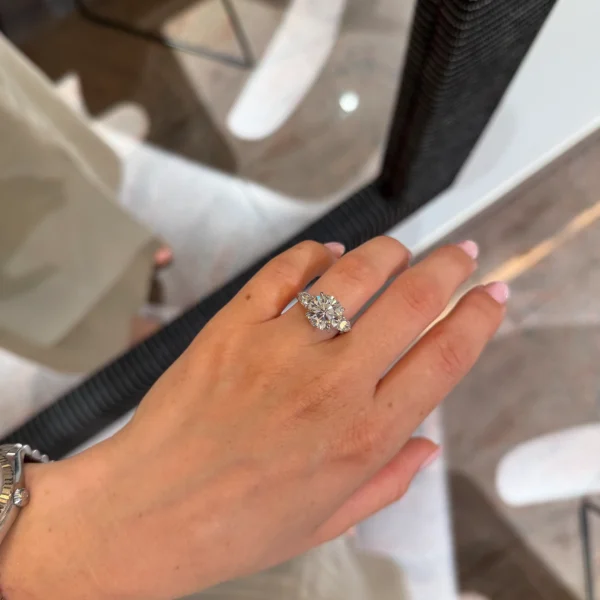
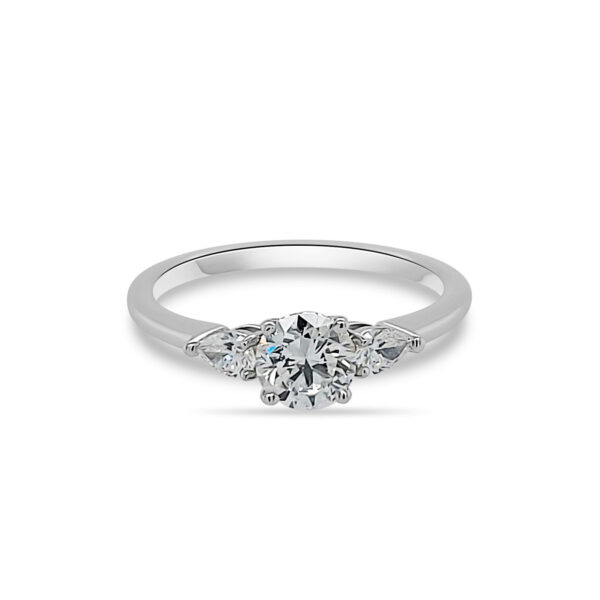
A three-stone ring is the one setting where the flanking stones are not accents. They are large enough to be read individually, which changes what the eye does: instead of resolving a centre and then a surround, it travels along a line of three. The centre still leads, but it leads a composition rather than standing alone in a field of metal.
That suits a coloured stone better than most arrangements. A halo encloses a colour and frames it; two diamonds beside it leave the emerald’s outline entirely open and put the white where it does the most for the green — adjacent, not surrounding. There is nothing between the metal and the stone at any point on its edge.
The usual emerald caveats hold and are worth repeating: beryl at 7.5–8 on the Mohs scale, softer than sapphire and far softer than diamond; almost universally oil- or resin-treated to fill surface-reaching fissures, which is accepted practice rather than a fault; and never to be cleaned ultrasonically.
Emerald with a halo instead: 0.27 ct in yellow gold, 0.25 ct in white gold.