Nederlands
 Français
 Italiano
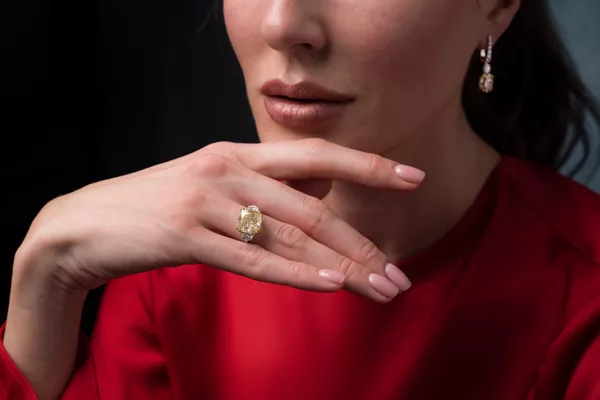

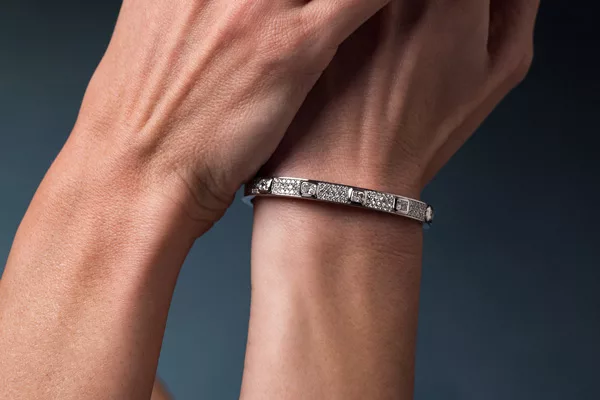

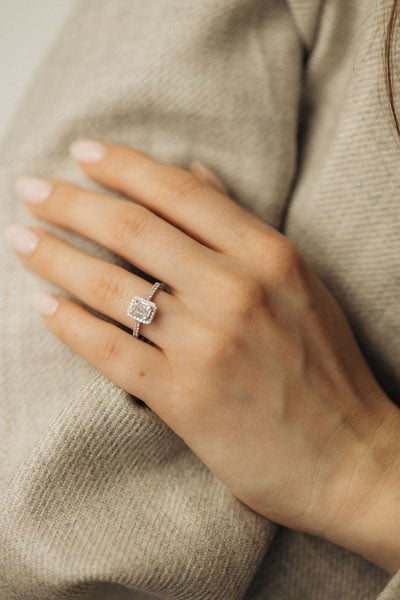

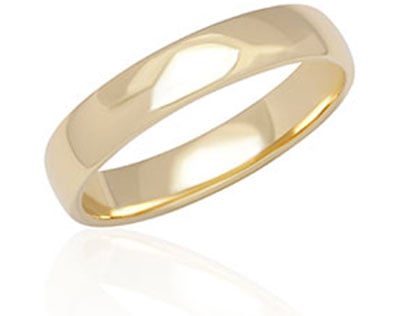
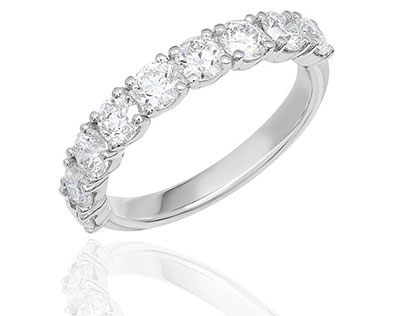

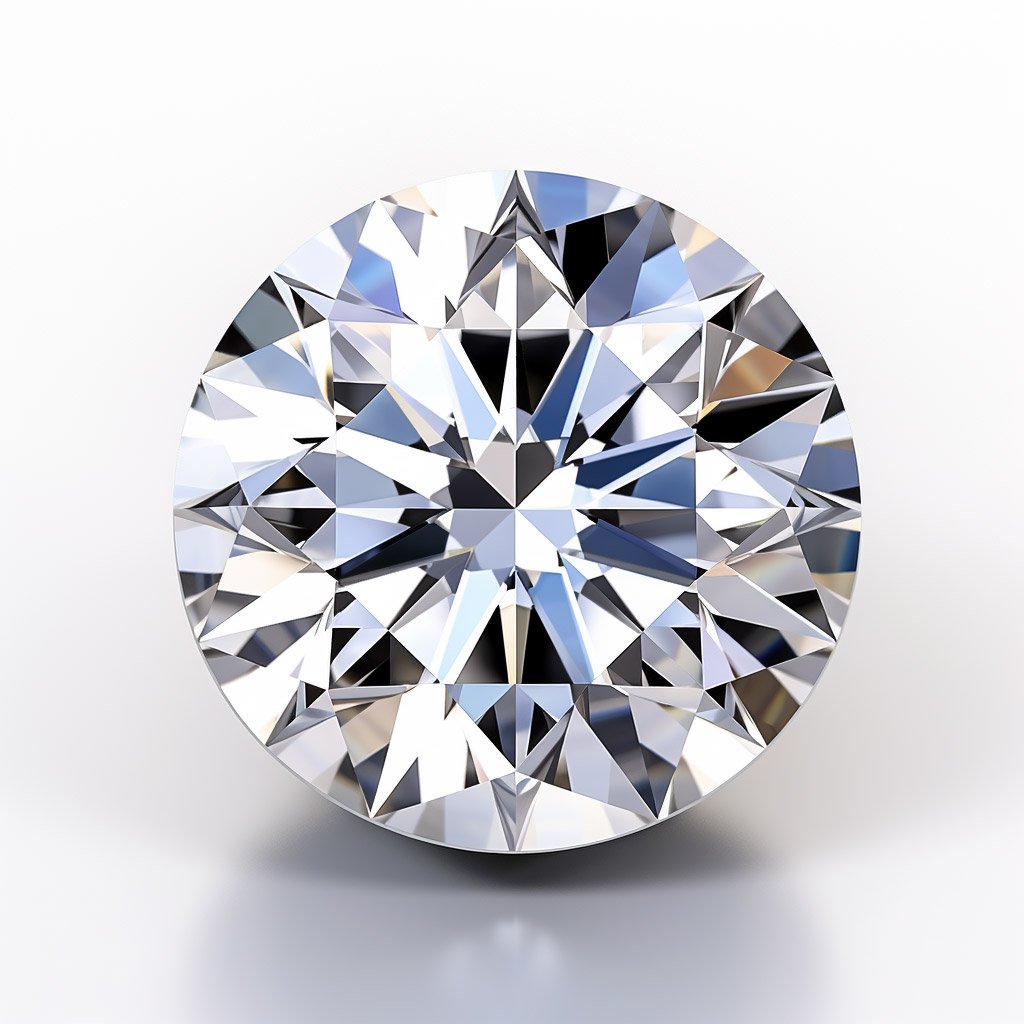



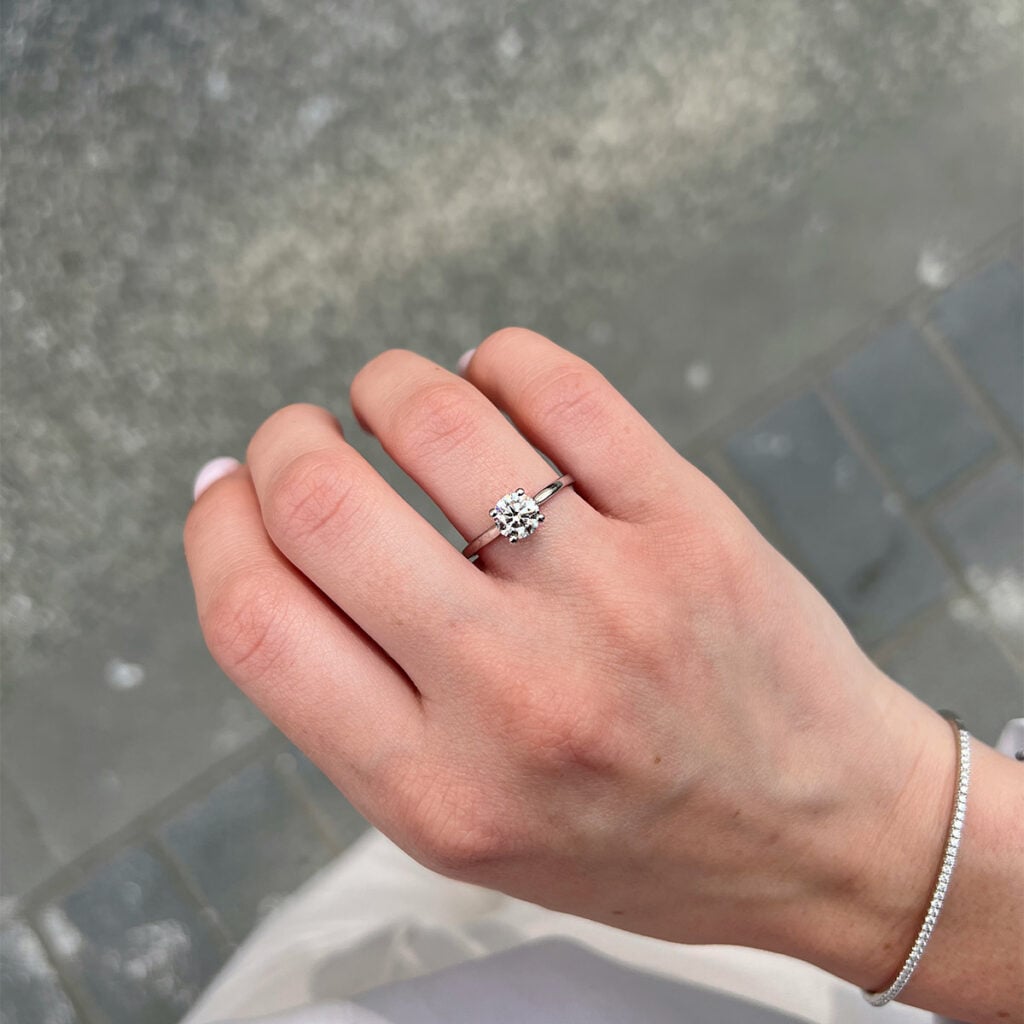
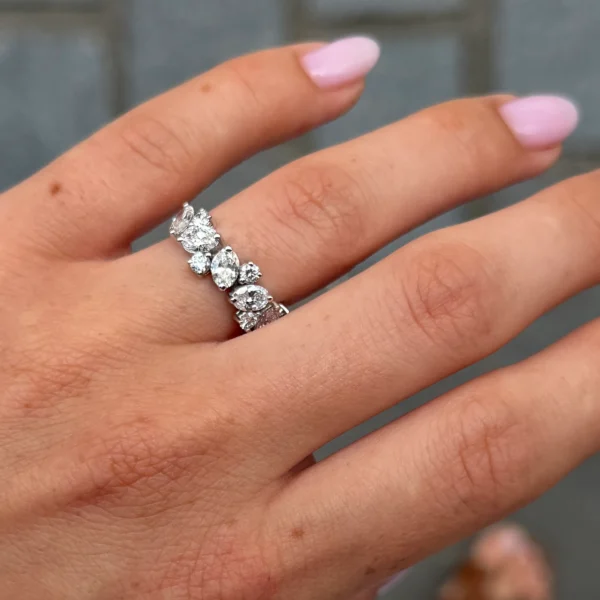
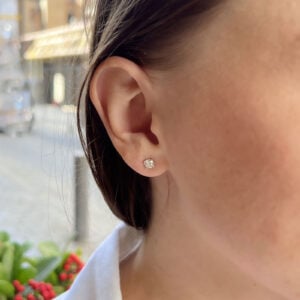
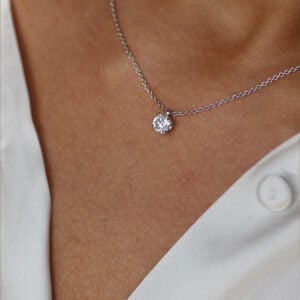
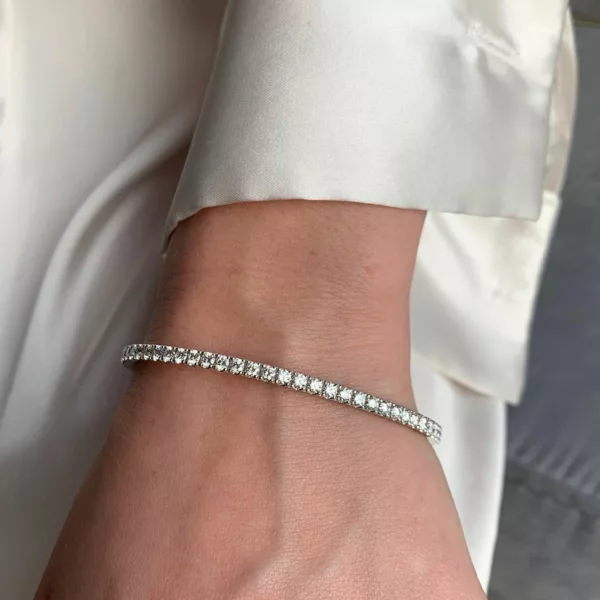


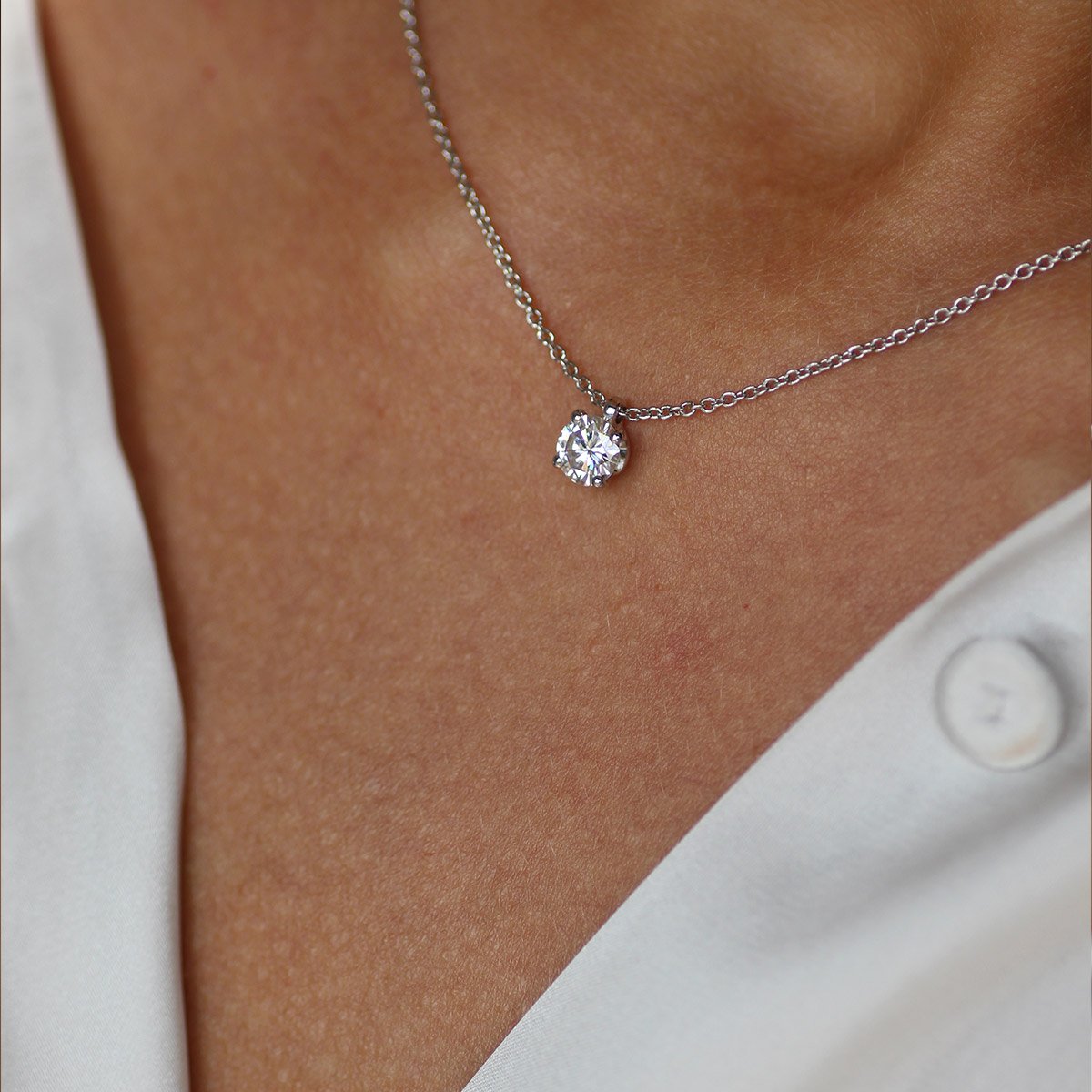
0.50 carat, round brilliant, GIA certified E colour and SI1 clarity. 18K white gold, 42 cm chain. Report 6545679058.
SI1 in a round brilliant
Of all the shapes, the round brilliant is the one that hides an inclusion best, and it is worth understanding why rather than taking it on trust.
A round brilliant has fifty-seven facets arranged to return light in many small flashes rather than a few broad ones. That scattered pattern is visual noise, and noise is what conceals a small dark feature. Compare it with an emerald cut, where long parallel planes act like windows and everything inside is on display — the same SI1 grade in that shape is a different proposition entirely.
So SI1 on a round at half a carat is the grade where the cut is doing the work. The inclusions are there, they are on the report, and a grader will find them at ten times magnification. At the distance a pendant is seen they are not part of the experience.
E colour against white gold
E is the second of the three colourless grades. That matters more in a white setting than a warm one: rhodium-plated white gold is a bright neutral, and it gives the eye a reference against which any warmth in the stone would show. At E there is nothing to find.
42 cm chain, sitting just below the collarbone. Natural diamond, 18K white gold, set and finished in Antwerp.
The same pendant, four stones
One design, one 42 cm chain, four diamonds. The head and the chain are identical; only the stone changes:
- 0.20 ct — F colour, VS1 clarity
- 0.50 ct — E colour, SI1 clarity — this page
- 0.50 ct — D colour, VS1 clarity
- 1.00 ct — F colour, SI1 clarity