Nederlands
 Français
 Italiano


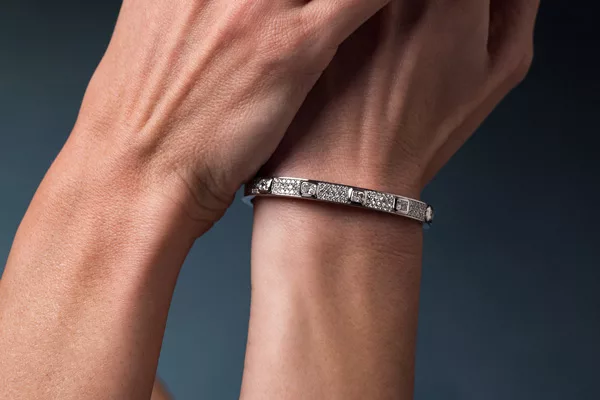


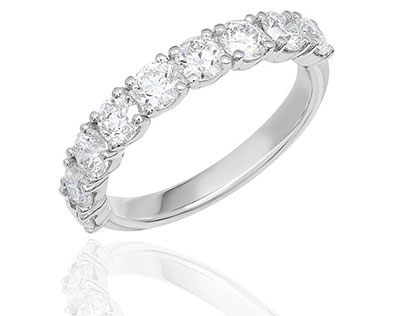




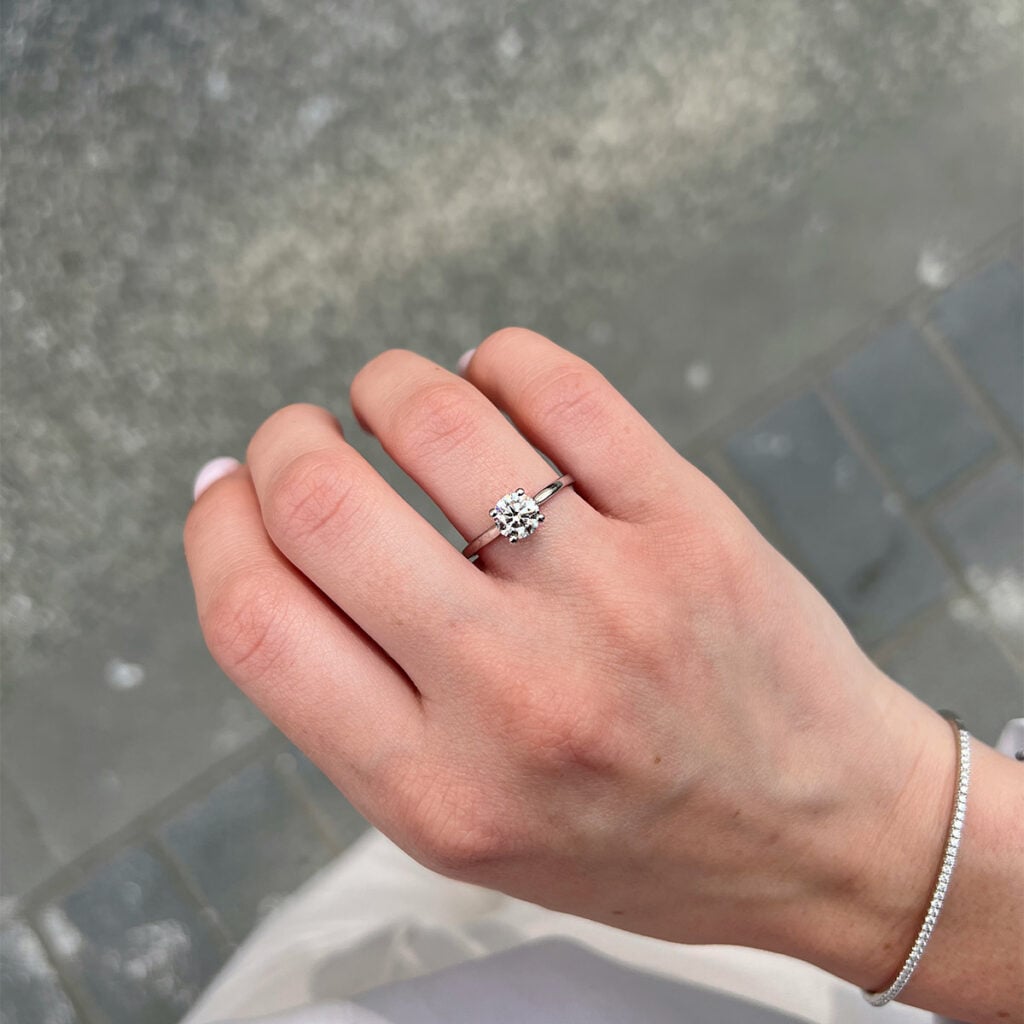
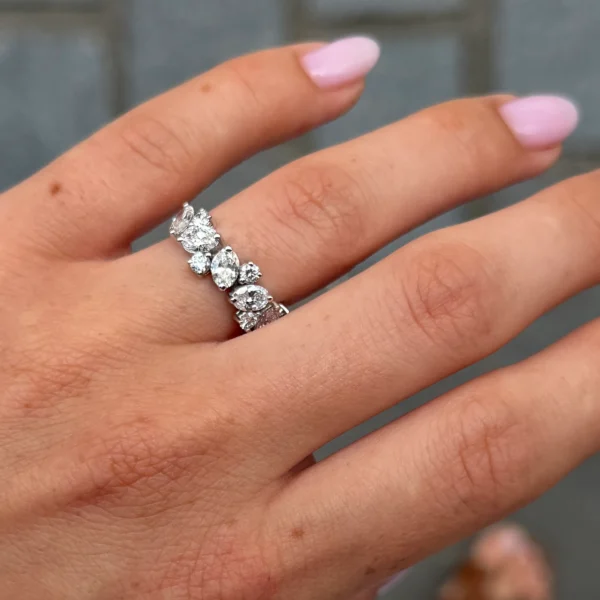



A 0.54 carat round blue sapphire with 0.20 carat of diamonds set either side, in 18K white gold.
A halo surrounds a coloured stone; a three-stone sits beside it. That distinction matters more with sapphire than with diamond, because a sapphire’s edge is where its colour is deepest.
Light entering a coloured stone near the girdle travels a long path through the crystal before it returns, so the rim of a sapphire is darker and more saturated than its centre. A halo covers exactly that band, hiding the strongest colour behind a ring of white. Two stones set alongside leave the whole outline open: the blue runs uninterrupted from edge to edge, and you see the stone’s full range from its pale table to its deep rim.
The diamonds do their work from outside rather than around. At 0.20 carat they are large enough to read individually, so the eye travels a line of three rather than resolving a centre and a frame — and the white sits adjacent to the blue, sharpening it by contrast without covering any of it.
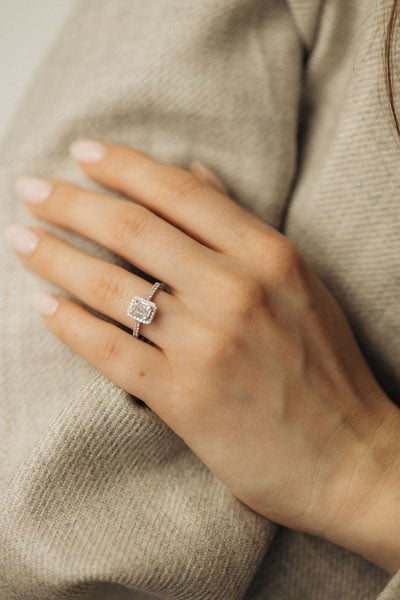
The same sapphire with a full halo: 0.50 ct halo and pavé. Three stones with an emerald centre: 0.43 ct.