Nederlands
 Français
 Italiano
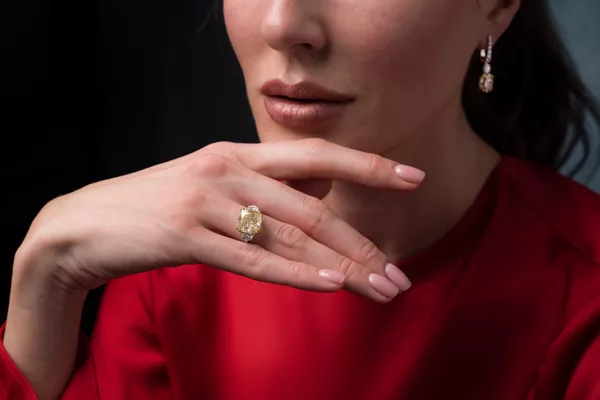

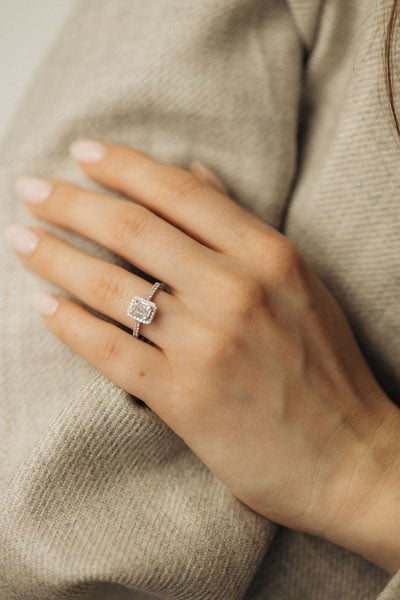

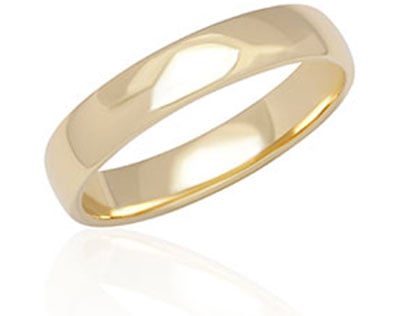
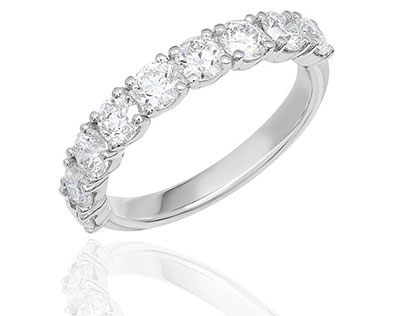

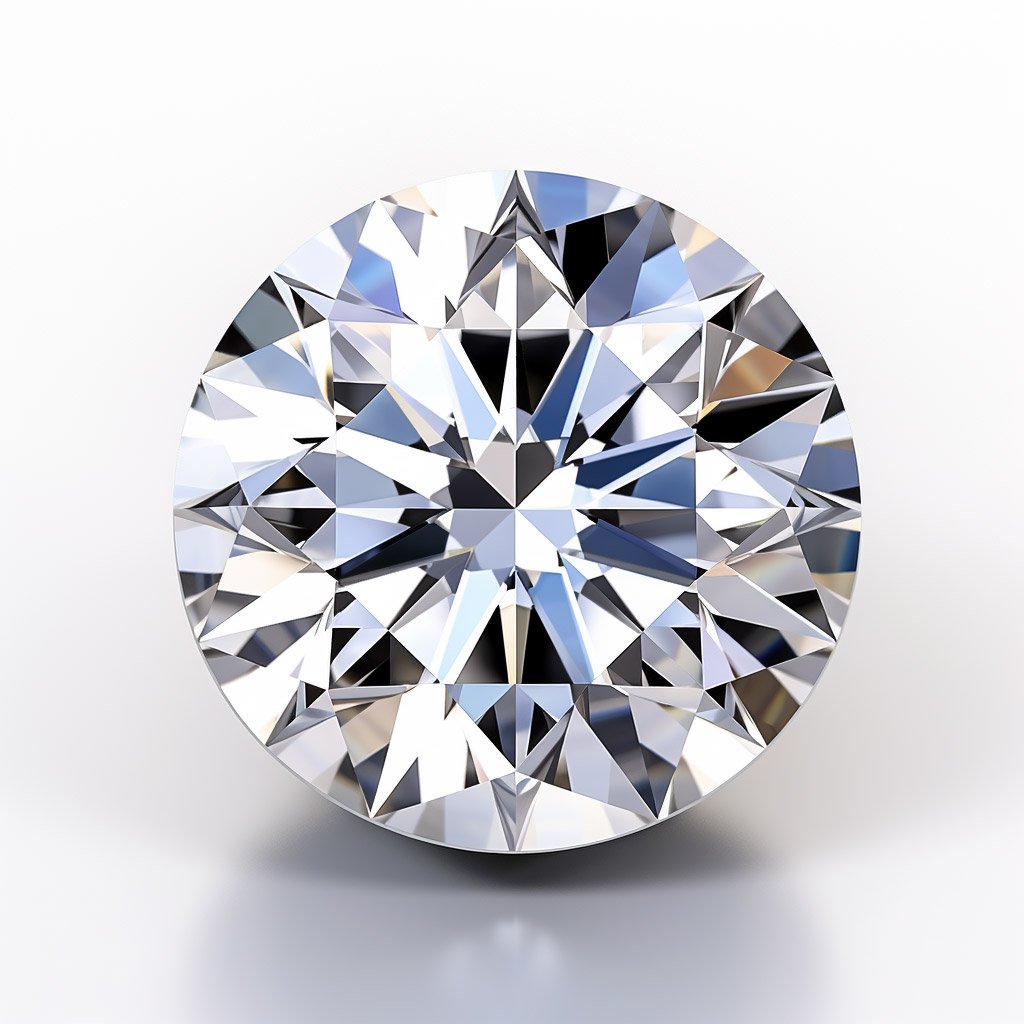



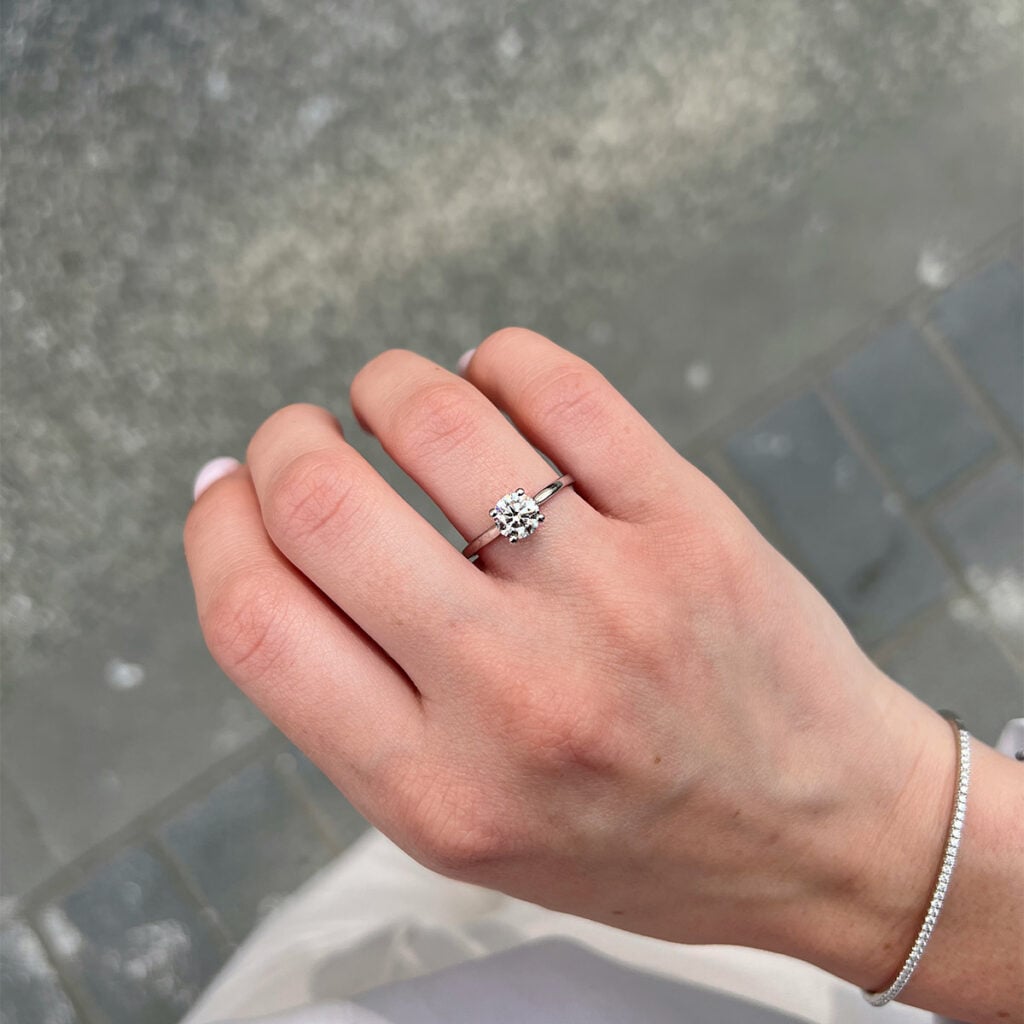
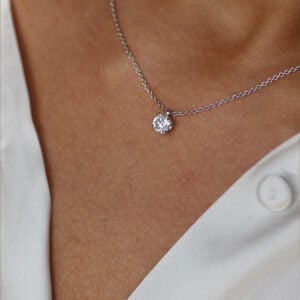
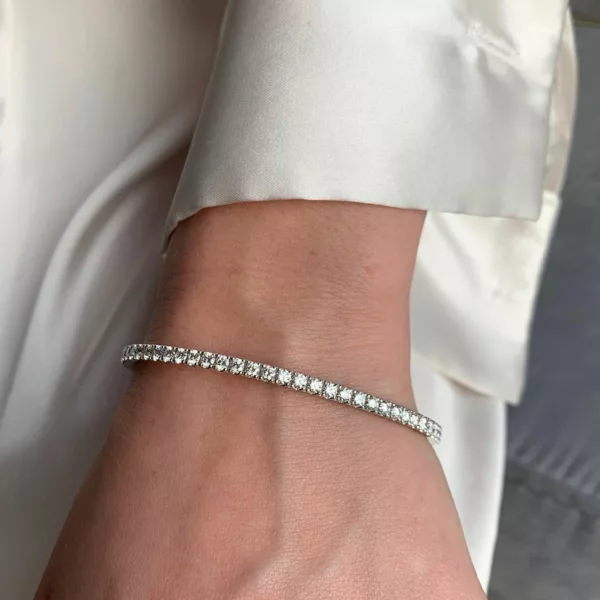

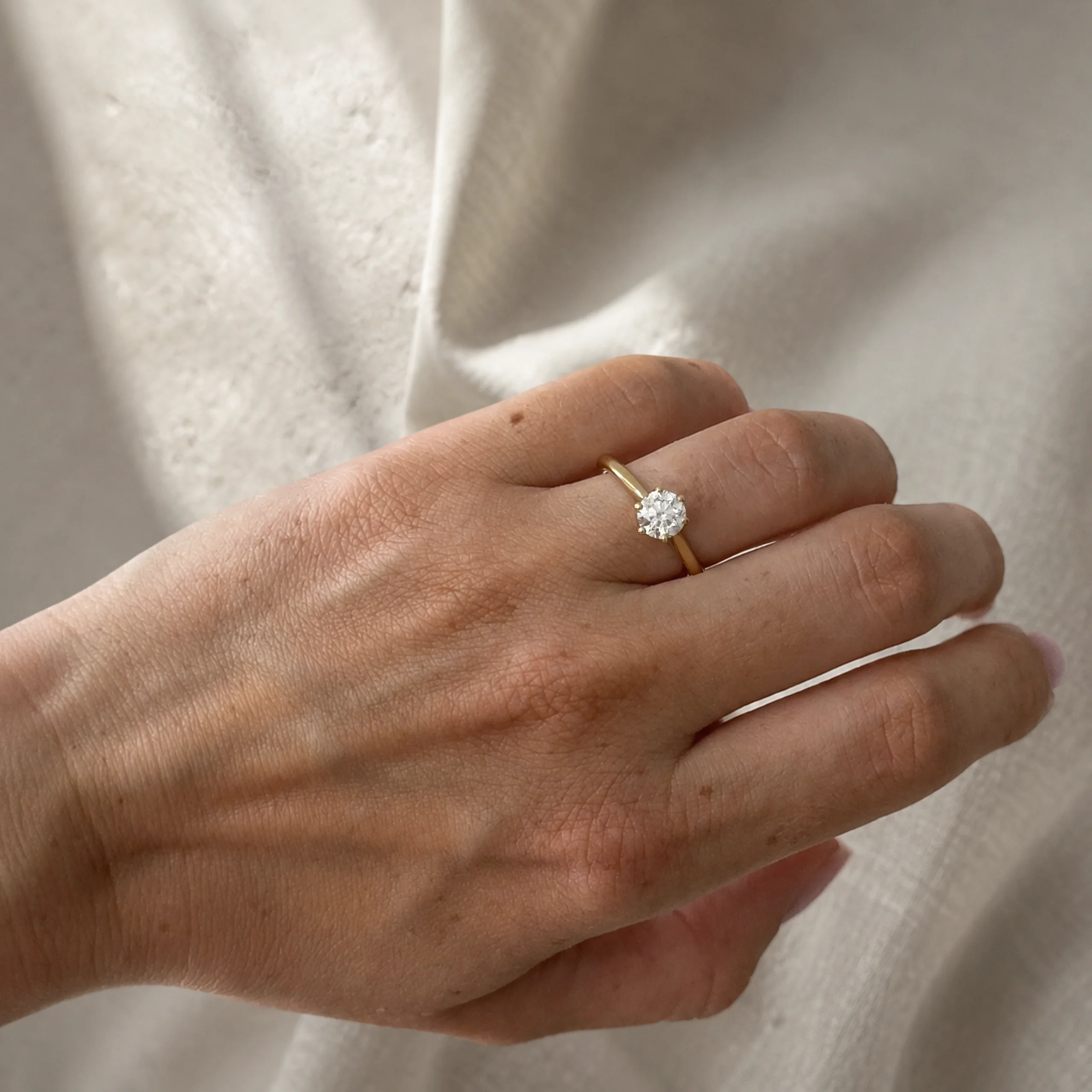


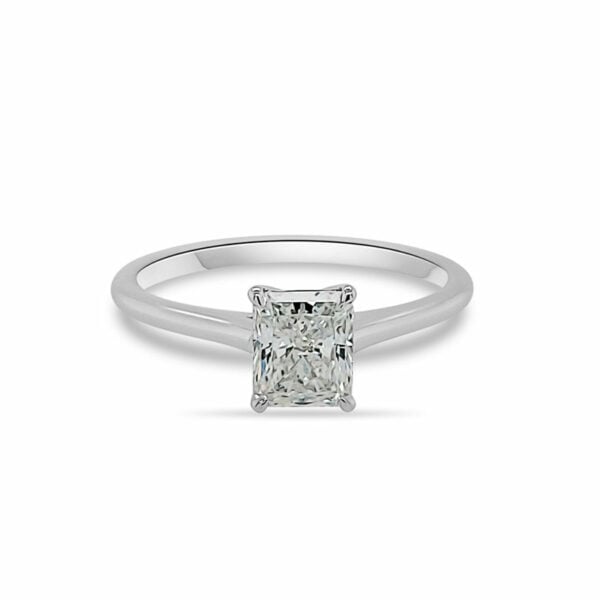
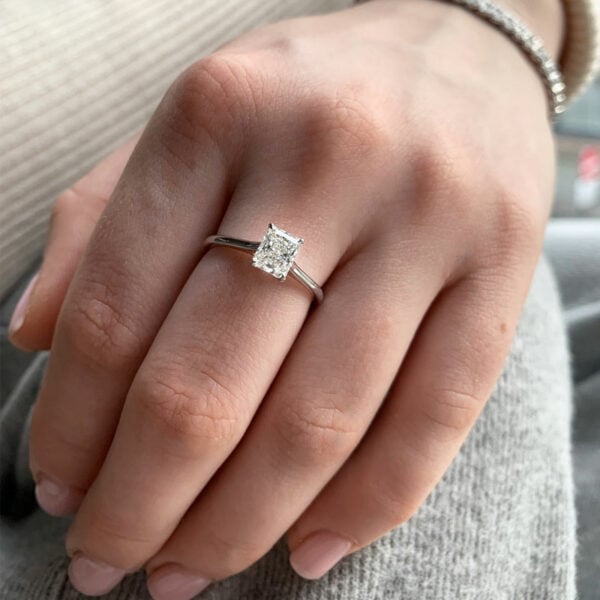
0.71 ct round brilliant, E SI1, GIA, in six claws on yellow gold
One natural round brilliant diamond of 0.71 carat, GIA graded colour E and clarity SI1, in six claws on a tapered band in 18K yellow gold. GIA report 1558962279.
From 0.40 to 0.71 carat: what you are actually buying
Carat is weight, and weight grows faster than width. That is why price lists read misleadingly if you use them as size lists.
This stone weighs 78 per cent more than a 0.40 ct. On the hand you do not see that, because diameter grows with the cube root of weight: from about 4.8 to about 5.8 millimetres. That is a fifth wider, and because a circle grows with the square, roughly half as much visible surface again.
A fifth wider sounds modest and is not: it is precisely the step at which a stone becomes recognisable as a diamond from across a conversation rather than as a glint. But you pay for 78 per cent and you see half of it. Anyone buying purely on visible size gets more from dropping half a clarity grade than from a quarter carat more weight. That is the honest version of this price difference.
E, and why in yellow gold it is worth a grade
E is the second grade of the colourless range, one step below D and one above F. Against white metal the distinction between E and F is barely makeable in the hand. In yellow gold it is different: warm metal continuously throws something back into the stone, and that contribution adds to whatever is already there. The higher in the colourless range you start, the more room there is before that reflection becomes visible.
An E in yellow gold therefore keeps reading cooler than an F in the same metal, where in platinum the two would be close to indistinguishable. This is one of the few places where buying a colour grade higher shows itself.
SI1 at close to three quarters of a carat
At 0.40 carat SI1 is almost always invisible: the table is too small to show a characteristic. At 0.71 carat that table is appreciably larger and the certainty falls away. SI1 stays eye-clean on most stones at this size, but it depends on where the inclusion sits — in the body or at the edge, under a claw or in the middle of the table.
We judged this stone on exactly that before it was set. But it is the kind of thing you are better off seeing than taking on our word: come and turn it under ordinary light, not under a window spotlight.
Six claws
Six points on the crown keep a round outline round, where four points pull the eye towards a faintly square silhouette. And if you lose one, five still carry — with four claws the stone then rests on three and the matter becomes urgent.
Certified and set in Antwerp
GIA report 1558962279, laser-inscribed on the girdle. Hand-set in our workshop, resizing included. Insured delivery free throughout Europe.