Nederlands
 Français
 Italiano
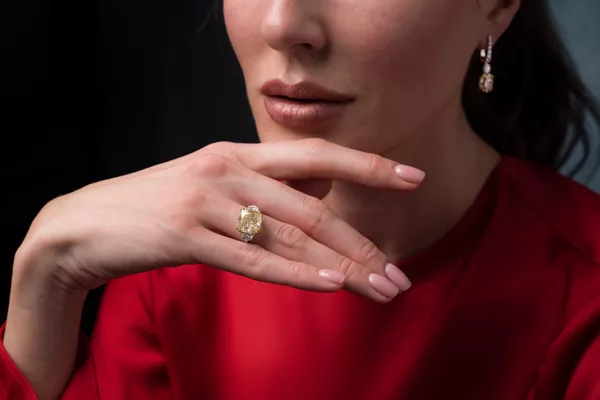






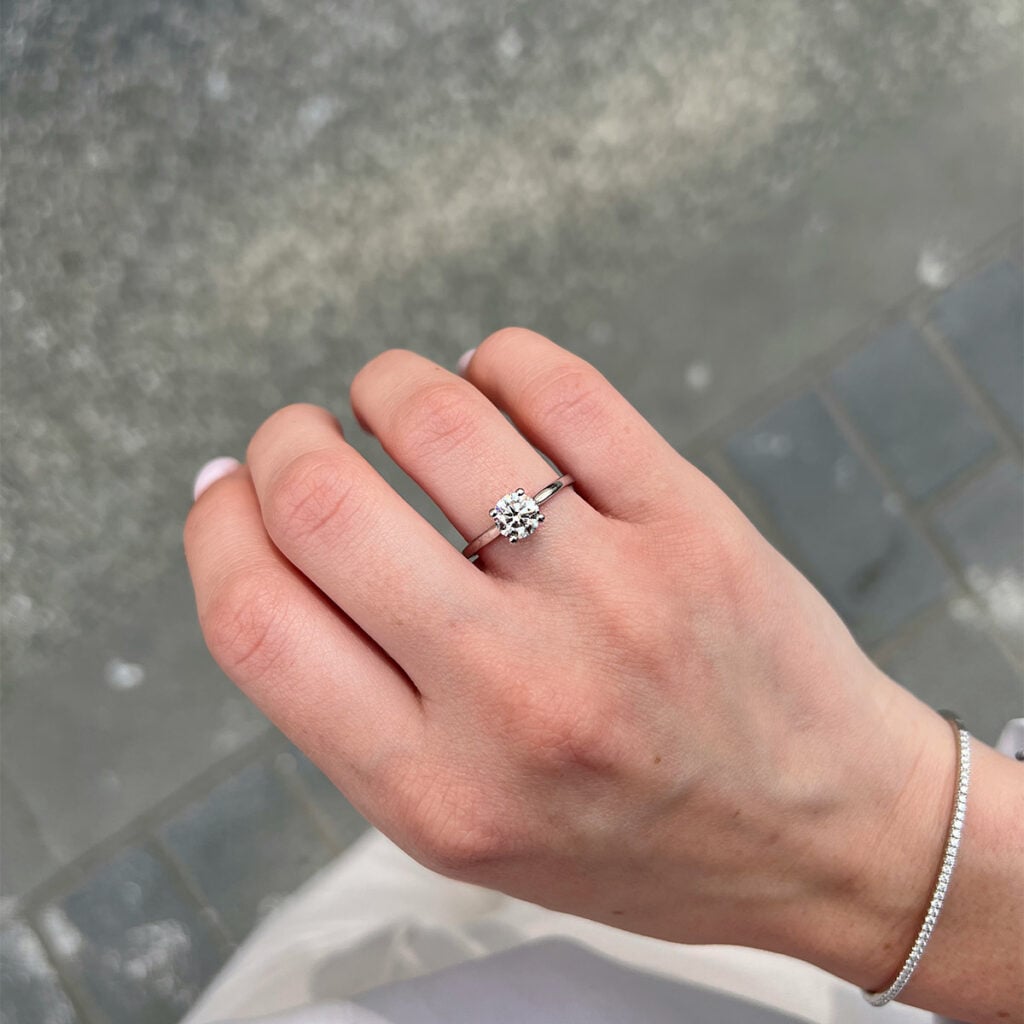

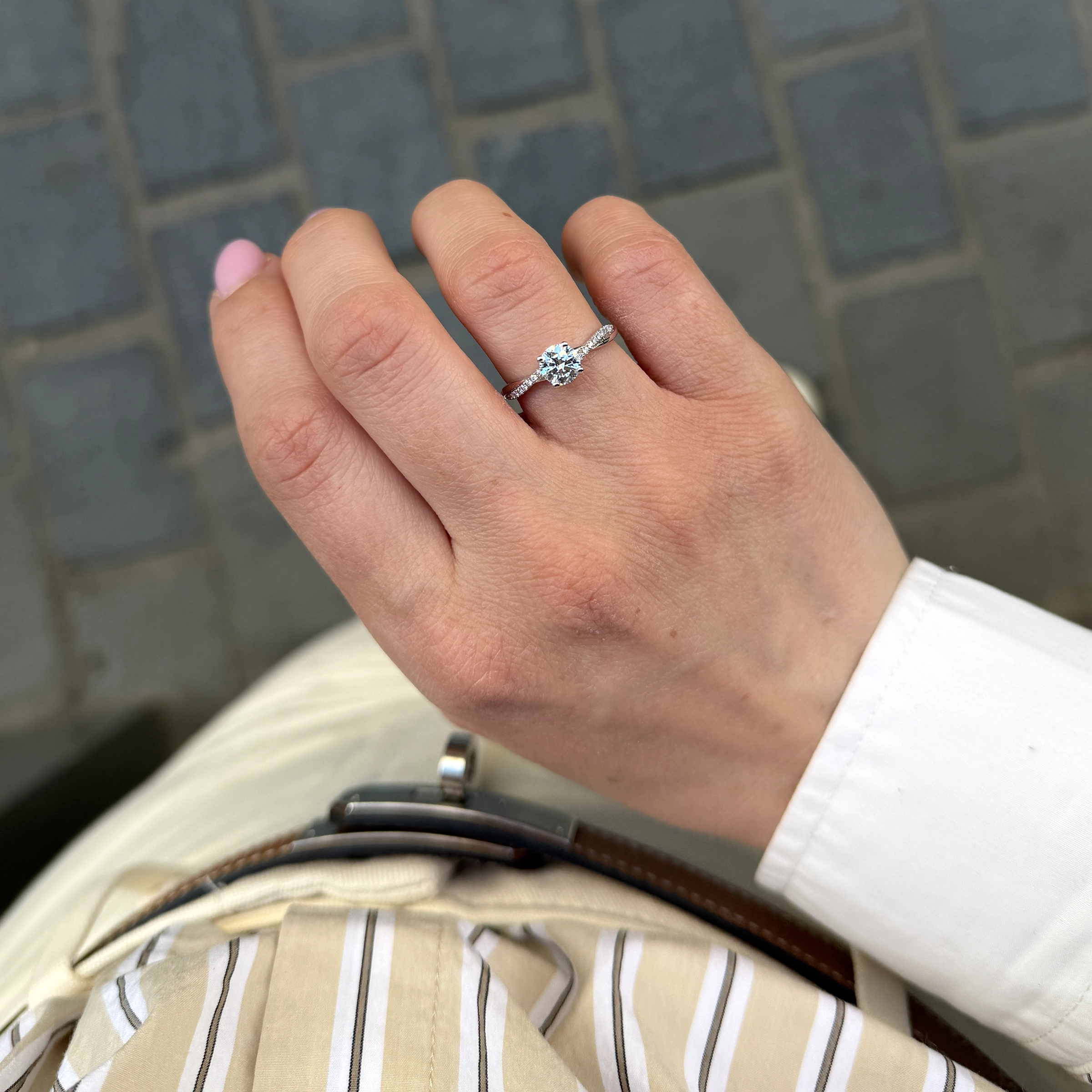
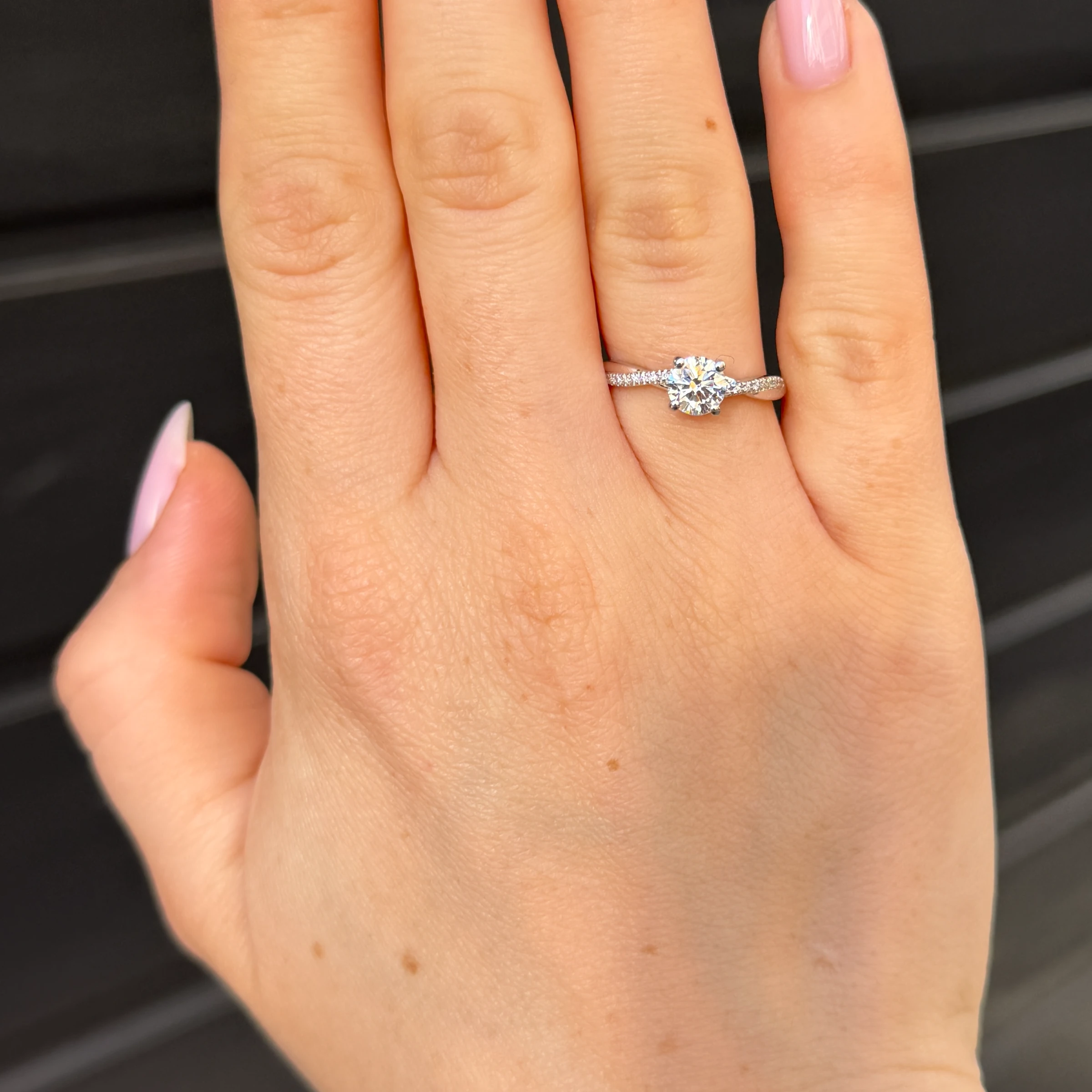
An intertwined band solves a problem that a plain band does not have. On a straight shank the centre stone sits on a single line of metal, and everything structural happens underneath, out of sight. Here the shank splits and the two strands cross under the setting, so the stone is carried on two points of support instead of one, and the crossing itself becomes the thing you look at from the side.
That matters in wear, not just in looks. The weakest moment in any solitaire is the join between the head and the shank, because that is where the metal is thinnest and where the leverage of a knocked stone is greatest. Two strands meeting under the head distribute that load across a wider footprint. It is the same reason a bridge is trussed rather than simply beamed.
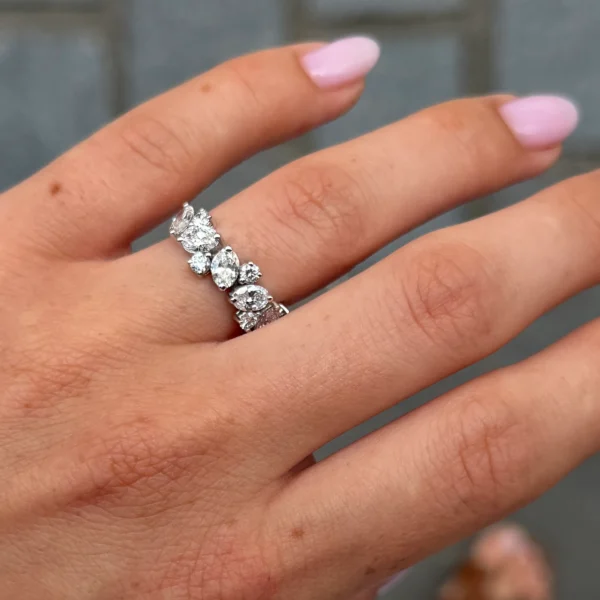
The 0.06 carat of natural diamonds along the strands is set to follow the twist rather than sit in a straight line, so the sparkle travels around the finger instead of stopping at the shoulders. Those side stones are D-F in colour and VS in clarity — graded a step finer than the centre, which is deliberate: small stones show colour more readily than large ones relative to their size, and matching them down to the centre’s grade would make the band look faintly grey against it.
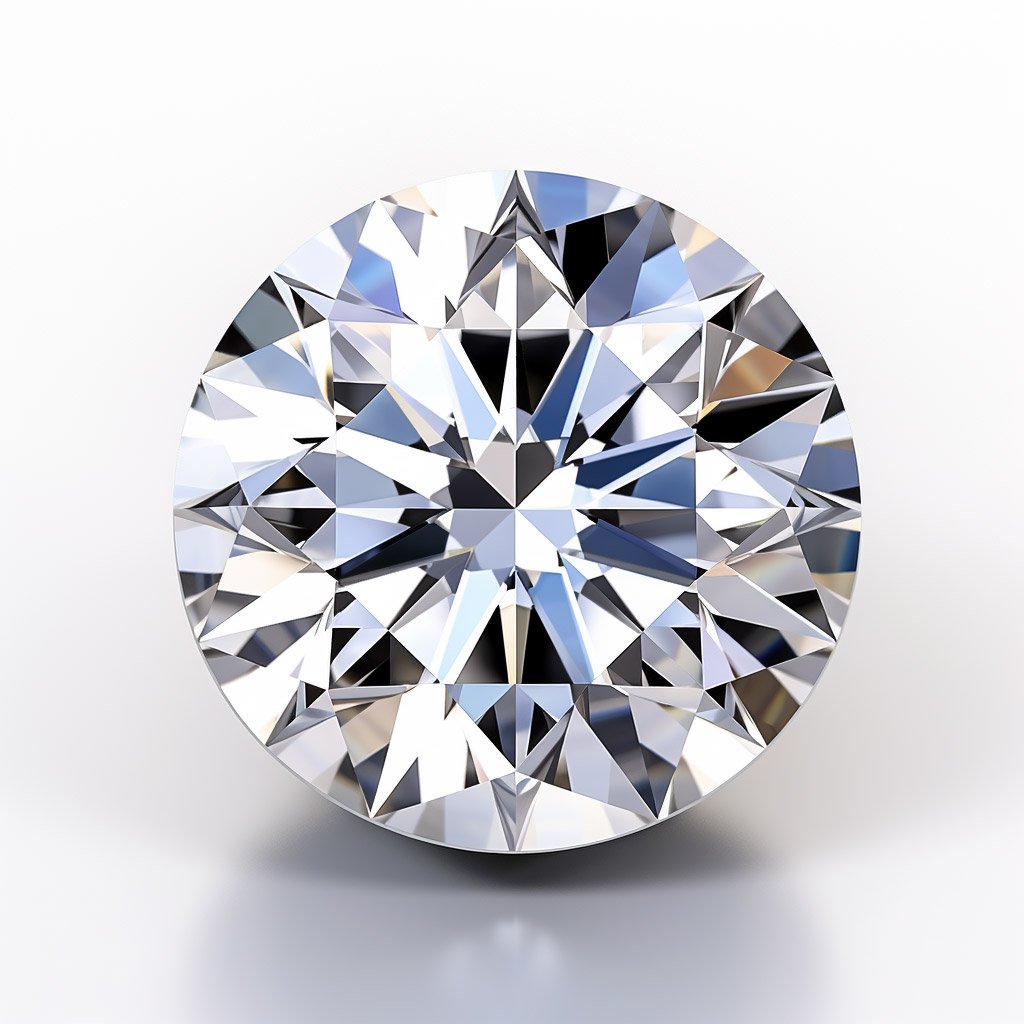
The centre is 0.72 carat, GIA certified under report 1563074518 at F colour — the last grade of the colourless range — and SI1 clarity. The round brilliant is the one shape with a GIA cut grade, and it is also the shape whose facet pattern most effectively scatters an SI inclusion into the general sparkle.
18K white gold. Natural diamonds throughout, set and finished in Antwerp.
The same ring is also made with a 0.50 ct E SI1 centre, a smaller stone that leans more on the crossover and less on its own width.