Nederlands
 Français
 Italiano
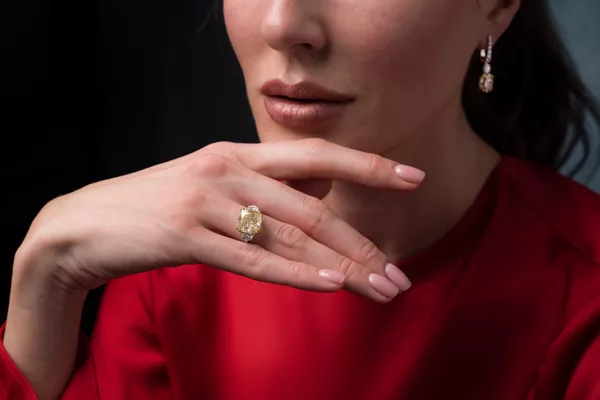

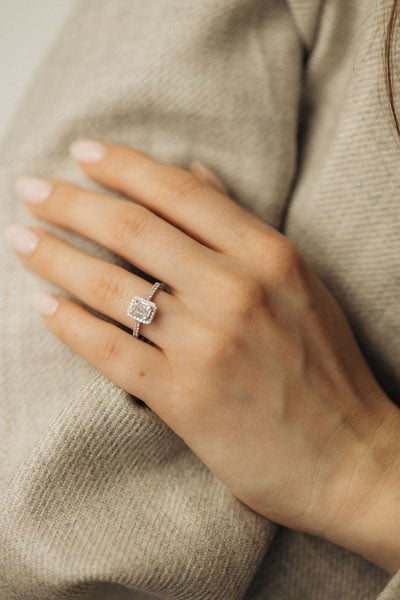





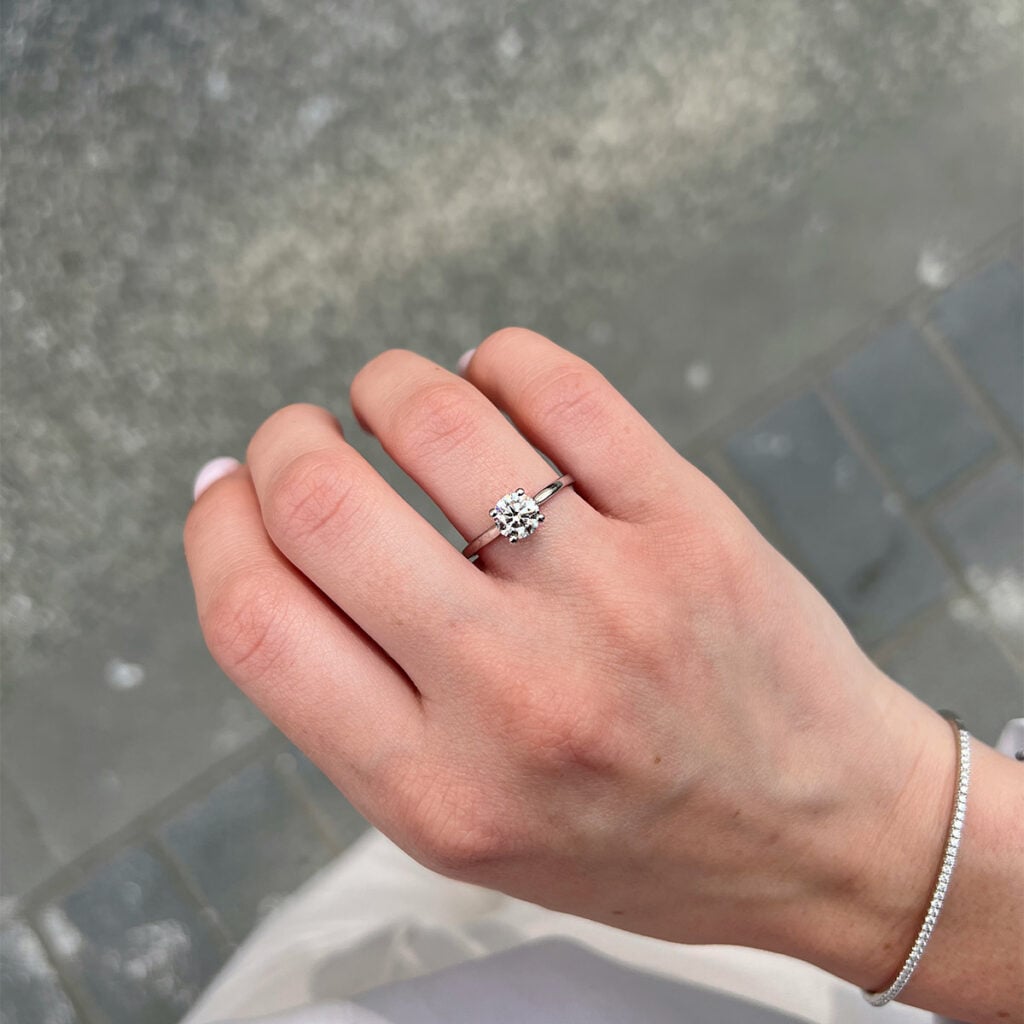
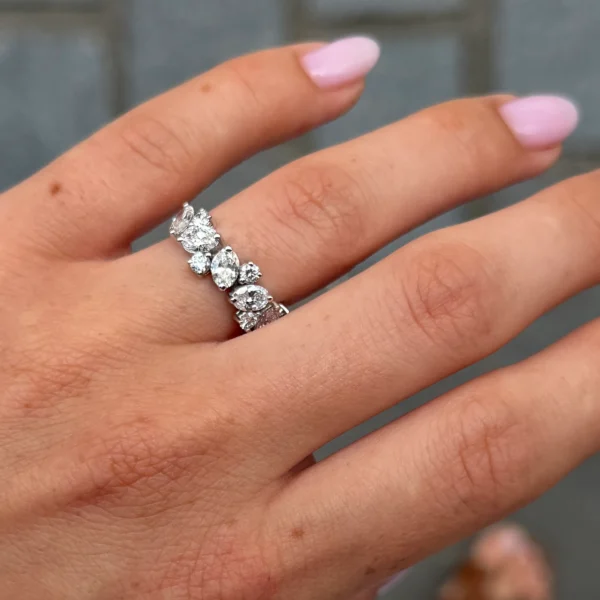


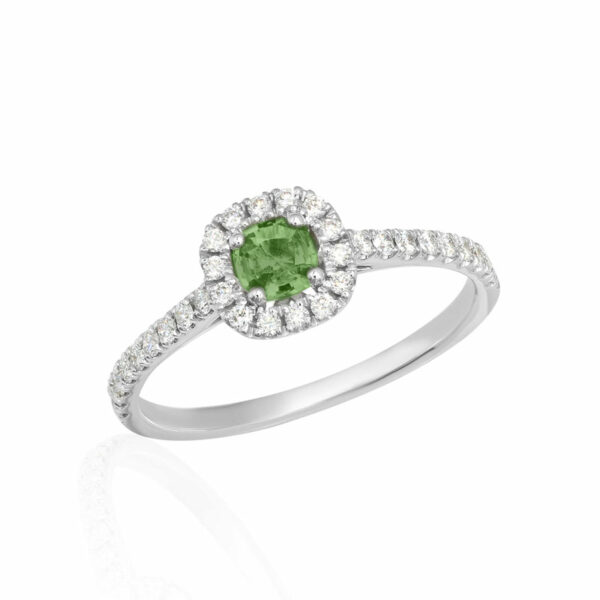
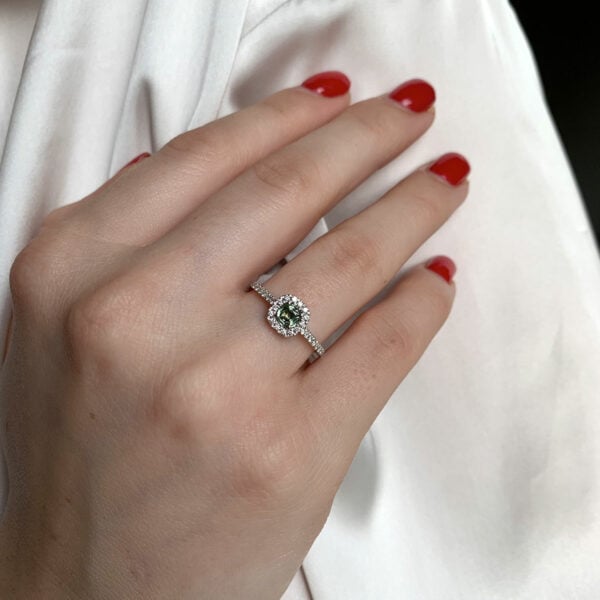
0.85 ct oval green sapphire with a diamond halo, 18K yellow gold
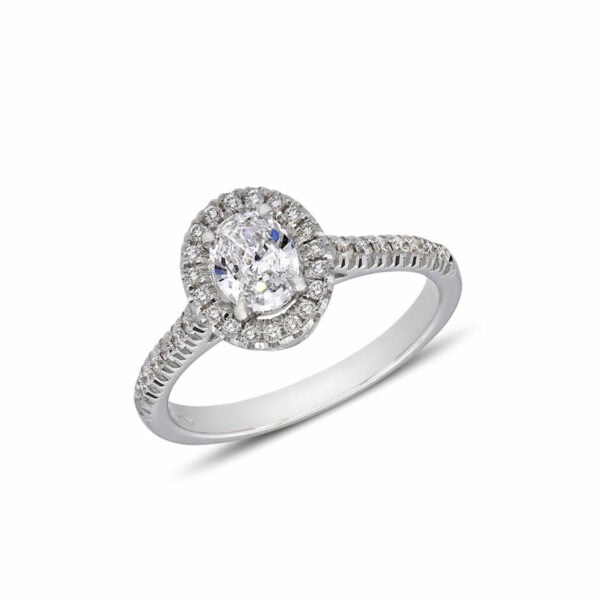
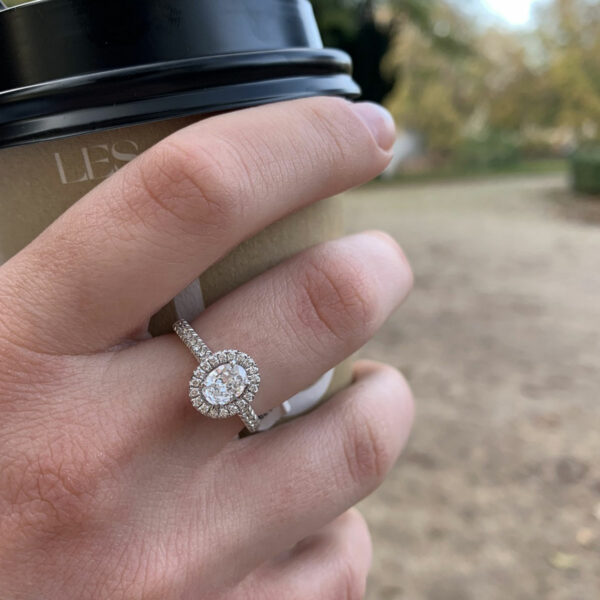
A natural green sapphire of 0.85 carat, oval cut, held on four claws inside a halo and pavé totalling 0.27 ct of diamonds (D–F, VS), in 18K yellow gold.
Green sapphire is corundum, and that changes everything about wearing it
Sapphire and ruby are the same mineral: corundum, aluminium oxide. Red corundum is called ruby; every other colour is a sapphire with the colour named in front of it. So a green sapphire is not a lesser blue sapphire — it is the same species, the same hardness, the same durability, in a different colour.
That hardness is the point. Corundum is 9 on the Mohs scale, the hardest natural material after diamond, and it has no cleavage plane — no direction along which a knock can split it. For a ring worn every day, on the hand, this puts a green sapphire in a completely different category from the stone it is most often confused with.
Why it is confused with emerald, and why the difference matters
Both are green and both are set the same way, so they look interchangeable in a photograph. They are not:
- Emerald is beryl, 7.5 to 8 on the same scale, and it grows with internal fissures — the jardin that is accepted in emerald as it would be in no other fine stone. Almost every emerald on the market is oiled or resin-filled to close fissures that reach the surface, and none should go near an ultrasonic cleaner.
- Green sapphire carries none of that. It is not routinely fracture-filled, so there is no filling to dry out, discolour or need replacing in ten years. Heat treatment to improve colour is common across sapphire as a species, and we will tell you what is known about this particular stone if you ask.
The practical translation: an emerald is a stone you protect. A green sapphire is a stone you can stop thinking about.
Where the green comes from, and what to look for
The green in sapphire comes from iron rather than from chromium, which is what colours ruby and emerald. It very often arrives as fine alternating zones of blue and yellow that the eye blends into green at normal viewing distance — the way a printed image resolves into continuous colour from a step back.
That is worth knowing for two reasons. It means a cutter has to orient the rough so the zoning reads evenly face-up, which is skilled work and part of what you are paying for. And it means that under magnification, in strong light, you may see the bands. That is not a flaw. It is the stone telling you it grew in the ground.
The yellow gold and the halo
Green and yellow sit next to each other on the spectrum, so a warm metal extends the colour of the stone rather than opposing it, and the green reads deeper for it. The colourless halo then supplies the break that keeps the stone from merging into the mount — it draws the outline of the oval so the eye can find the edge.
Specification
- Centre stone: natural green sapphire, oval cut, 0.85 ct, four claws
- Diamonds: 0.27 ct total, halo and pavé, colour D–F, clarity VS
- Metal: 18K yellow gold
Care
Warm water, a drop of washing-up liquid and a soft brush. Unlike an emerald, the stone itself is not the fragile part of this ring — the pavé is, as on any ring with small set stones, so it is the settings we check rather than the sapphire.
If you were looking for an emerald
We also make this design with a true emerald centre: 0.64 ct oval emerald halo ring. Same metal, same halo, a different stone with a different set of rules.
Buying from Antwerp
In stock at our workshop in the Antwerp diamond district. Resizing available, shipped insured.