Nederlands
 Français
 Italiano
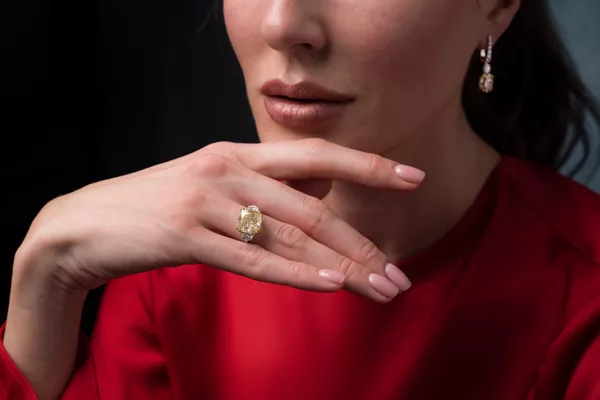

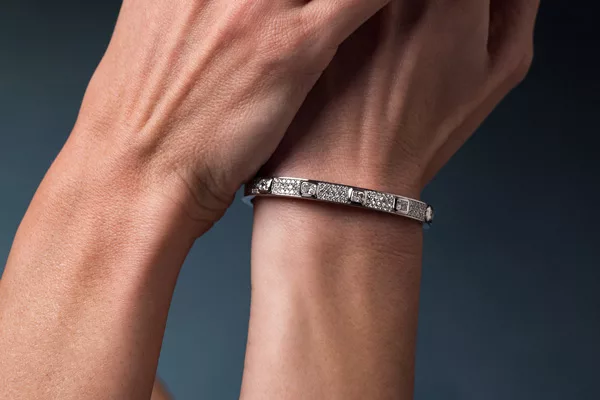
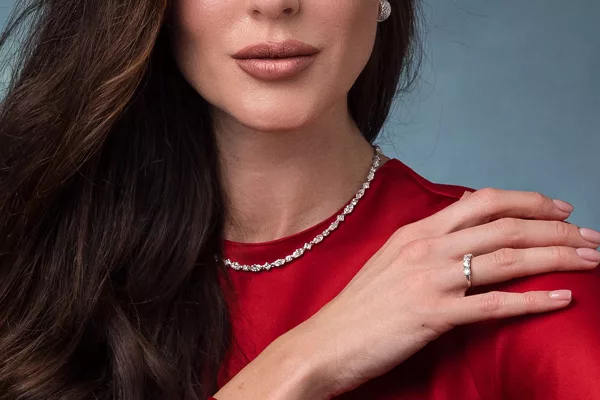
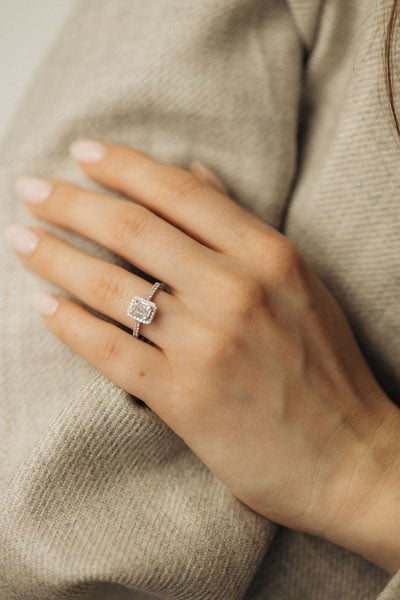




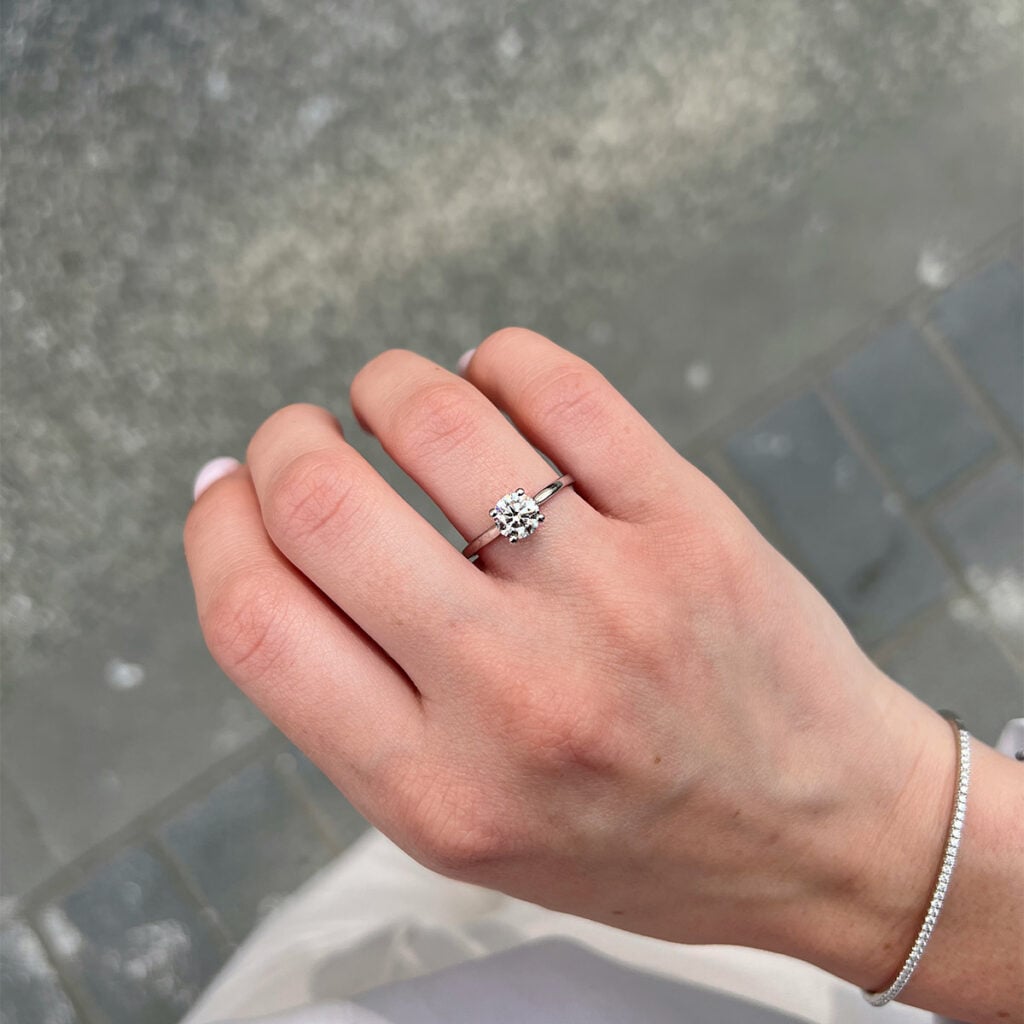
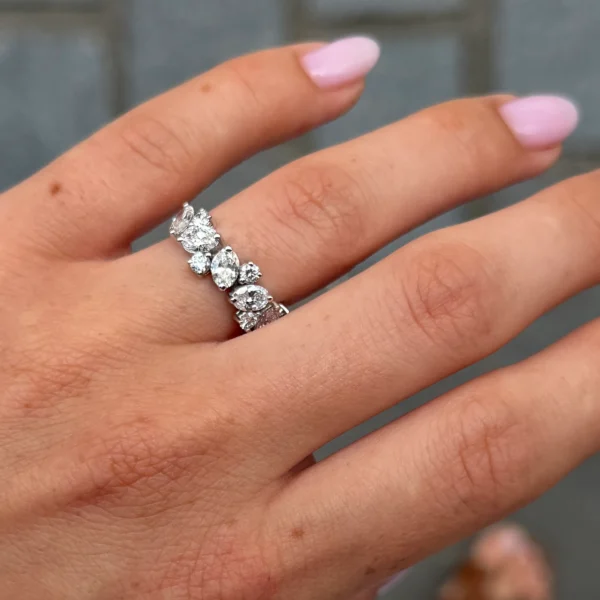
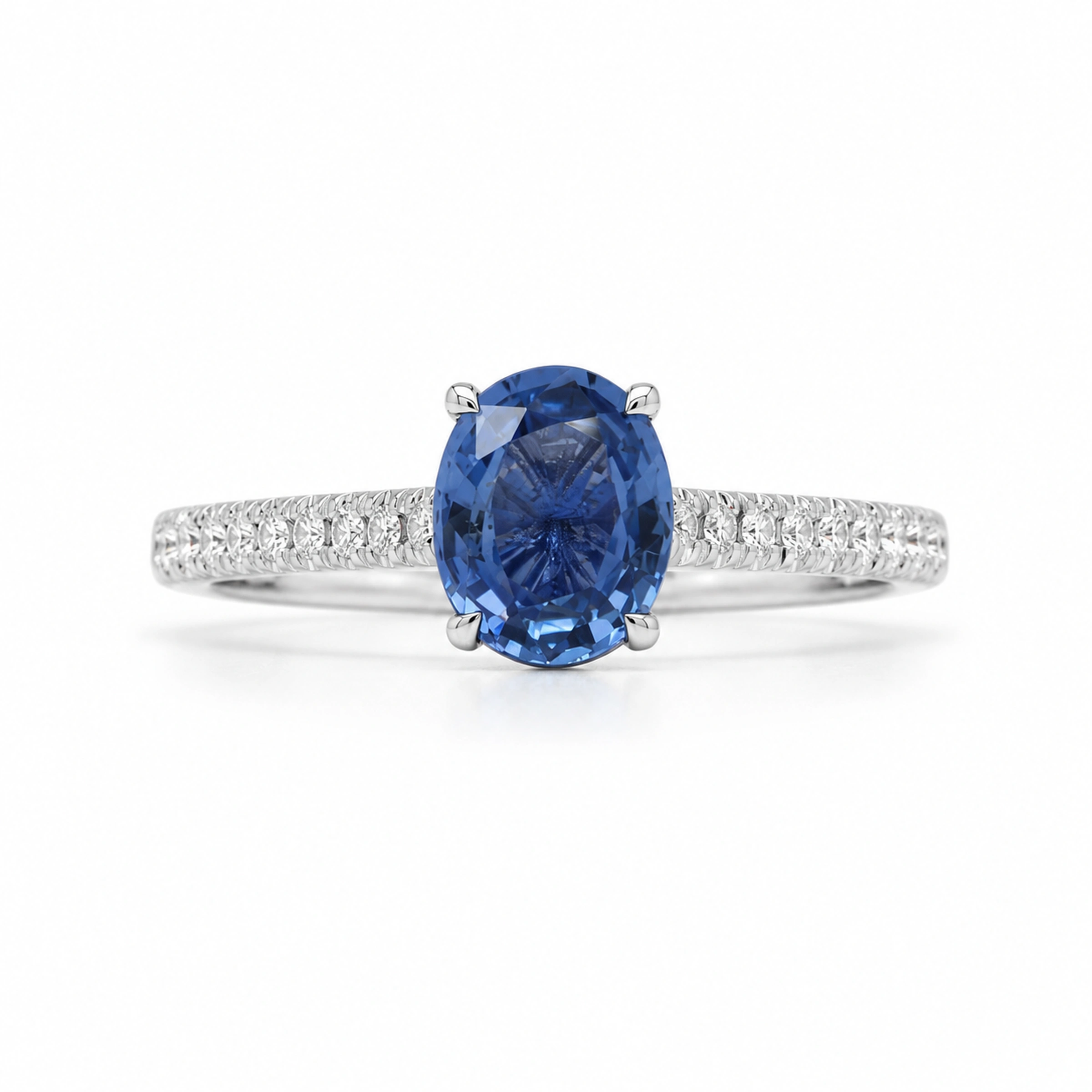
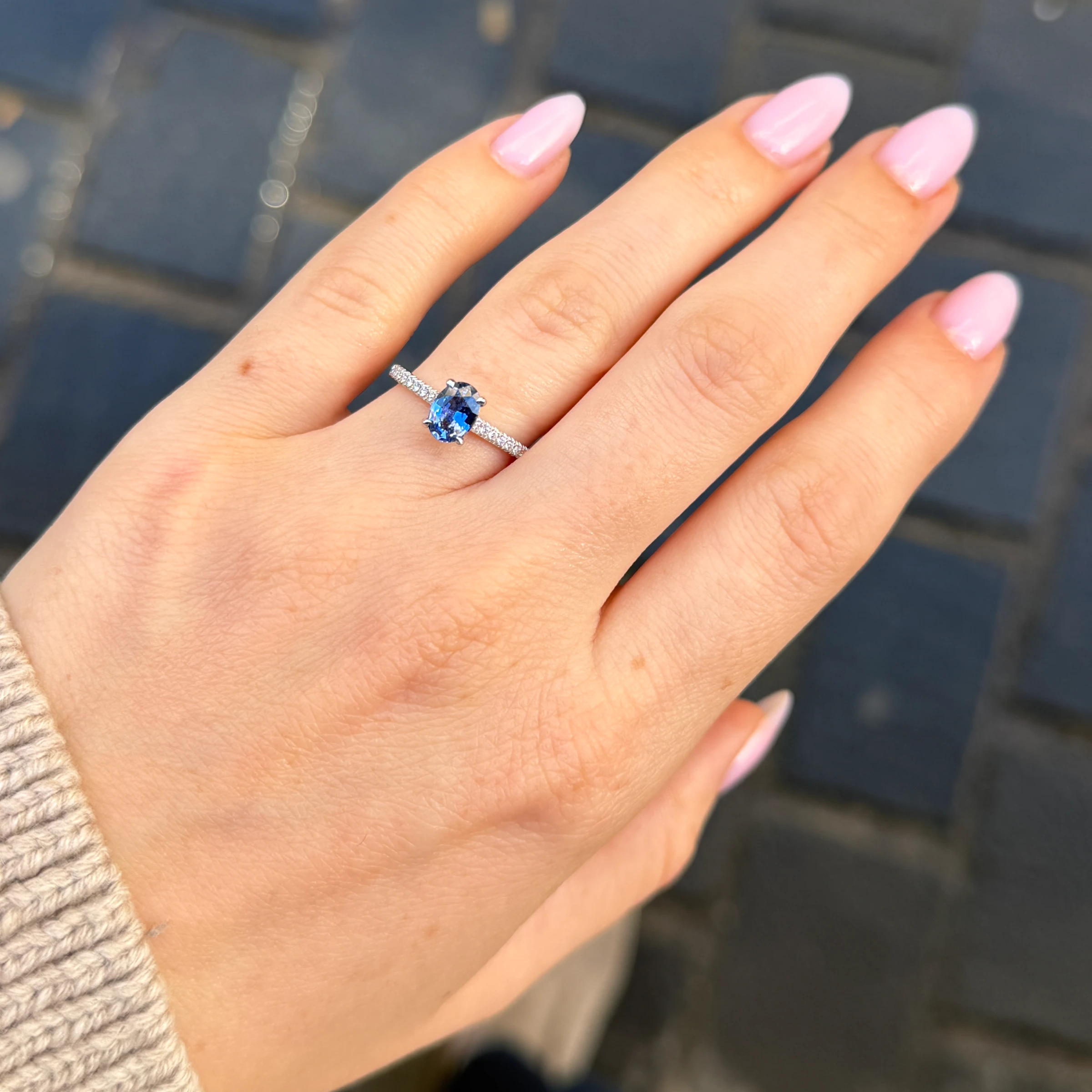
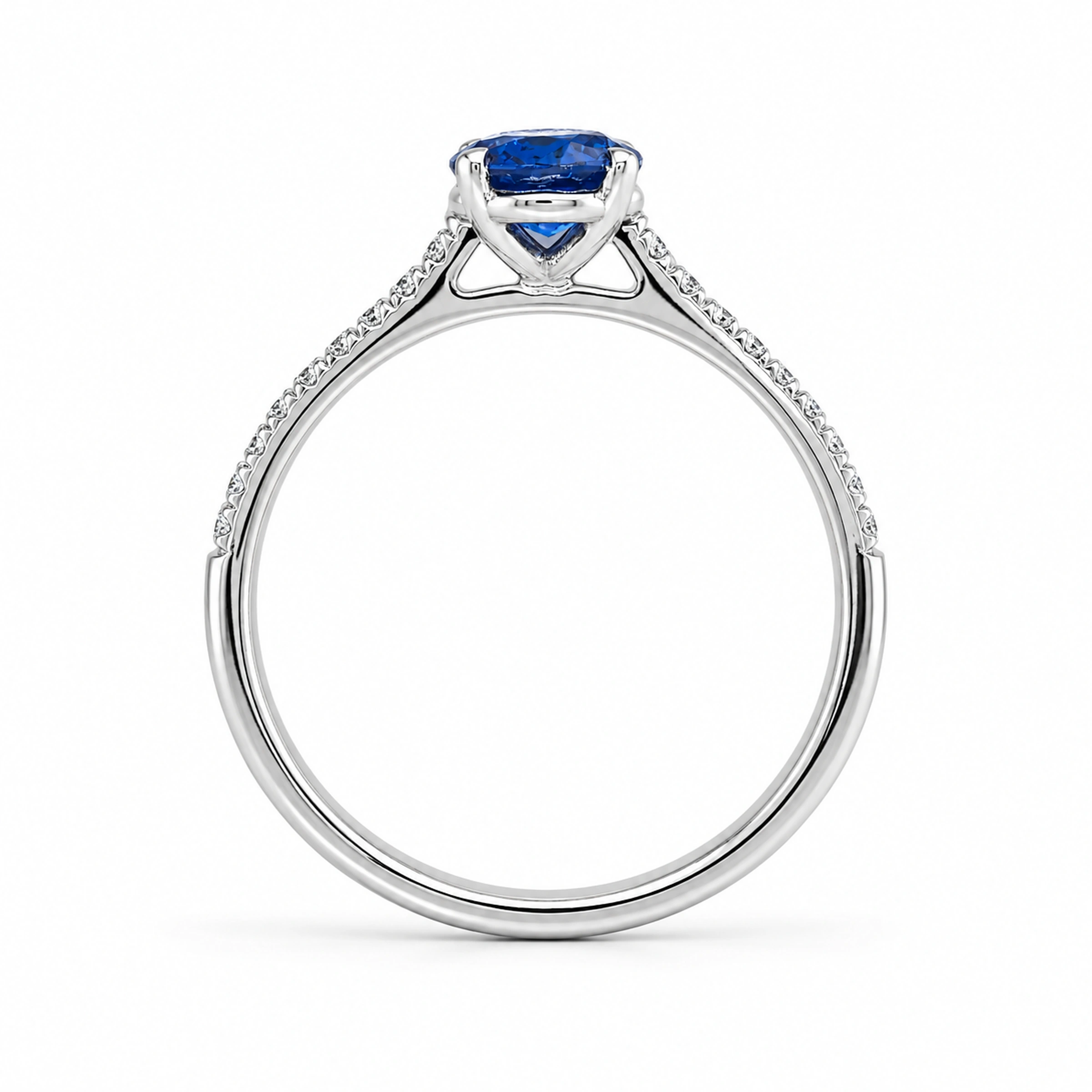
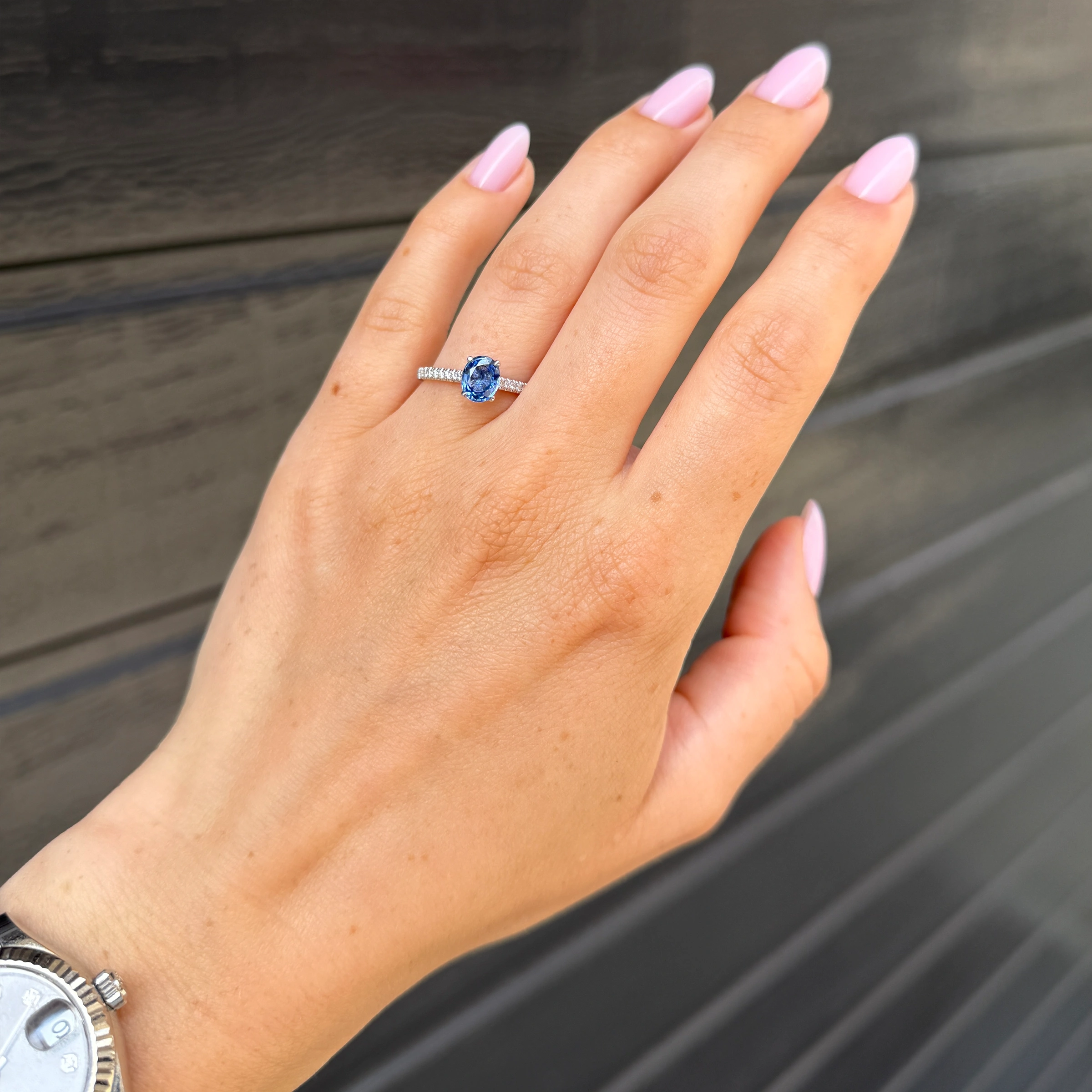
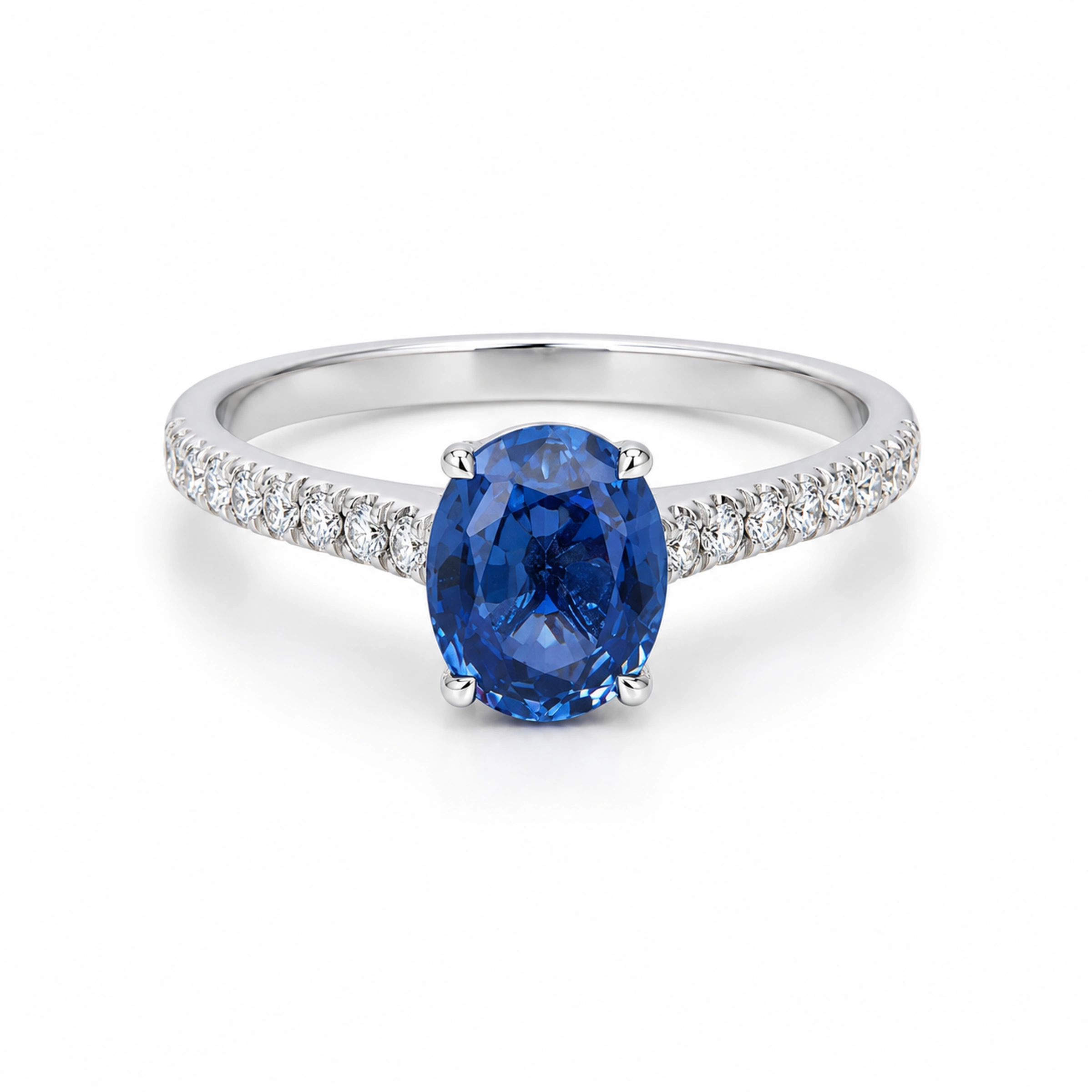
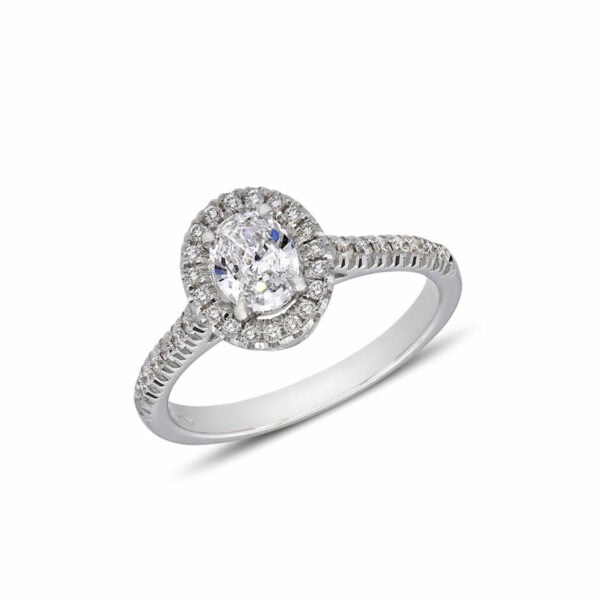
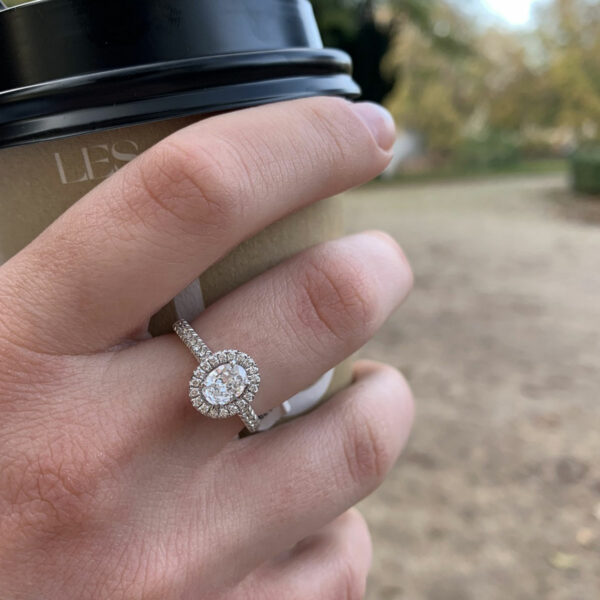
0.91 carats, oval cut blue sapphire, four claws, on an 18K white gold band carrying 0.12 carat of round brilliant diamonds in D–F colour and VS clarity.
Colour zoning, and why the oval helps
Sapphire rarely grows evenly. Corundum crystallises in layers, and the trace elements that give blue sapphire its colour are deposited in bands — straight or angular zones of stronger and weaker blue running through the crystal. Almost every blue sapphire has some of this. It is a characteristic of the material, not a defect.
The cutter’s job is to make it invisible. By choosing the angle at which the stone is cut, a good lapidary spreads the colour so that it reads as one even blue face-up, rather than a pale half and a deep half. This costs weight, because the orientation that distributes colour best is rarely the orientation that saves the most of the rough.
An elongated shape makes the task easier. An oval has more face-up area along one axis to blend a zone across, so a band of colour that would sit as an obvious stripe in a round has room to dissolve. It is one of the reasons ovals are so common in sapphire and so much less common in diamond, where there is no colour to distribute.
White metal does not help the stone, and that is the point
A warm setting lends colour to whatever sits in it. White gold lends nothing. Set a blue sapphire in white metal and what you see is the stone’s own saturation, unassisted and unflattered — the surrounding field is neutral, so nothing reflects back into the pavilion to deepen or warm the blue.
That makes white gold the honest choice and the demanding one. A sapphire that looks strong here is strong. The D–F pavé reinforces it: colourless diamonds beside a blue stone give the eye a true white to judge against, which is what makes the blue read as blue rather than as dark.
Hardness, and what it means for daily wear
Sapphire is 9 on the Mohs scale, second only to diamond and a long way above the other coloured stones usually considered for an engagement ring. There is no cleavage plane to worry about and no routine fragility. Among coloured gems it is the one that can be treated like a diamond — worn every day, for decades, without being handled carefully.
18K white gold. Set and finished in Antwerp.
The same ring, four ways
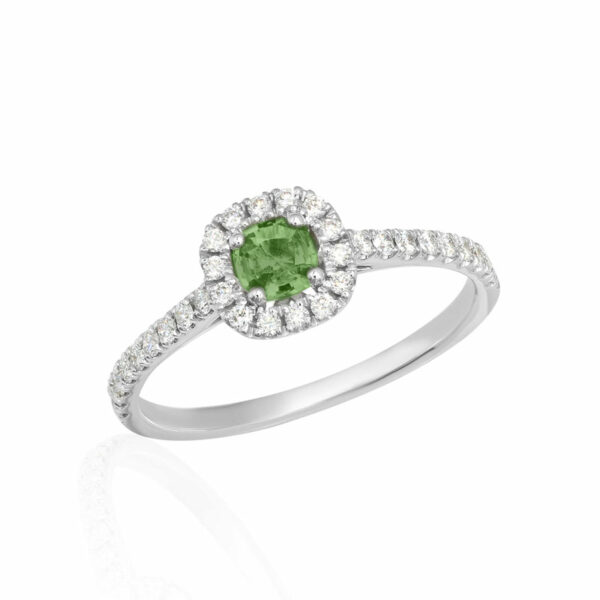
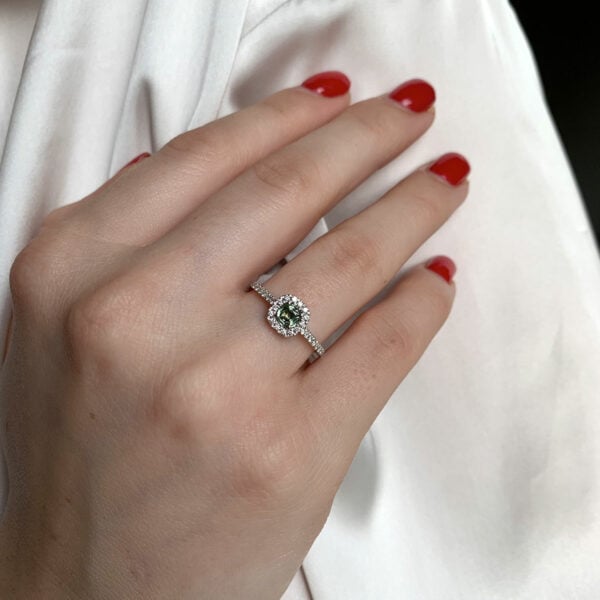
One design — oval sapphire, four claws, 0.12 ct pavé shoulders — in two colours and two metals. The stone and the metal are the only variables.
- Blue, white gold — 0.91 ct — this ring
- Blue, yellow gold — 0.96 ct
- Green, white gold — 0.91 ct
- Green, yellow gold — 1.24 ct