Nederlands
 Français
 Italiano
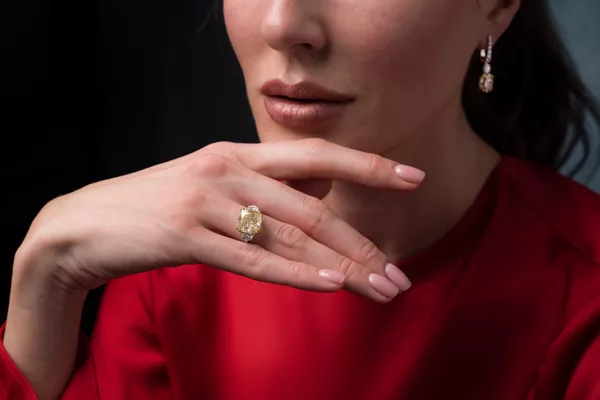

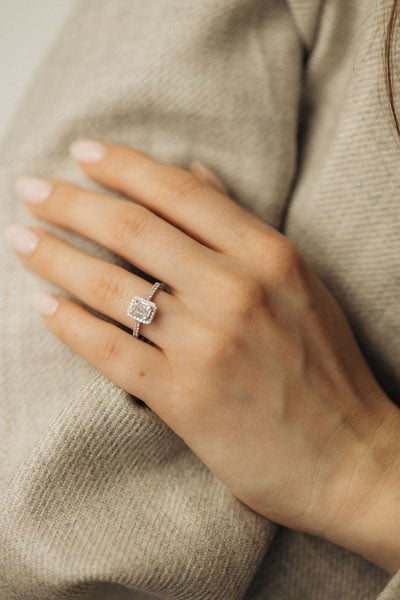

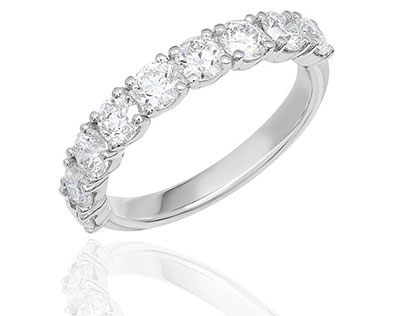




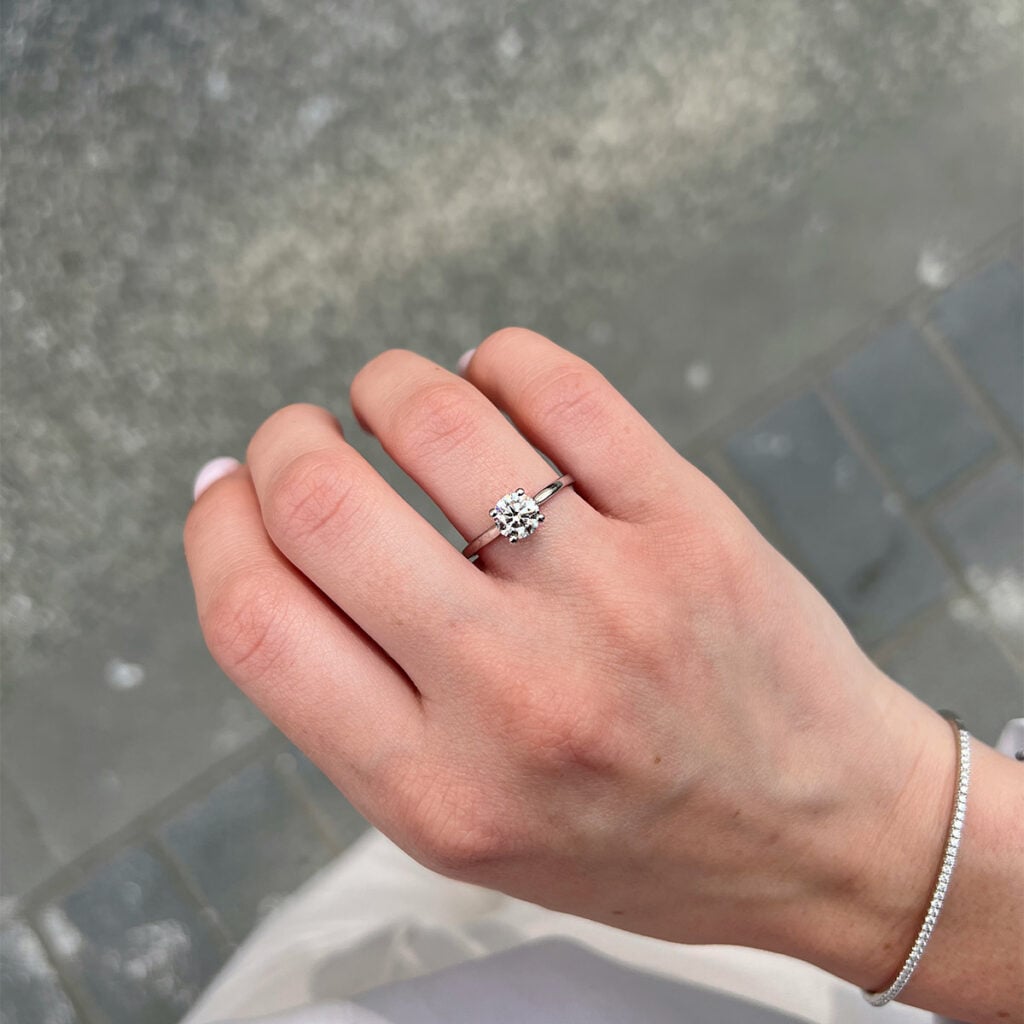
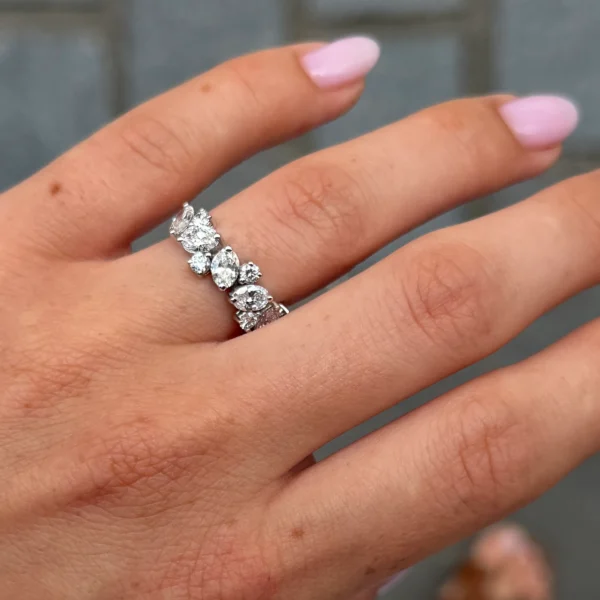

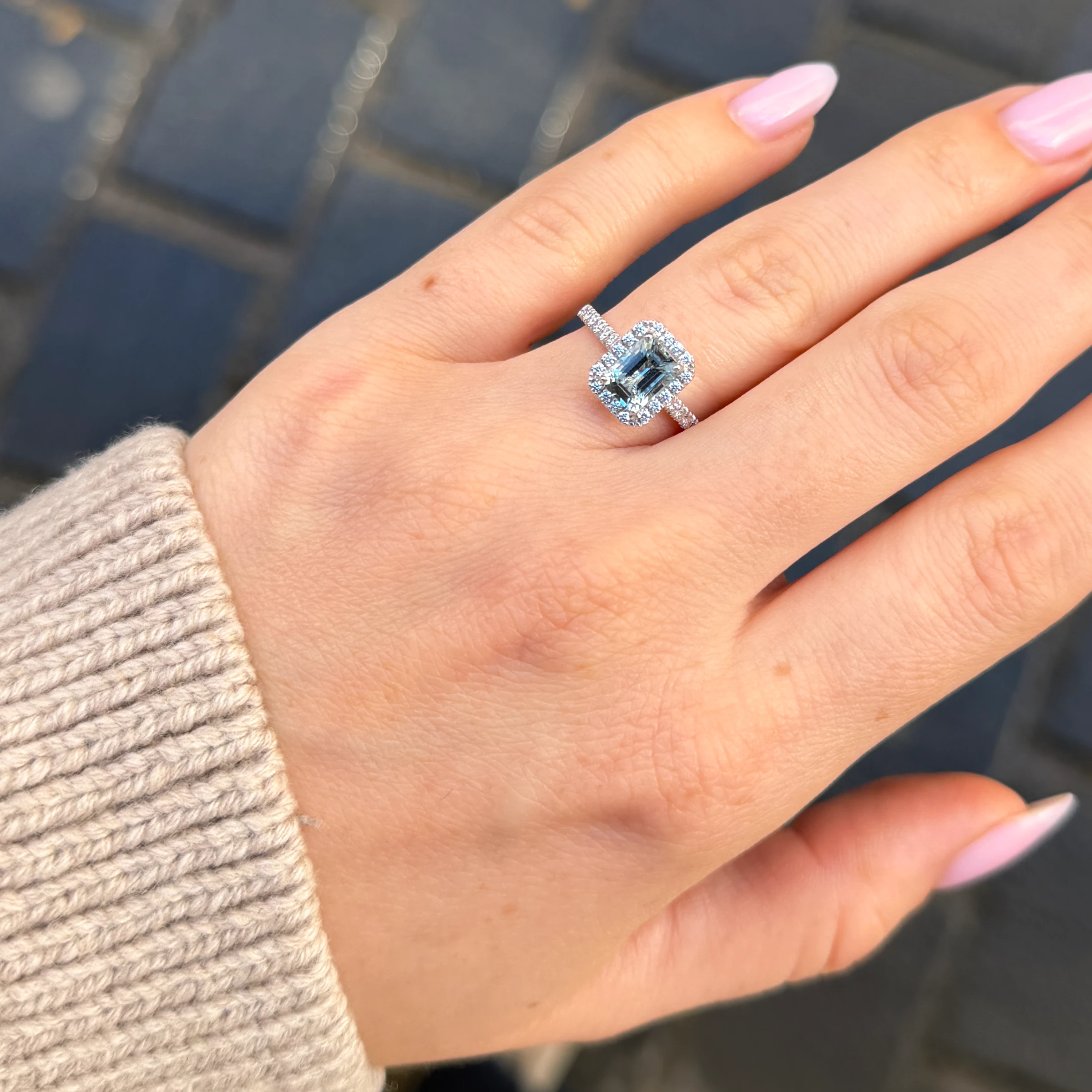

0.91 carats, emerald cut aquamarine, framed by a single halo of round brilliant diamonds with pavé running down the shoulders. The diamonds total 0.26 carat in D–F colour and VS clarity. 18K white gold.
A pale stone has to be big enough to be blue
Aquamarine is not a saturated gem and never has been. Its blue comes from iron in the beryl structure, and even the finest material is light — this is a stone defined by clarity and calm rather than depth of colour.
That has a consequence most buyers are never told. Colour in a gemstone is not a surface property; it accumulates along the distance light travels inside the stone before it comes back out. Double the path and you deepen the colour. In a strongly saturated gem this barely matters, because even a small stone has more colour than it needs. In a pale one it decides everything: the same rough, cut into a 0.30 carat stone and a 0.90 carat stone, gives you something nearly colourless and something distinctly blue.
Which is why size in aquamarine is not vanity. At 0.91 carats in an elongated emerald cut, this stone is past the point where the blue stops being a suggestion and becomes the thing you actually see.
Pleochroism — the cutter’s decision you are looking at
Aquamarine is strongly pleochroic: look through it along one crystallographic direction and it is near-colourless, look along another and it is blue. The same stone, two different answers, depending purely on orientation.
This puts the cutter in a bind. The blue direction usually runs along the length of the original crystal, so orienting a stone to show its best colour face-up often means cutting across the rough and losing weight — while the greedy orientation keeps the carats and gives you a washed-out stone. Every faceted aquamarine is the record of that decision.
An emerald cut is where the decision shows most plainly, because its large flat table is a single wide window into the stone. There is no mosaic of small facets to break up the view and disguise a poor orientation. What you see through the table is the body colour, undiluted, and that is a cut only used on material a cutter is willing to show honestly.
Why a colourless halo is a risk here, and why it works
Ringing a pale centre with D–F diamonds is not an obvious decision. Colourless melee is brighter and whiter than aquamarine will ever be, and on a pale brilliant-cut centre the halo wins: the small stones out-sparkle the middle and the centre reads grey, like the setting swallowed it.
An emerald cut survives the comparison because it is not competing on sparkle at all. It has hard straight edges, visible depth, and broad slow flashes instead of scintillation — a different kind of presence from the quick bright noise of the melee around it. The halo sharpens the outline and the blue stays legible inside it. The pavé then carries the line down the shoulders so the head does not sit on the finger as an isolated block.
Wearing it
Aquamarine sits at 7.5 to 8 on the Mohs scale — comfortably hard enough for regular wear, though below sapphire and well below diamond, so it is not indifferent to a knock against stone or steel.
The vulnerable points on any step-cut gem are the corners, which is precisely why emerald cuts have theirs truncated in the first place. Here the halo does a second job beyond the optical one: it wraps those corners in metal and melee, which is the most exposed part of the stone taken out of harm’s way.
18K white gold. Set and finished in Antwerp.