Nederlands
 Français
 Italiano







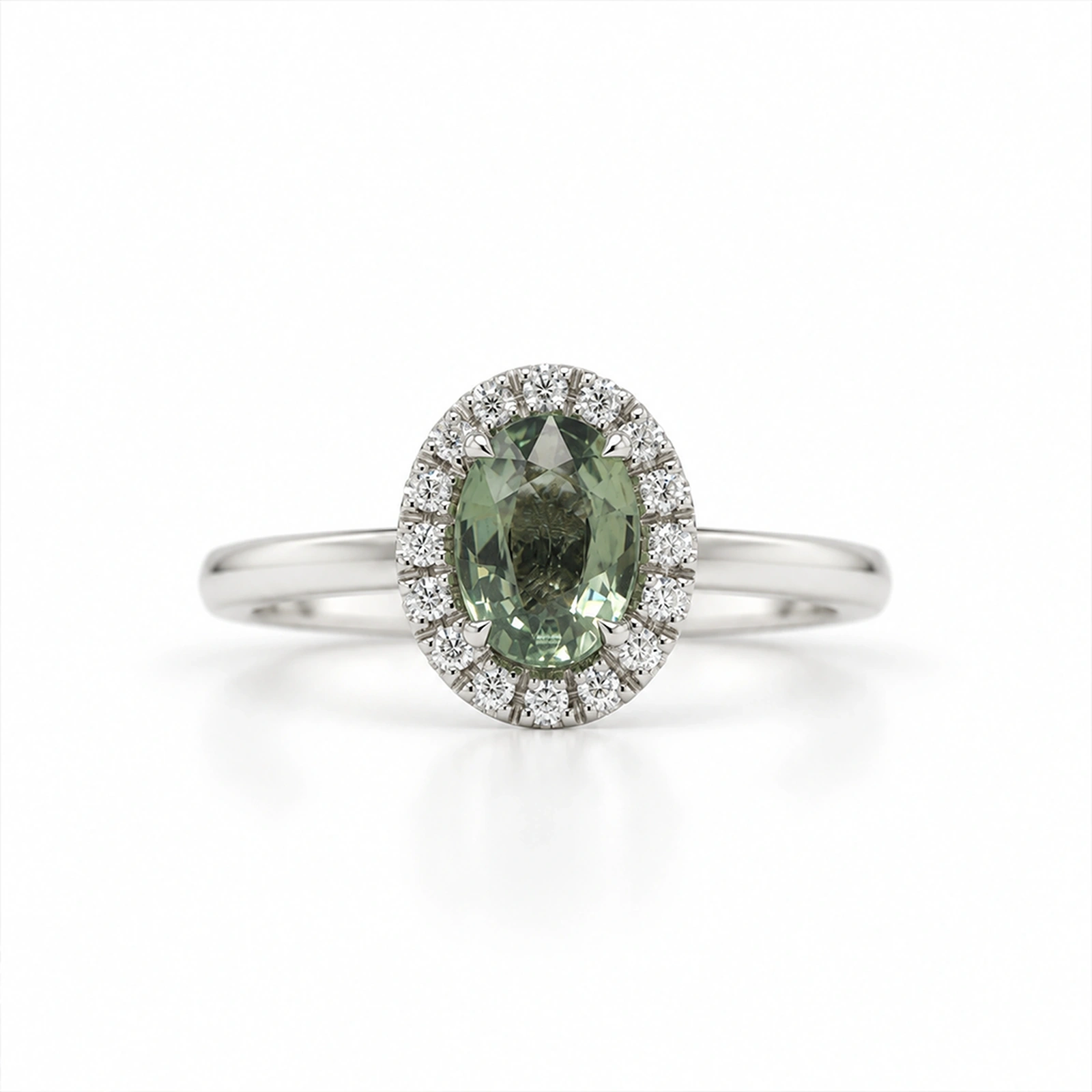
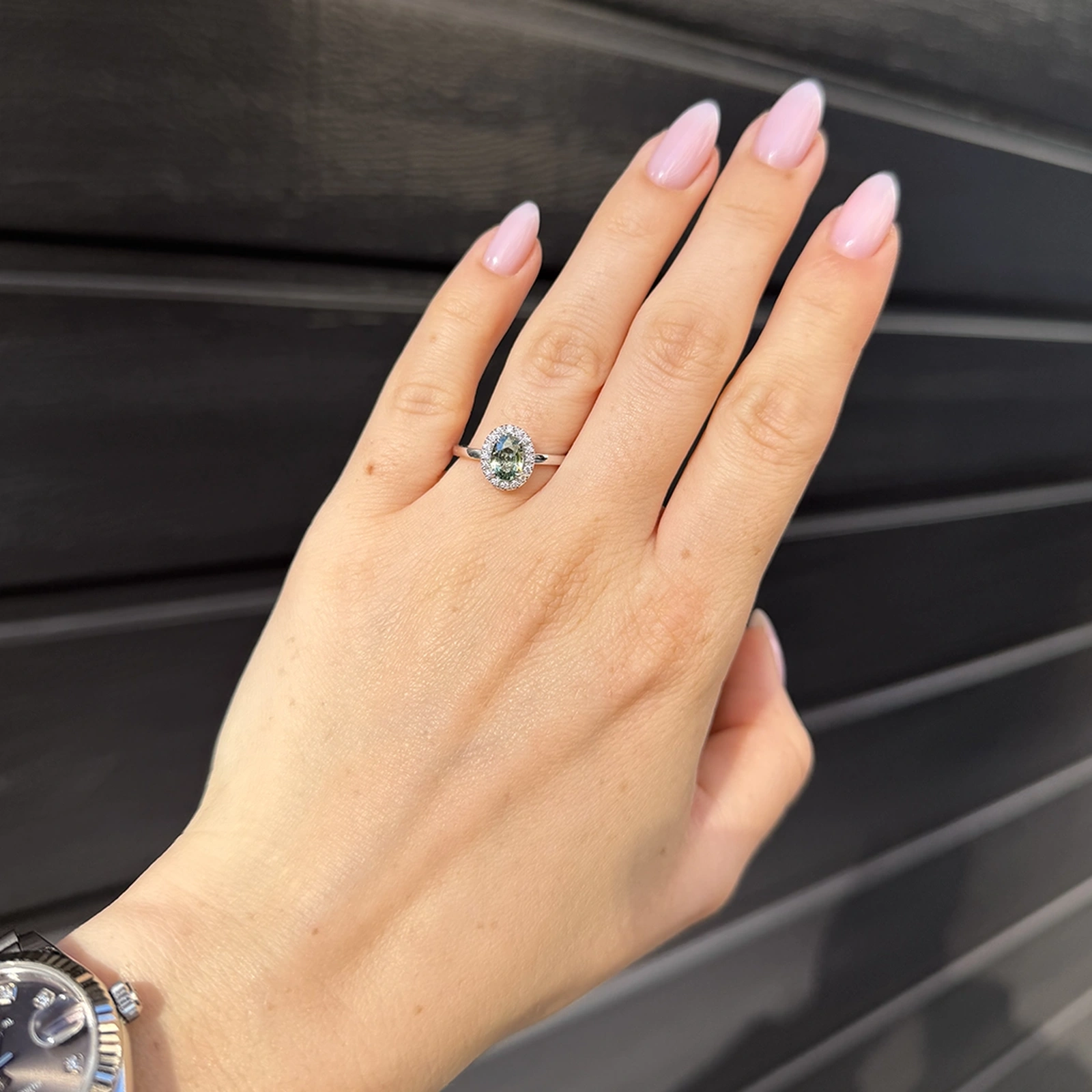


Sapphire is the gem name for corundum in every colour except red — red corundum is ruby, and everything else, green included, is sapphire. The green comes from iron: in corundum, traces of different elements produce different colours, titanium with iron giving the familiar blue and chromium giving red. That origin is why green sapphire runs to forest and olive tones rather than the vivid grass-green of an emerald.
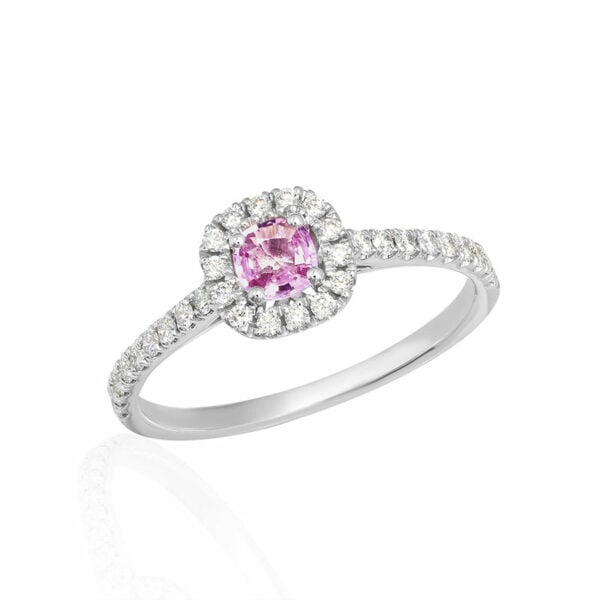
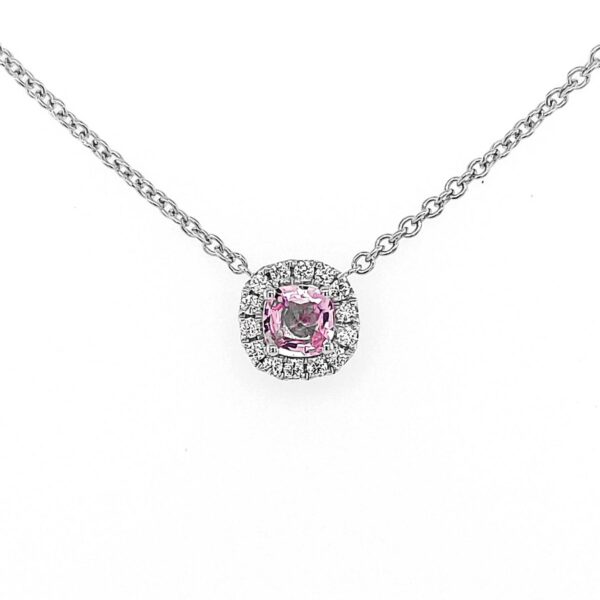
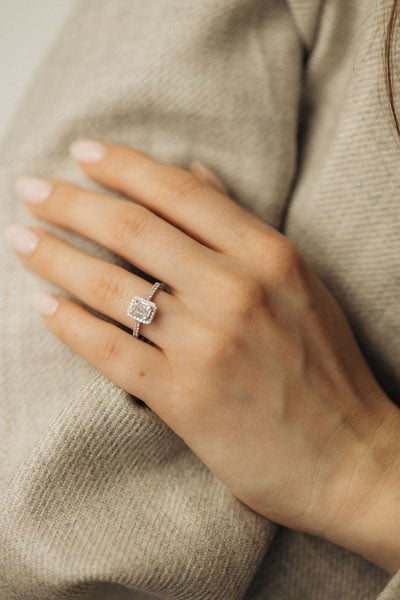
This one is set in white gold, and that is the decision that defines the ring. A metal is never neutral around a coloured stone — it reflects into the pavilion and leans the colour one way or the other. Yellow gold warms a green toward gold; rose pushes it toward olive. Rhodium-plated white gold is the closest thing to no opinion at all: it adds no hue of its own, so the sapphire shows the colour it actually has rather than the colour the setting lends it.
The halo compounds that. Around a colourless centre a halo mostly adds apparent size; around a coloured stone a ring of small white diamonds works by contrast, and the eye reads the green as deeper and more saturated when it sits against a bright neutral frame. White metal and white diamonds together give the maximum contrast available, which is why this is the version of the three where the green reads most strongly as green.
The stone weighs 0.94 carat and is held in four prongs at the two ends of the long axis and the two sides — on an oval, the ends are where the stone is thinnest and most exposed, so a prong at each end covers them. The halo is 0.10 carat of natural diamonds, D to F in colour and VS in clarity.
18K white gold. Natural sapphire, natural diamonds, set and finished in Antwerp.
The same ring, three stones
This halo setting is held with three different green sapphires. The choice is between tone and metal, not between better and worse:
- 0.94 ct, medium tone — 18K white gold — this page
- 0.96 ct, deep tone — 18K yellow gold
- 1.00 ct, light tone — 18K yellow gold