Nederlands
 Français
 Italiano






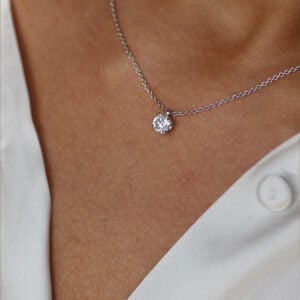
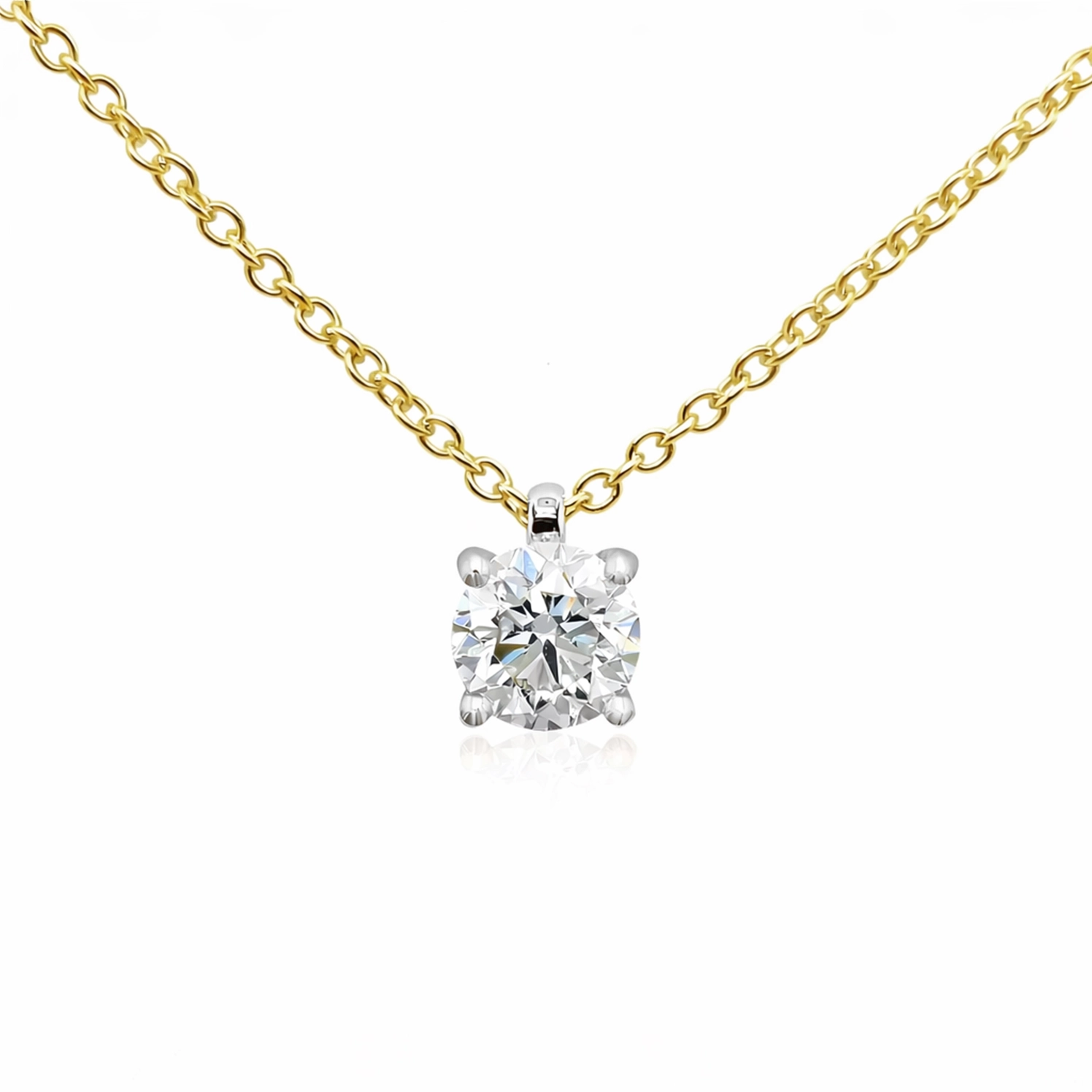
1.00 carat, D VVS2, yellow gold chain with a white gold head
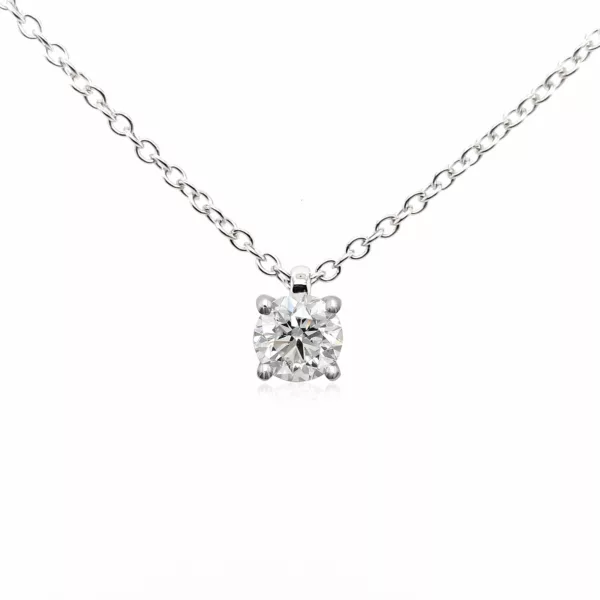
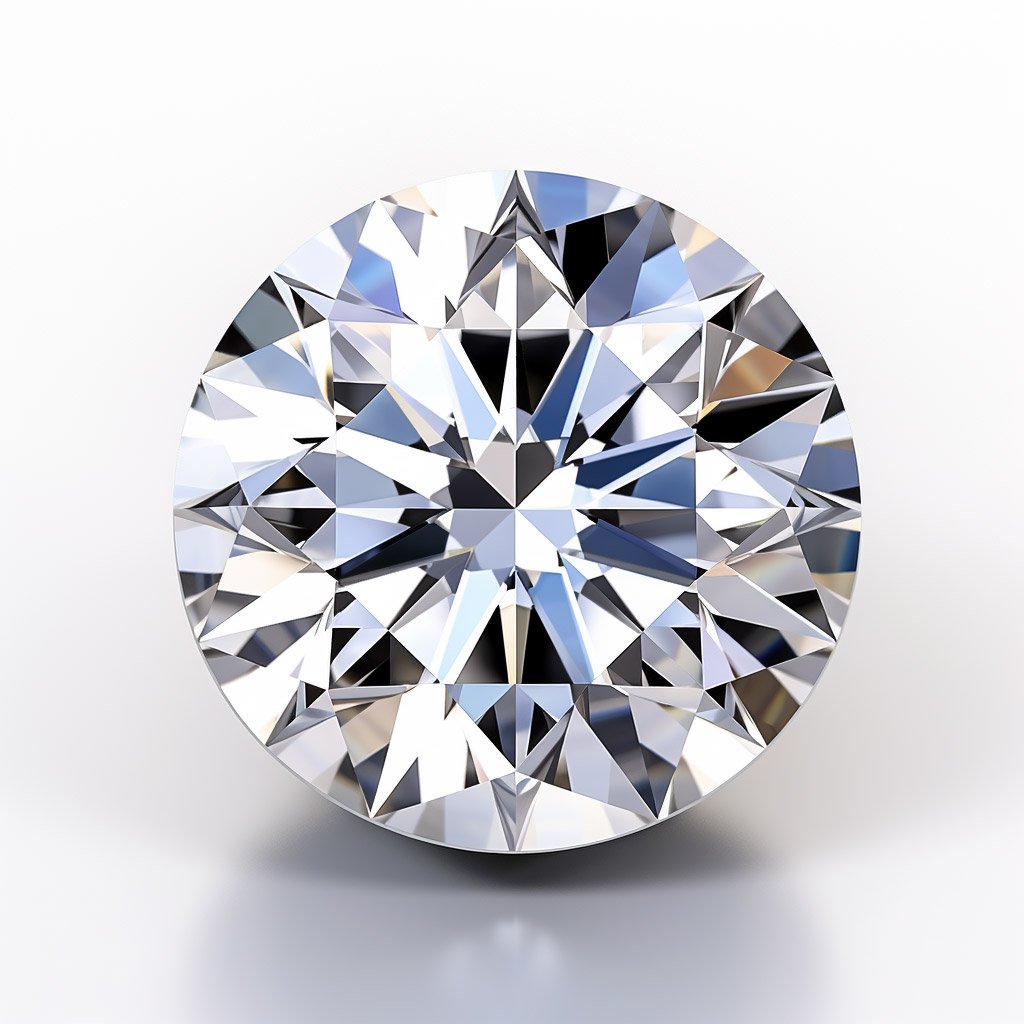
An IGI-certified laboratory-grown round brilliant of 1.00 carat, about 6.4 mm across, colour D, clarity VVS2. The chain is 18K yellow gold; the four claws and the bail that hold the stone are 18K white gold. IGI report LG708586209.
White where it touches the stone, yellow where it touches the skin
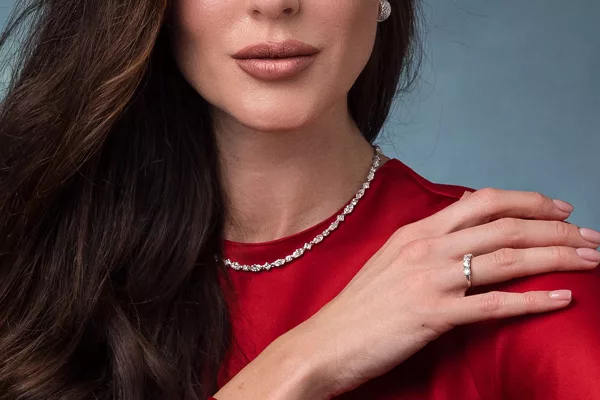
Look closely at the photograph and the piece is two colours. The chain is warm yellow all the way round the neck, and then, at the point where it meets the diamond, it changes: the small bail it runs through and the four claws holding the stone are white metal.
That is a deliberate decision about where the warmth should live. A pendant is read in two places at once — along the neckline, where the chain lies on the skin, and at the single point where the stone hangs. Yellow gold is at its best in the first place: against skin it reads as warmth and colour rather than as a hard line. At the second place, the job is different. There the eye is looking at a small, very bright, colourless object, and anything that touches its outline becomes part of what you see.
White claws simply disappear into a D stone. From a normal distance the diamond and its setting read as one white point of light, with nothing around its edge to interrupt the colourlessness you paid for. The warmth stays where yellow gold does its best work, in the chain, and stops exactly where the stone begins.
It is worth knowing that this is a choice, not a rule. Our yellow gold studs take the opposite decision and set the stones in yellow claws, so that a warm line is drawn around a cold centre — that suits a stone sitting flat against the ear. On a pendant that hangs and turns, we would rather the stone read clean.
How a one-carat pendant actually wears
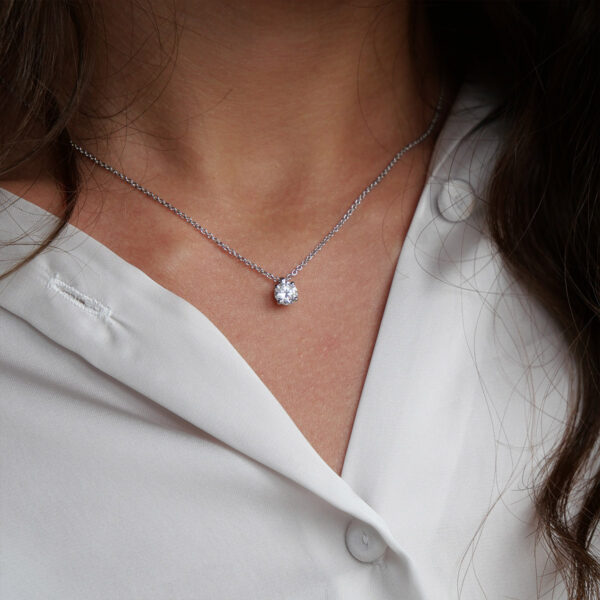
A one-carat round brilliant measures roughly 6.4 mm across. On the chest that reads as clearly present without becoming a statement — visible across a table at dinner, invisible under a shirt collar. Because the stone swings freely rather than sitting rigid on a finger, it is caught by overhead light from constantly changing angles, which is why pendant diamonds tend to flash more often through a day than ring diamonds do.
That movement is also why the white bail matters. It is the hinge the whole head turns on, and keeping it the same colour as the claws means that whichever way the pendant has turned, what faces the room is the stone and its white setting, never a flash of yellow at the top.
D VVS2
D is the top of the colour scale: no perceptible body colour. VVS2 means a grader needed ten times magnification and good light to locate anything inside the stone at all. Neither is something anyone will ever check on a pendant at conversation distance; what they buy together is a stone that reads like water rather than merely bright, which is exactly what the white head is there to protect.
Specification
- Stone: laboratory-grown diamond, round brilliant, 1.00 ct, about 6.4 mm
- Colour: D Clarity: VVS2
- Certificate: IGI LG708586209
- Head: four-claw setting and bail in 18K white gold
- Chain: 18K yellow gold
Laboratory grown, certified by IGI
The stone is chemically, optically and physically diamond; it was grown rather than mined. When one of our lab-grown diamonds is certified, the report is always IGI’s — we do not offer GIA-certified lab-grown diamonds. IGI normally laser-inscribes the report number on the girdle, and you can check the report against IGI’s own database before you buy.
The same price, all in white
If you would rather have no yellow at all, the 1.05 carat solitaire necklace in 18K white gold is also D, also VVS2 and also €1,250 — five hundredths of a carat more, white from clasp to claw. Between the two, the decision is the chain, not the stone.
Either side in size: the 0.75 carat in white gold and the 2 carat in yellow gold. All of them in lab-grown diamond necklaces.
Buying from Antwerp
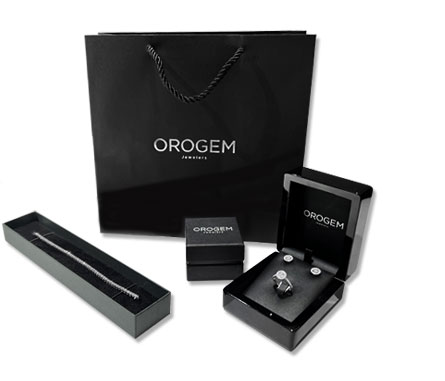
In stock at our workshop in the Antwerp diamond district. Shipped insured, in its presentation box, with the IGI report.