Nederlands
 Français
 Italiano
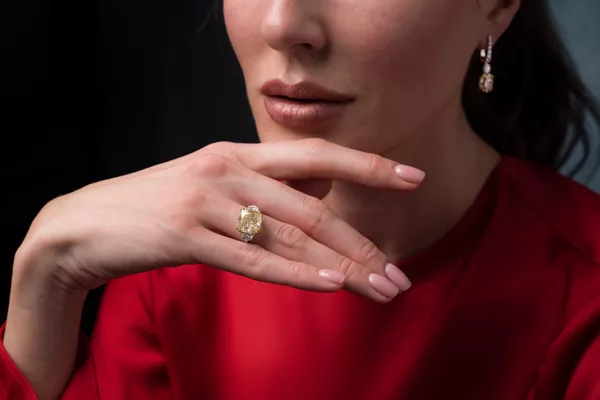

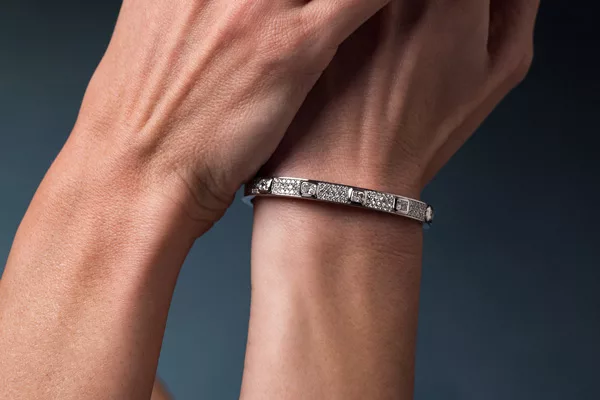


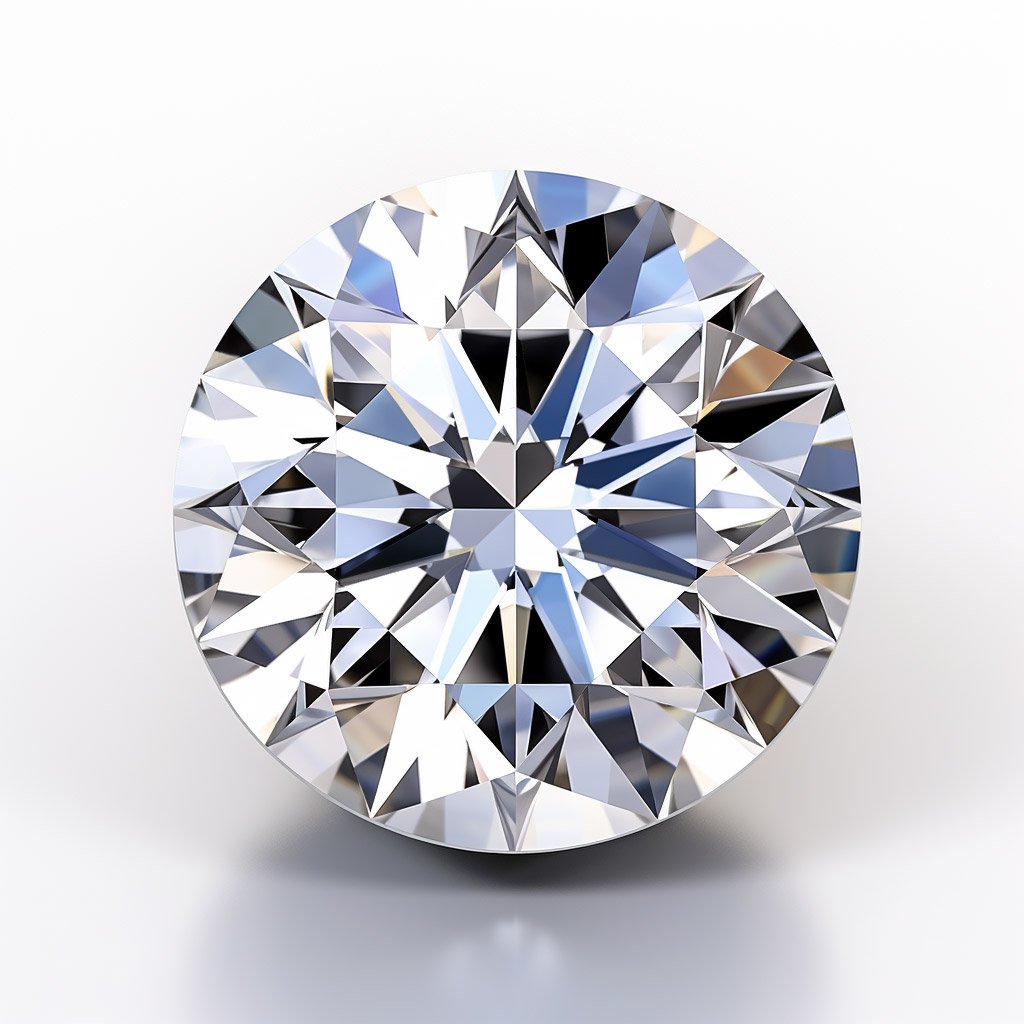



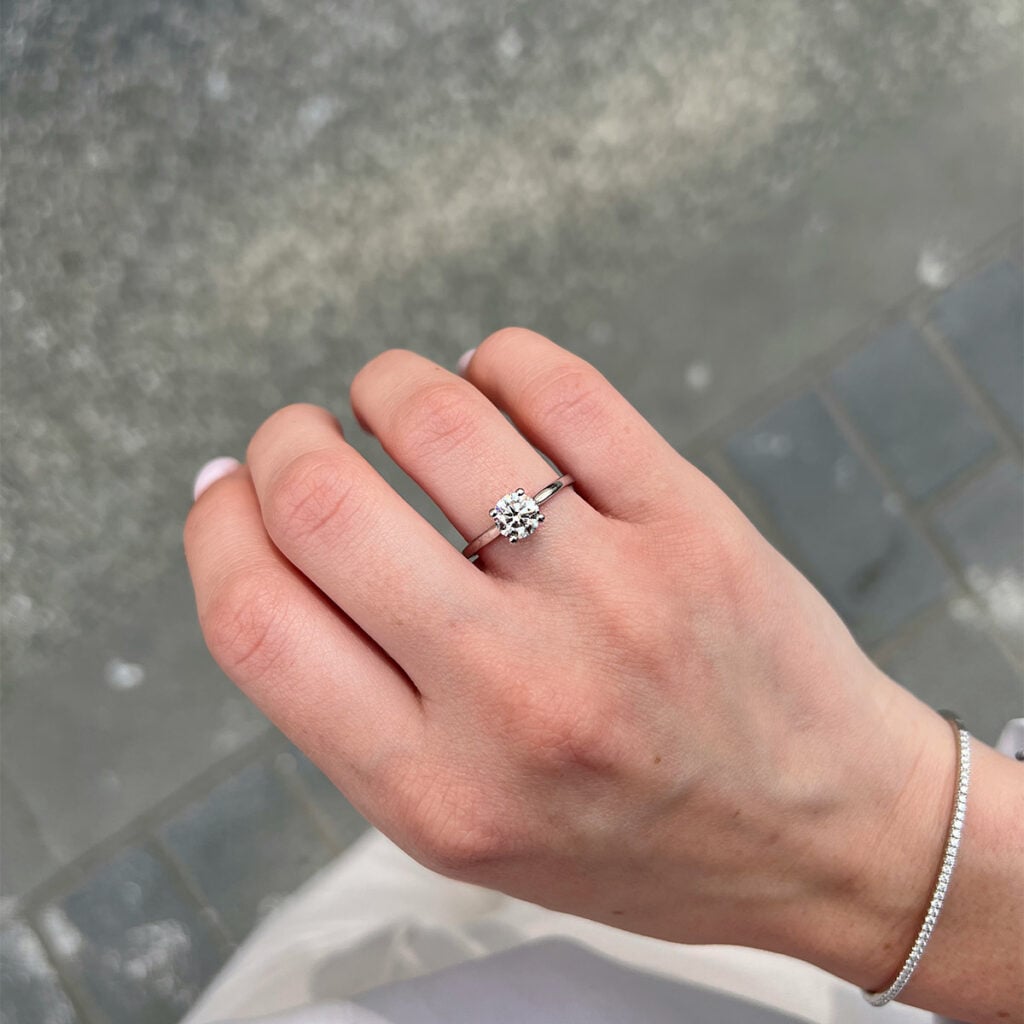
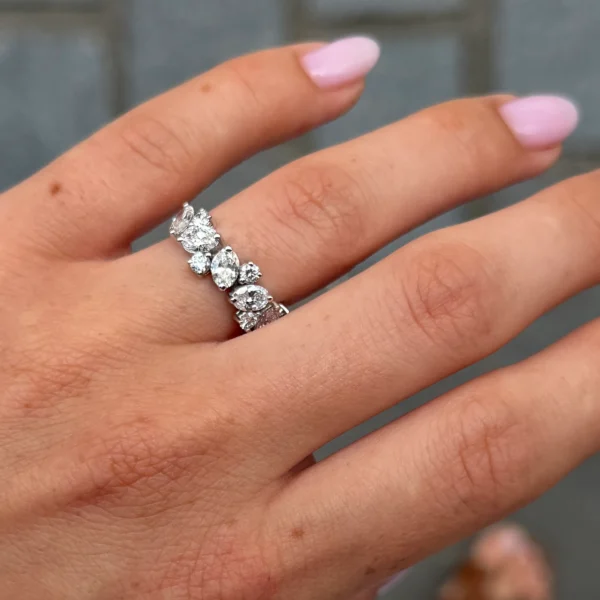
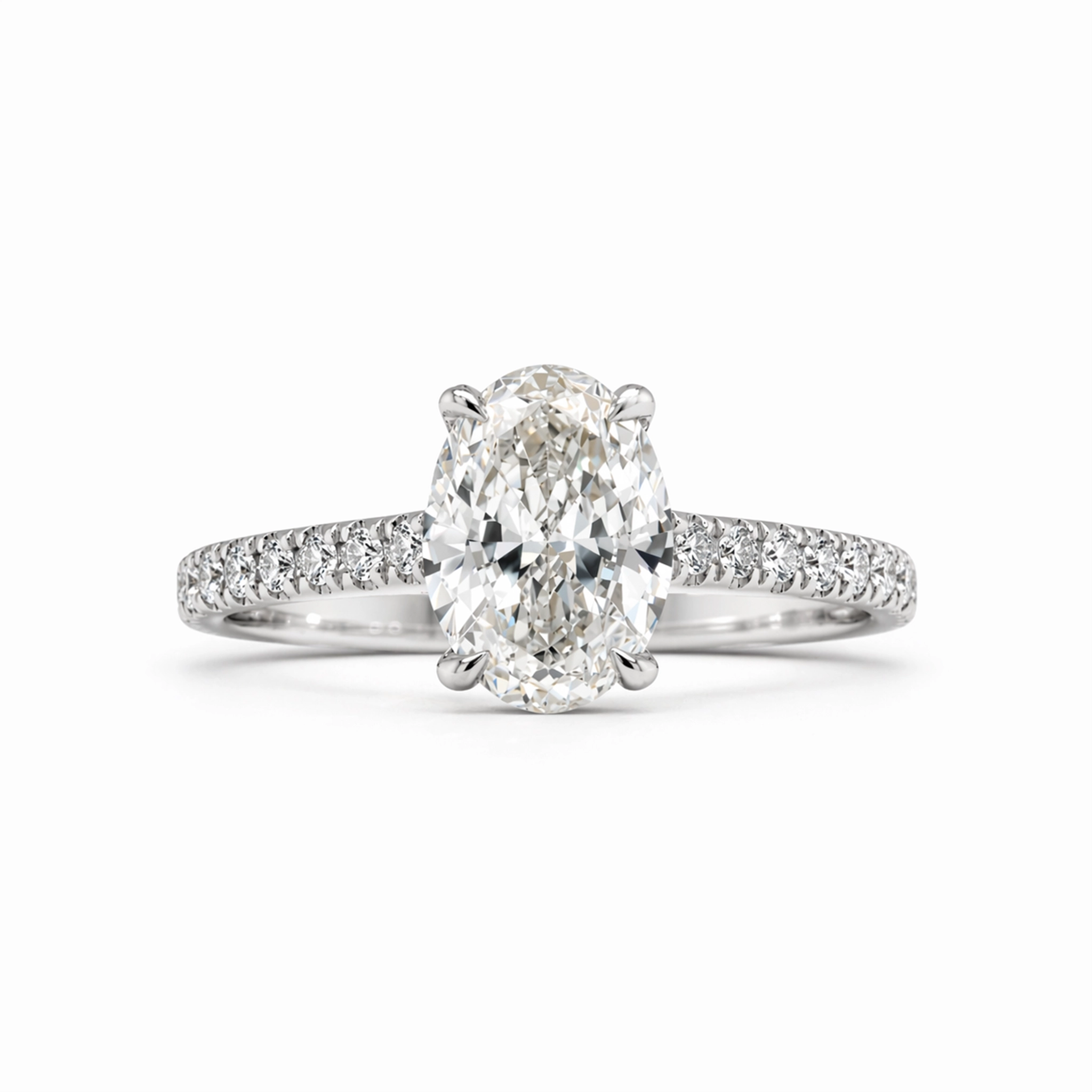
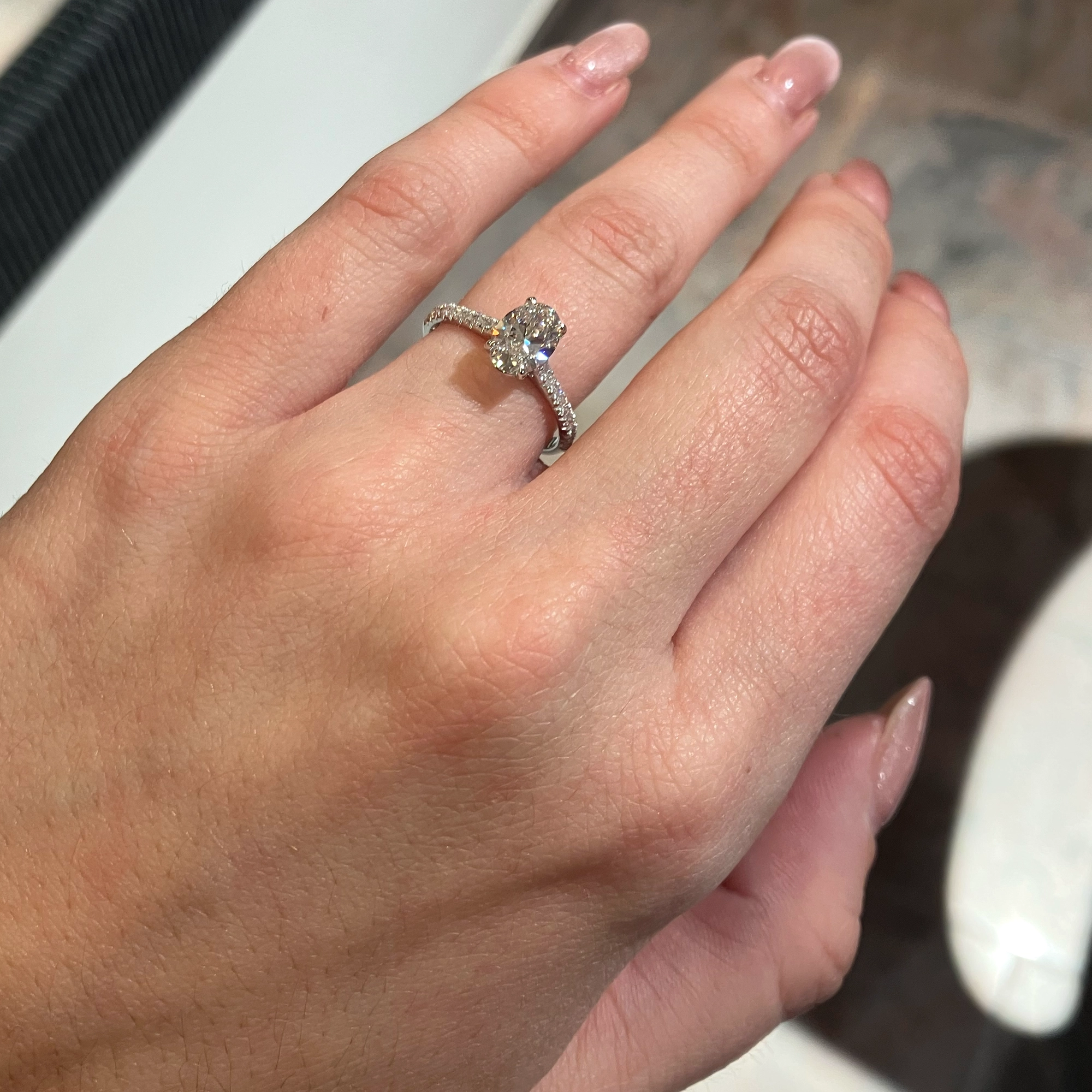
1.00 carat, oval cut, IGI certified D colour and VVS1 clarity, on an 18K white gold band carrying 0.12 carat of D–F VS pavé. Report LG839624480.
We build this oval at this weight and these grades in two metals, and the metal decides whether a pavé band belongs on it.
In white gold, colourless pavé and the metal around it are the same tone. The small stones and the shank read as one continuous line of light, and the eye follows it out from the centre without registering where diamond stops and metal starts. That continuity is what makes a pavé band work on an elongated stone: the ellipse appears to extend along the finger rather than ending at the setting.
Put the same pavé into yellow gold and the effect inverts. Warm metal against colourless stones gives maximum contrast, so each small diamond reads as a separate point of white — punctuation instead of a line. It is not worse, but it does not extend an oval; it interrupts it. So in yellow gold the band has to earn its place a different way, and both answers are legitimate: our 1.05 ct oval in yellow gold keeps the pavé and lets it read as contrast rather than as a line, while our 1.01 ct oval in yellow gold drops it entirely.
D and VVS1 sit at the top of both scales. On grown material that is a specification rather than a rarity, which is why it appears at this weight and this price.
The same weight in white gold with pear side stones instead: 1.01 ct D VS1.
The same oval, larger, with a hidden halo instead of a pavé band: 1.50 ct D VVS1 hidden halo.