Nederlands
 Français
 Italiano







W-X is a colour grade, not a fancy colour
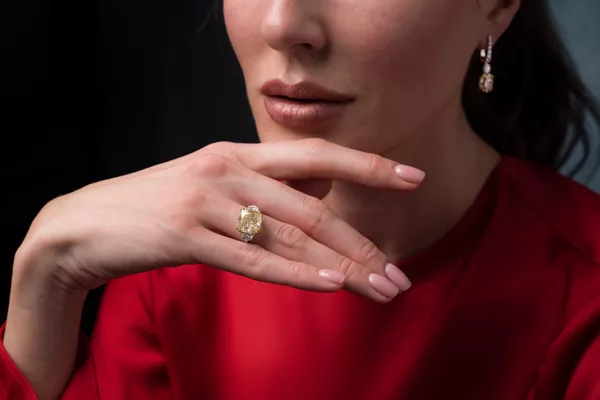
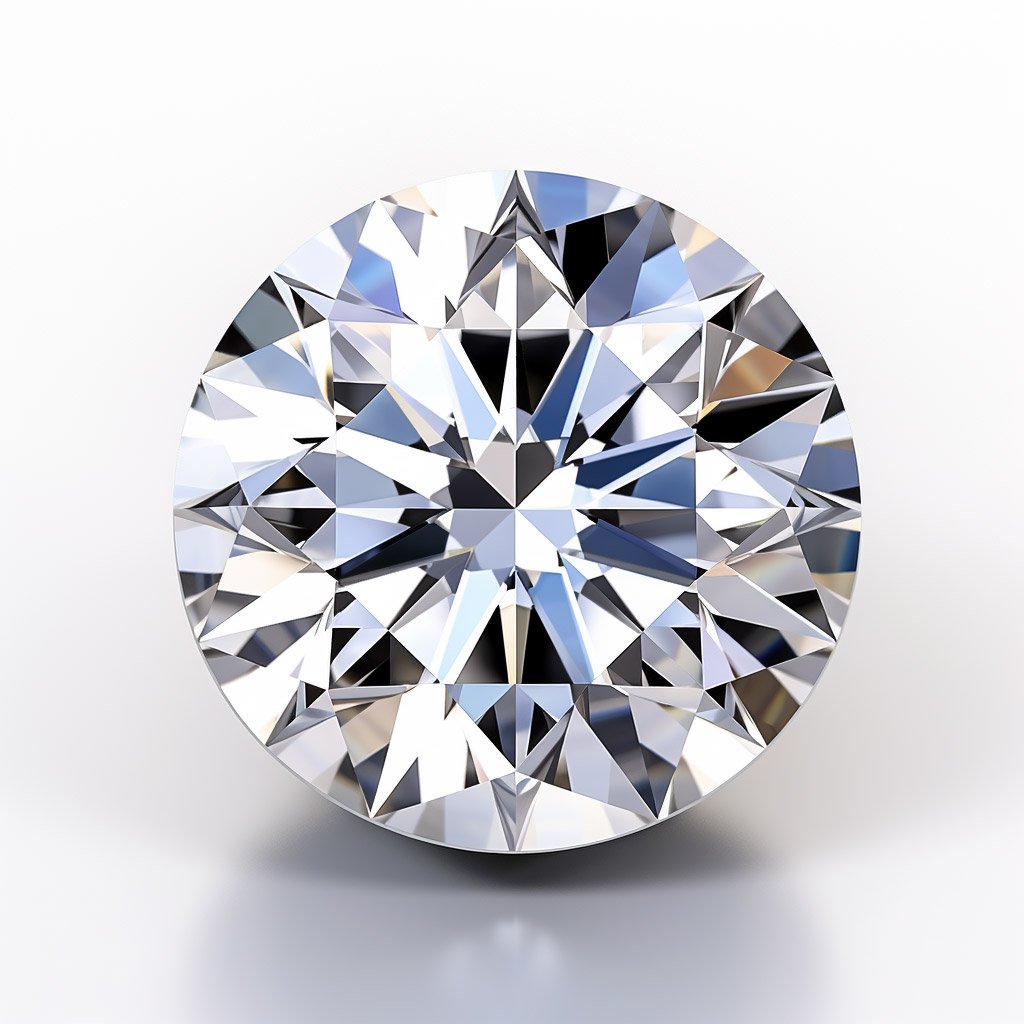
GIA’s D-to-Z scale measures one thing: how much colour a diamond does not have. D is the top, where there is none. W-X sits in the second-to-last bracket. At that point the yellow is no longer something you find by tilting the stone face-down against a white card — it is plainly there, face up, in ordinary light.
What W-X is not is a Fancy Yellow. Fancy colour is graded on a separate scale altogether — Faint, Very Light, Light, Fancy Light, Fancy, and upward — and a diamond only enters that scale when its saturation carries past Z. This stone stops just short of that line. The distinction is not academic: fancy colour carries a substantial premium, and a W-X described as “fancy yellow” is a stone quoted on the wrong scale. The GIA report for this diamond, number 2231034091, reads W-X. That is what we sell it as, and it is reflected in the price.
Why the halo and the yellow gold basket are deliberate
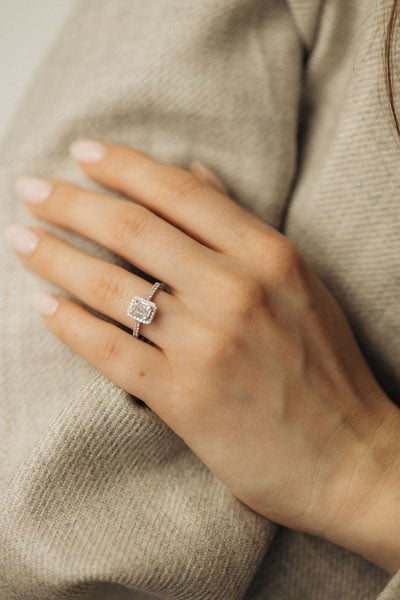
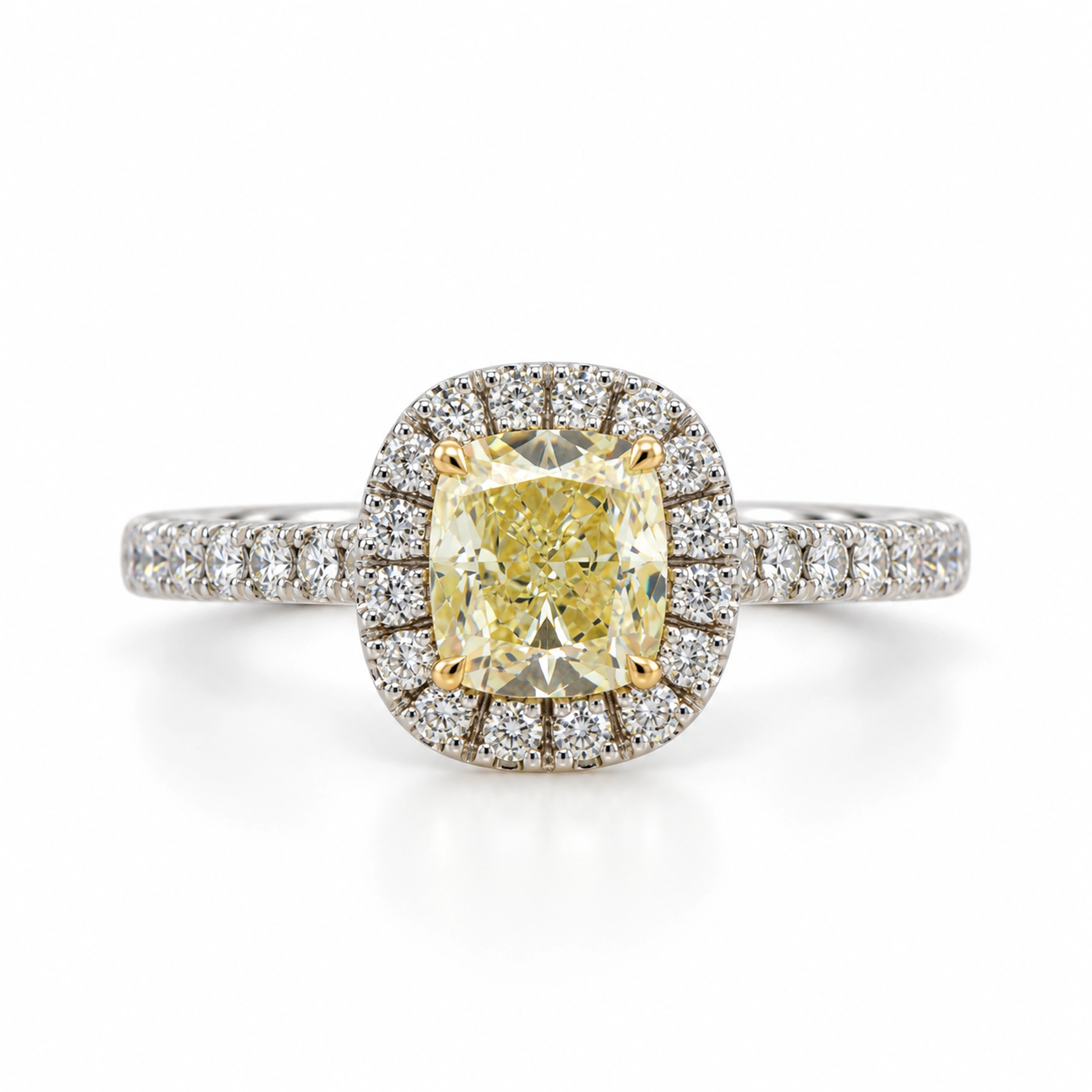
A stone with visible body colour can be framed two ways, and they produce opposite results. Surround it with more warmth and the colour sinks into its background. Surround it with colourless diamonds and the contrast makes the centre read as a decision rather than as a shortfall.
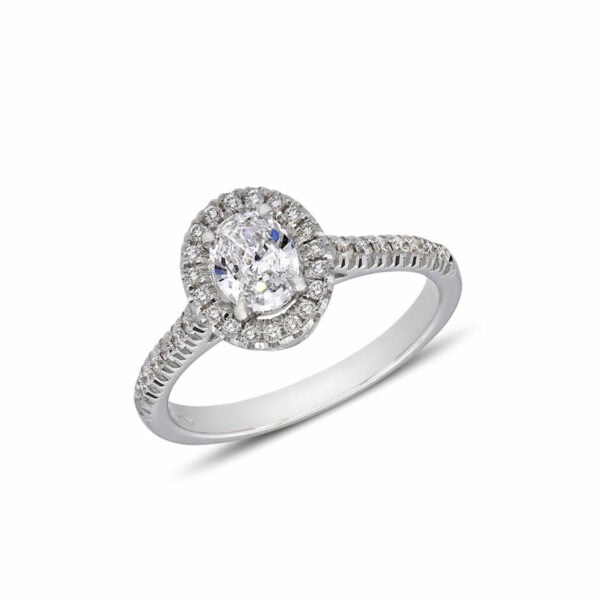
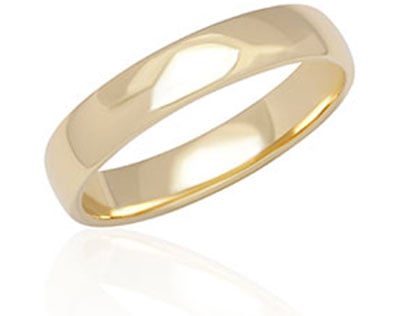
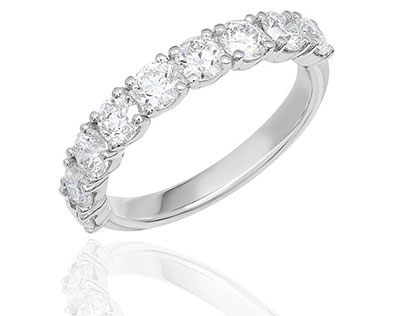
The halo here is 0.28 ct of round brilliants in the D-F range — the top of the very scale the centre sits at the bottom of. The distance across that gap is the visual argument of the ring. Underneath, the basket holding the cushion is yellow gold: metal in contact with the pavilion feeds its own colour back up through the stone, so a yellow basket deepens the body colour instead of arguing with it. The shoulders and the halo are white gold, which keeps the small stones bright. Two metals, each doing one job.
SI2 in a cushion cut
SI2 means inclusions a trained eye finds under 10× magnification, and that you may find yourself if they sit under the table. On a cushion this is less predictable than on a round brilliant. Cushion faceting runs from large, open facets to a fine crushed-ice pattern, and crushed ice scatters returned light in a way that breaks an inclusion up until it effectively stops being visible.
There is a second effect particular to a stone like this one. Contrast is what makes an inclusion readable, and body colour reduces the contrast between an inclusion and the material around it. SI grades sit more quietly in a tinted diamond than in a colourless one. None of which is a reason to buy blind: ask us for the clarity plot before you decide. On SI2 the position of the inclusion decides everything, and it is a question with a definite answer.
The numbers
Centre stone 1.00 ct cushion cut, colour W-X, clarity SI2, GIA report 2231034091. Side stones 0.28 ct round brilliant, D-F. Total weight 1.28 ct. 18K white gold with a yellow gold basket. In stock in our Antwerp workshop.
If you want to see what the other side of that line looks like, compare it with our 0.57 ct cushion pendant graded on the fancy colour scale.