Nederlands
 Français
 Italiano
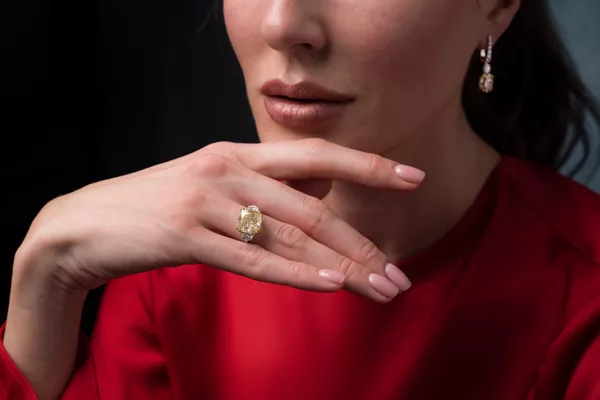


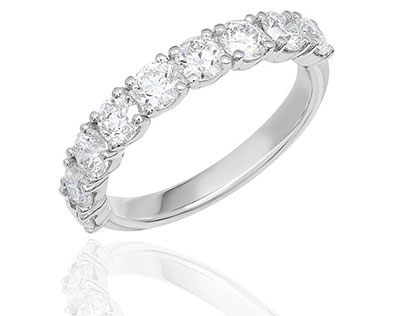

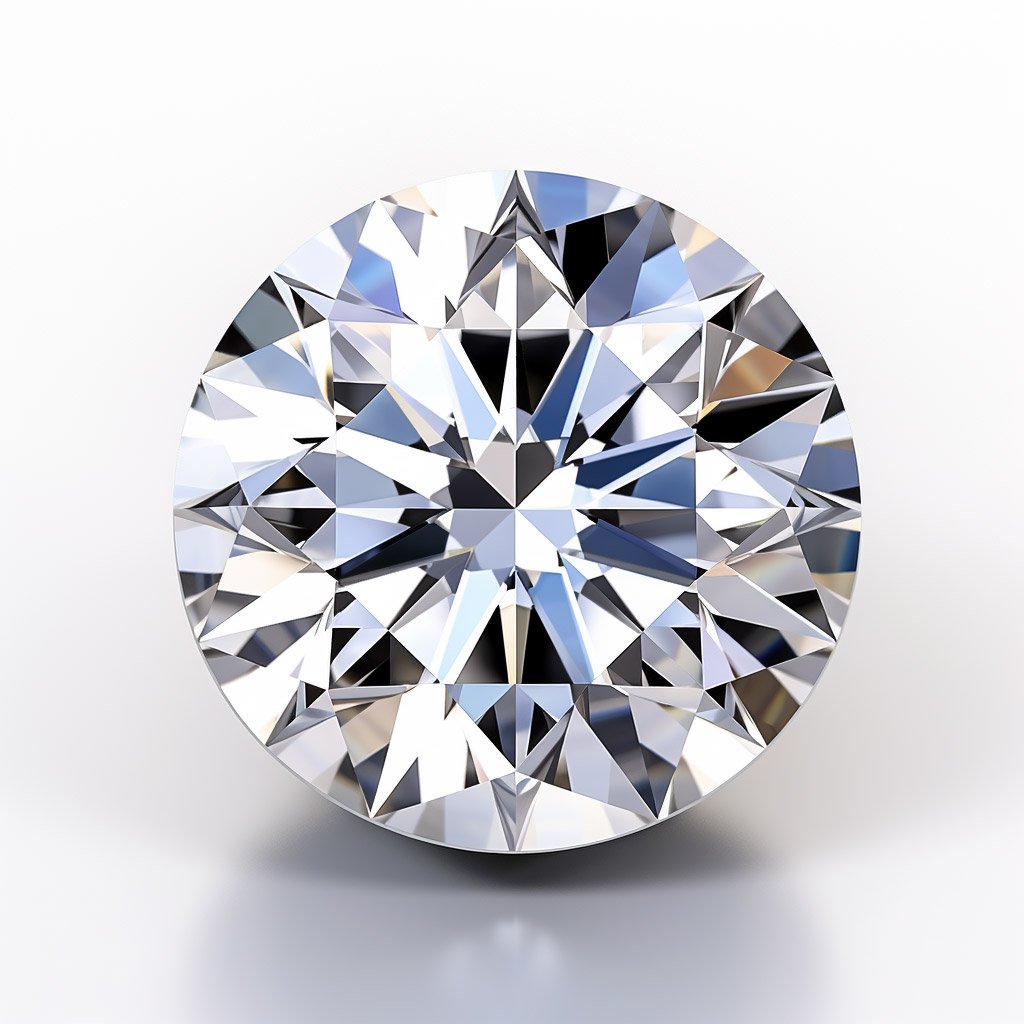



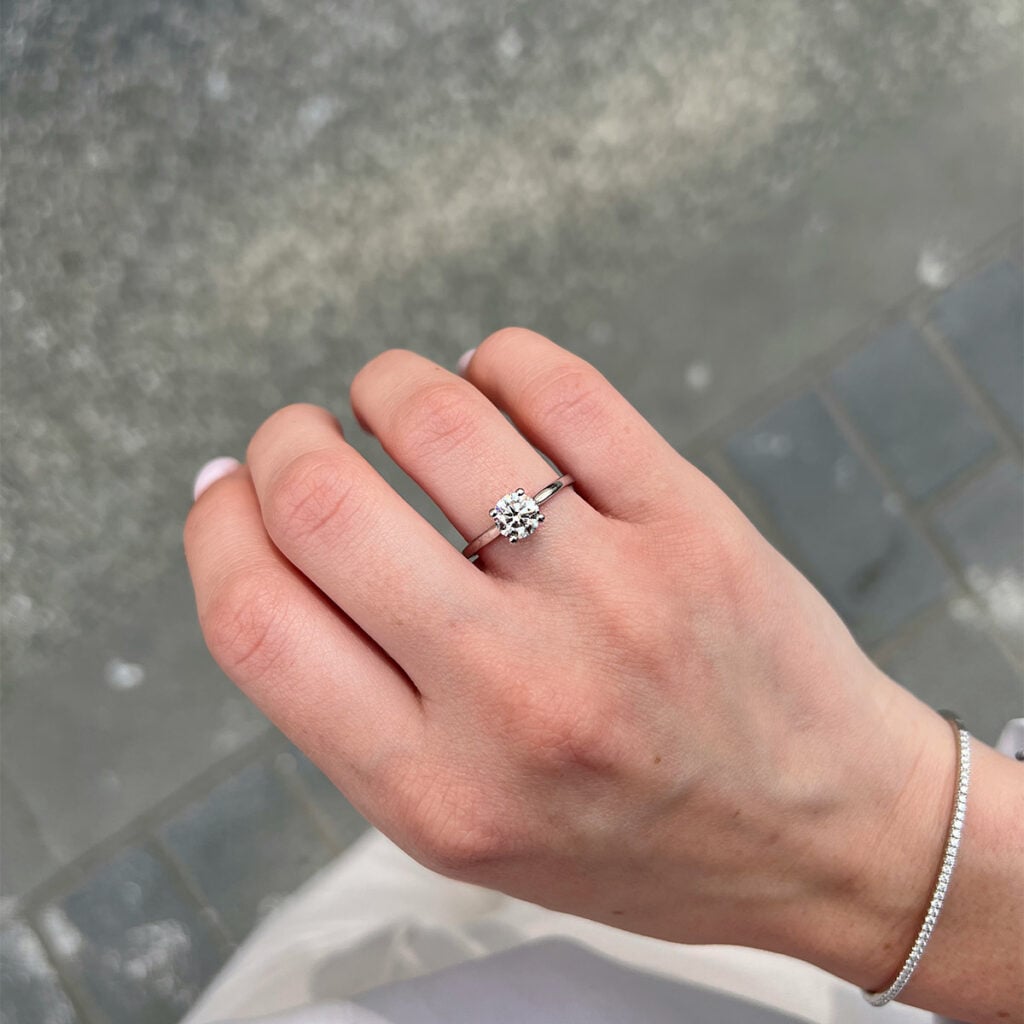
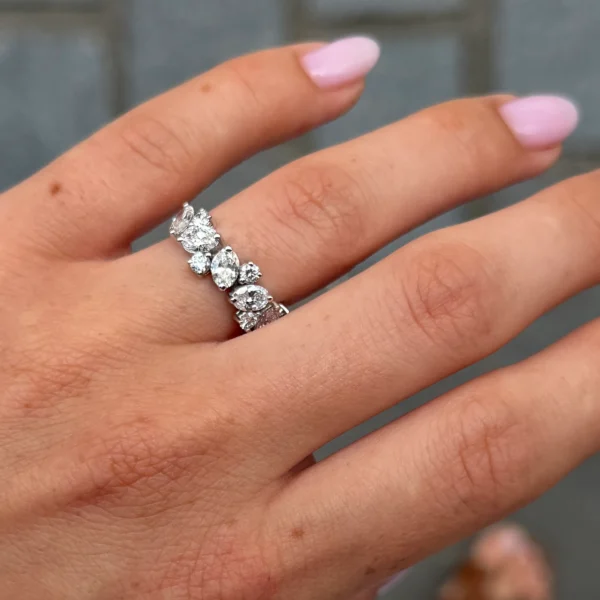
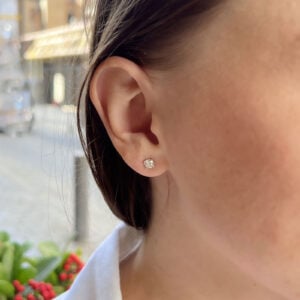
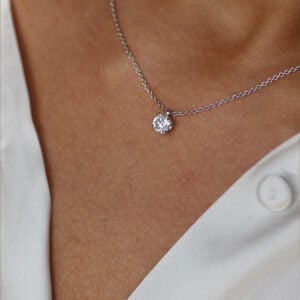
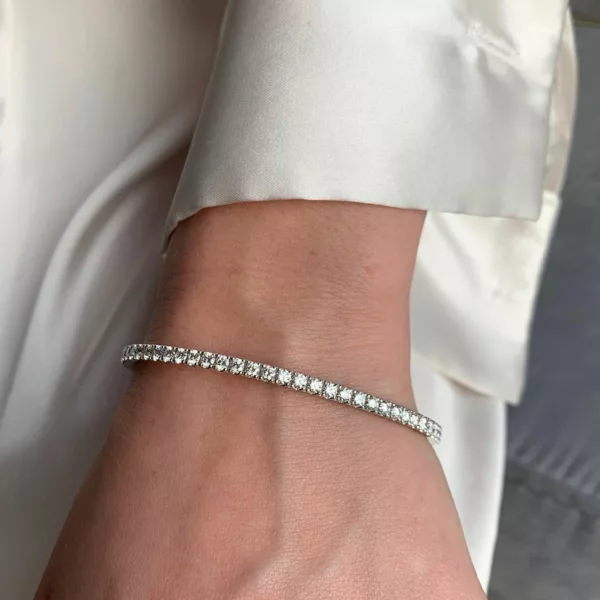
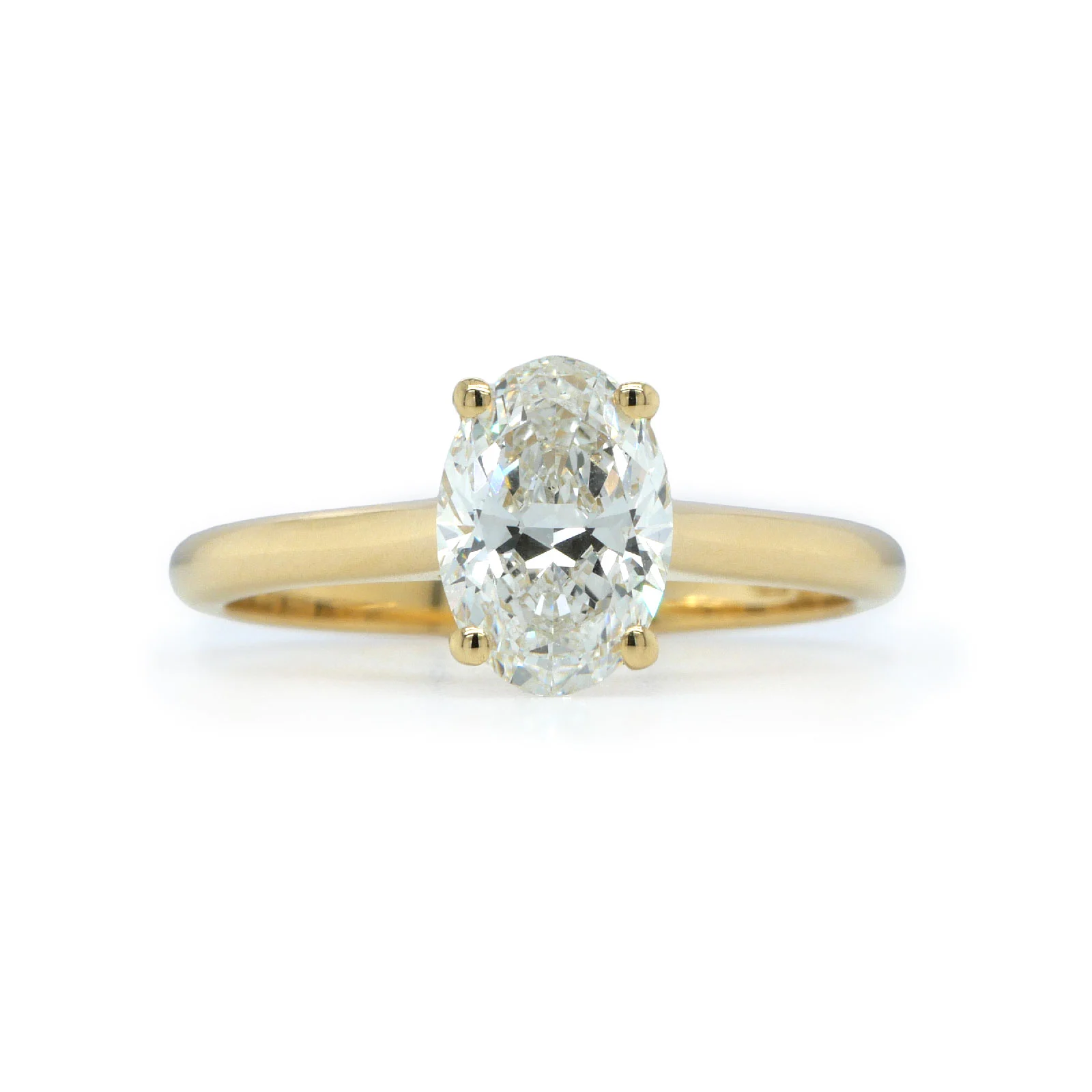
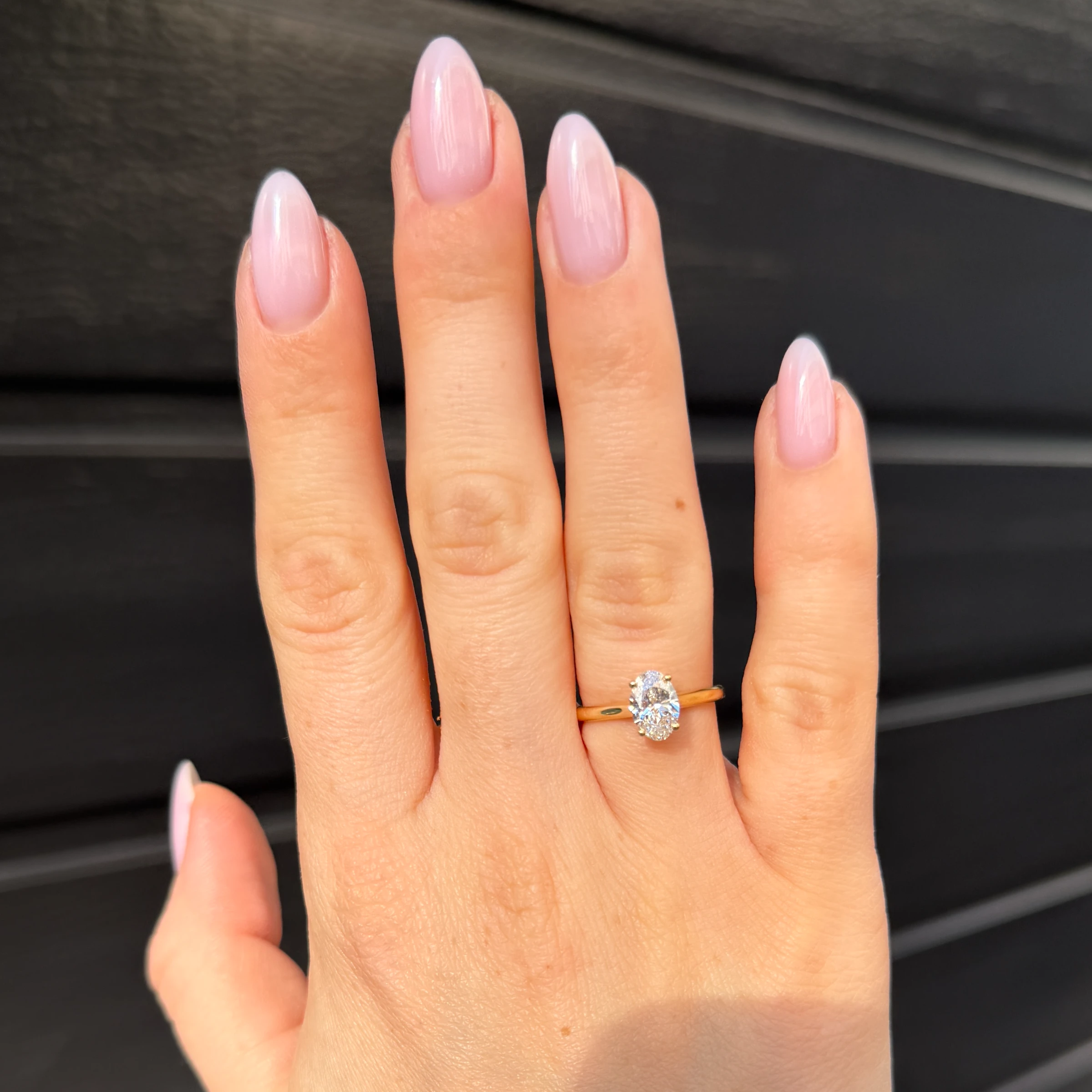
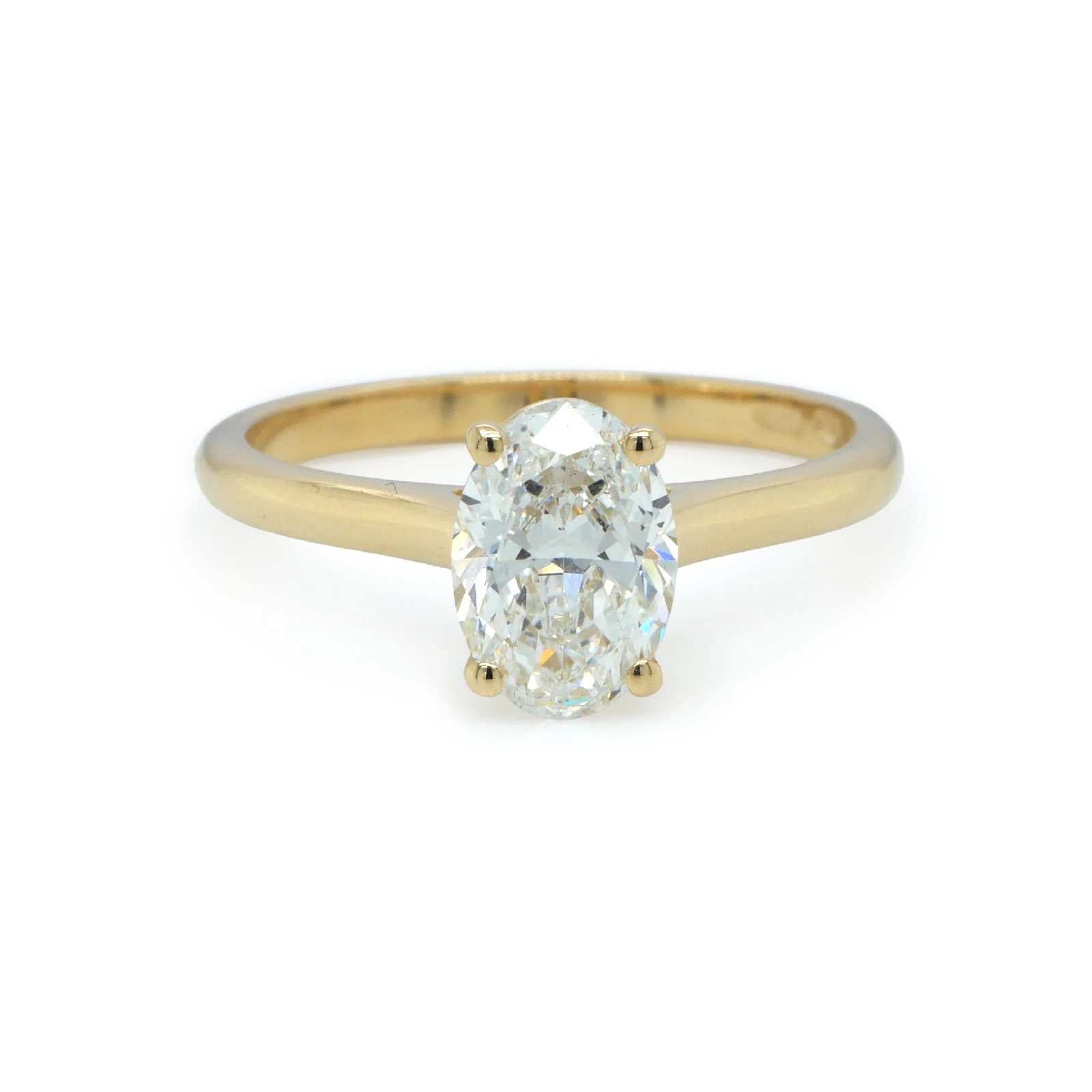

D is the top of the colour scale. There is no grade above it: the scale begins at D and runs to Z, and a D stone is the absence of body colour rather than a degree of it. That is the headline here, and it is worth understanding why it matters more in yellow gold than most people expect.
The usual argument says a warm metal makes colour grade irrelevant, because gold reflects into the stone and warms it anyway. That is half true, and it is the half that applies to the setting. Light entering an oval from above, through the table, is not passing through the gold — it returns to the eye having met only the diamond. So a D stone in yellow gold still reads icy through the middle of the face, with the warmth appearing at the edges where the metal is close. The contrast is the effect: a colourless centre against a warm band looks deliberately set, not compromised.
The clarity is SI1, and on an oval that grade behaves well. An oval is a brilliant-cut shape — its facets are arranged to break returning light into many small flashes rather than a few broad ones, which is exactly the pattern that hides a small inclusion. SI1 means the inclusions are found under 10x magnification by a grader who knows where to look; across a table at conversational distance, there is nothing to see.
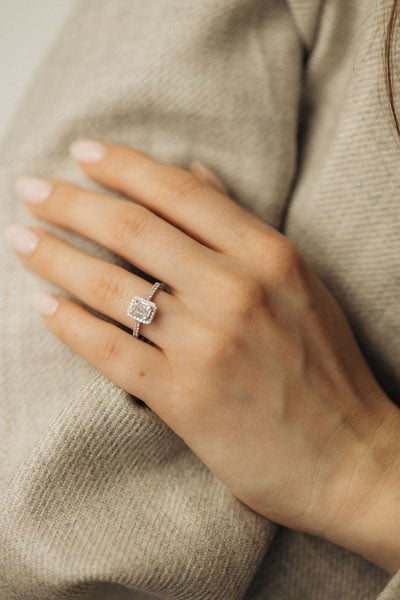
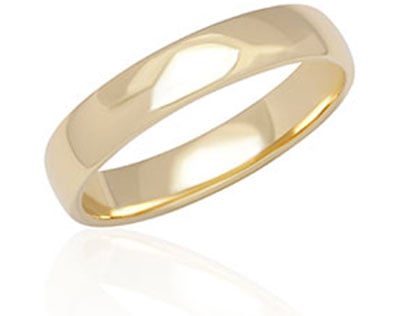
Four prongs, placed at the two ends and the two sides. On an oval that arrangement matters structurally as well as visually: the ends of the long axis are where the stone is thinnest and most exposed, and a prong at each end covers them. The band is plain 18K yellow gold, so nothing competes with the stone.
GIA report 6545521977. Natural diamond, set and finished in Antwerp.