Nederlands
 Français
 Italiano


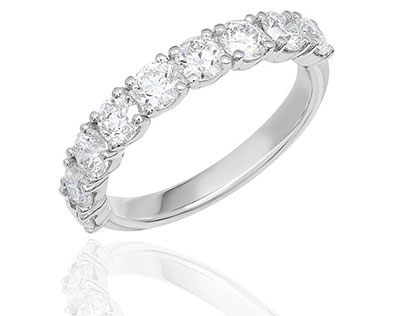




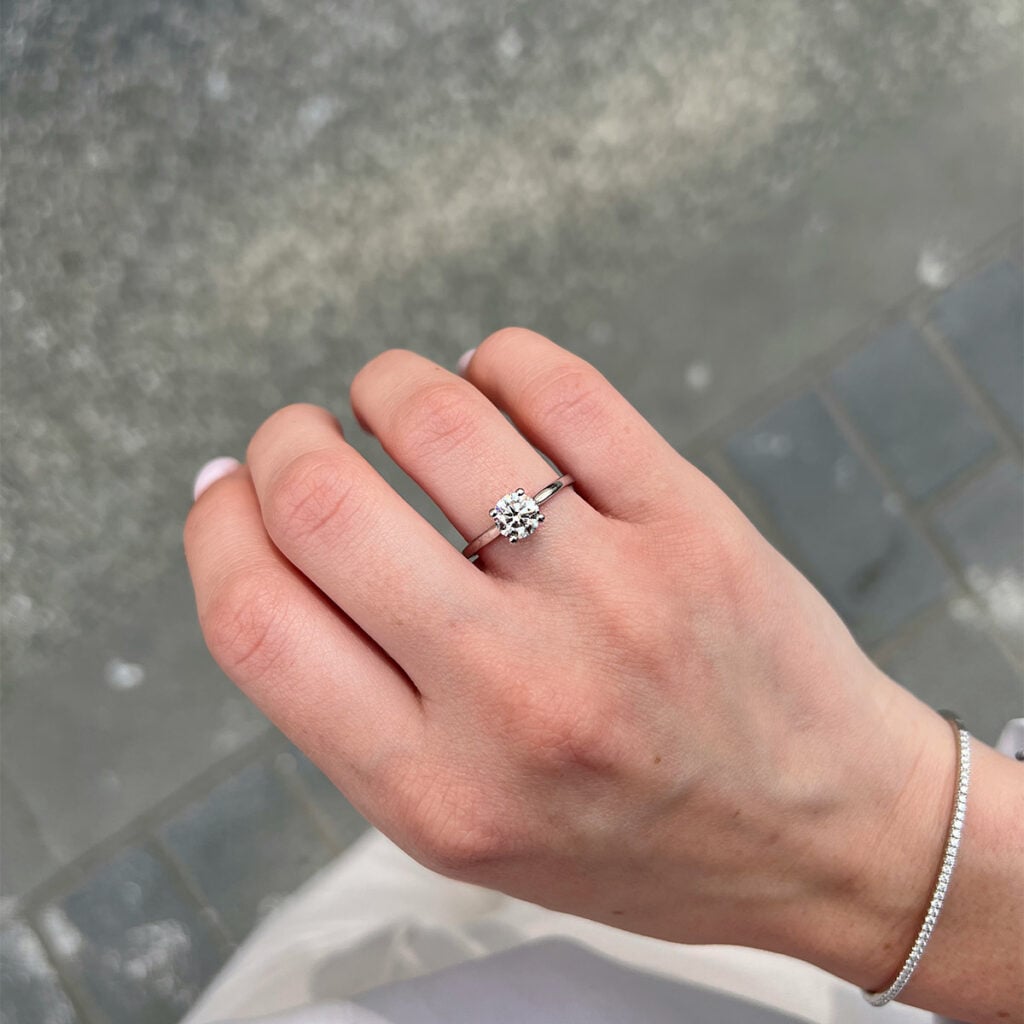
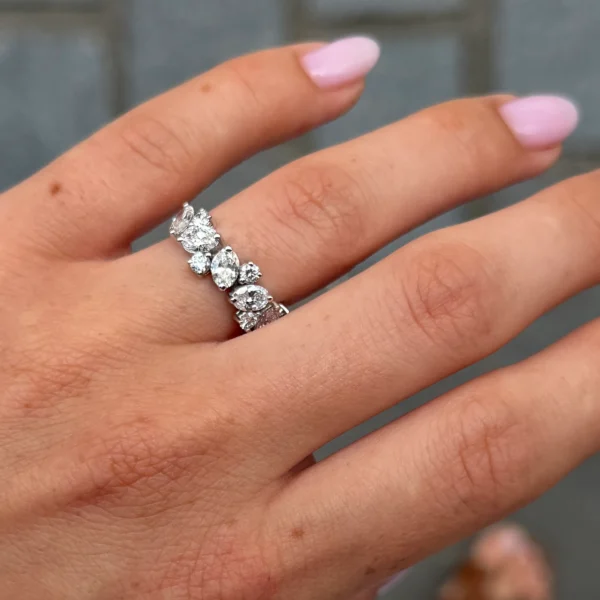


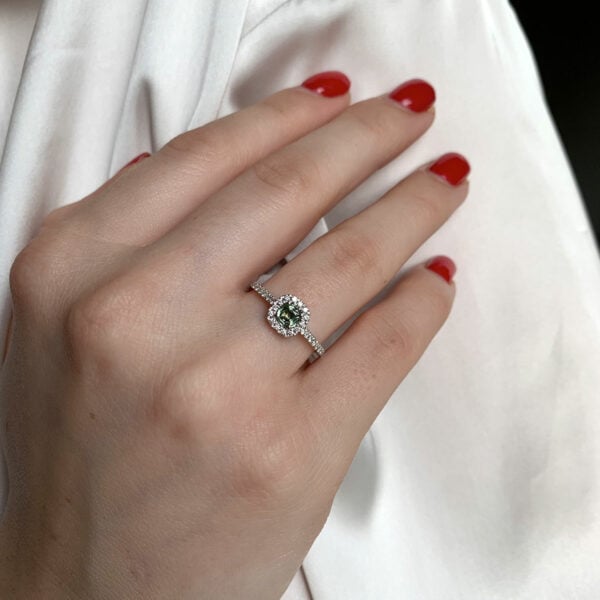
1.15 ct oval blue sapphire, 0.44 ct diamond halo
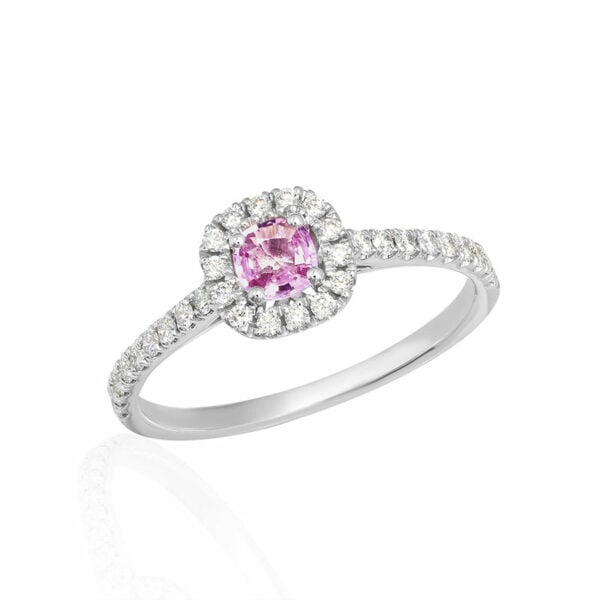
A natural blue sapphire of 1.15 carat, oval cut, framed by a halo of round brilliant natural diamonds totalling 0.44 ct in D–F colour and VS clarity. Eighteen carat white gold. Made in our Antwerp workshop.
Why a coloured stone is given a diamond halo
The halo is not decoration. It is compensation, and the reason is optical.
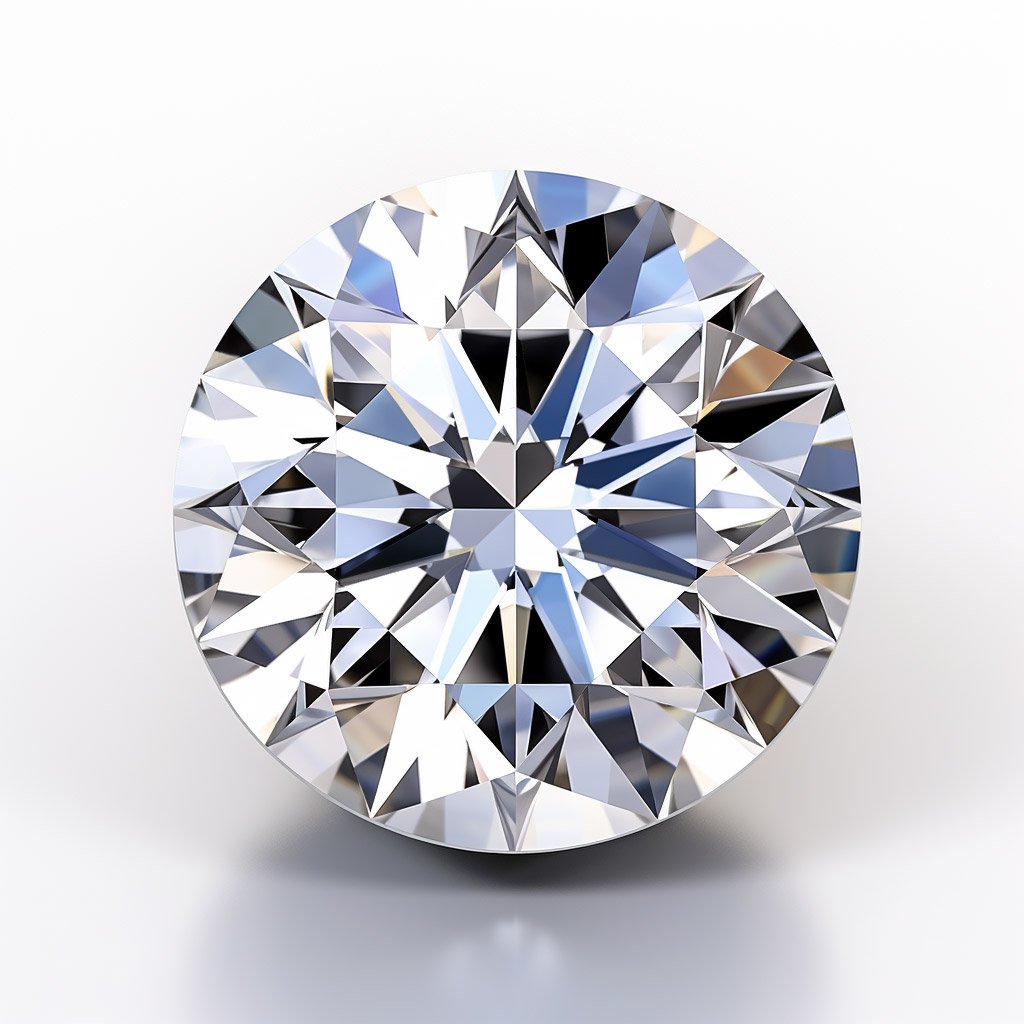
How much light a faceted stone throws back at you depends on its refractive index. Diamond sits at 2.42, which is exceptionally high; light entering the crown is trapped by total internal reflection and forced back out through the table. Sapphire sits at 1.76–1.77. That is a large gap. More light passes straight through a sapphire instead of bouncing back, and its dispersion — the splitting of white light into spectral colours, what the trade calls fire — is 0.018 against diamond’s 0.044, less than half.
So a sapphire will never behave like a diamond, and it is not meant to. What you buy in a sapphire is colour: deep, saturated, continuous body colour that a colourless stone cannot produce at all. What you lose is the flash. Ringing the stone with diamonds puts the brightness back around the perimeter, where it frames the blue instead of competing with it. That is the whole logic of a halo on a coloured centre, and it is why halos are far more common on sapphire and emerald than on diamond.
0.44 ct is a generous halo
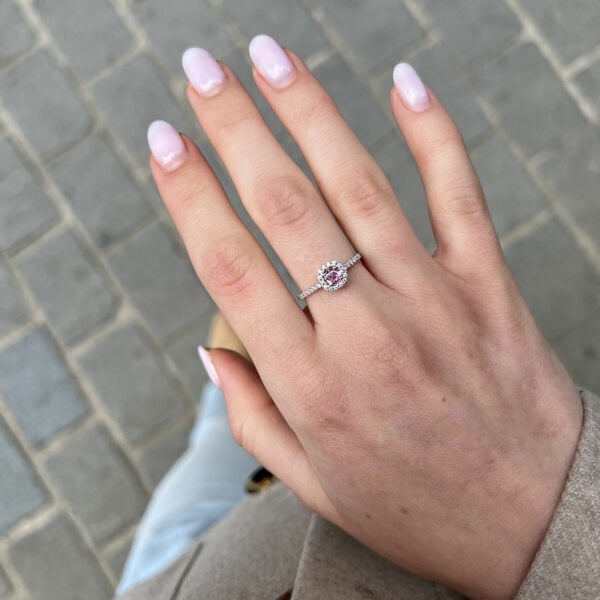
Look across the sapphire halo rings we hold and most surrounds fall between 0.10 and 0.35 ct. This one carries 0.44 ct — about 38% of the centre stone’s own weight. In practice that means larger individual melee and a wider band of white around the blue, so the ring reads considerably bigger on the hand than 1.15 ct alone would suggest, and the contrast at the edge of the sapphire is stronger.
It also means the diamonds are a real part of what you are paying for rather than a trim. D–F colour and VS clarity on a surround of this size is a deliberate specification: at 0.44 ct the melee is large enough that a lower colour grade would be visible against the white gold.
A carat of sapphire is smaller than a carat of diamond
Carat measures weight, not size, and sapphire is denser than diamond — specific gravity 4.00 against 3.52, about 14% heavier for the same volume. The consequence surprises people: a 1.15 ct sapphire is physically smaller than a 1.15 ct diamond of the same shape and proportions.
This is worth knowing when comparing a coloured stone against a diamond on paper. Compare the millimetre dimensions, not the carat figures, or you will consistently overestimate how large the sapphire will look.
Hardness 9, and what that means in daily wear
Sapphire is corundum, Mohs 9 — harder than anything you will meet in ordinary life apart from diamond itself. But the Mohs scale is ordinal, not linear: the step from 9 to 10 is wider than the whole climb from 1 to 9. Diamond is several times harder than corundum in absolute terms.
That matters here because in a halo the centre stone is the tallest and most exposed point of the ring, and in this design the exposed stone is the softer one. Sapphire is perfectly robust for daily wear — it is the second hardest gem material there is — but treat it as jewellery rather than armour, and take the ring off for anything abrasive.
Specification
- Centre stone: natural sapphire, oval cut, blue, 1.15 ct
- Side stones: natural diamonds, round brilliant, 0.44 ct total, D–F colour, VS range clarity
- Setting: diamond halo, 18K white gold
- Made: in our own Antwerp workshop
Related pieces
A lighter version of the same idea is the 1.01 ct oval sapphire halo ring with a 0.36 ct surround. If you prefer the halo shaped into petals rather than a plain frame, see the 1.36 ct oval sapphire floral halo ring. The rest are in gemstone rings.
Availability and buying from Antwerp
This ring is available to order rather than sitting in the case. Tell us the finger size and any date you are working towards and we will confirm the schedule before starting. Vestingstraat 38, in the Antwerp diamond district; call or WhatsApp +32 3 232 30 77.