Nederlands
 Français
 Italiano
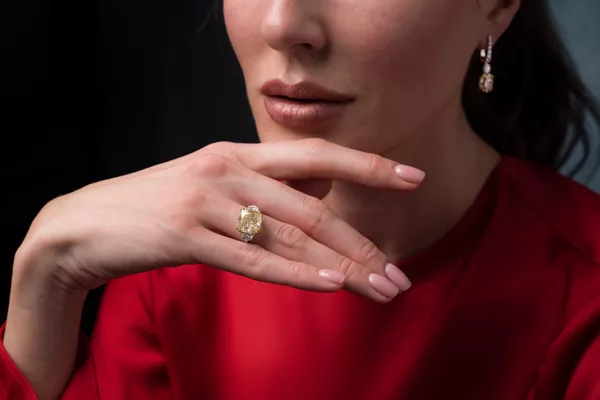

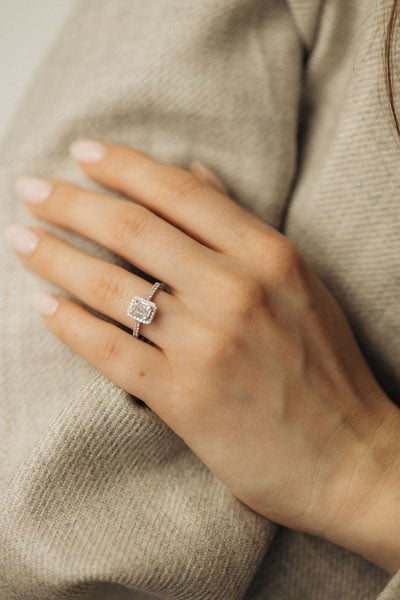

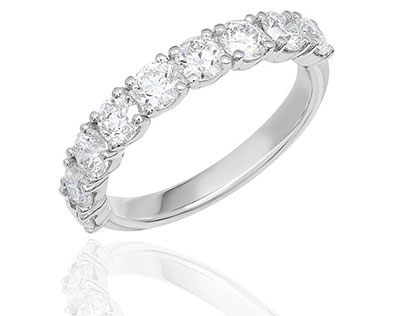

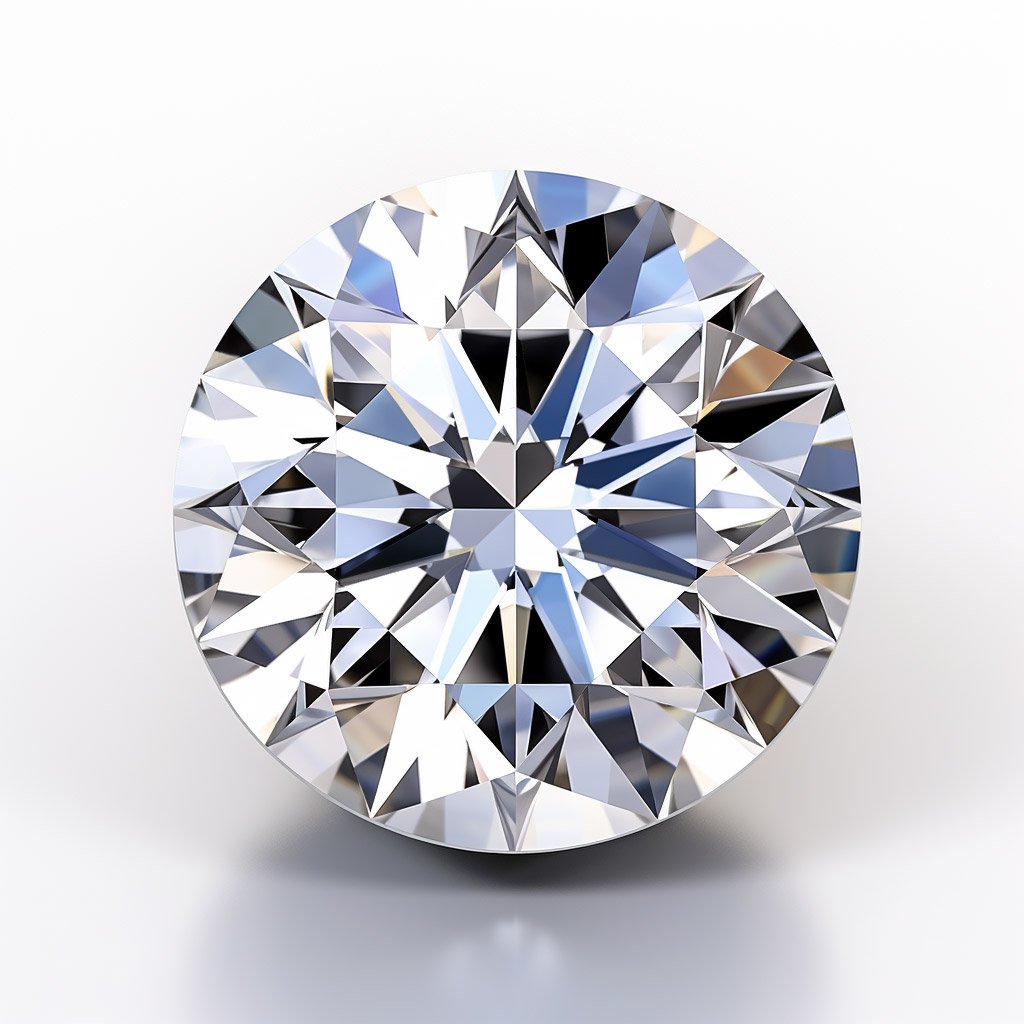



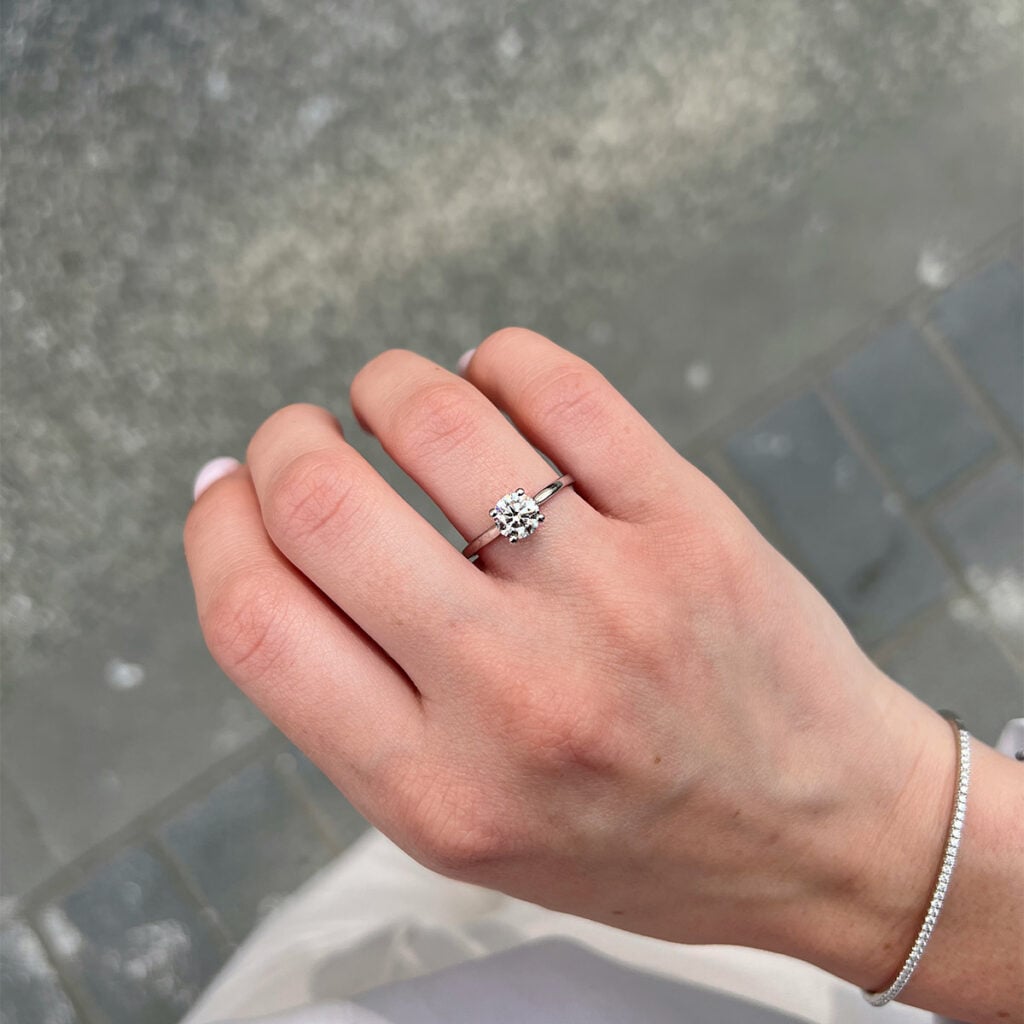
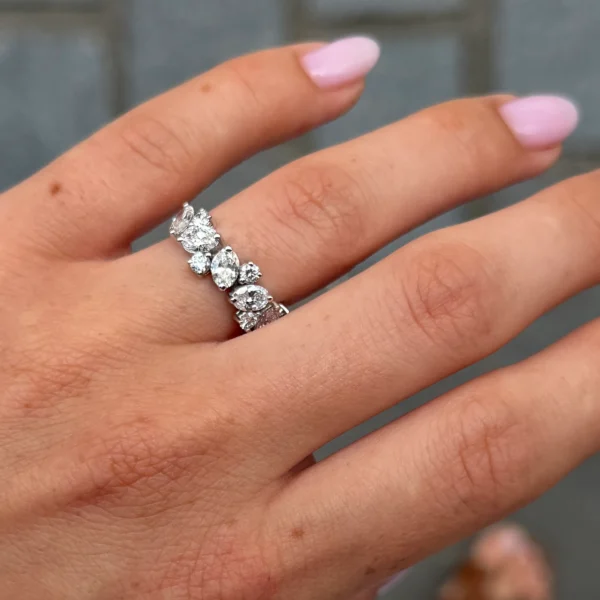
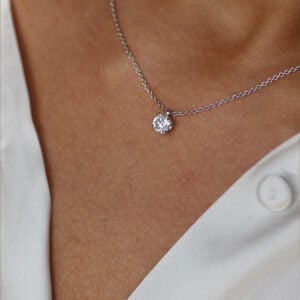
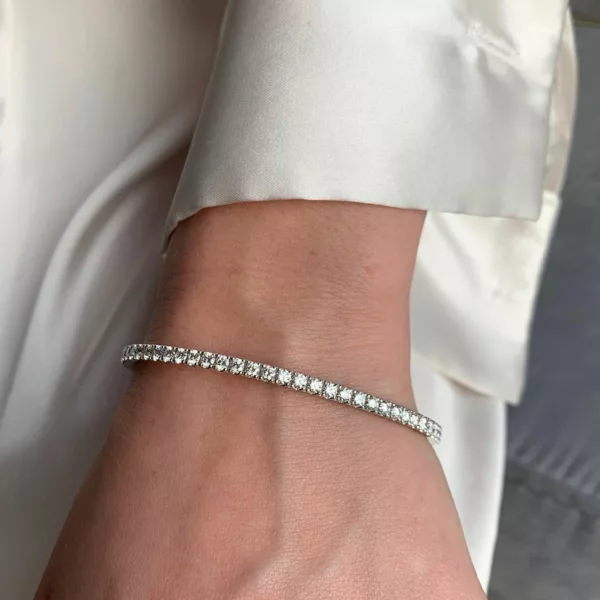
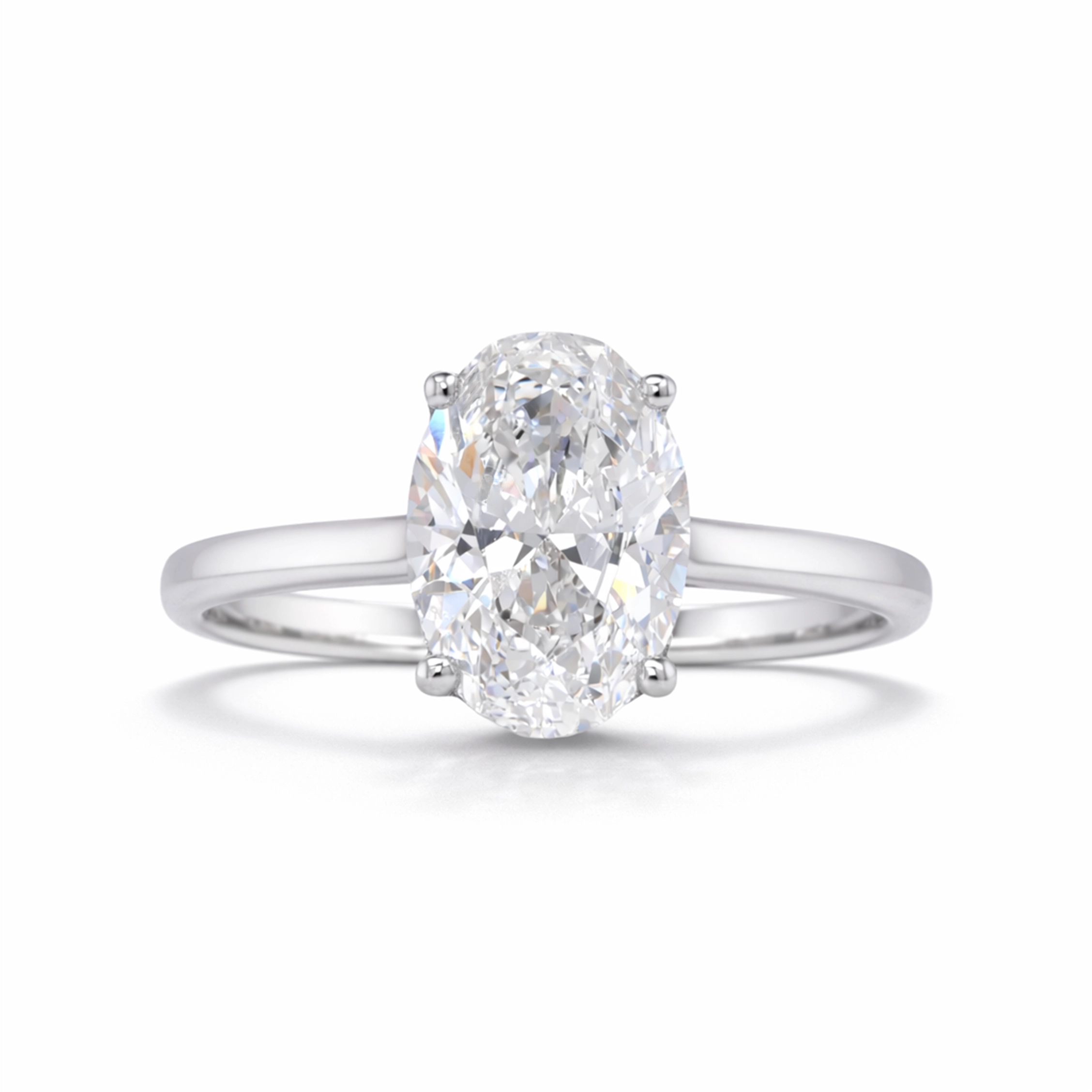
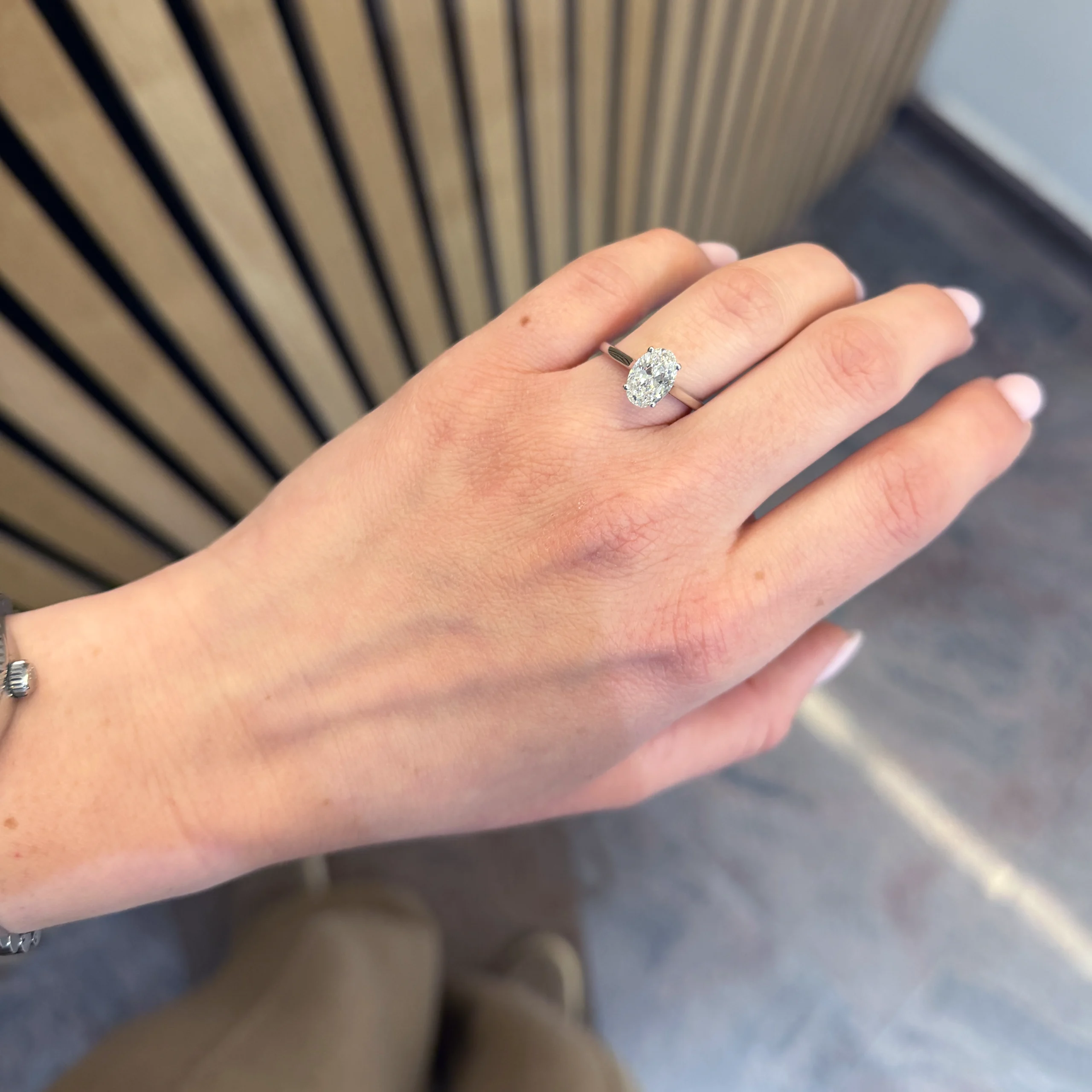
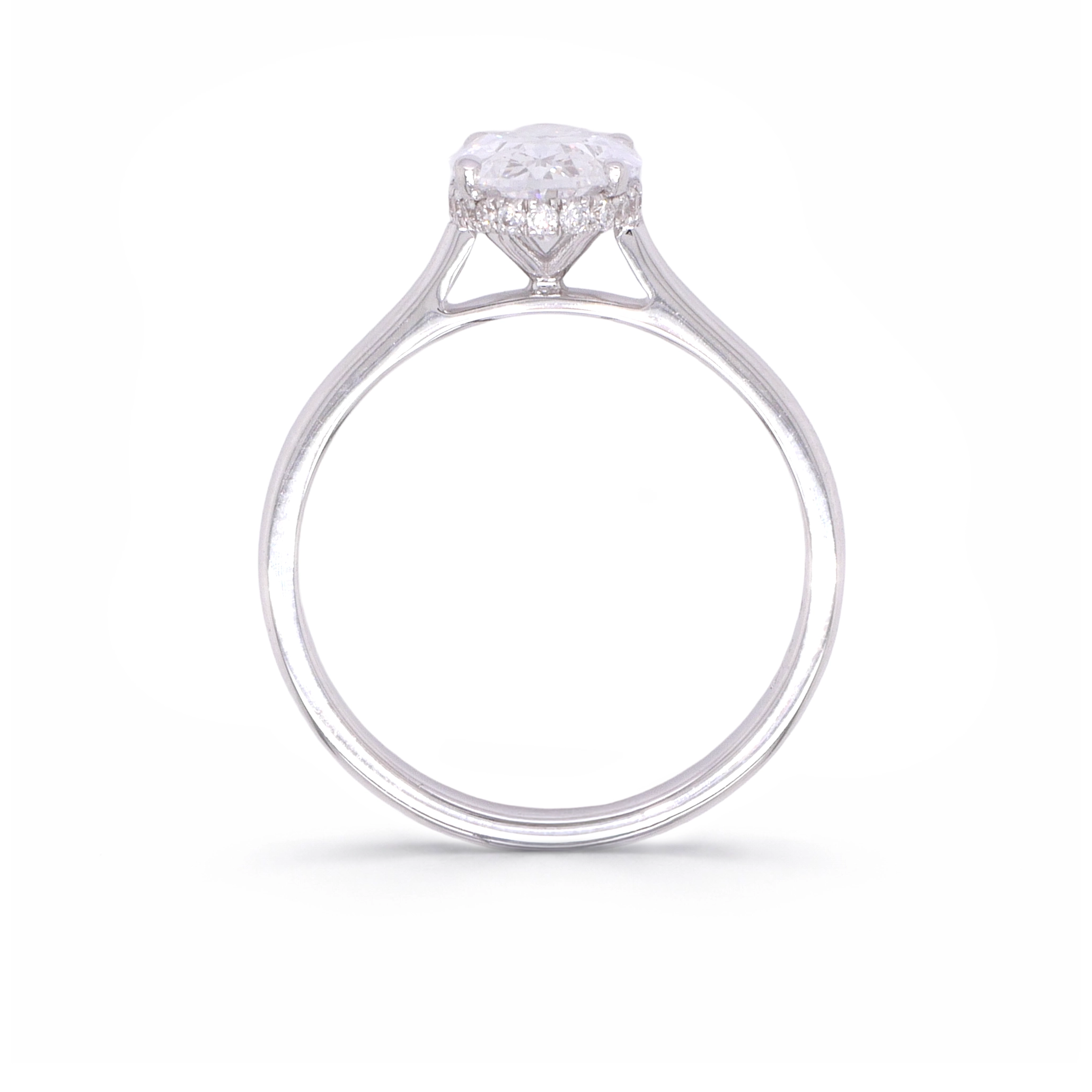
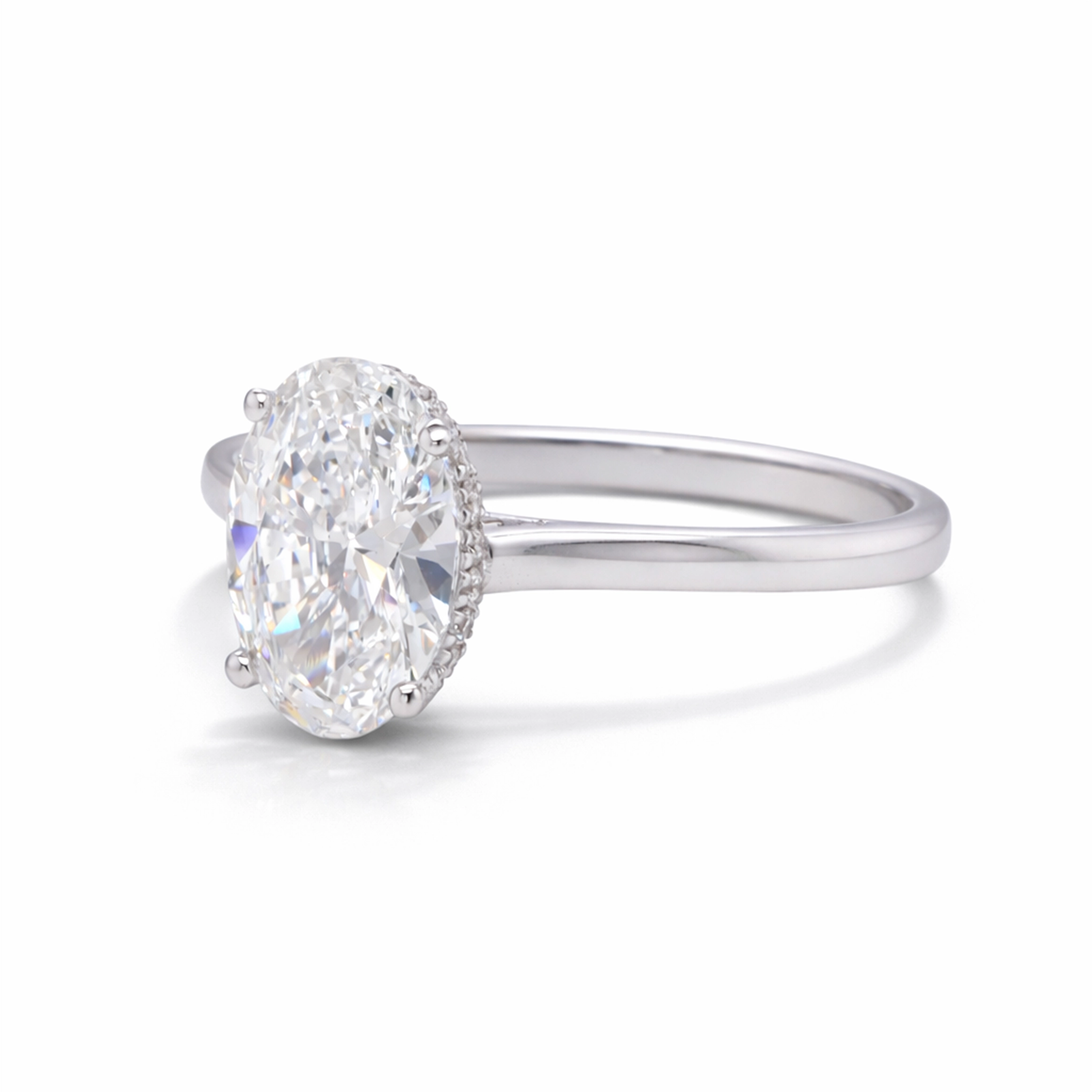
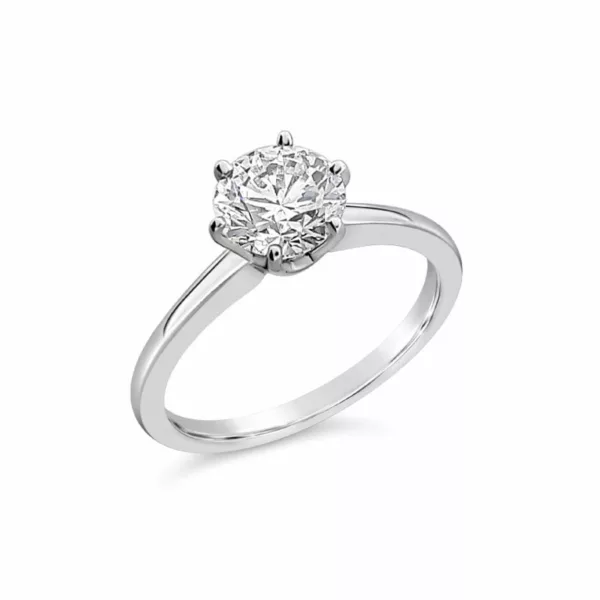
1.50 carats, oval cut, IGI certified D colour and VVS1 clarity, on a plain 18K white gold band. Report LG839670710.
What a stone this size does to the side view
A 1.50 ct oval is not simply a wider version of a smaller one. It is deeper. The pavilion has to carry the extra weight somewhere, and that depth pushes the whole stone upward in its setting — the basket has to be taller to keep the point of the pavilion clear of the finger.
That height is unavoidable, and it has a consequence nobody mentions when you are looking at the ring from above: in profile, a large oval shows a considerable band of bare metal between the girdle and the shank. It is the part of the ring other people actually see, and on a plain solitaire it is empty.
The hidden halo is what furnishes it. A ring of small brilliants set horizontally around the outside of the basket, facing outward, occupies exactly the space the extra height creates. On a half-carat stone a hidden halo is ornament; at 1.50 carats it is answering a problem the size itself produces.
Why it reads as one band of light here
The metal is white gold, and the accent stones are D to F. Both are the same tone, so from the side the halo and the basket merge into a single bright line beneath the stone rather than resolving into separate points. The effect is continuous where a warm metal would make it staccato — the same logic that governs whether a pavé band suits an elongated stone.
The band itself is left plain. With 1.50 carats above it and a halo underneath, the shoulders are the one place in this ring where nothing needs to happen.
The grades
D is the top of the colour scale and VVS1 is one grade below flawless — inclusions a trained grader struggles to find at ten times magnification. On grown material that combination is a specification rather than a rarity, which is why it appears at this weight and this price.
The same oval, smaller, with a pavé band instead: 1.00 ct D VVS1 pavé.