Nederlands
 Français
 Italiano




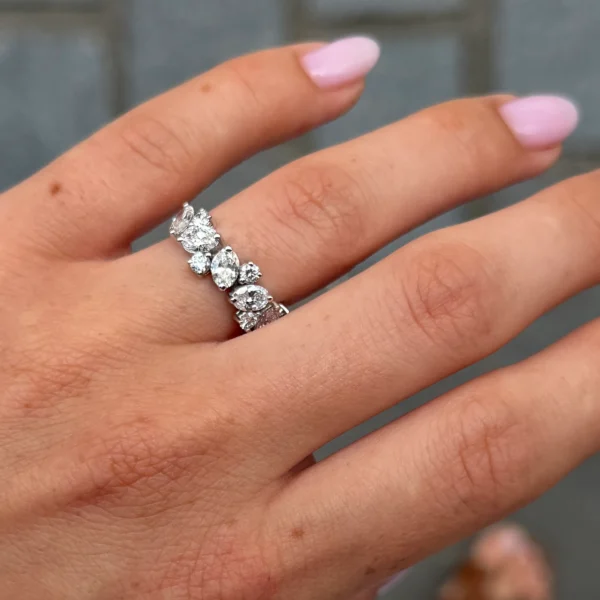
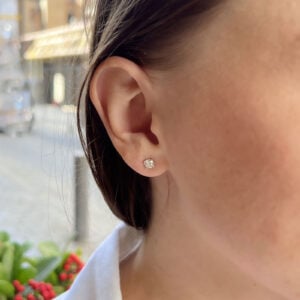
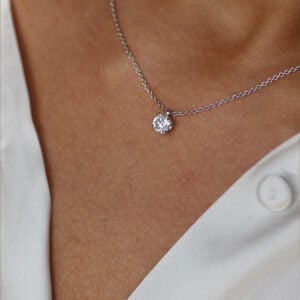
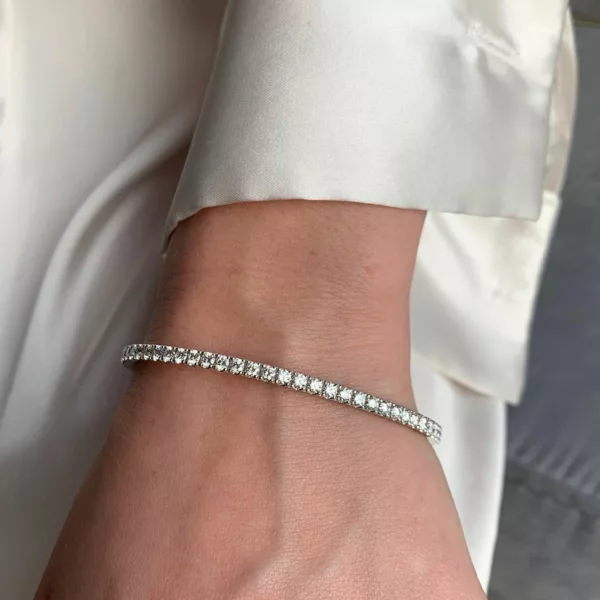
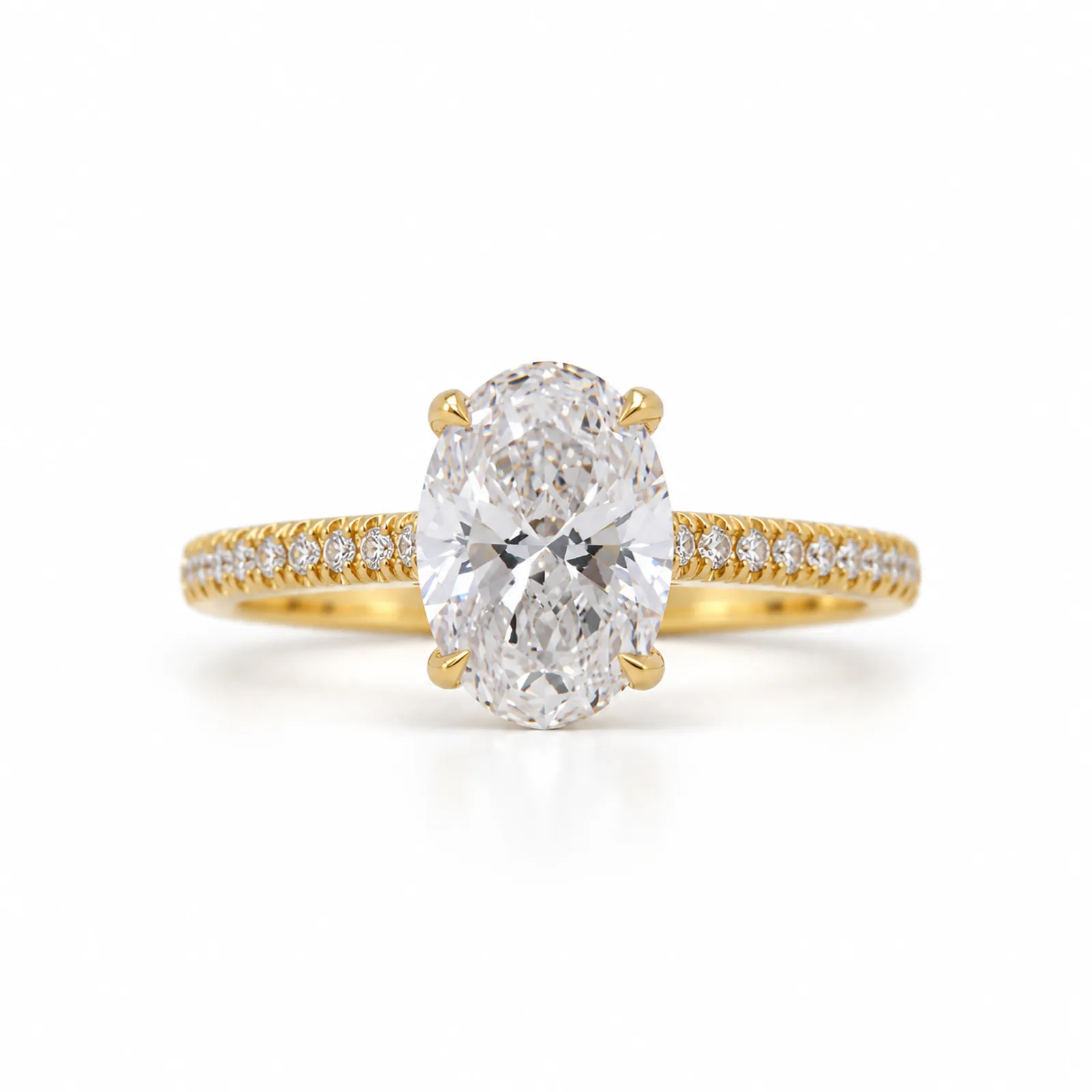
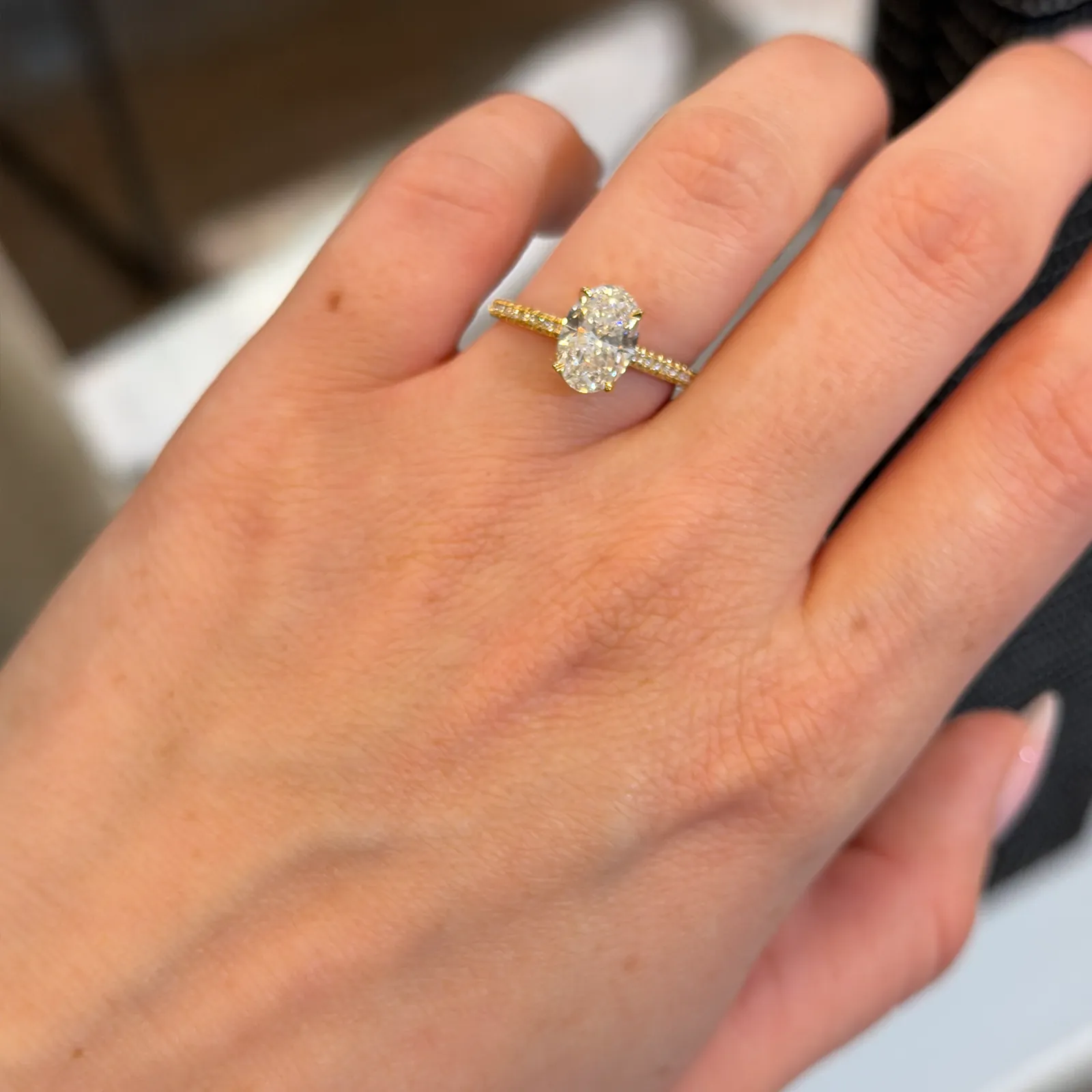



The hidden halo, and who it is for
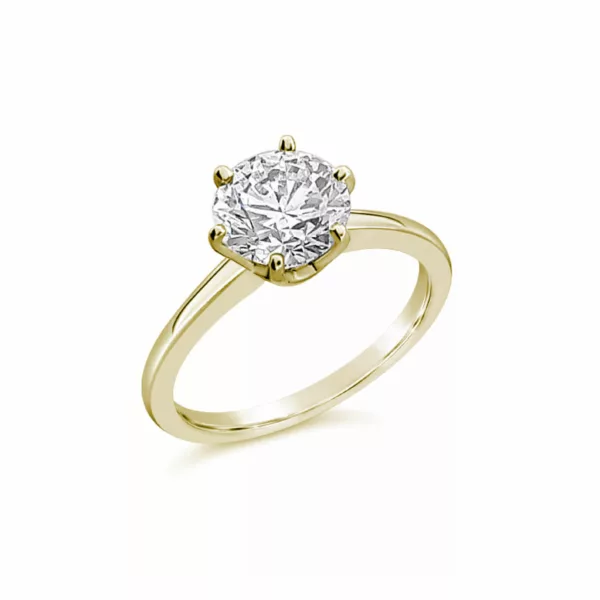
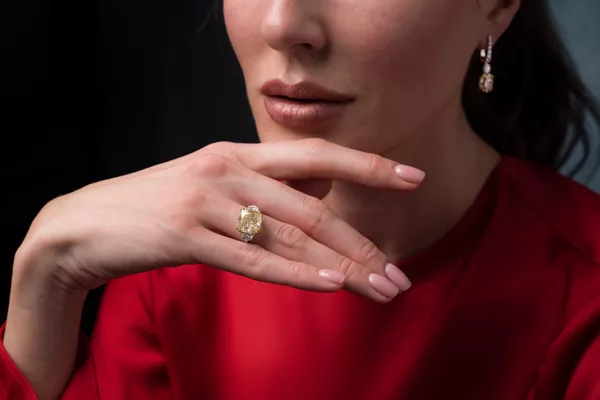
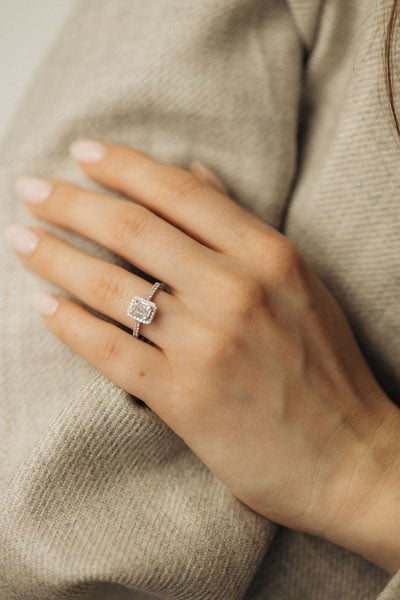
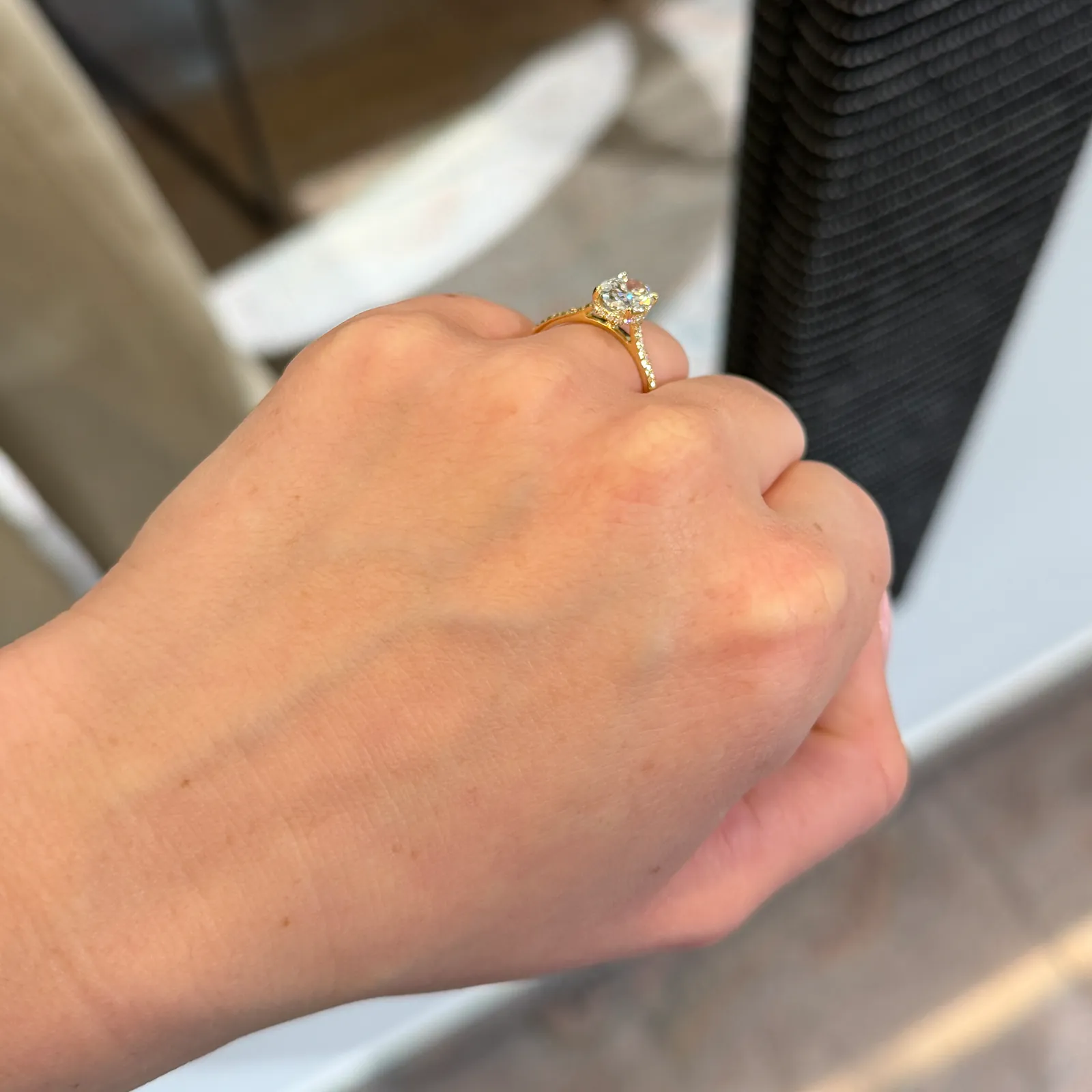
A hidden halo is a ring of small diamonds set horizontally around the outside of the basket, directly beneath the girdle of the centre stone, facing outward rather than up. From directly above it cannot be seen at all. It appears only in profile.
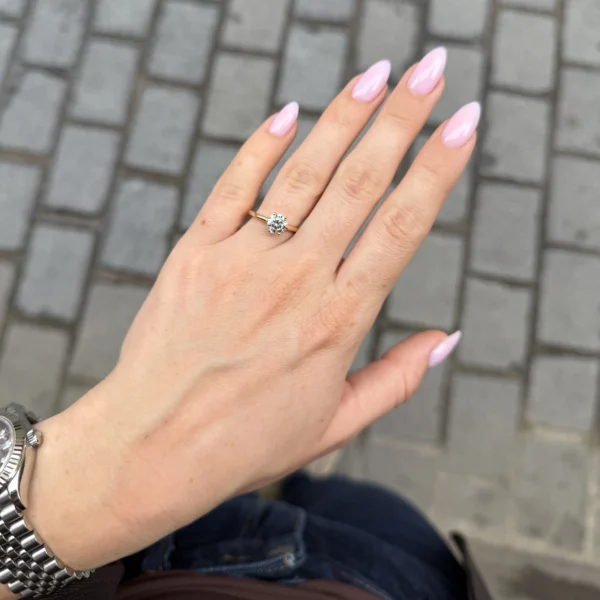
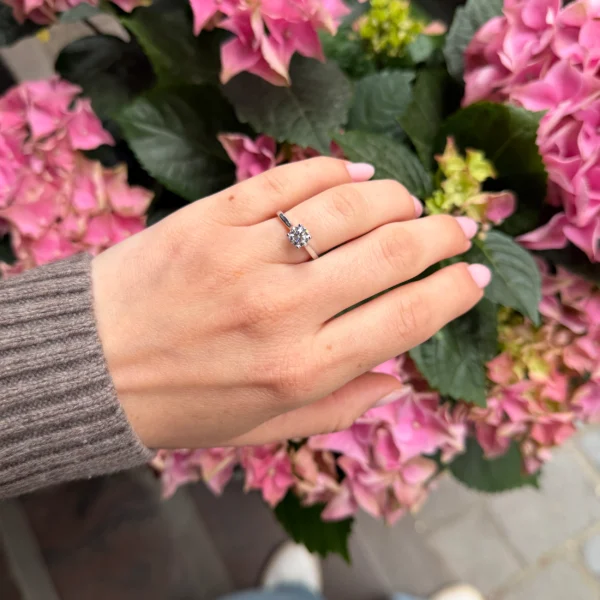
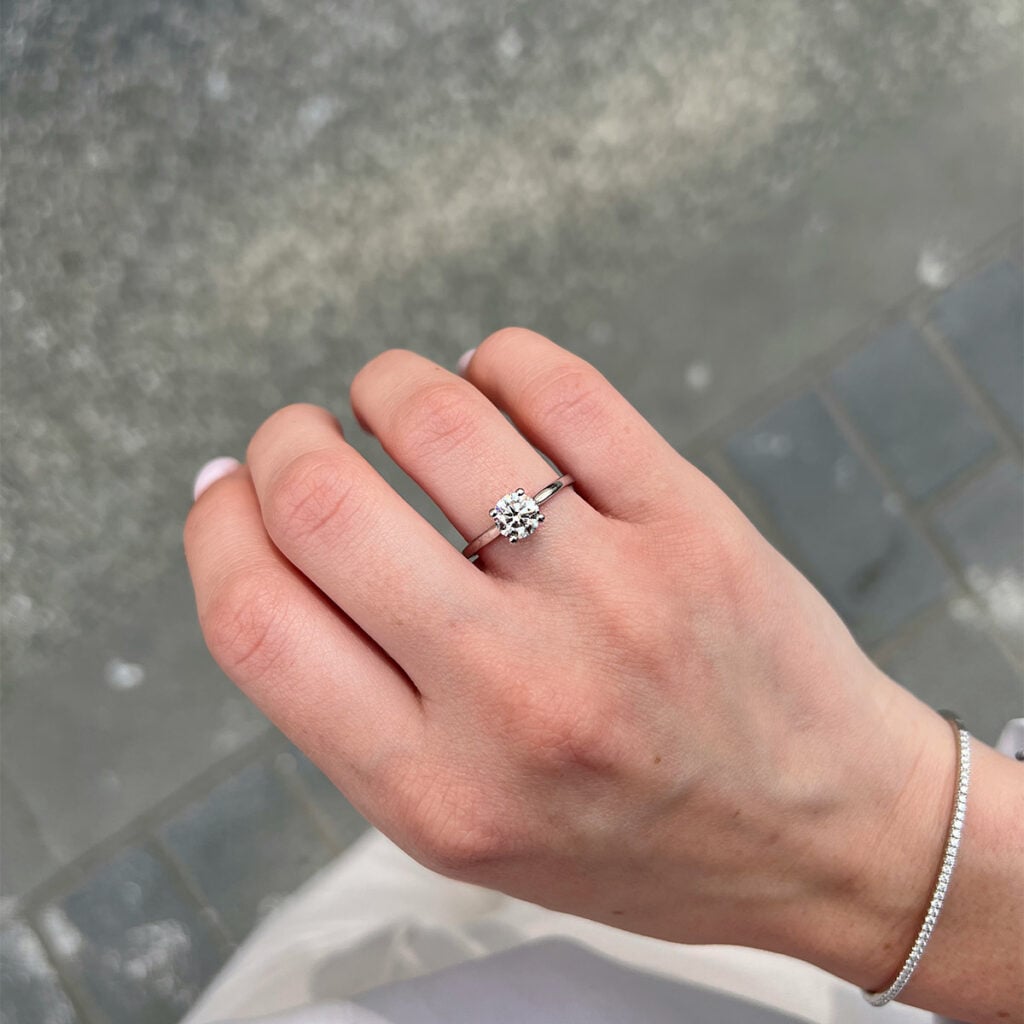
Which is a stranger decision than it first sounds, because directly above is how you see your own ring. Looking down at your hand, the halo is invisible to you. In profile is how everybody else sees it — across a table, on a steering wheel, holding a glass — and it is also the angle at which rings are almost always photographed. A hidden halo is detail for other people and for the camera, not for the wearer.
What it does optically
The join between a stone and its setting is where a solitaire goes dark. Metal absorbs light, and a plain basket under the girdle gives the eye a band of shadow between the diamond and the shank. The hidden halo fills that band with stones instead, so light is returned where it would otherwise be swallowed. The practical effect is that the centre reads as though it is floating clear of the metal rather than sitting in it.
In yellow gold the halo is doing something additional. A warm metal reflects warmth into the pavilion, and the girdle is precisely where that contact is closest. A row of white stones in that position interrupts the gold exactly where it would otherwise lean into the diamond — which is worth having under a D colour stone, the top of the scale, where any borrowed warmth is a loss.
The band
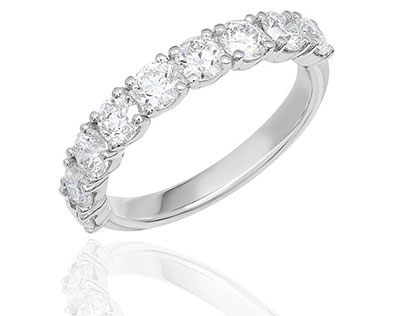
0.17 carat of lab grown diamonds runs in pavé along the shoulders, D to F in colour and VS in clarity. The shoulders rise in a cathedral arch to meet the head, which carries the pavé line continuously up to the centre so there is no gap of bare metal between the band and the stone. Brightness runs from the finger to the diamond without interruption.
The stone
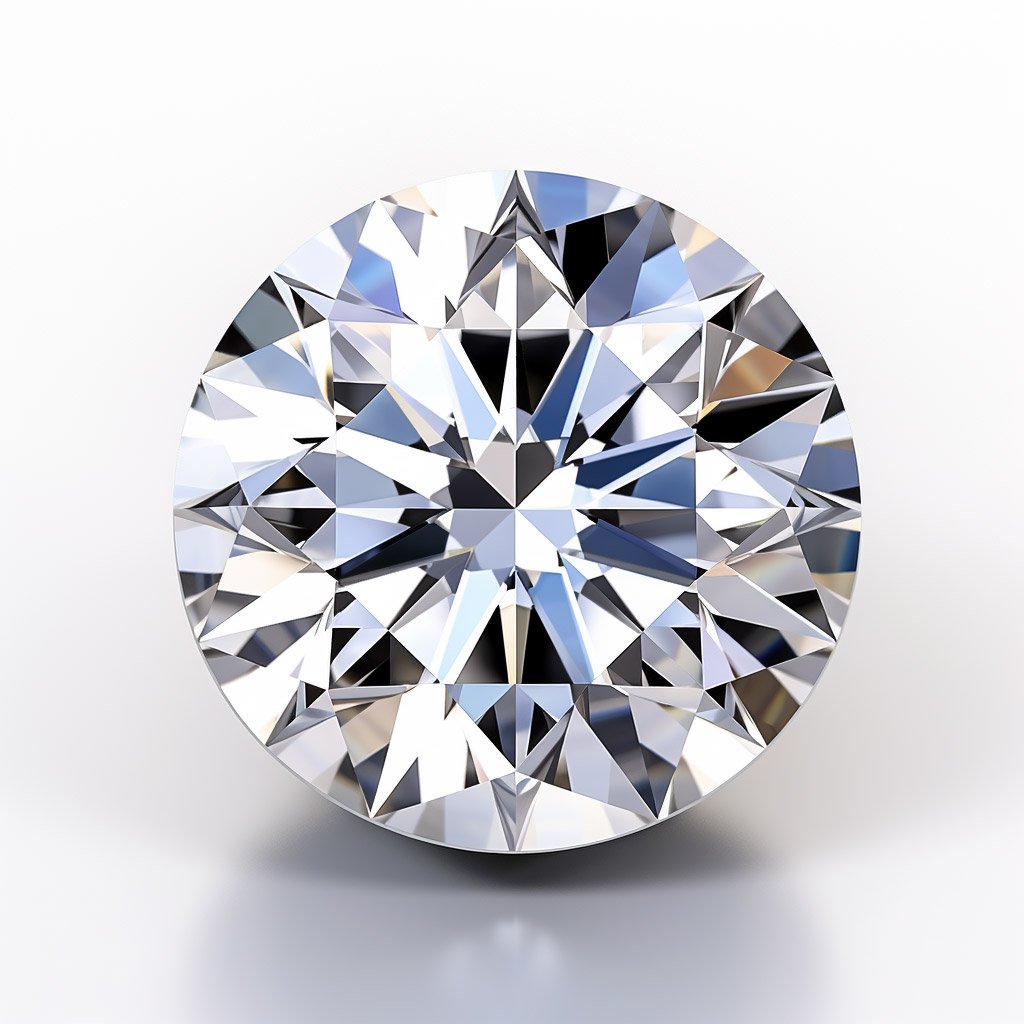
1.59 carat, oval cut, lab grown, IGI certified D colour and VVS2 clarity under report LG800643622. Held on four claws at the ends and sides of the long axis, where an oval is thinnest and most exposed.
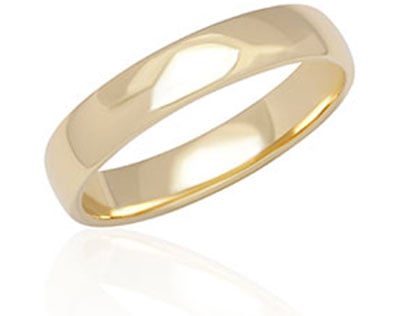
18K yellow gold. Set and finished in Antwerp.