Nederlands
 Français
 Italiano






Why the petals are pears
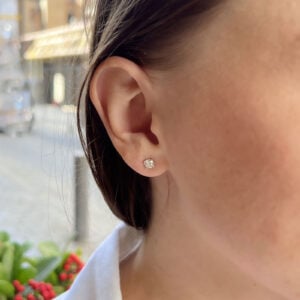
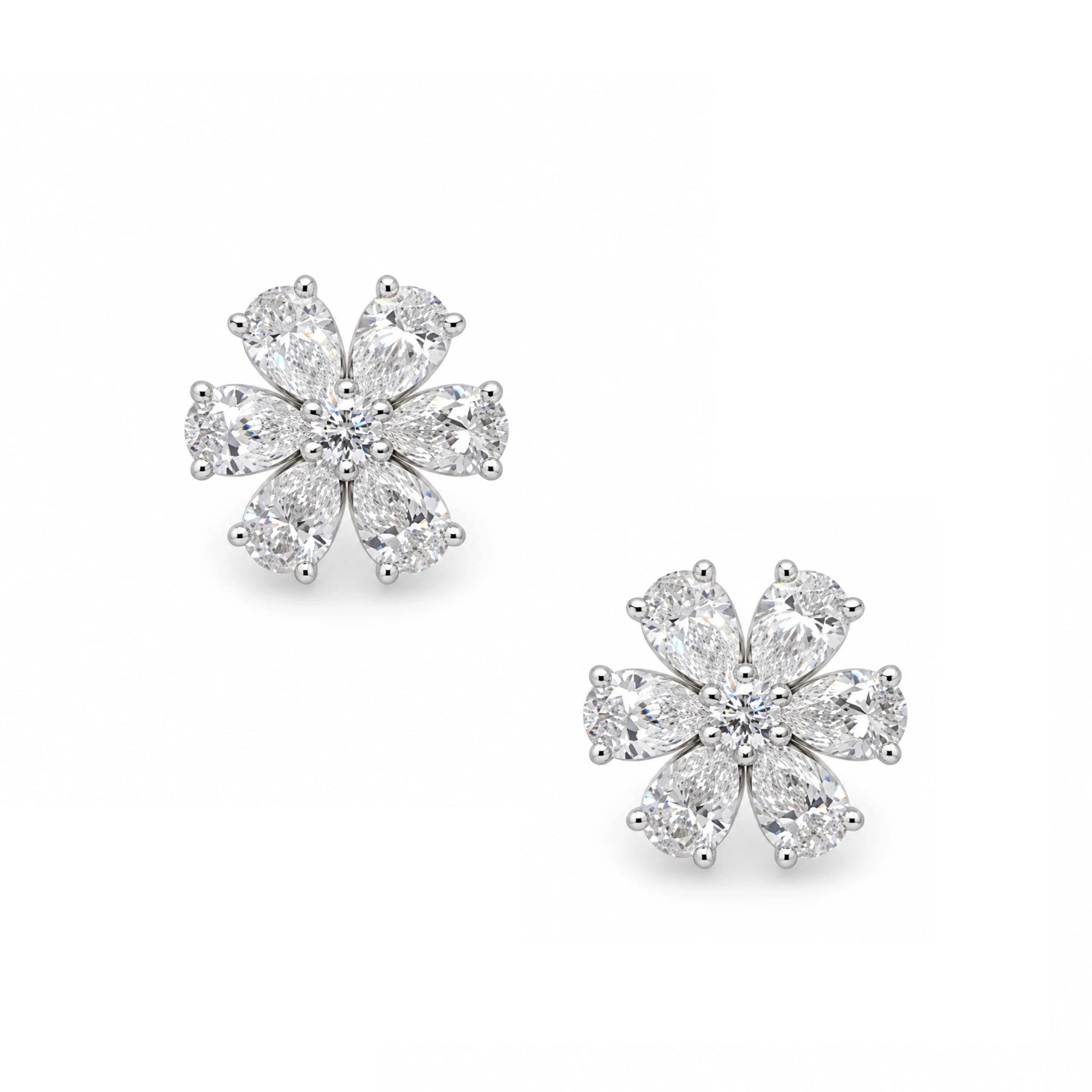
A pear has one point and one rounded end, and that asymmetry is what makes it the right stone for a petal. Each pear here is set point-inward, tip toward the centre, with the rounded belly facing out. The result is a rim made entirely of curves — a scalloped outline that follows the shape a flower actually has.
Compare it with the obvious alternative. A marquise is pointed at both ends, so a marquise flower necessarily finishes with points radiating outward at the perimeter. That reads spikier, more star than bloom, and the outward tips are the part most likely to catch on a scarf or a jumper. Pears put the vulnerable ends in the middle of the cluster, where metal and neighbouring stones protect them.
Six petals, not four
Six pears close the circle. With four petals there are visible gaps at the diagonals and the eye reads a cross; at six the petals meet along their flanks and the flower becomes a continuous disc of light with no empty quadrants. It is the difference between a motif and a shape.
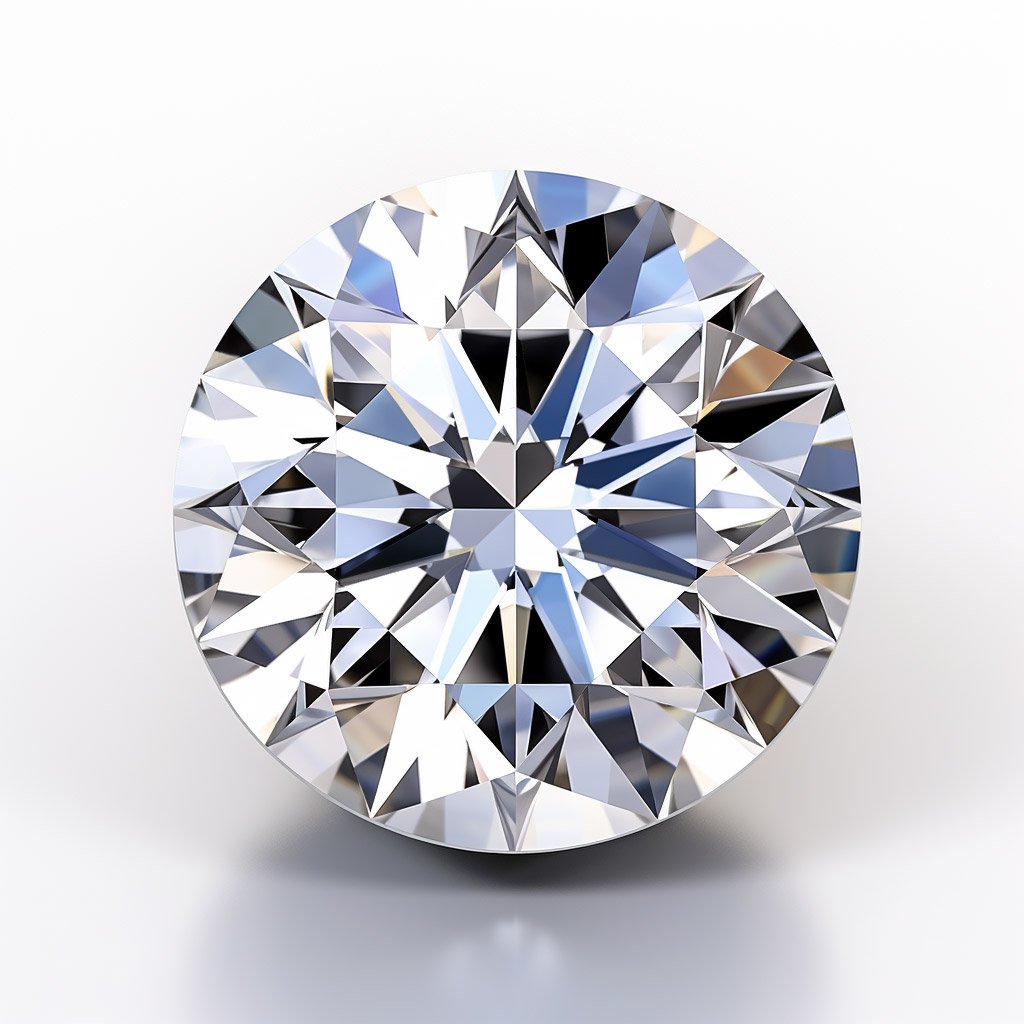
The round brilliant at the centre is doing more work than its 0.11 carat suggests. Six pear points converge on it, and it has to close that junction cleanly — six tips meeting under one stone is the most demanding setting problem in the piece, and it is the part to look at if you want to judge the workmanship.
Specification
Twelve pear cut natural diamonds across the pair, six per ear, with two round brilliants at the centres. 1.94 carat total: 1.83 ct of pears and 0.11 ct of rounds. Colour D to F, clarity VS, quoted as ranges because the stones in a multi-stone piece are matched by eye against a reference rather than certified individually.
18K white gold, claw set, posts with butterfly backs. Set and finished in Antwerp.