Nederlands
 Français
 Italiano
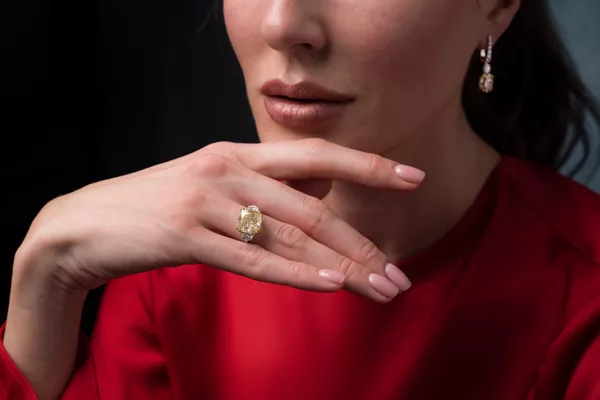

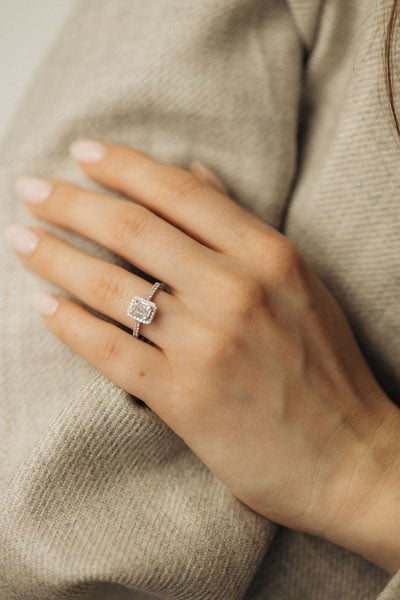

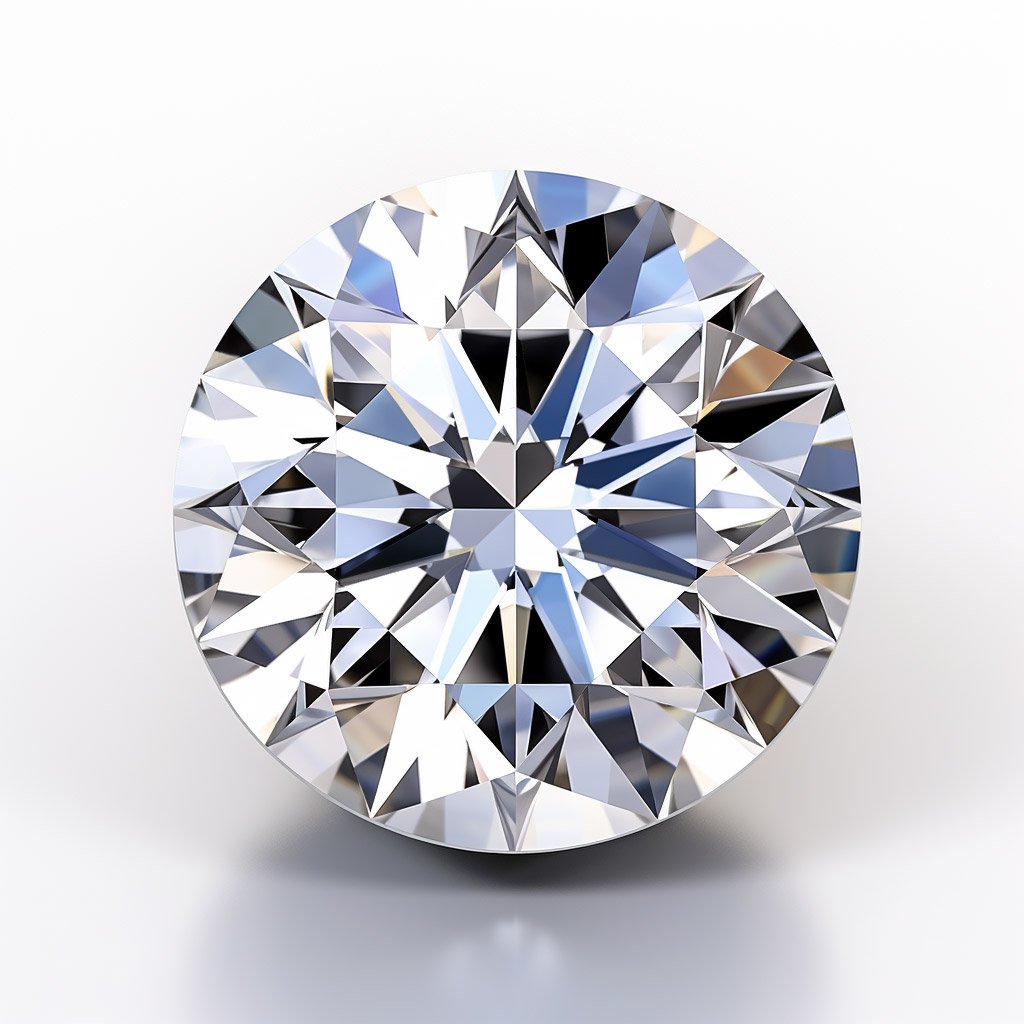



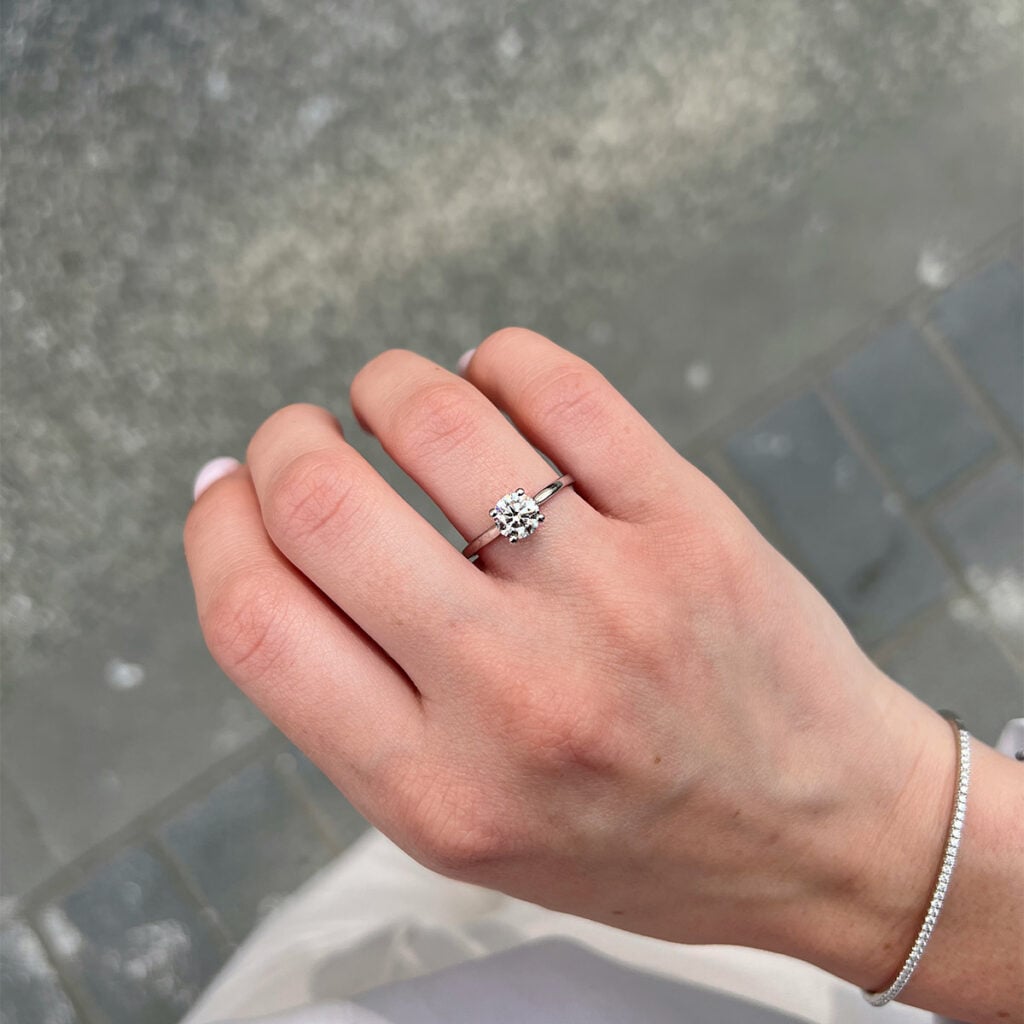
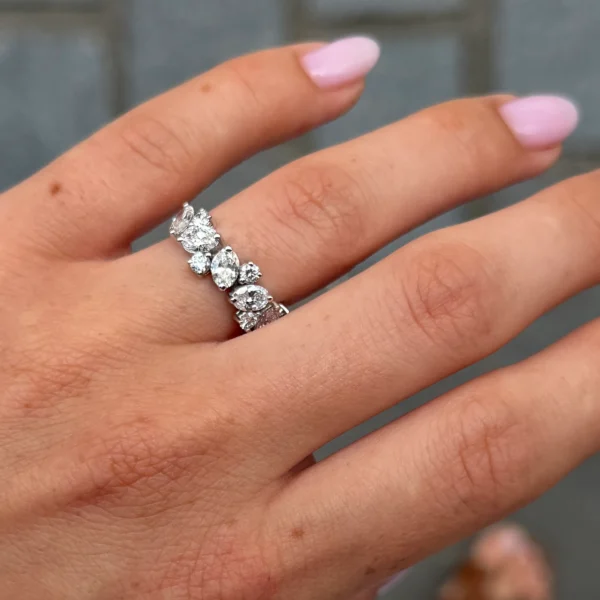
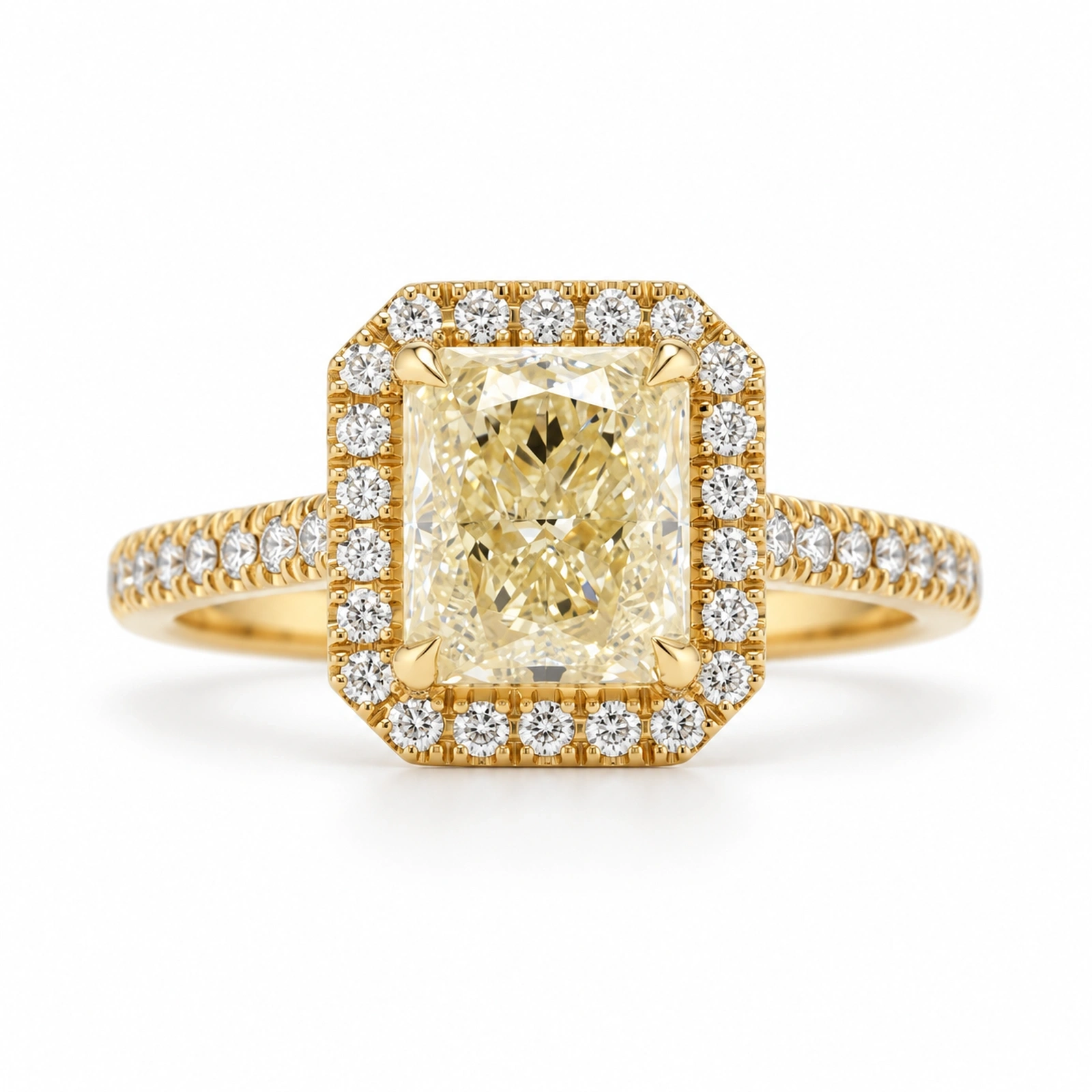
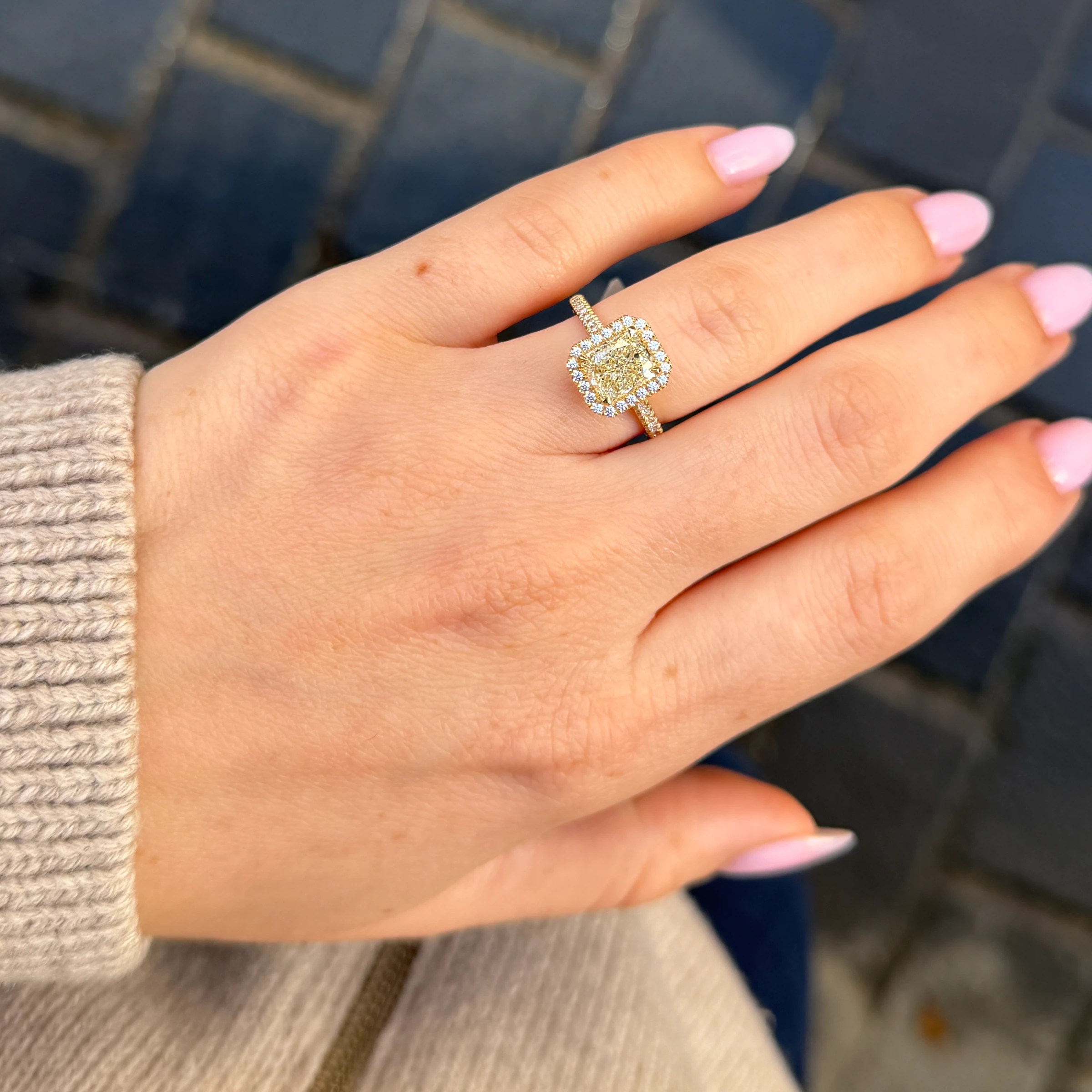

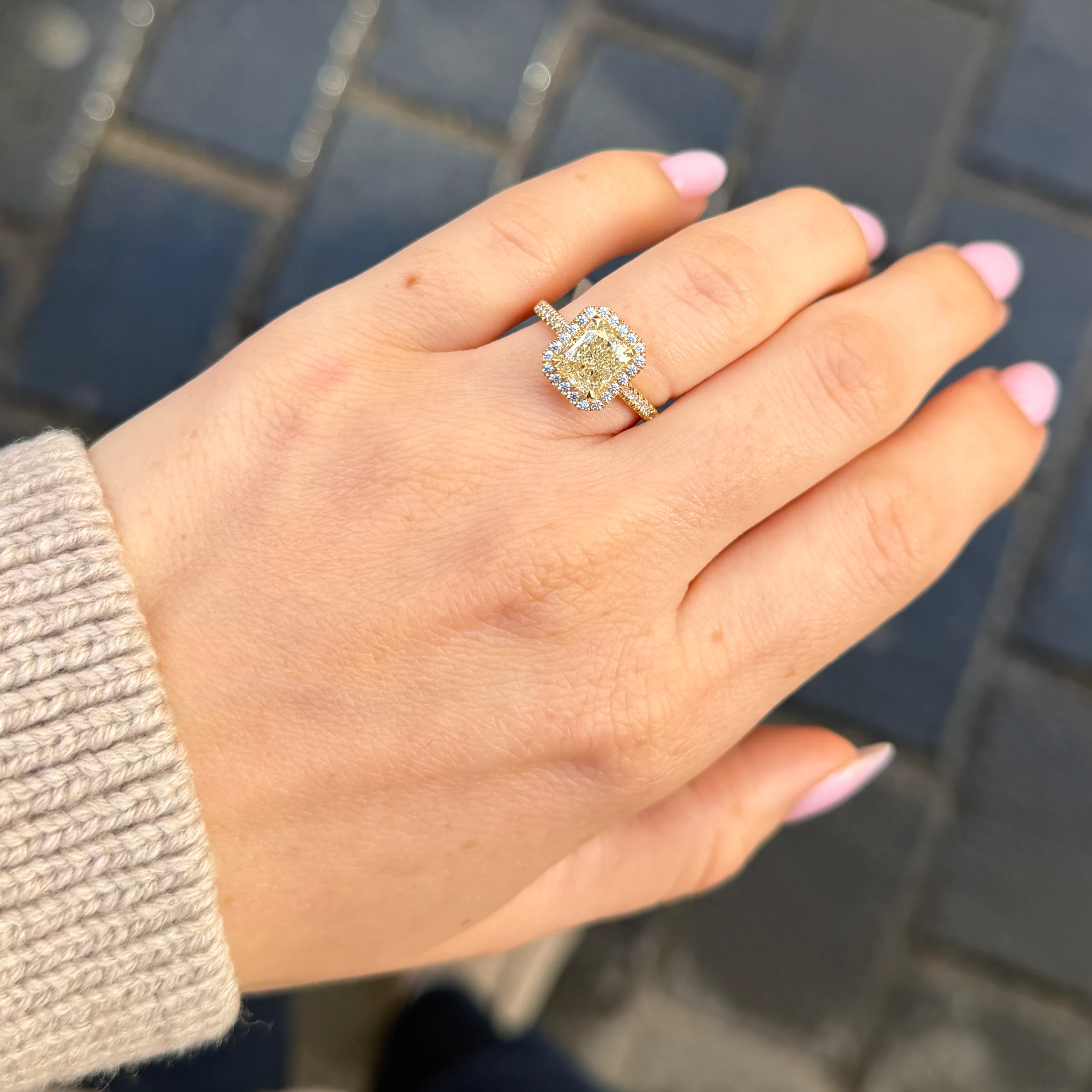
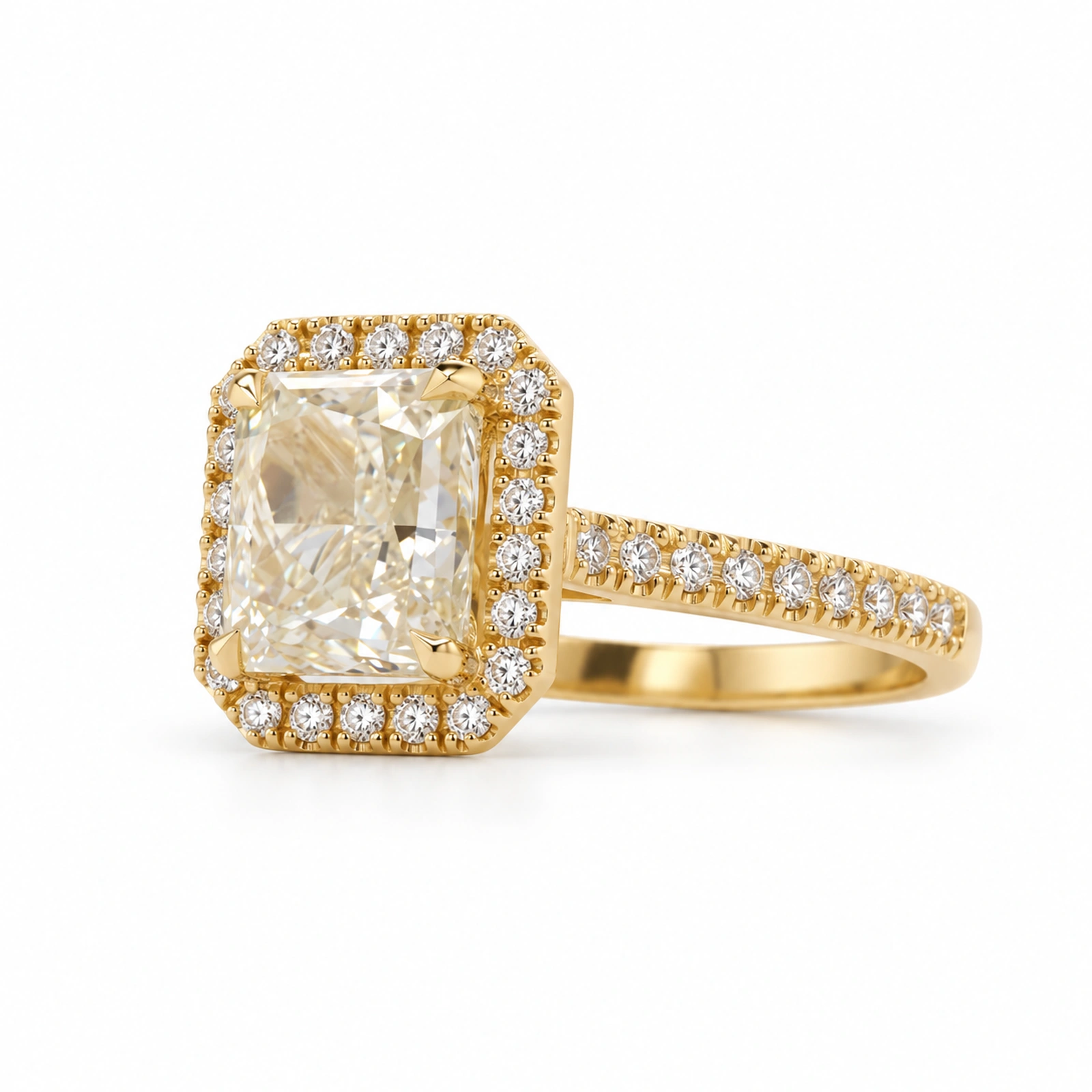
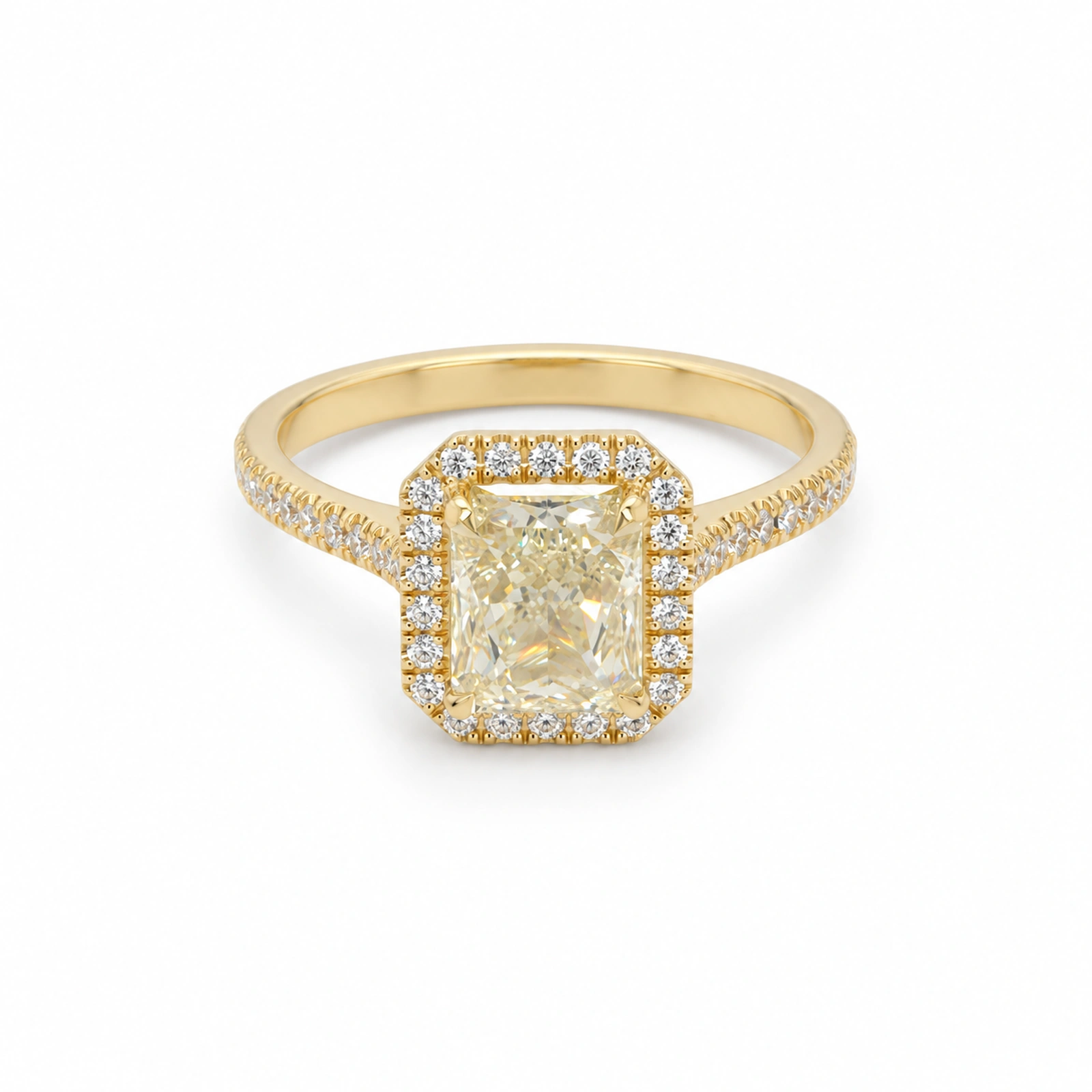
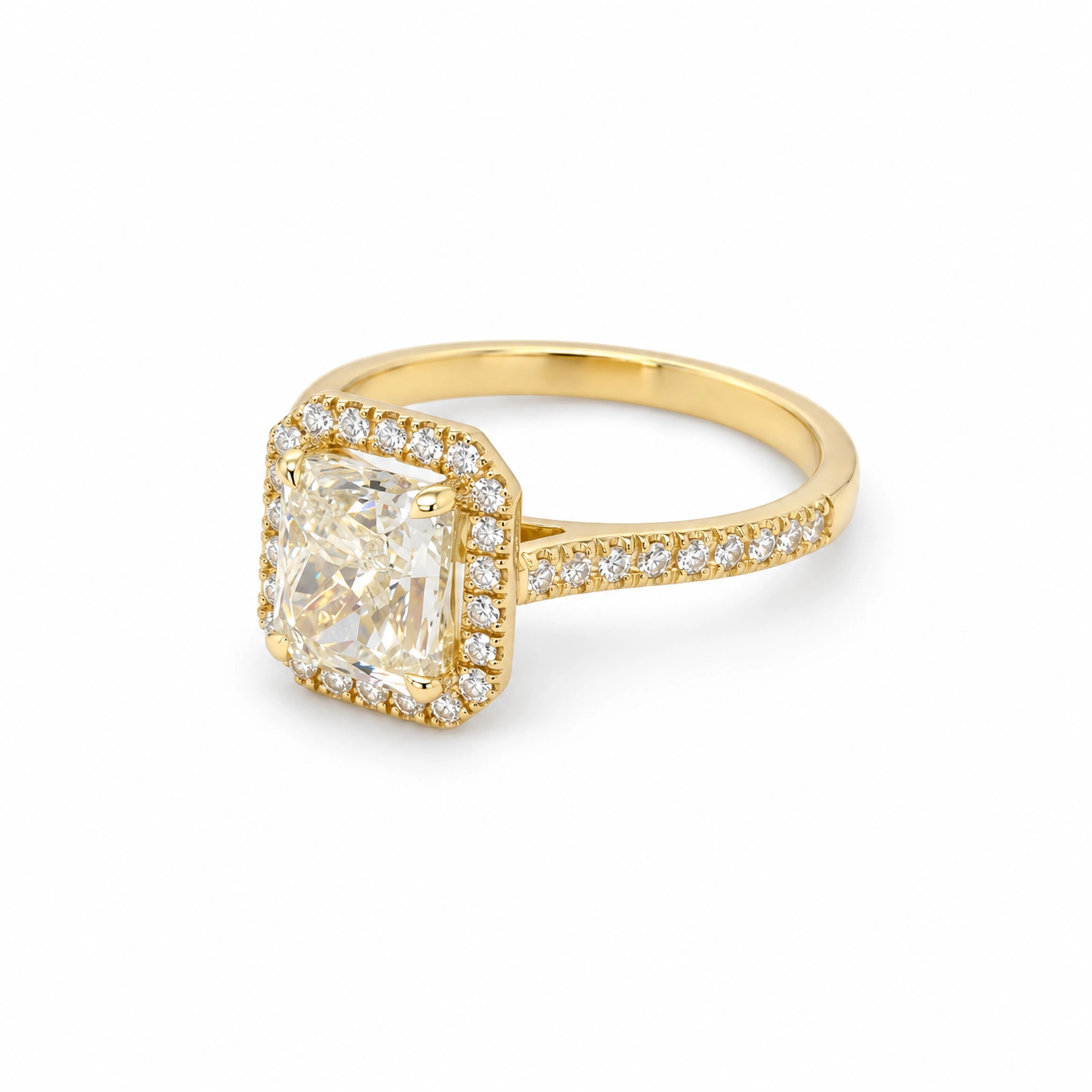
2.02 ct radiant-cut diamond ring, S–T light yellow, VS2, GIA certified
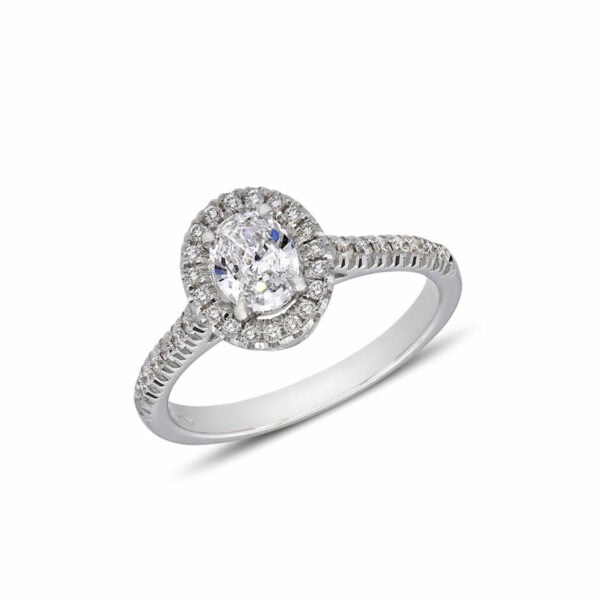
A radiant-cut diamond of 2.02 carats, framed by an octagonal halo of colourless round brilliants that follows the stone’s cut corners, on a pavé-set band in 18K yellow gold. GIA report 5513613907.
The stones
- Centre: 2.02 ct radiant cut, colour S–T, clarity VS2
- 7.24 × 6.04 × 4.48 mm, length-to-width ratio 1.20
- Depth 74.1%, table 64%, extremely thick polished girdle, no culet
- Polish Excellent, symmetry Excellent, Faint fluorescence
- GIA 5513613907, laser-inscribed on the girdle
- Halo and shoulders: 0.23 ct total of round brilliants, D–F colour
S–T is the last stop before Fancy
GIA’s normal colour scale runs from D to Z, in bands: D to F colourless, G to J near colourless, K to M faint, N to R very light, and S to Z light yellow. Past Z a diamond leaves that scale altogether and is graded as a Fancy colour.
That boundary is not a gradual one, because the economics invert as you cross it. Everywhere on the D–Z scale, colour is treated as a departure from colourless and discounted accordingly — the further down the alphabet, the lower the price. The moment a stone is graded Fancy, the same yellow becomes the thing being charged for, and the price turns and climbs.
S–T sits two letters short of that turn. The diamond is unmistakably and evenly yellow to the naked eye, and it is priced as though its colour were a shortcoming. That is the entire case for this stone, and it is a quirk of how the scale is built rather than anything we have done.
Where the weight went, and why that helps here
This stone is cut deep: 74.1% depth with an extremely thick girdle, which puts a great deal of its two carats into the pavilion rather than into width. It measures 7.24 by 6.04 mm across the top, less spread than two carats would usually buy, and we would rather say so plainly than let the carat weight imply a larger stone.
What that depth buys instead is colour. Light entering the table travels down through 4.48 mm of diamond before it turns and comes back to the eye, and the longer the path through a tinted stone, the more body colour it gathers along the way. In a colourless diamond this proportion would be a fault that left the stone dull and small. In an S–T it is the reason the yellow reads as full and consistent across the whole table rather than pooling in the corners.
A colourless halo against a yellow centre
The halo and the pavé are D to F — the colourless end of the scale, set directly against the centre stone. Placing white next to yellow raises the apparent saturation of the yellow: the eye reads colour comparatively, and with no reference point a tinted stone simply looks like an off-white one. The octagonal frame also restores the outline that the deep cut costs, following the radiant’s cut corners rather than rounding them off.
Clarity and finish
VS2, with crystal and pinpoint inclusions that need magnification to find. Polish and symmetry are both Excellent, which is worth noting on a fancy shape, where symmetry is often the first thing a cutter gives up to hold weight. The Faint fluorescence recorded on the report is detectable under a laboratory UV lamp and not in daylight.
Certification
Supplied with GIA report 5513613907. Read how we source and verify our diamonds.
Made in Antwerp
Made in our own Antwerp workshop and available in any finger size. Insured delivery is free across Europe. Browse the full engagement ring collection, or come and try it at our Vestingstraat showroom.