Nederlands
 Français
 Italiano






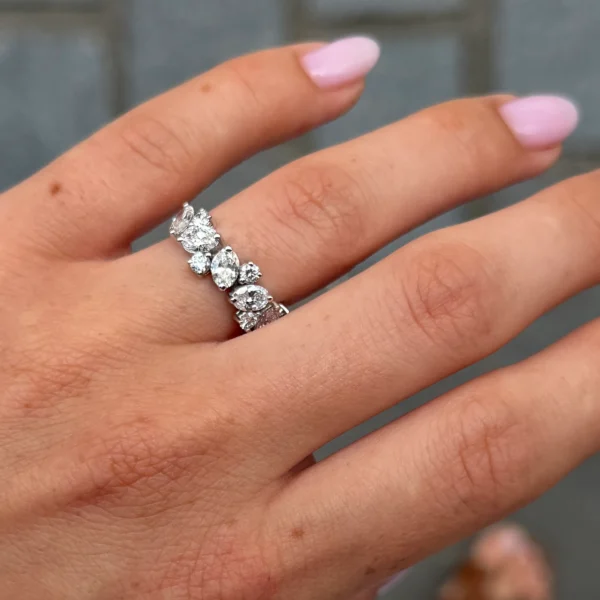
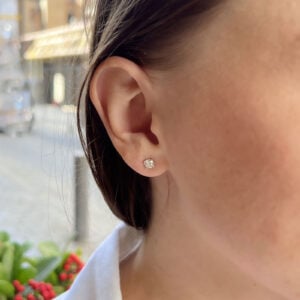
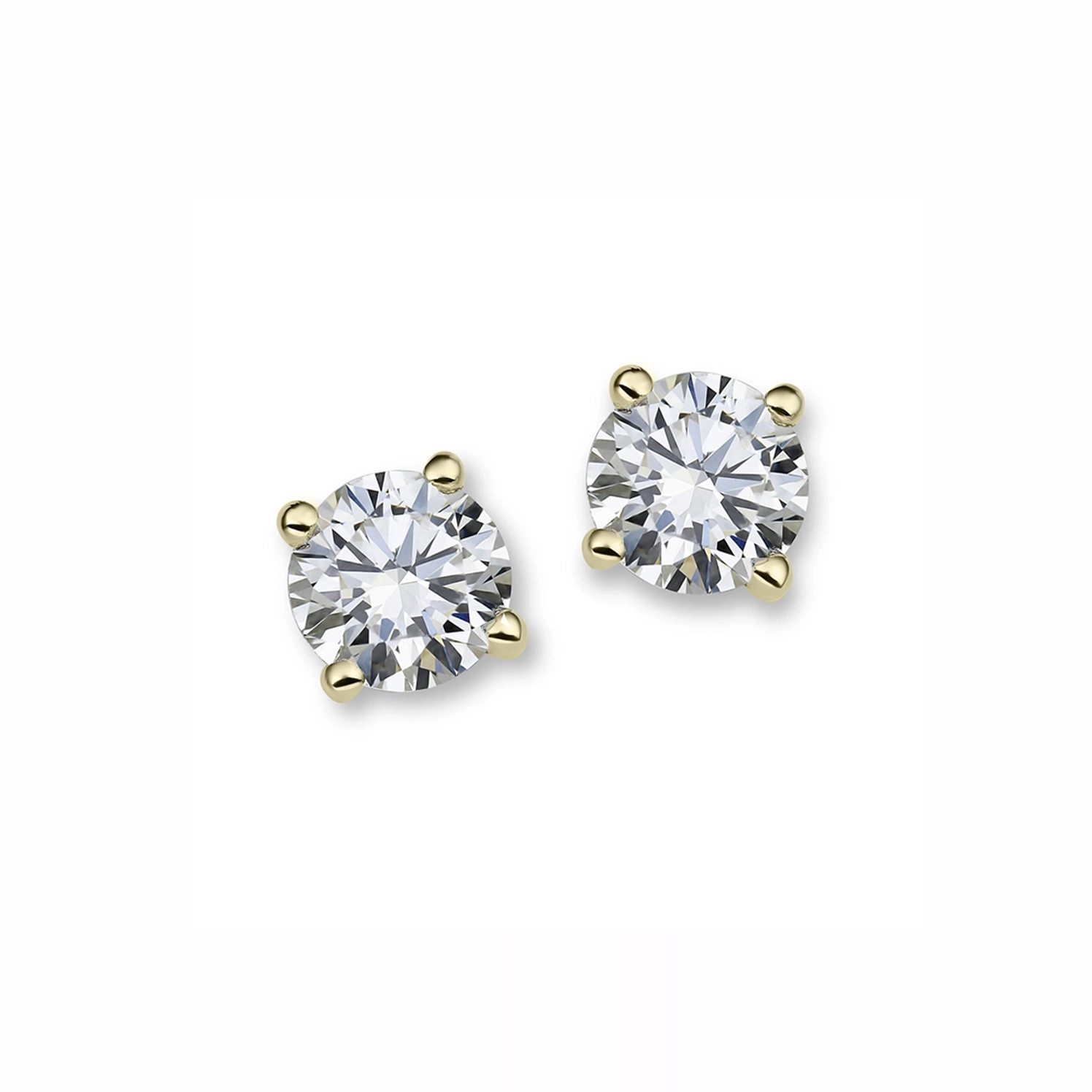
3.06 ct total weight, D VVS2, 18K yellow gold
A pair of IGI-certified laboratory-grown round brilliants totalling 3.06 carat — 1.53 ct per ear, about 7.4 mm each — colour D, clarity VVS2, each held in four yellow gold claws. Report LG818614383.
The size at which the claws stop being invisible
On a half-carat stud nobody ever sees the setting. The stone is 5 mm, the claws are specks, and the whole thing reads as a point of light. Somewhere around a carat and a half that changes: at 7.4 mm the stud stops being a point and becomes an object with an outline, and the four pieces of metal holding it become part of what you are looking at.
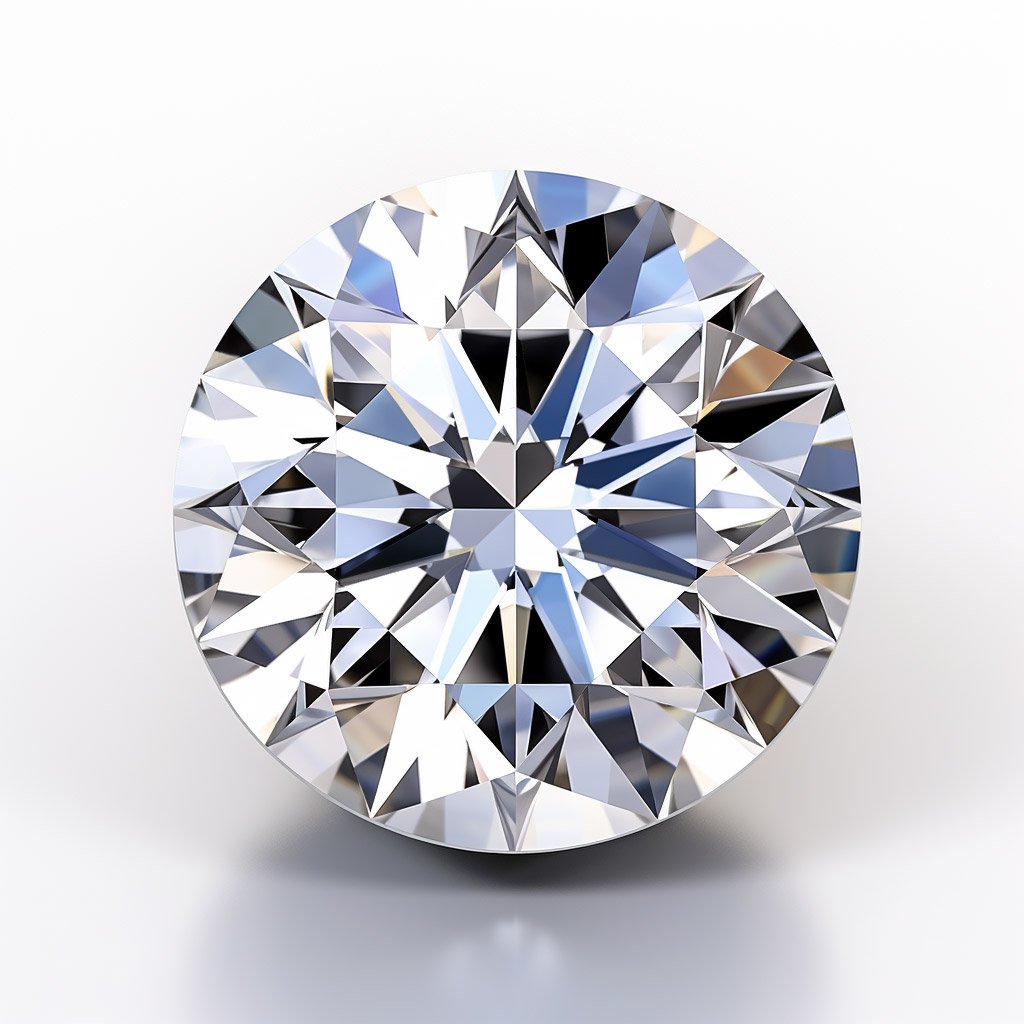
Which is why their position is a design decision rather than an afterthought. Look closely at the photograph: the claws on these are set on the diagonal, at roughly the four corners, not at twelve, three, six and nine o’clock. The difference is not decorative. Claws placed on the vertical and horizontal axes draw a cross over the face of a large stone, and the eye finds it immediately because the eye is extremely good at finding crosses. Turned forty-five degrees, the same four claws fall where the brilliant’s own facet pattern is already busy, and they disappear into it.
It costs nothing to do. It is simply knowing, at the bench, that this stone is big enough for it to matter.
What 1.53 carat does to the ear
Here is the part that catalogues leave out. A stud at this weight is heavy enough that the lobe has to do real work to keep it level. On a soft or stretched lobe a large stud rotates forward and downward, and what people then see is not the table of the diamond but its girdle, edge-on — a bright line instead of a bright disc. The stone is doing nothing wrong; it is being held badly.
The fix is at the back, not the front: how much surface the back presents to the lobe, and how firmly it can be set against it. A back with a wide bearing surface spreads the load and holds the stone upright; a small one lets it pivot. It is worth saying plainly because it is the single most common reason a large stud looks worse on than it did in the box, and nothing about the diamond itself will tell you.
So when you buy studs this size, ask about the backs. Come in and we will fit them against your own ears before you decide — it takes five minutes and it is the difference between a diamond you see and a diamond you catch glimpses of.
D VVS2 at 7.4 mm
D is the top of the colour scale, and at this diameter it earns its keep: the larger the stone, the longer the path light travels inside it, and the more any body colour accumulates. Warmth that would be invisible at 4 mm starts to show at 7.4. VVS2 means a grader needed ten times magnification and good light to locate anything at all — at arm’s length, across a room, in any circumstance in which an earring is actually seen, there is nothing to find.
Why yellow gold around a colourless stone
Yellow gold does not tint a D diamond. The claws touch only the girdle, and light enters through the crown and leaves through the crown; the metal is beside the stone, not behind it. What the gold does is draw a warm line around a cold centre, so the outline of the diamond reads sharply against the ear instead of dissolving into it — which, at 7.4 mm, is the whole point of the mount.
Specification
- Stones: two laboratory-grown diamonds, round brilliant, 3.06 ct total (1.53 ct each)
- Colour: D Clarity: VVS2
- Certificate: IGI LG818614383
- Mount: four-claw studs, 18K yellow gold
Laboratory grown, certified by IGI
The stones are diamond in every physical and chemical sense; they were grown rather than mined. When one of our lab-grown diamonds is certified, the report is always IGI’s — we do not offer GIA-certified lab-grown diamonds.
The same weight in white, and the sizes either side
The 3.18 ct tw pair in 18K white gold is also D VVS2 and also €2,050: same grades, same money, a choice of metal rather than of stone. A step down is the 2.00 ct tw pair in yellow gold; a step up, the 4.00 ct tw. All of them in lab-grown diamond earrings.
Buying from Antwerp
In stock at our workshop in the Antwerp diamond district. Shipped insured, boxed, with the IGI report.