Nederlands
 Français
 Italiano


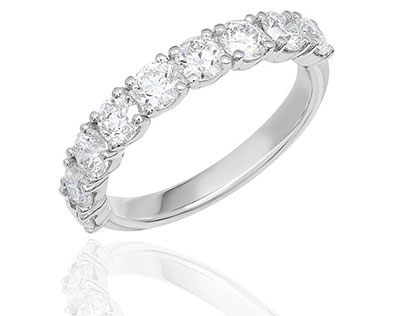

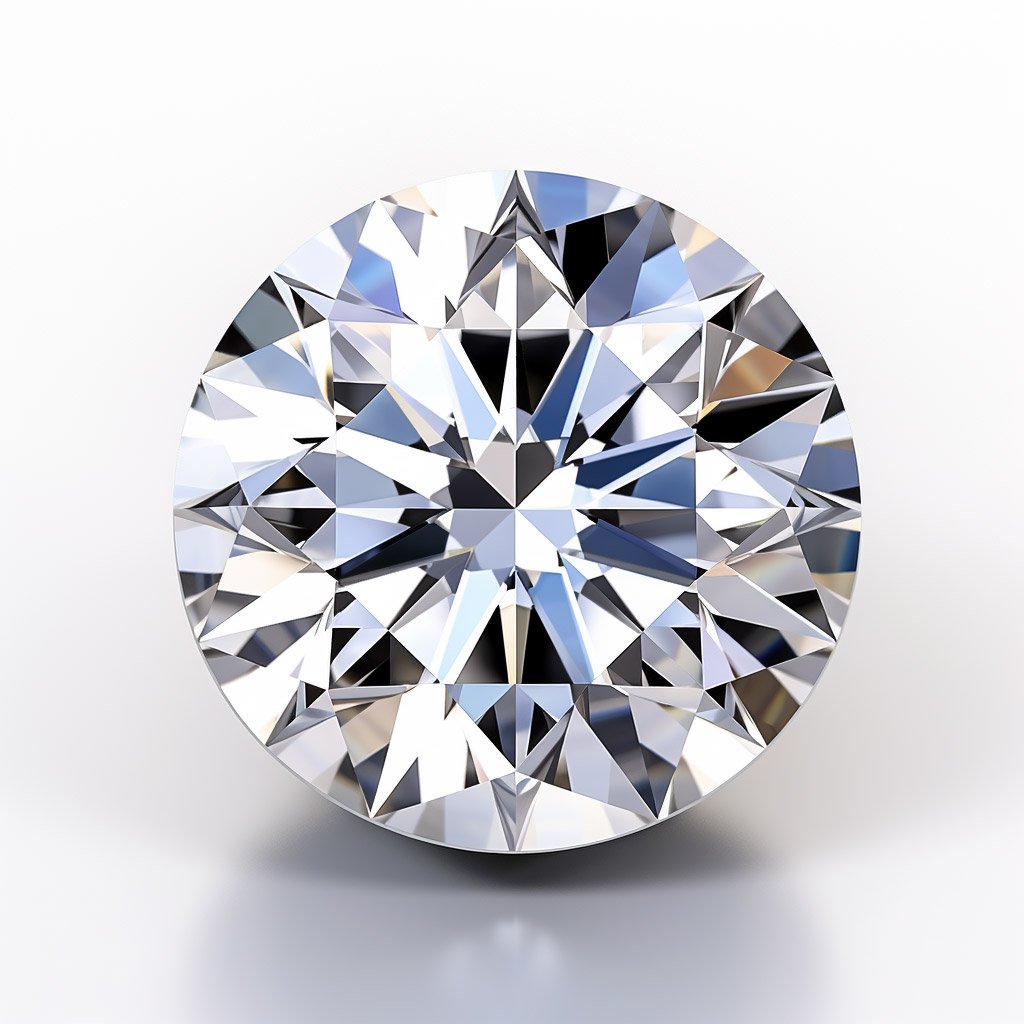



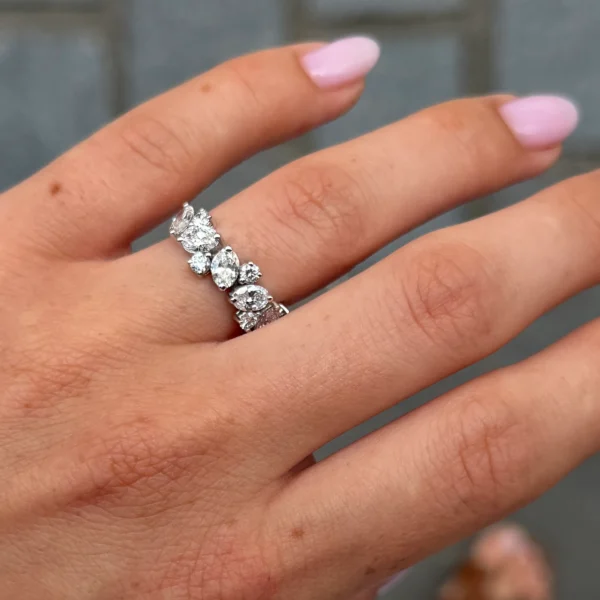
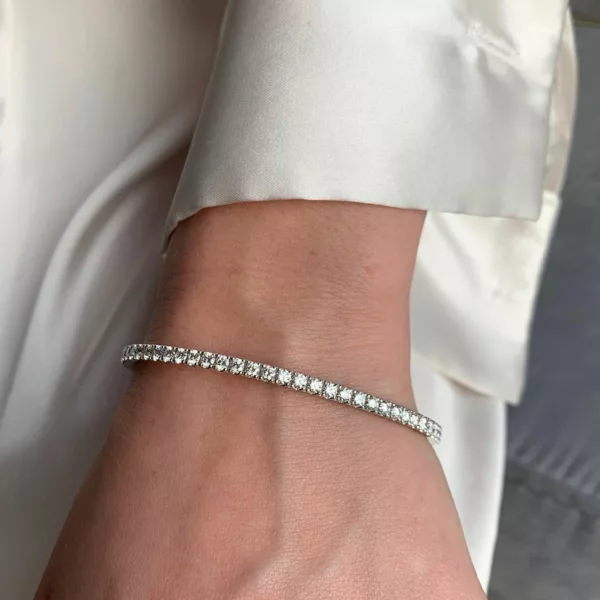


5.05 ct lab grown Fancy Intense Blue diamond ring in 18K white gold
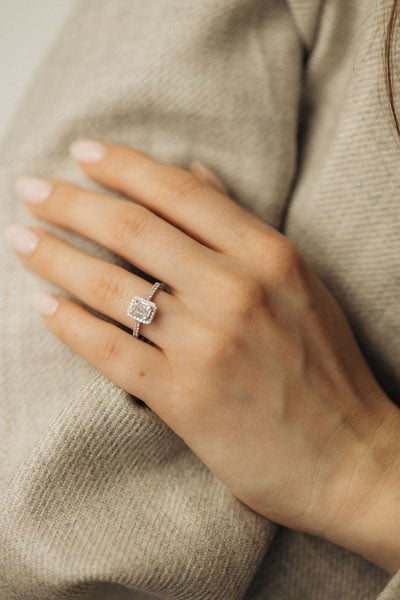
A laboratory-grown cushion cut diamond of 5.05 carats, graded Fancy Intense Blue with VS1 clarity, held in four claws inside a halo, on shoulders pavé-set with 0.62 ct of F colour round brilliants, also laboratory-grown. IGI report LG639499382. There is one of it.
First things first: the stone is lab grown
In the title, and here in the opening paragraph, because with blue at this size the distinction is not a detail — it is the difference between a five-figure ring and a stone that belongs in a museum. Natural blue diamonds are the rarest of all the fancy colours: the Cullinan mine in South Africa has been the principal source for a century, output is measured in a handful of significant stones per year, and a natural Fancy Intense Blue of five carats sells at auction for tens of millions. This one is grown in a laboratory.
It is a real diamond — crystallised carbon, hardness 10, graded by IGI on the same scales as any mined stone. It is simply not a mined one, and at this price nobody should be left guessing.
Blue comes from boron, and boron does something strange
Each fancy colour has its own cause, and blue has the most interesting one.
Yellow comes from nitrogen. Pink comes from damage to the crystal lattice. Blue comes from boron — boron atoms taking the place of carbon in the lattice, absorbing the red and yellow end of the spectrum and letting blue through.
The strange part is what else boron does. Diamond is one of the best electrical insulators known, but boron-coloured diamond is a semiconductor: it conducts electricity. It is the only variety of diamond that does, and laboratories have long used electrical conductivity as one way to identify blue diamonds — the colour and the conductivity come from the same atoms. The famous historic blues share this property with the stone in this ring.
In a growth chamber boron can be introduced deliberately and dosed, which is why a saturated Intense blue at five carats is achievable at all. In the earth it depends on boron being present in the mantle where the diamond happened to form, which almost never occurs.
Why white gold, and why a halo
Blue is a cool colour, and white gold keeps it that way. Yellow or rose metal alongside a blue stone pushes it towards grey — the warm reflection fights the hue rather than supporting it. This is the same reasoning that leads us to set a pink diamond in rose gold and a yellow one in white: match or contrast, depending on where the colour sits.
The halo of F colourless diamonds does what a halo does on any fancy colour: it puts a white reference immediately next to the blue, and the eye reads the saturation as deeper against it than it would against metal alone.
The certificate
IGI report LG639499382. The LG prefix is IGI’s marker for laboratory-grown. Colour, clarity, cut and carat are graded on the same scales used for mined diamonds, the origin is stated explicitly, and the report number is laser-inscribed on the girdle.
A unique piece
Set by hand in our Antwerp workshop. Ring sizing is included — tell us your size, or come in and we will measure it. Insured delivery is free throughout Europe.
Related
More fancy colour lab grown diamonds, all our lab grown diamond engagement rings, or blue sapphire engagement rings if you want a natural stone in the same colour.