Nederlands
 Français
 Italiano
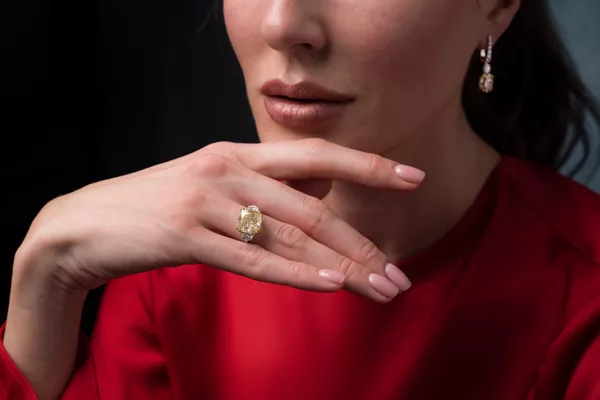

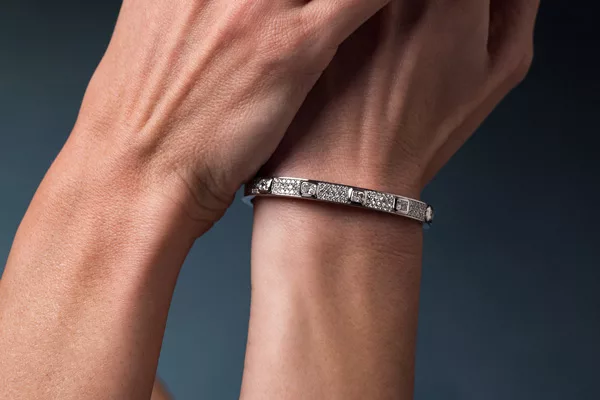
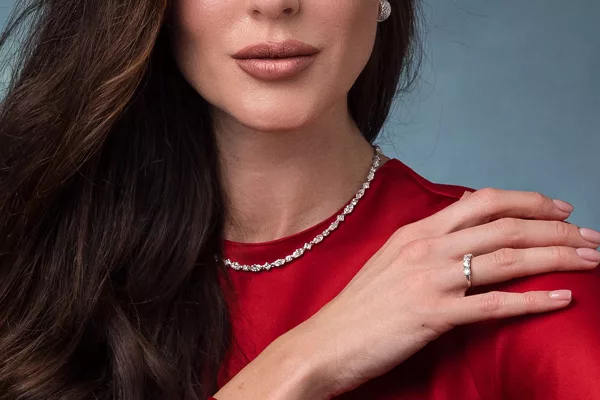
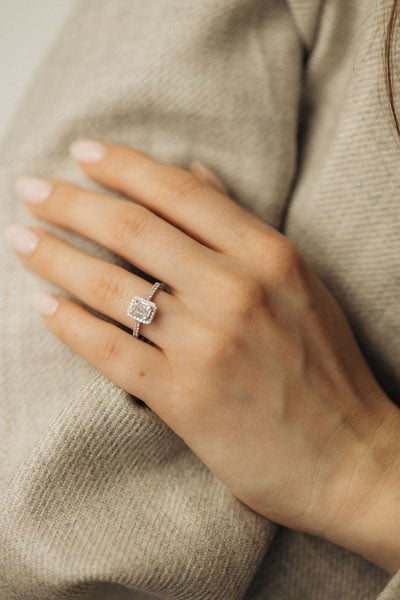

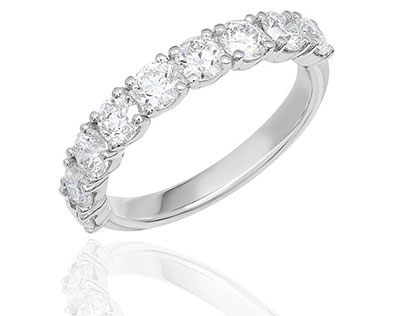

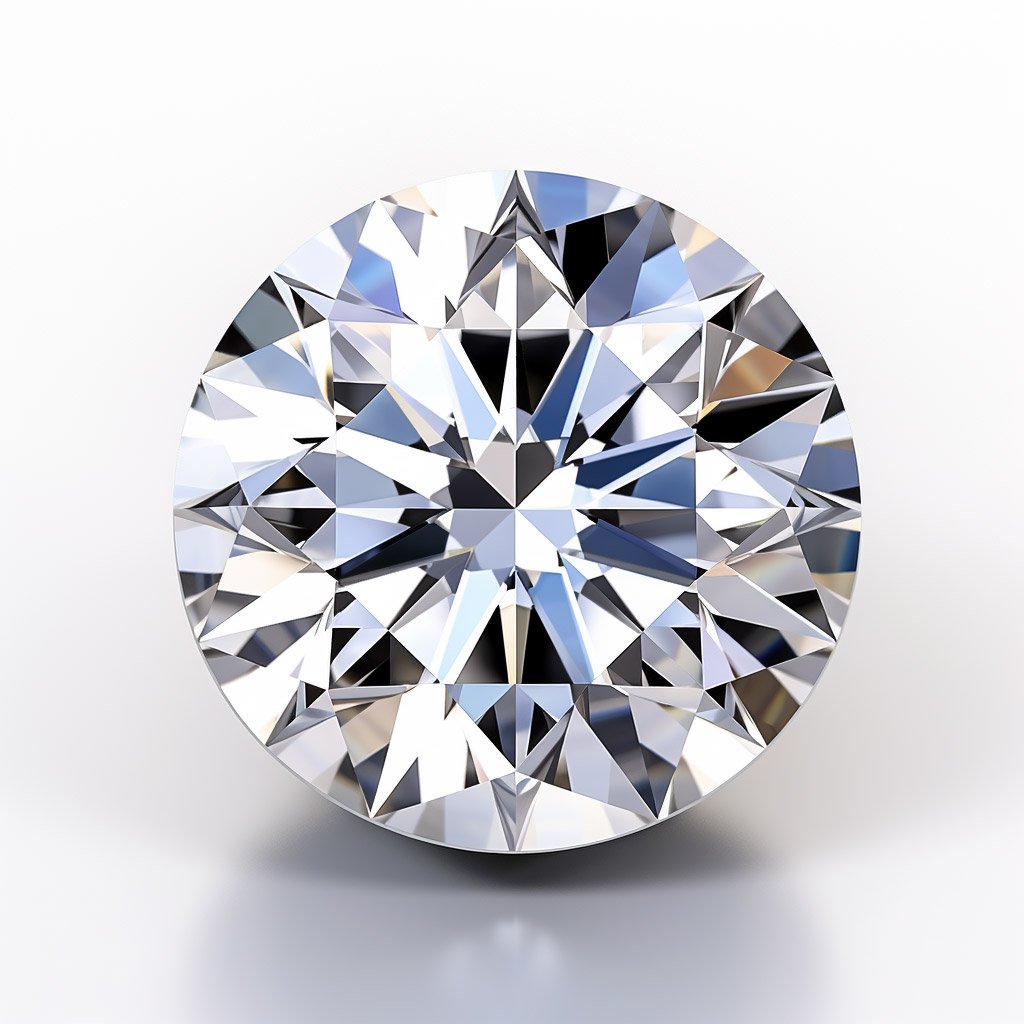



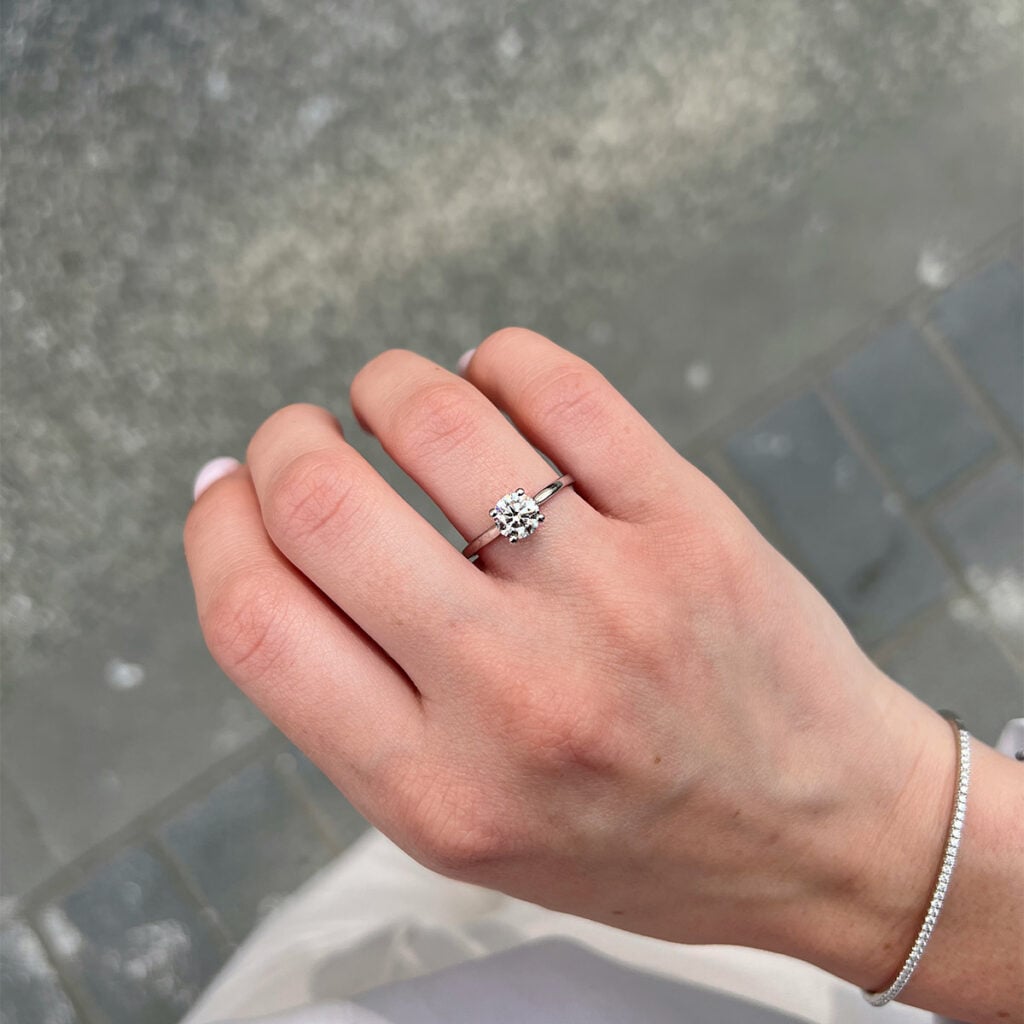
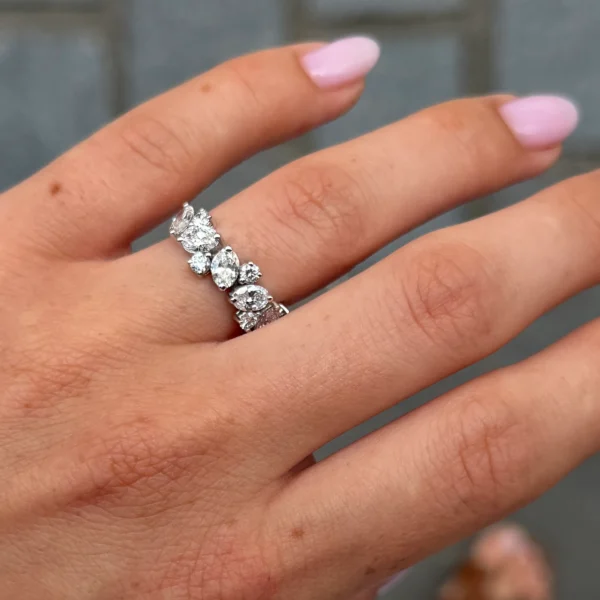
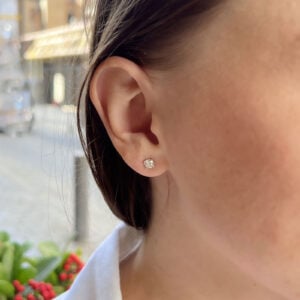


7.26 ct total, four cuts, F colour, VS clarity, 18K white gold
A pair of hoops carrying 7.26 carat of natural diamonds in four different cuts: 2.64 ct of round brilliants together with 4.62 ct of emerald, marquise and pear cut stones. Colour F, clarity VS. 18K white gold.
First, the number
Our own specification table lists 2.64 ct under the centre stones, and that figure alone understates this piece badly. The emerald, marquise and pear cuts add 4.62 ct — more than the round brilliants — for a genuine total of 7.26 carat across the pair. If you have been comparing these against other hoops on a 2.64 ct basis, compare again.
Four cuts is a composition problem, not a stone-buying problem
Any jeweller can source good stones in four shapes. Arranging them so the hoop reads as one object rather than as a collection is the actual work, and it turns on a distinction most people never have explained to them.
The round, the marquise and the pear are brilliant-style cuts: triangular and kite-shaped facets arranged to scatter light in every direction. They twinkle — rapid, small, restless flashes.
The emerald cut is a step cut: long rectangular facets running parallel to the girdle, like a staircase. It does not twinkle. It gives broad, slow flashes with darker planes between them — the effect the trade calls a hall of mirrors.
Put a step cut in a row of brilliants and it reads as a pause. That is not a fault; it is the reason to include one. A hoop set entirely with brilliant-style stones is uniformly busy, and at seven carats uniform business becomes noise. The emerald cuts give the eye somewhere to rest, and the brilliants around them read brighter by contrast.
What to look at before buying any mixed-cut piece
Look at the sequence, not the stones. Follow the row round with your eye and ask whether the arrangement repeats, progresses, or simply happens. Are the step cuts distributed so the rests fall evenly, or clustered at one end because that is where they fitted? Does the pattern on the left earring correspond to the right?
Stones can be bought. Rhythm has to be designed, and it is the part of a mixed-cut piece that a certificate will never tell you about.
At this value, the paperwork is part of the purchase
Worth saying plainly at €13,860, because it is the thing people deal with too late.
A grading report is not a valuation. A report describes a stone — weight, colour, clarity, measurements. A valuation states a replacement value at a given date, for an insurer. They are different documents with different purposes, and an insurer will want the second.
For a piece like this, ask for three things and keep them somewhere other than the box: an itemised valuation, photographs of both earrings, and the reports for the stones that carry them. If a stone is ever lost, those documents are what makes a faithful replacement possible instead of approximate.
One practical check most people skip: household policies usually carry a single-article limit for jewellery, and a limit for items worn away from home. Both are often lower than a piece at this level. Worth reading before rather than after.
We prepare valuations for pieces bought here — ask and we will explain what it covers and what it costs.
Specification
- Round brilliants: 2.64 ct total
- Emerald, marquise and pear cuts: 4.62 ct total
- Combined: 7.26 ct, natural diamonds
- Colour: F Clarity: VS range
- Metal: 18K white gold
Elsewhere
A single-cut hoop at the top of our range: the 2.54 ct hoops, where the question of stone count is set out. Mixed cuts at a smaller scale: the 1.32 ct marquise floral earrings. All in diamond earrings.
Buying from Antwerp
In stock at our workshop in the Antwerp diamond district. Shipped insured and boxed.