Nederlands
 Français
 Italiano
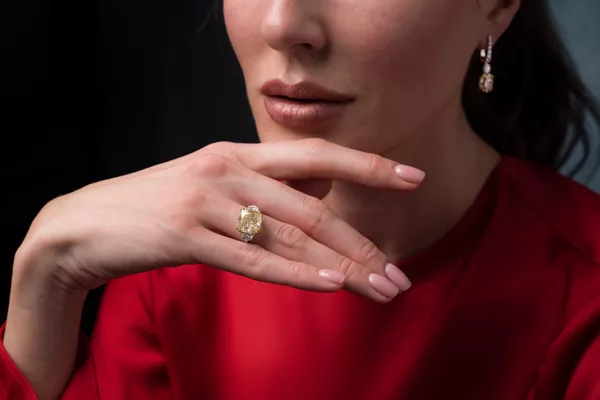


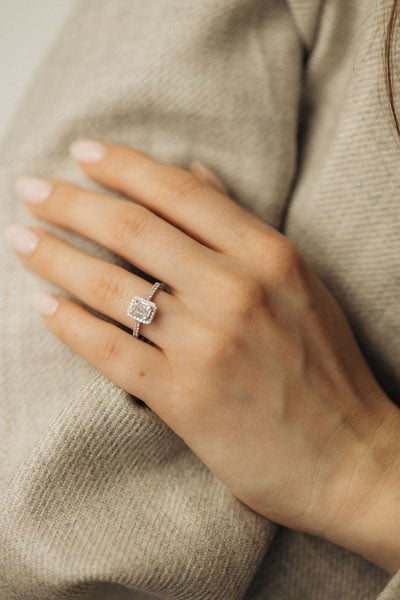





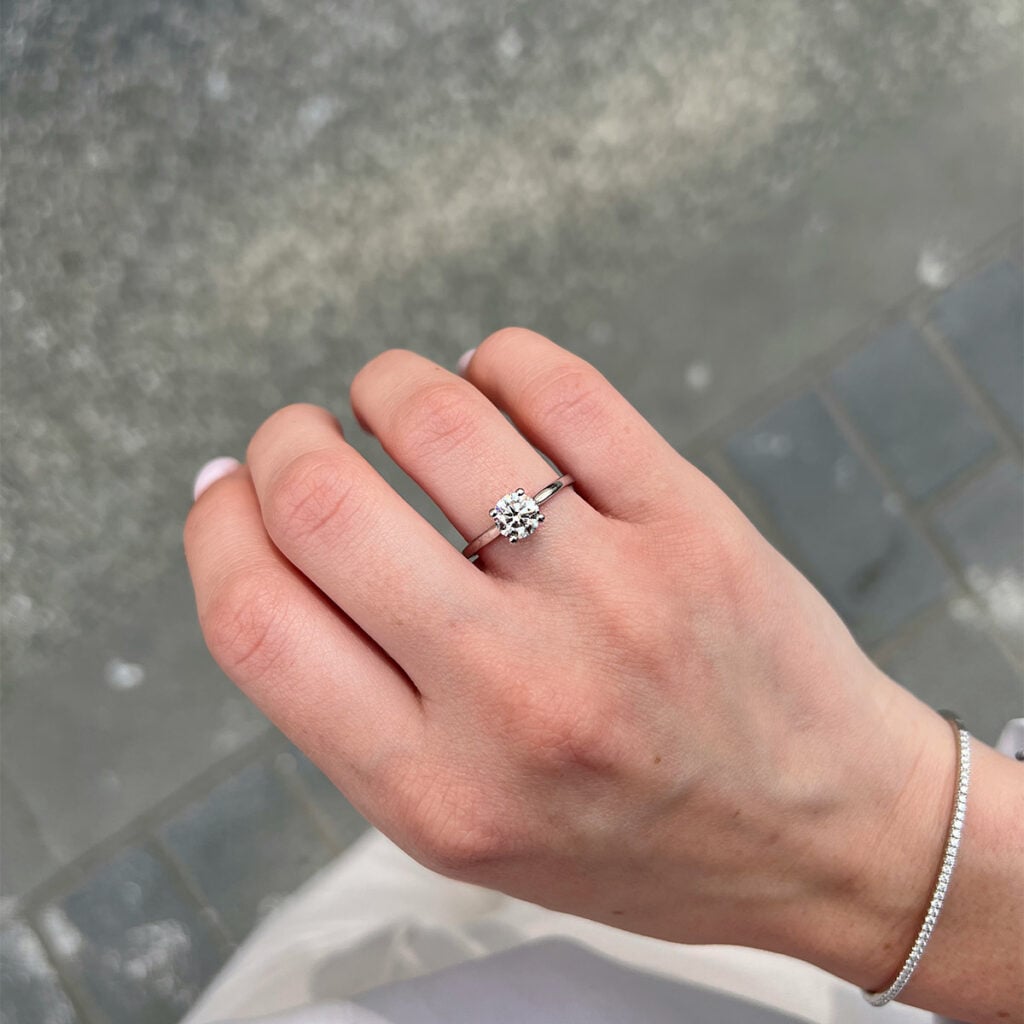
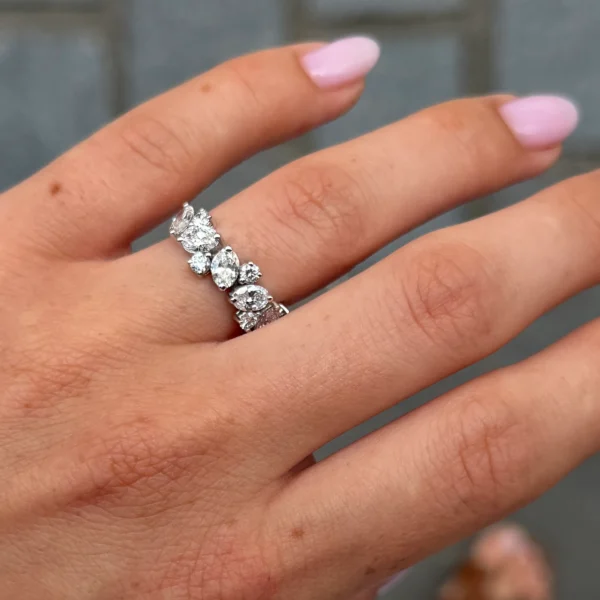
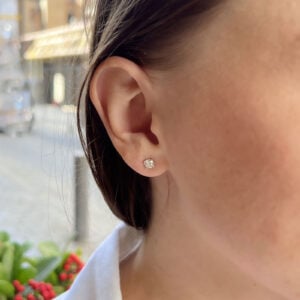
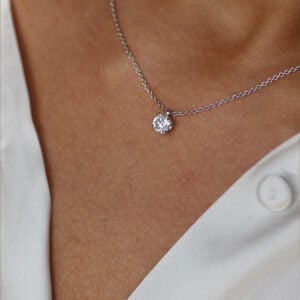
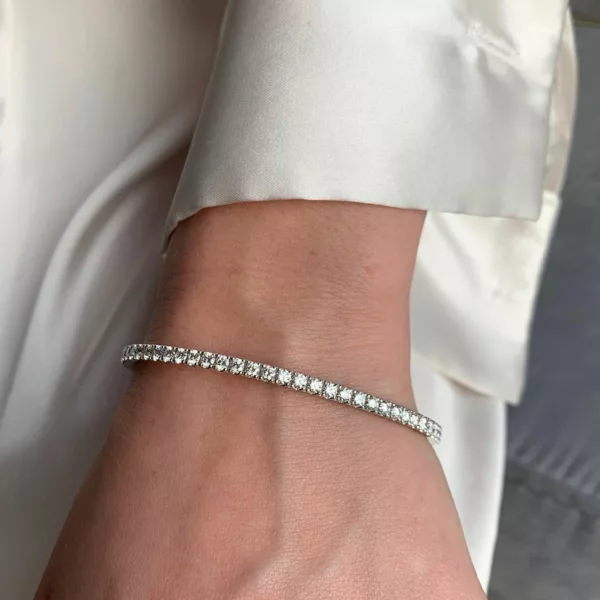
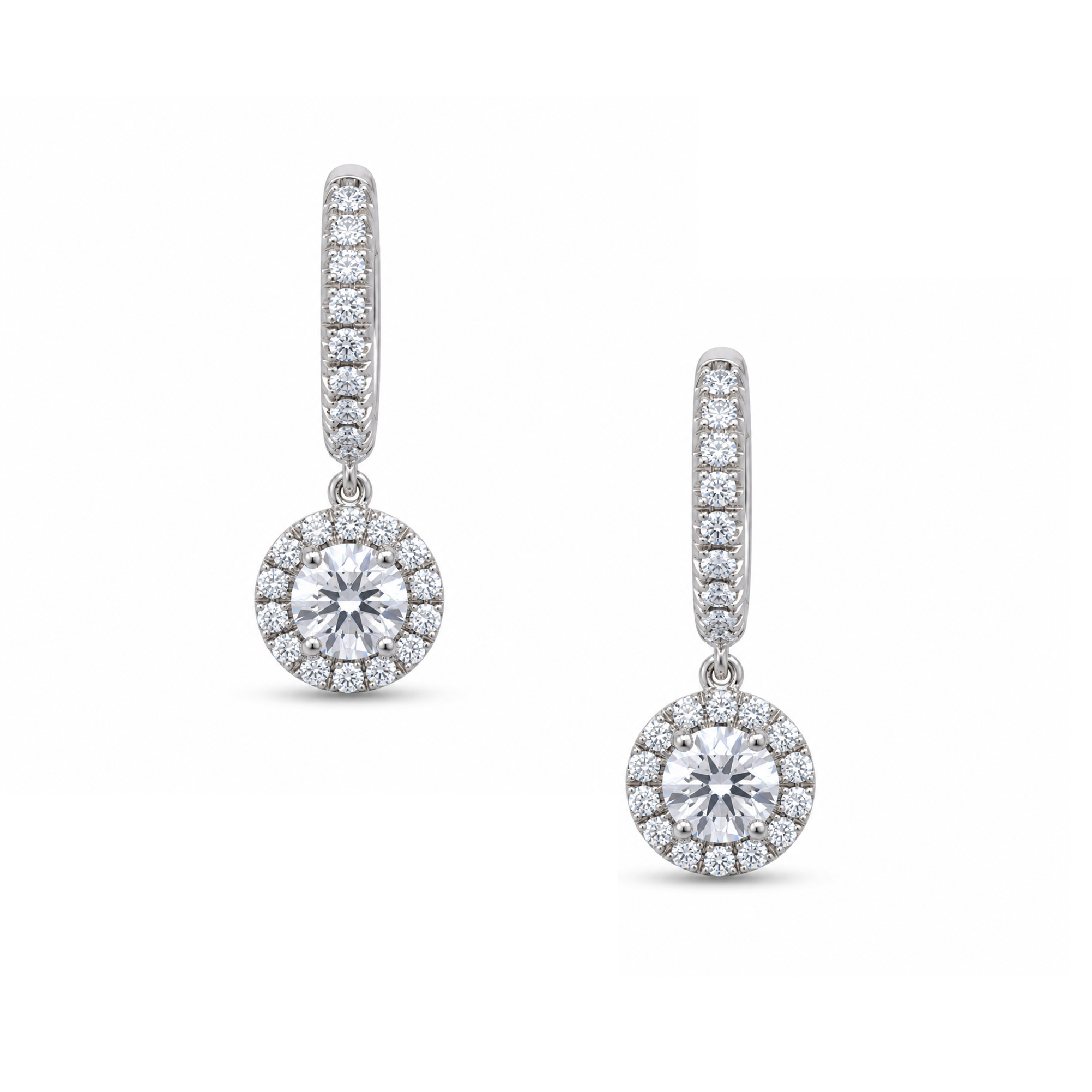
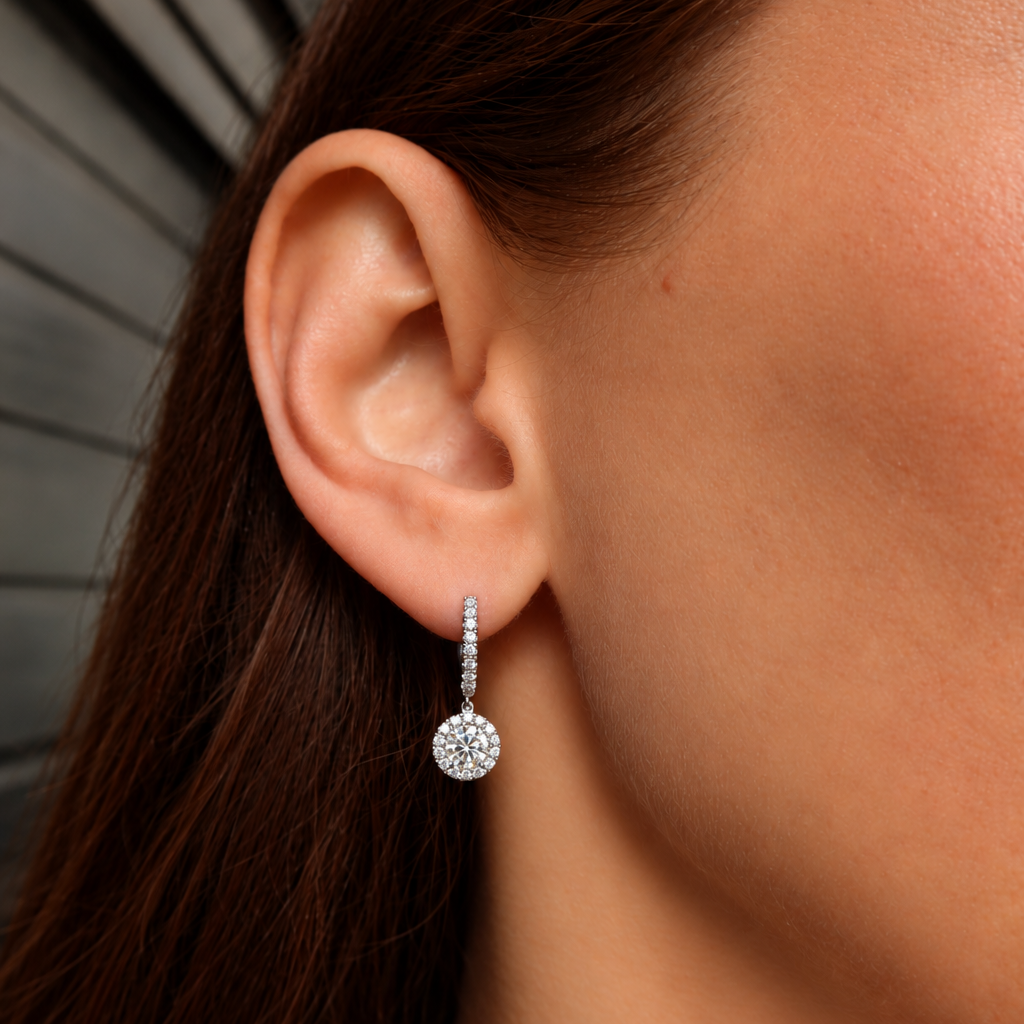
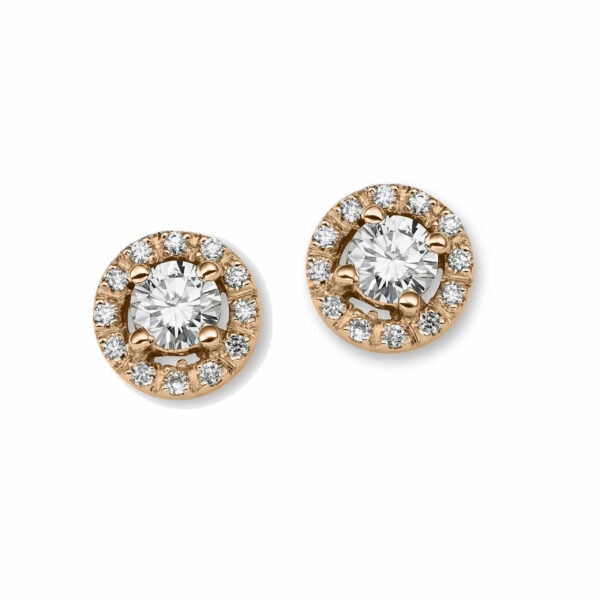
Halo diamond drop earrings, two GIA-certified 0.40 ct centres, 18K white gold
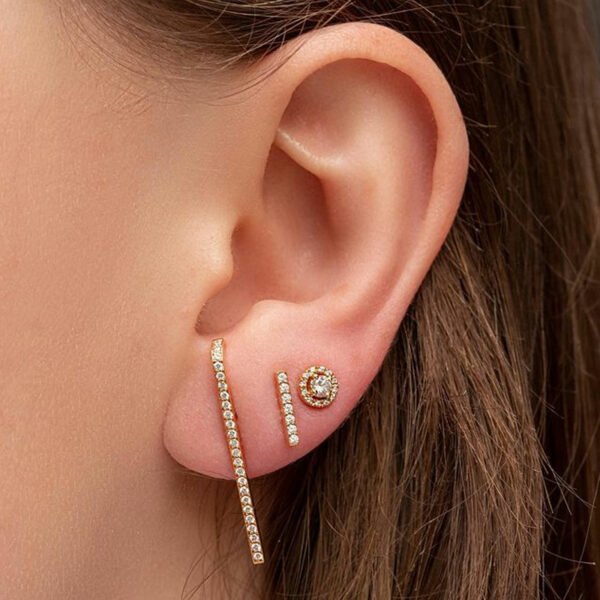
Each earring is two parts: a slim pavé-set bar that curves over the lobe, and a halo cluster suspended beneath it, free to swing. At the centre of each halo sits a 0.40 carat round brilliant with its own GIA report. 18K white gold.
The stones
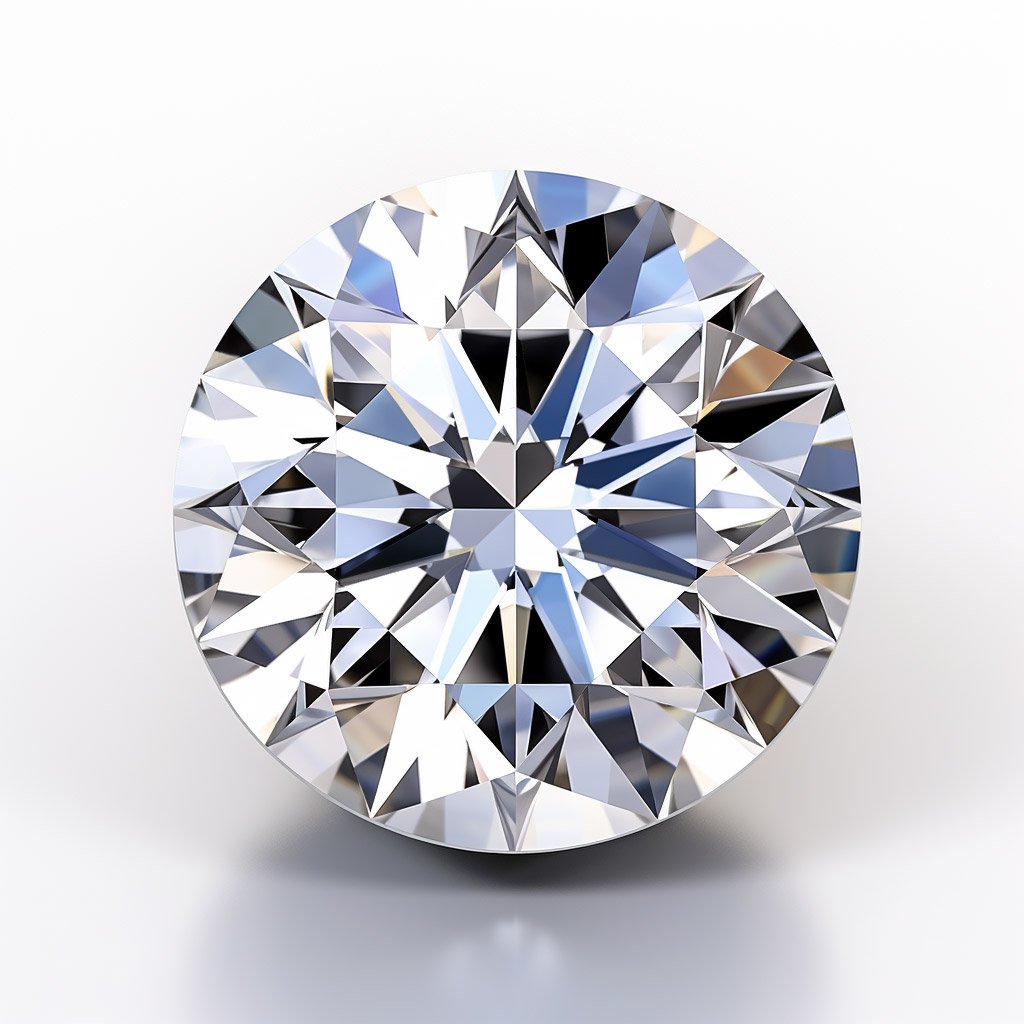
- Left and right centres: 0.40 ct each, 0.80 ct together — round brilliants, colour F, clarity VS2
- Both graded Excellent for cut, polish and symmetry, with no fluorescence
- 4.71 – 4.73 × 2.94 mm — GIA 2556518091
- 4.69 – 4.71 × 2.94 mm — GIA 1568074139
- Surrounding stones: 0.34 ct of round brilliants, D–F colour, VS clarity, set in the halos and along both bars
Earrings are judged at a different distance from rings
This is the fact the design answers, and it is why a ring and a pair of earrings at the same price are built so differently.
A ring is examined at arm’s length by the person wearing it, and closer than that by anyone who asks to see it. At thirty centimetres the eye resolves a single stone: its outline, its clarity, whether the table is clean. Earrings are almost never seen that way. They are seen across a table, in profile, at a metre or two, against hair and skin, by someone who is looking at a face rather than at jewellery.
At that distance the eye cannot resolve an individual stone at all. It registers two things: the size of the lit area, and whether it moves. That is what the construction here is built around.
Size: what the halo adds to a 4.7 mm stone
A 0.40 ct round measures about 4.7 mm across — a proper stone, not an accent, and large enough to stand alone as a stud. Ringed by a halo, it stops being read as a stone at all. The eye takes the whole lit disc, centre and halo together, as a single object, because at conversational distance it cannot see the metal between the stones that would tell it otherwise. The result reads as a considerably larger solitaire than the carat weight of the centre would suggest.
Movement: where the cut grade earns its keep
The second thing the eye registers at a distance is movement, and a stud cannot move: it returns light only when the head turns or the lighting shifts. Here the halo cluster hangs below the bar rather than being fixed to it, so it swings with every movement and keeps re-presenting itself to the light.
That is also what makes the Excellent cut grade on both centres worth paying for. A cut grade describes how efficiently a stone returns the light that enters it — and a stone that is constantly changing its angle to the light is the one that draws on that efficiency most often. On a ring, worn flat and seen from a fixed angle, a top cut grade is partly paperwork. On a drop earring it is the specification you actually see working.
What is certified here, and what is not
The two centre stones each carry a full GIA report. The 0.34 carats of surrounding diamonds do not, and that split is deliberate rather than a shortcut.
A laboratory report protects you on the stone that carries the value: it fixes the colour, the clarity and the cut in writing, by an independent party, and it is what an insurer or a future buyer will read. Submitting melee of this size for individual certification would cost more than the melee is worth, and no report exists that would change how those stones are set or seen. Paying for paperwork where it protects something, and not paying for it where it protects nothing, is the honest allocation.
Both centres are also laser-inscribed with their report numbers on the girdle, so each can be matched back to its certificate.
Certification
Supplied with GIA reports 2556518091 and 1568074139. Read how we source and verify our diamonds.
Made in Antwerp
Made in our own Antwerp workshop. Insured delivery is free across Europe. Browse the full diamond earrings collection, or come and try them at our Vestingstraat showroom.