Nederlands
 Français
 Italiano
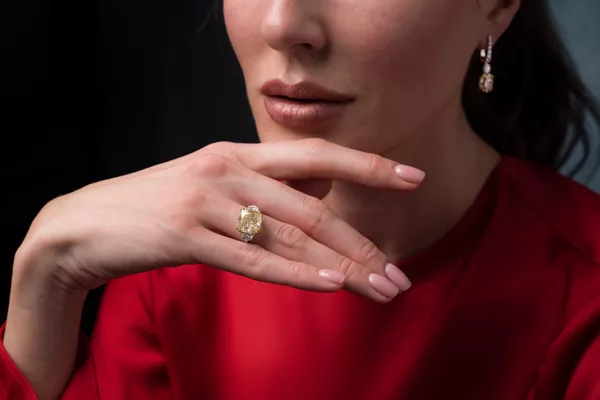


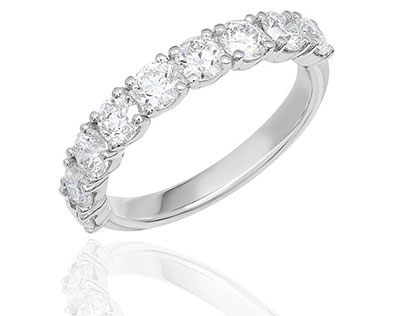

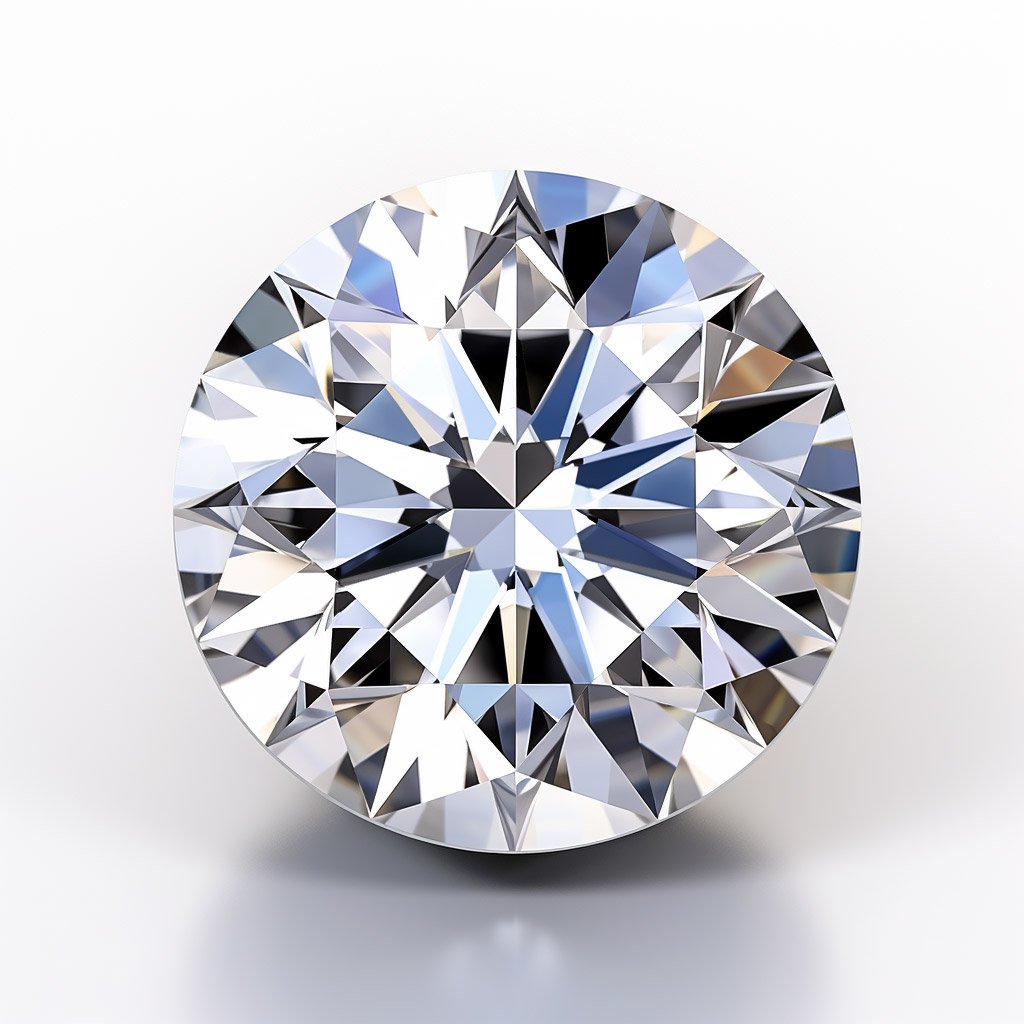


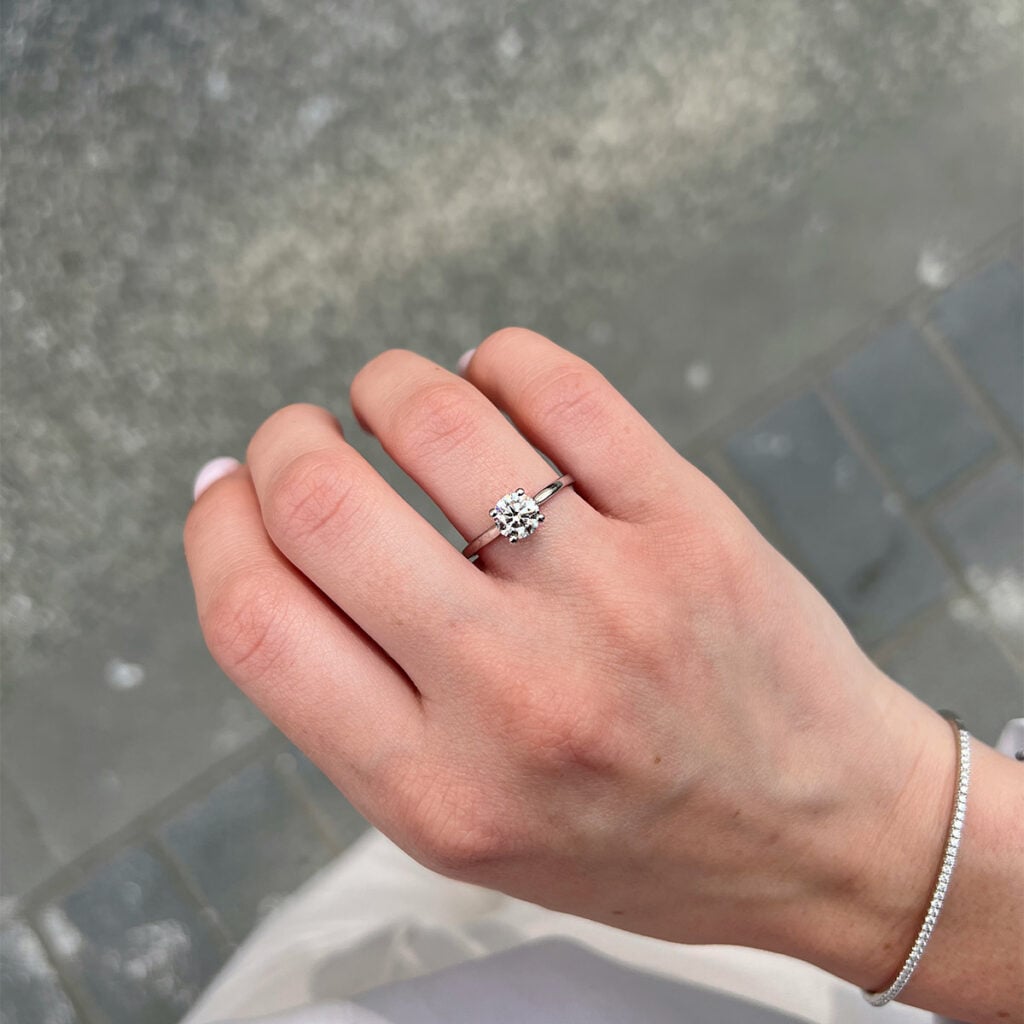
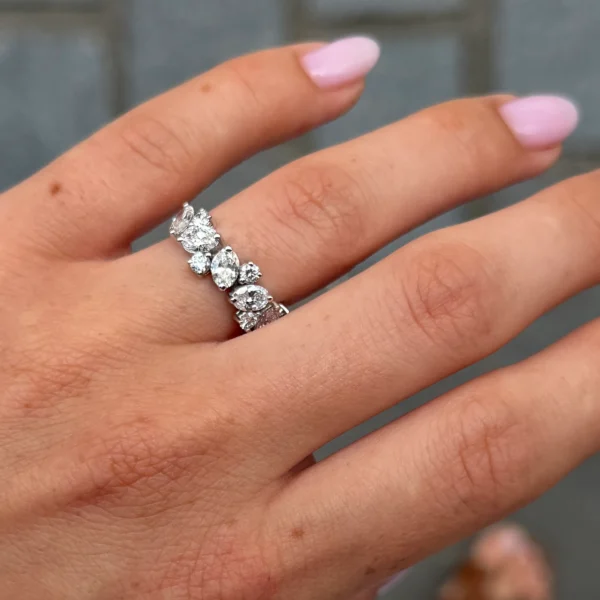


4.33 ct lab grown fancy vivid yellow diamond ring in 18K white and yellow gold
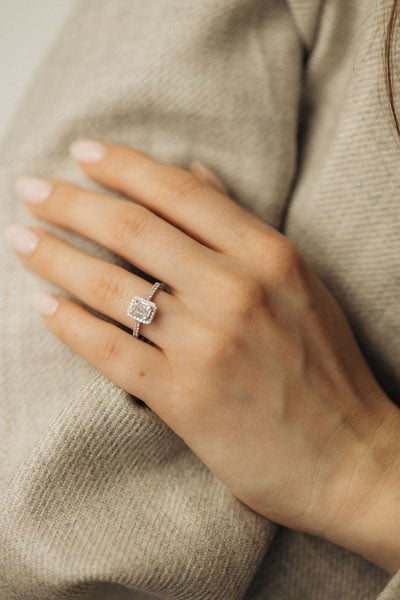
A 4.33 ct fancy vivid yellow lab grown diamond, cushion cut, SI1, IGI report LG631457822, held in a halo of lab grown white diamonds with a pavé band — 0.62 ct of side stones, D to F colour, VS1. 18K white and yellow gold. One ring, made in our Antwerp workshop.
Vivid, not just yellow
Yellow in a diamond comes from nitrogen sitting in place of carbon in the lattice; the nitrogen absorbs blue light and what returns to the eye is yellow. Almost all diamonds contain some nitrogen — it is why so many mined stones grade faintly off-white. What is rare is enough of it, arranged in the right way, to produce a colour strong enough that the trade stops calling it a defect and starts calling it fancy. Vivid is the top of that scale: the most saturated grade there is. In mined goods a 4.33 ct vivid yellow is an auction stone. Here the nitrogen was dosed on purpose.
Why two colours of gold
This ring is built in both metals, and the split is deliberate. The setting immediately under and around the centre stone is yellow gold, so the metal reflects back through the pavilion and reinforces the colour rather than diluting it. Everything else — the halo, the pavé band, the claws holding the white diamonds — is white gold, which keeps the surrounding stones icy and makes the centre read hotter by contrast. Build the whole ring in yellow and the halo goes creamy; build it all in white and the centre stone loses a shade. Two metals is not decoration here, it is optics.
The halo, and what it is doing
A halo of small white diamonds does two things for a coloured centre. It enlarges the apparent size of the stone, which is the reason most people think haloes exist. More usefully, it draws a bright white line around the colour, and colour perception is comparative — put anything next to pure white and it looks more saturated than it did alone. The 0.62 ct here is graded D to F, VS1: the whitest range, so the contrast is at its maximum. These side stones are lab grown, like the centre.
SI1 at four carats
The centre is SI1, and we say so rather than leaving the grade off the page. In a vivid colour at this saturation the body colour does most of the masking, and a cushion cut — unlike a step cut — breaks light into enough movement to occupy the eye. The honest answer is that clarity matters less here than it would in a colourless stone of the same weight, and that the only useful test is looking at it. The IGI report travels with the ring.
One piece
A single ring, held in Antwerp, with its IGI report. Ring size and any adjustment to the setting are agreed before the piece leaves the workshop.
Related — the fancy colour lab grown rings
The coloured pieces we hold, each a single ring: