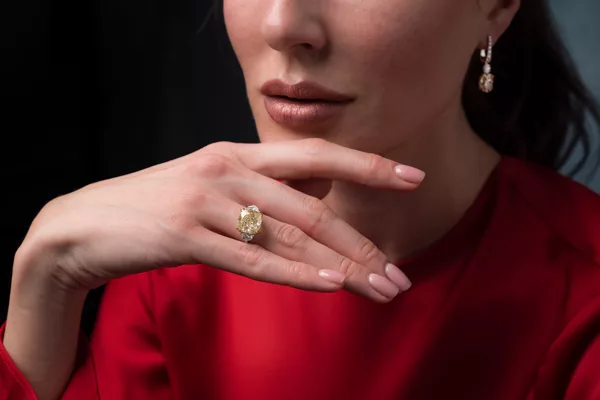
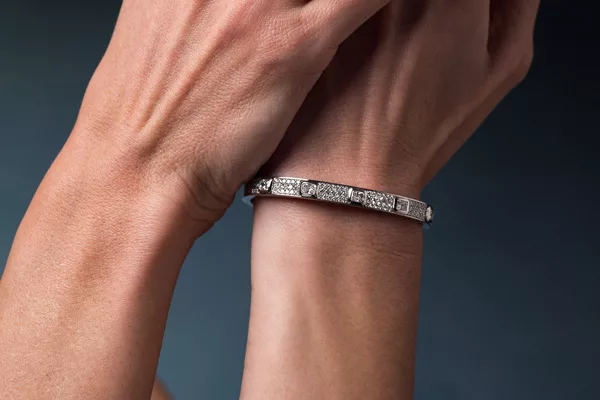
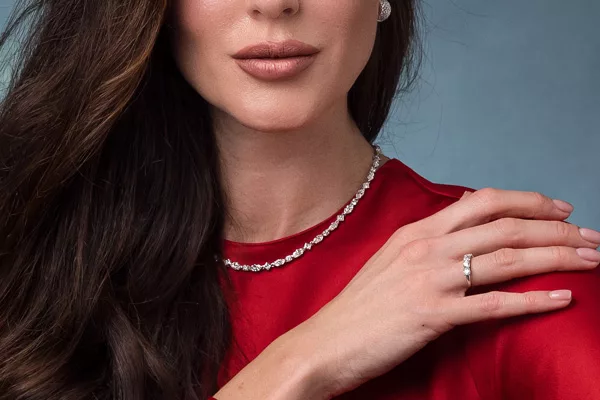
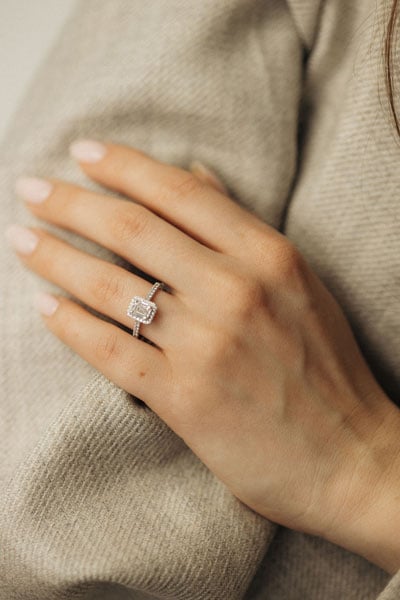
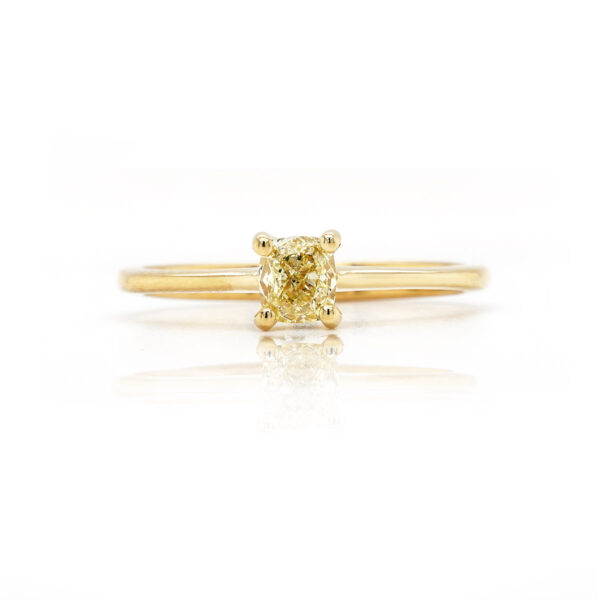
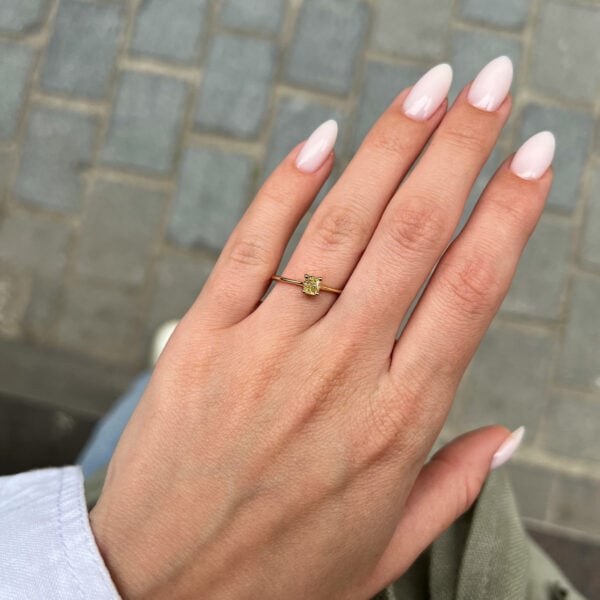
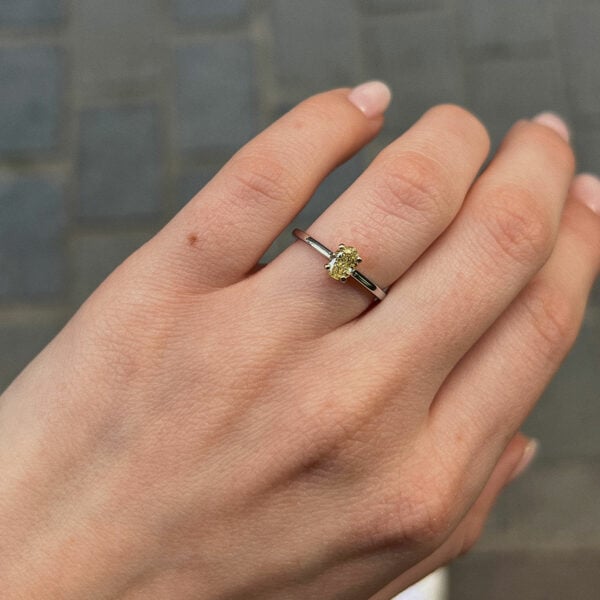
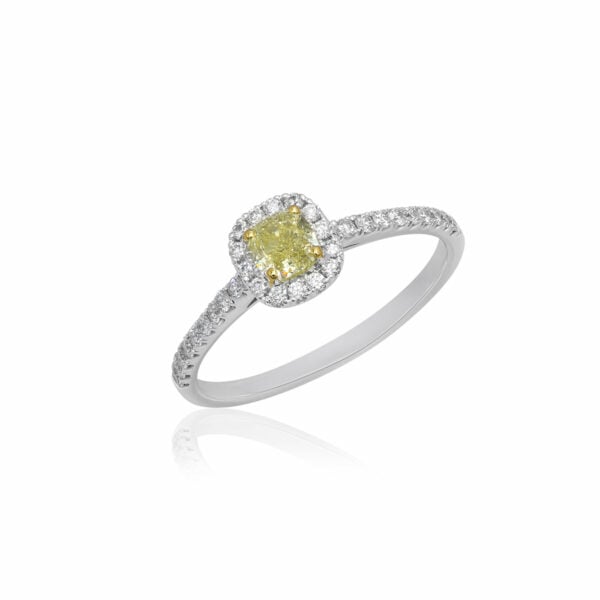
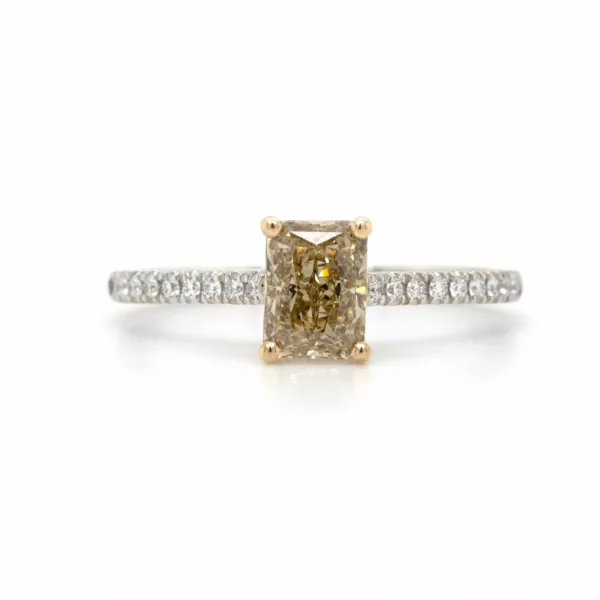
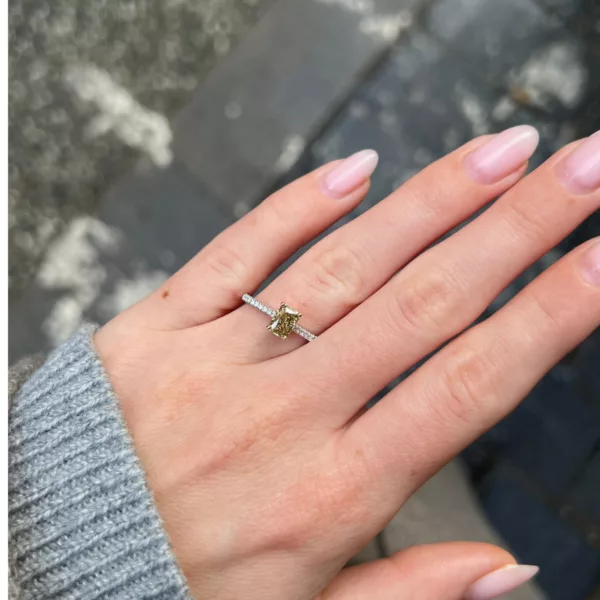
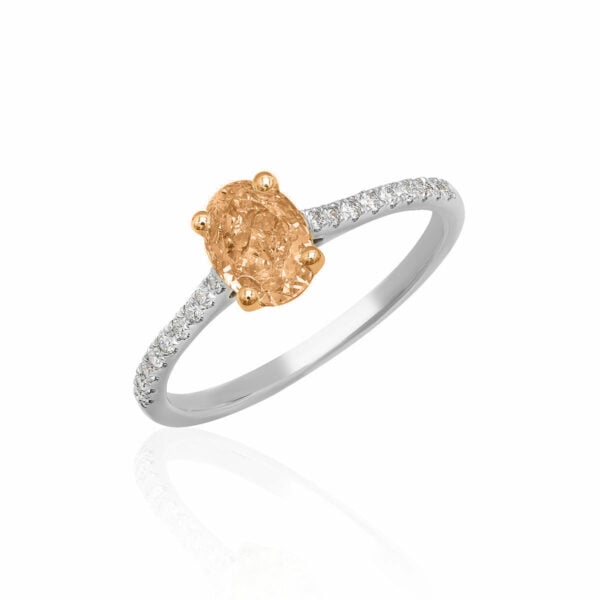
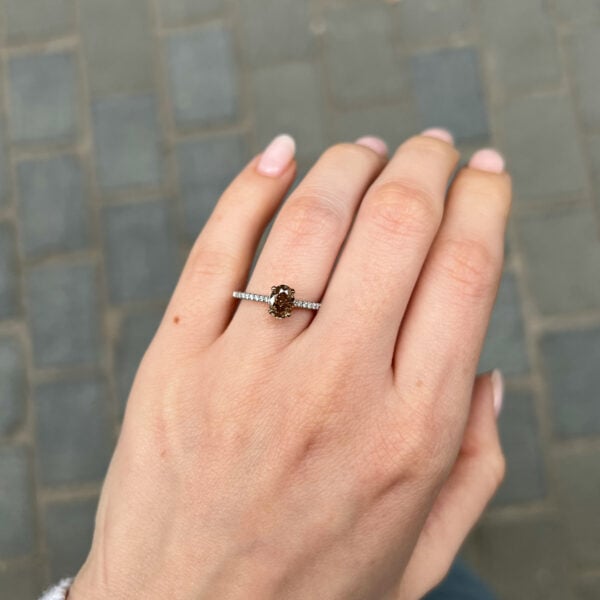
Find an engagement ring that suits the person who will wear it. Explore solitaire, halo, pavé and trilogy designs at Orogem in Antwerp, or visit us at Vestingstraat 38 to compare diamonds, settings and ideas for a bespoke ring.
Classic Engagement Rings
Halo Engagement Rings
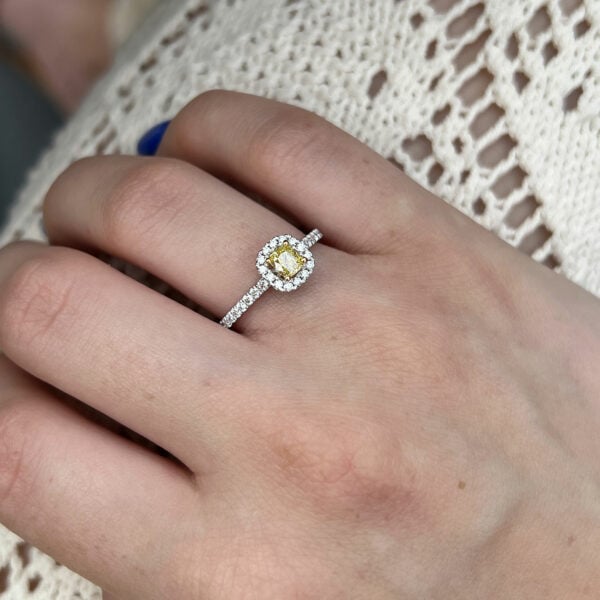
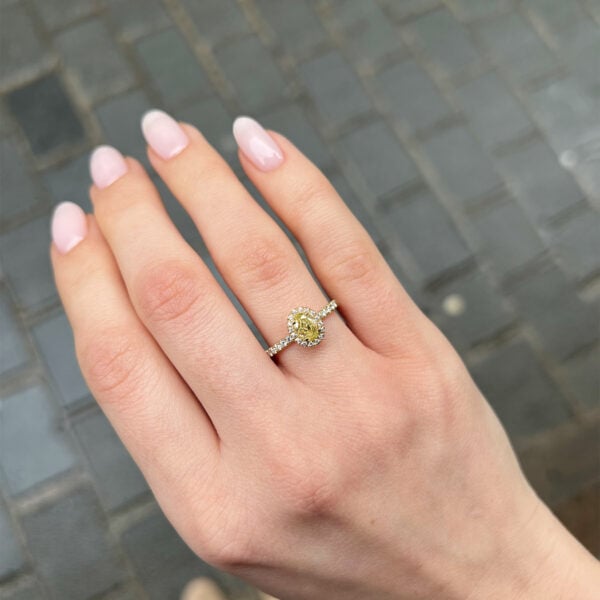
0.40 Carat Fancy Light Yellow Cushion Diamond Halo Engagement Ring (GIA Certified)
Halo Engagement Rings
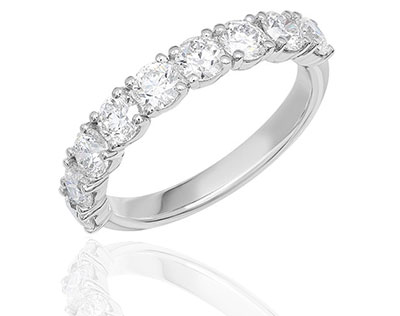
Diamond Band Engagement Rings
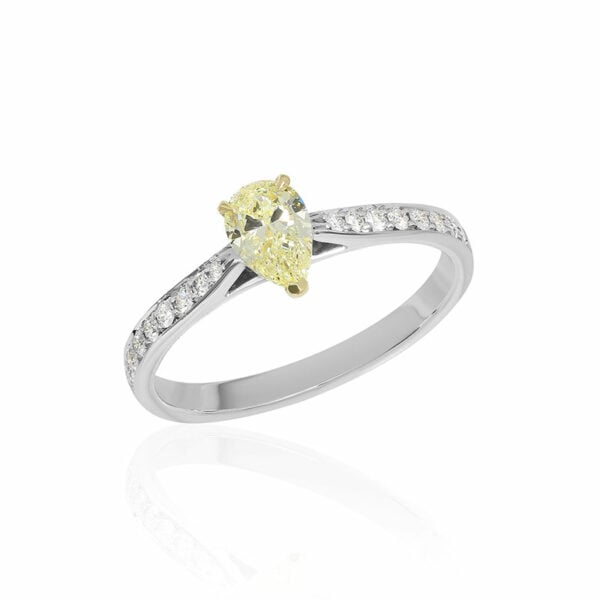
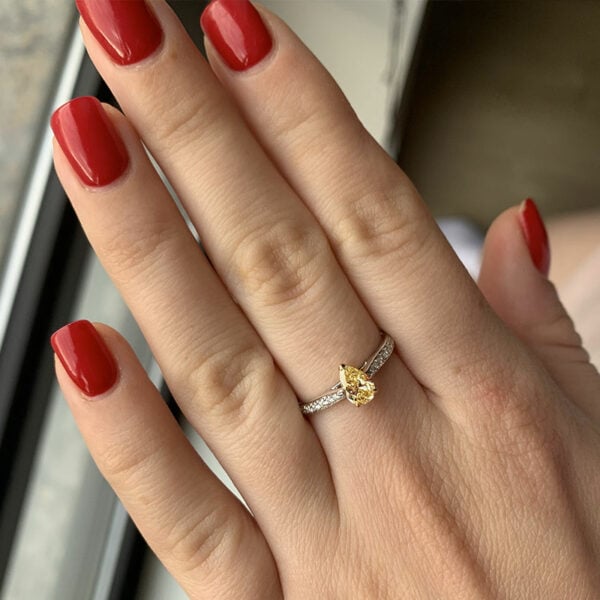
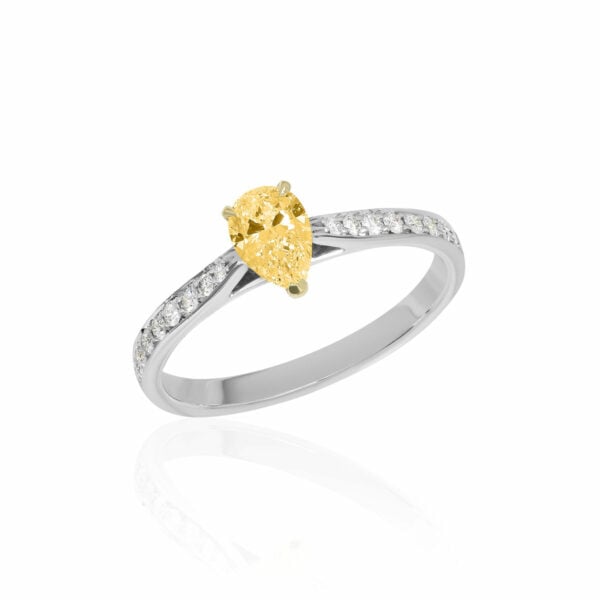
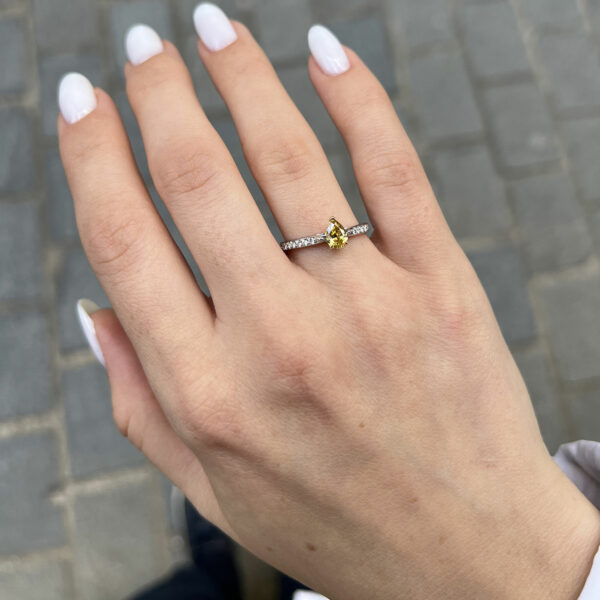
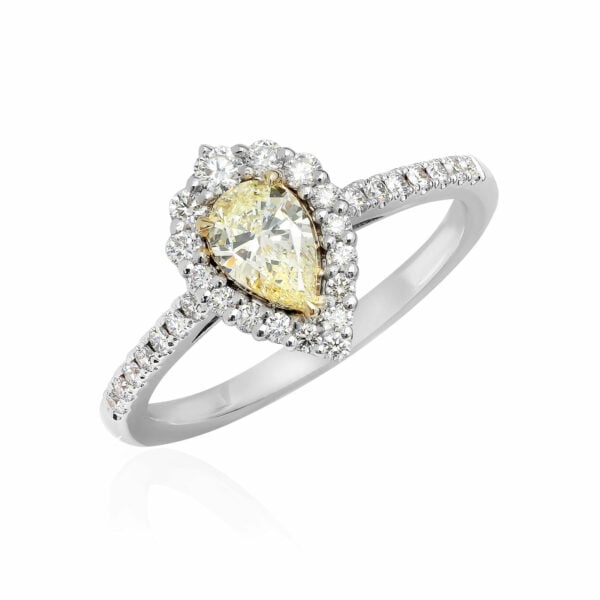
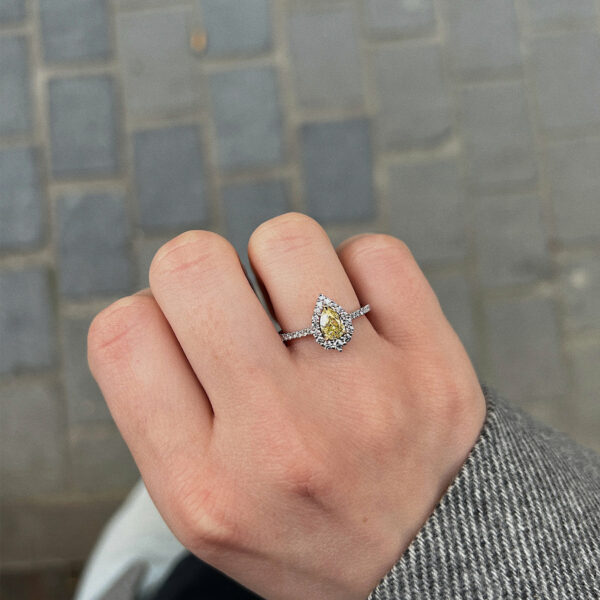
0.50 Carat Pear-Cut Diamond Engagement Ring – Pavé Diamonds in 18K White Gold
Halo Engagement Rings
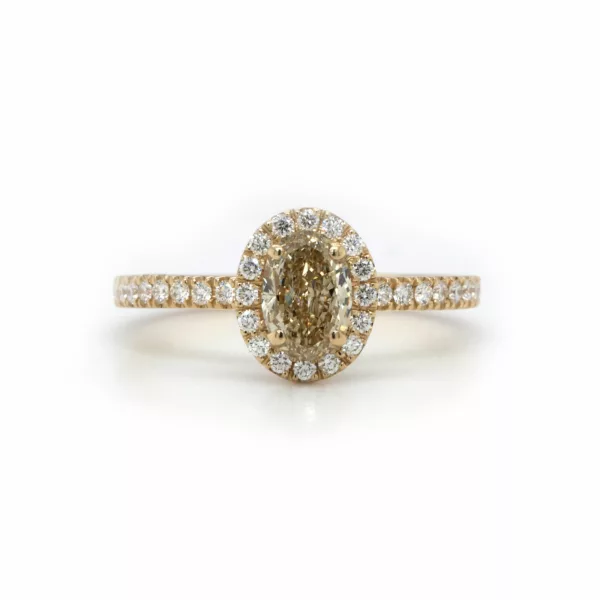
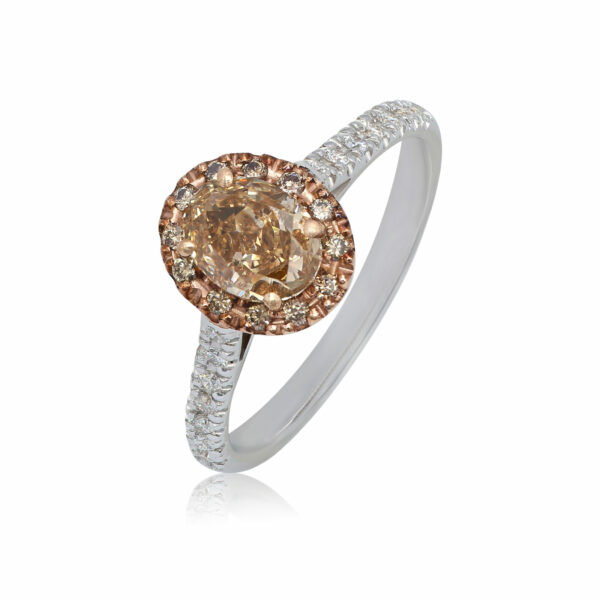
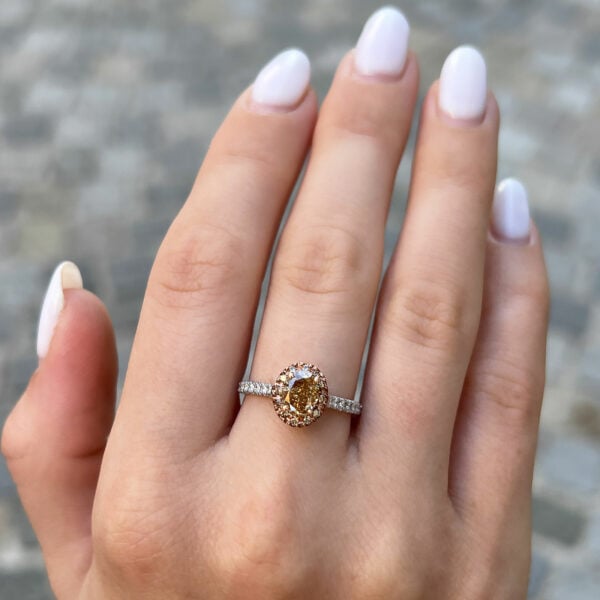
Fancy Light Brownish Yellow Oval Diamond Engagement Ring – Halo & Pavé in 18K White and Yellow Gold
Diamond Band Engagement Rings
0.70 ct Fancy Brownish Yellow Diamond Ring – GIA Certified with D-F VS Pavé in 18k Yellow Gold
Diamond Band Engagement Rings
0.81 Carat Fancy Yellow-Brown Oval Diamond Engagement Ring with Pavé Accents in 18K Yellow Gold
Diamond Band Engagement Rings
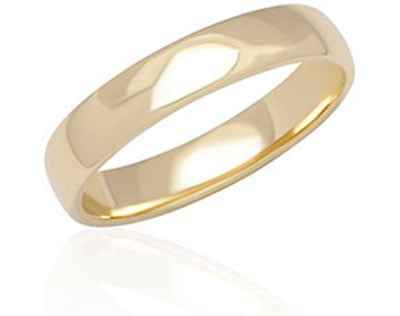
Classic Engagement Rings
Diamond Band Engagement Rings
0.50 Carat oval fancy light yellow diamond pavé engagement ring
Diamond Band Engagement Rings
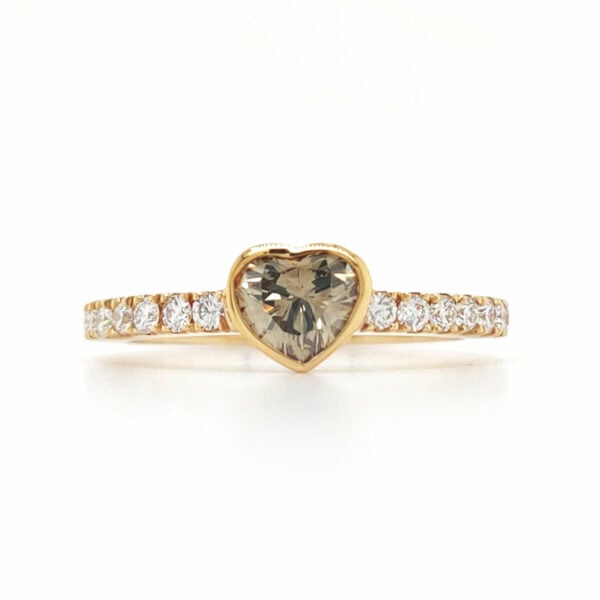
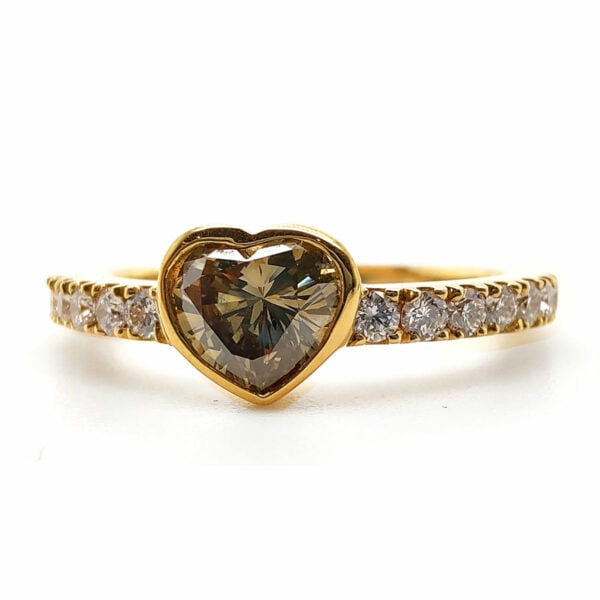
0.65 Carat heart cut and pavé diamonds engagement ring 18k yellow gold
Halo Engagement Rings
1.01 Carat Fancy Dark Yellowish Brown Diamond Halo Engagement Ring in 18K Rose Gold – GIA Certified
Halo Engagement Rings
1.02 Carat FBY oval diamond halo and pavé engagement ring GIA
Halo Engagement Rings
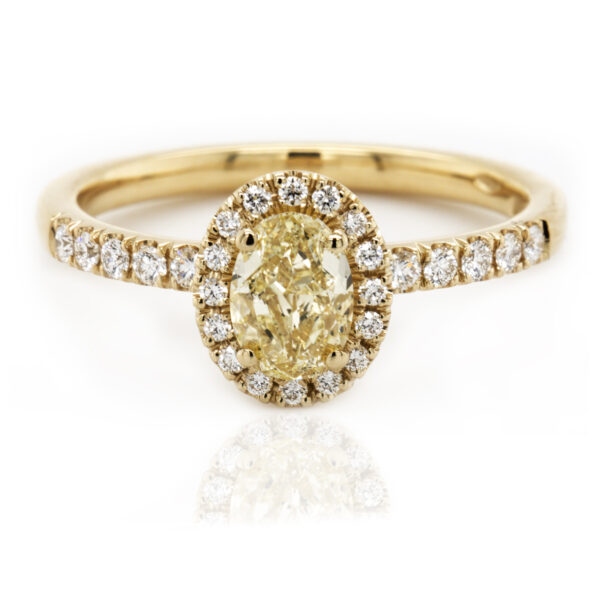
0.70 Carat Fancy Light Yellow Oval Diamond Halo Engagement Ring (GIA Certified)
Classic Engagement Rings
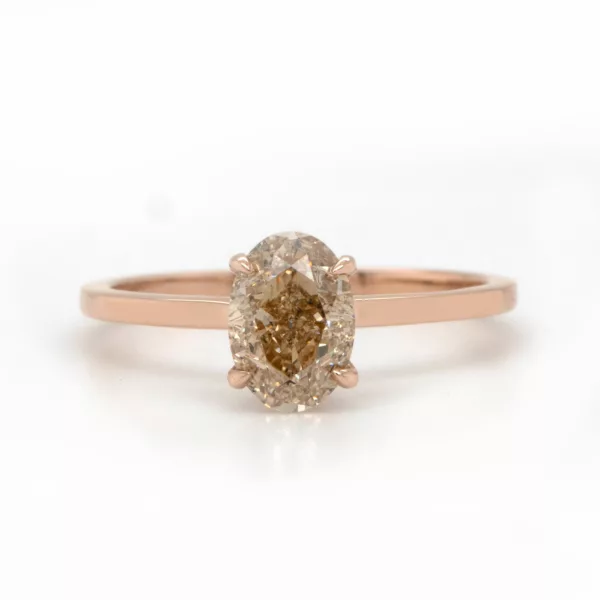
1.04 Carat Oval Solitaire Engagement Ring – F‑BY Color, VS2 Clarity, 18K Rose Gold
Diamond Band Engagement Rings
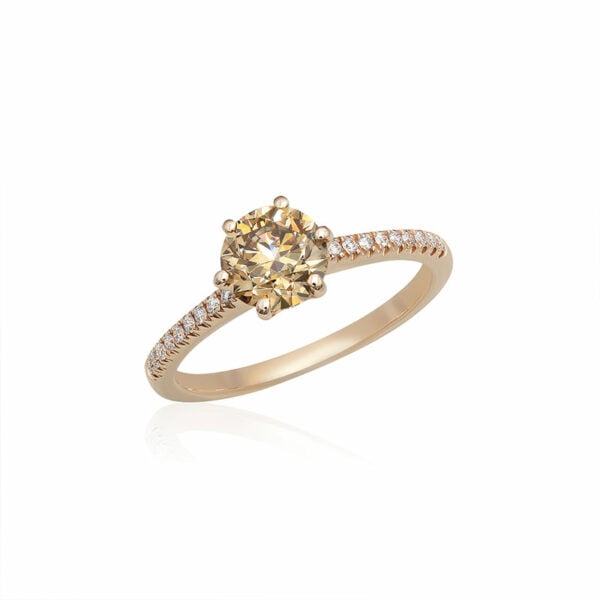
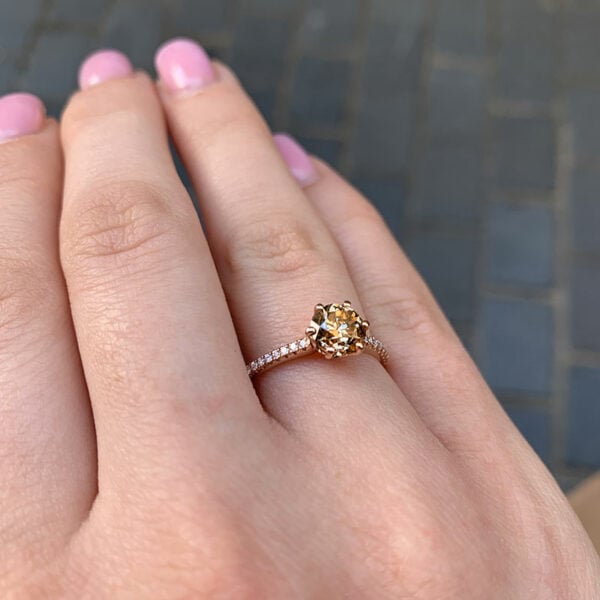
1.00 Carat six prong basket pavé diamond engagement ring rose gold 18K
Halo Engagement Rings
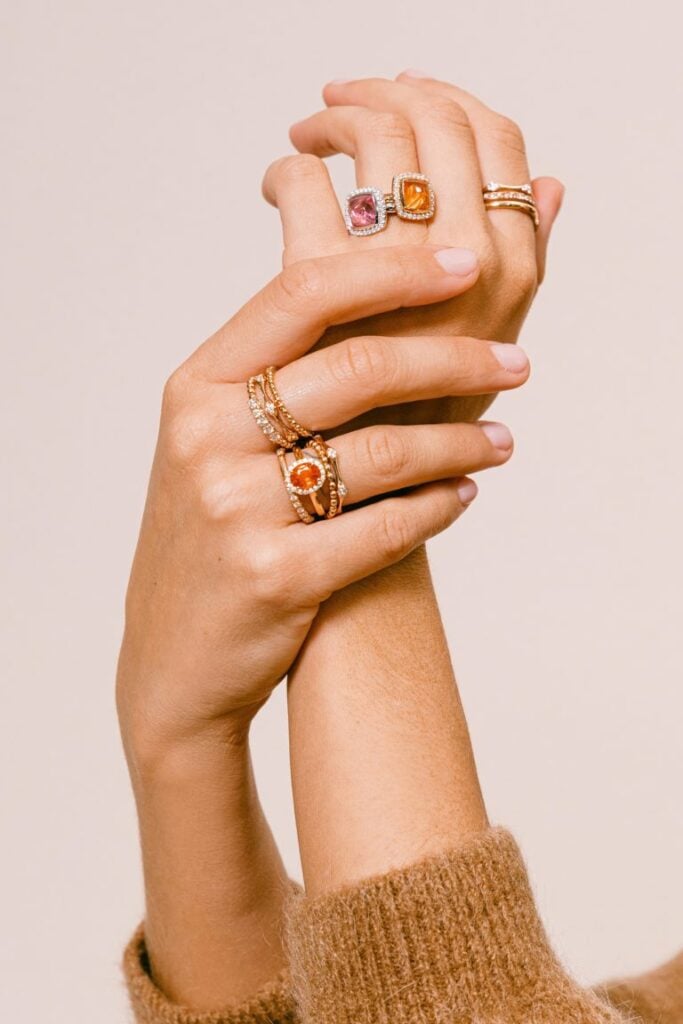
Start with the jewellery she already wears
The most useful information is already on her hands. Note the metal colour she wears daily, whether her pieces are plain or detailed, and how wide the bands are. Those three observations narrow 450 rings down to a few dozen faster than any carat figure will.
Then choose the architecture. A classic solitaire puts one stone on a plain band and is the only style that resizes freely later. A pavé or diamond band runs small stones along the shoulders, which makes the band look narrower and the centre stone look larger. A halo rings the centre with melee and adds roughly 1.5–2 mm to its apparent diameter. A three-stone ring spreads the weight sideways. Round and oval centres account for most of what we hold; emerald, pear, radiant, cushion and marquise are there in smaller numbers.
How to read the specification on each ring
Every product page here publishes four separate things, and they are not interchangeable.
- The centre stone — one weight, one colour grade, one clarity grade, one shape, and a report number.
- The side stones — a total weight and a grade range, such as D–F, VS range. Small diamonds are sieved to size and graded in parcels rather than individually, because a report costs more than a 1.2 mm stone is worth. The range is the floor of the parcel, not an average.
- The metal — 18K throughout, in white, yellow or rose.
- The laboratory — GIA, HRD or IGI. The report number is laser-inscribed on the girdle, and you can check it in that laboratory's public database before you order, not after.
If a ring anywhere quotes a single carat figure without separating centre from sides, ask which is which. A "1.20 ct" ring can be a one-carat solitaire or a 0.70 ct stone with a busy band.
Lab-grown or natural: what the difference actually costs
Both are diamond — same crystal, same hardness, same optics. One grew in the earth, one grew in a reactor, and the certificate says which.
The honest argument is price at equal specification. In our stock today a natural 1.04 ct D solitaire is €5,795; a lab-grown one-carat D solitaire is €1,350. That is the whole trade-off, and it is yours to make: the same budget buys about one carat natural or roughly two to three carats grown, at comparable grades. Stock and prices move, so compare the two pages side by side on the day.
One rule on our side: every lab-grown diamond set in an engagement ring here is graded by IGI. We do not offer GIA-certified lab-grown diamonds, and we would rather say so plainly than let you assume otherwise.
Ring size — how to measure, and what can be altered afterwards
Belgian and European sizes are simply the inner circumference in millimetres: size 52 means 52 mm. To find hers, take a ring she already wears on that finger, measure the inner diameter across the widest point and multiply by 3.14. A ring from a different finger is not a substitute — the difference between ring and middle finger is commonly one to two sizes.
Measure at the end of the day at normal room temperature. Fingers are measurably smaller in the cold and in the morning, which is how rings end up loose in August and tight in January.
What can be changed later depends on the design, and this is worth knowing before you choose:
- Plain solitaire band — sizes up or down comfortably, usually by two sizes or more.
- Pavé or diamond band — about one size either way. The shoulders are already cut to seat the stones, so only the plain section at the back can be worked.
- Full eternity — not resizable. It has to be made to measure.
If you do not know the size and cannot find out without spoiling the surprise, tell us and we will talk through the options for the specific ring rather than guessing.
What engagement rings cost here
Rings start at €985 for a certified natural diamond and €965 for a lab-grown one, and run into five figures for larger and fancy-coloured stones. There is no rule about spending a set number of months' salary; it was an advertising slogan, not a tradition.
Anything marked in stock is physically in the Antwerp workshop, already made, with its report — so it needs no production time.
A ring made to order
If you like the stone from one ring and the band from another, that is a tailor-made engagement ring. The route is a consultation, a free written quotation against your design and materials, a CAD drawing you approve, then casting and setting. Tell us your proposal date at the first conversation so we can confirm the schedule before any work starts.
Visit Orogem in Antwerp
Orogem is a family jewellery house in the Antwerp diamond district, with four generations behind it. Buying here means buying where the stones are traded and set: you can see a diamond loose, under a loupe, before it goes into a mount, and compare two stones next to each other instead of across two websites.
Vestingstraat 38, 2018 Antwerp. Monday to Thursday 10:00–18:00, Friday 10:00–17:00, Saturday 12:00–17:00, closed Sunday. Call or WhatsApp +32 3 232 30 77, or book an appointment. If a particular ring has caught your eye, send us its name and we will have it out of the safe and on the table when you arrive.