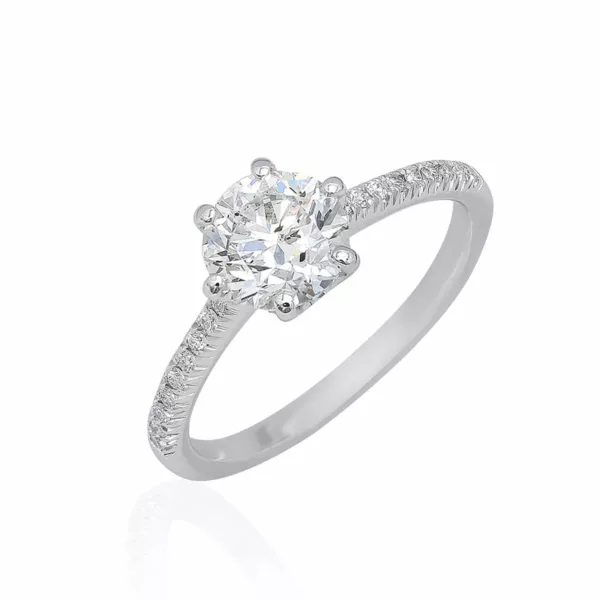
Lab grown diamond engagement rings set in our own Antwerp workshop. Every stone IGI certified, in every shape, from 0.50 ct upwards, in 18K white, yellow and rose gold. Same crystal as a mined diamond, graded on the same 4Cs — and roughly a third of the price for the same size.

Lab Grown Diamond Engagement Rings

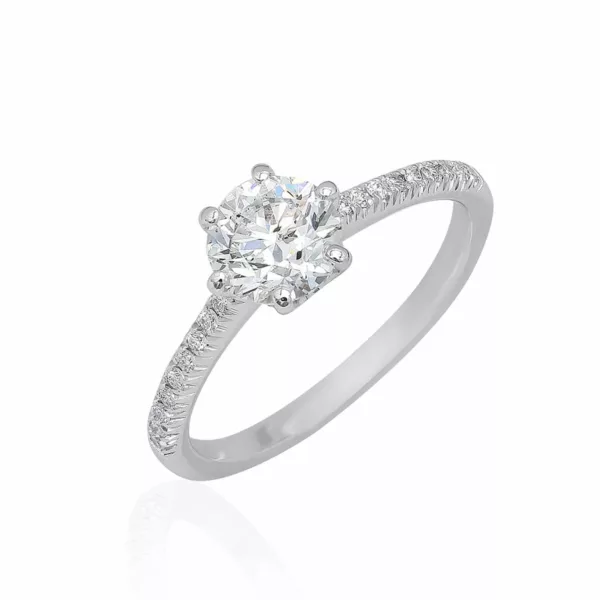
0.51 ct Lab Grown Round, D VVS2, White Gold

965,00 (incl. VAT)

Lab Grown Diamond Engagement Rings

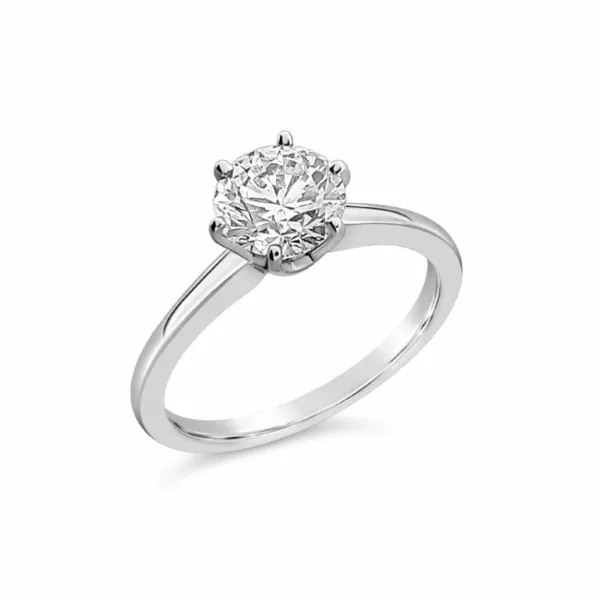
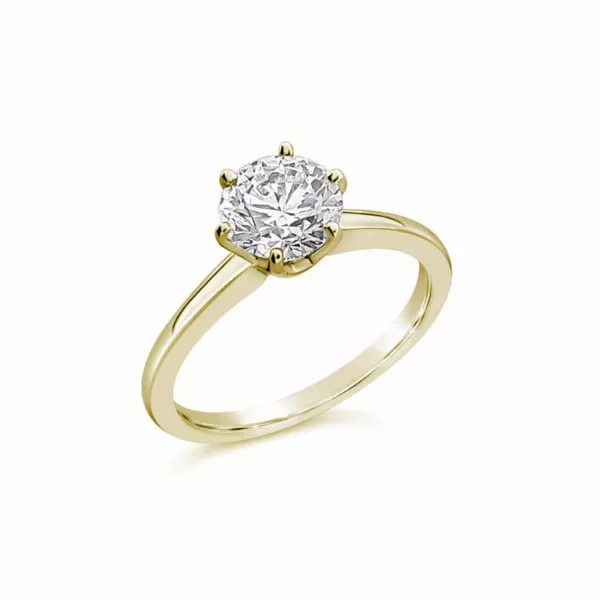
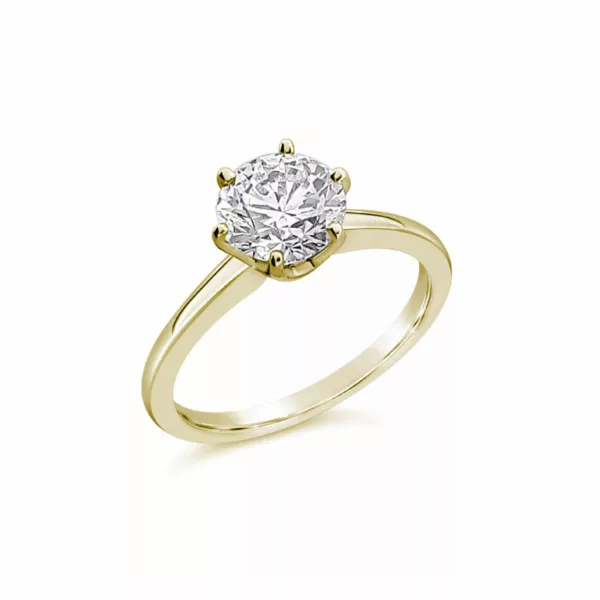
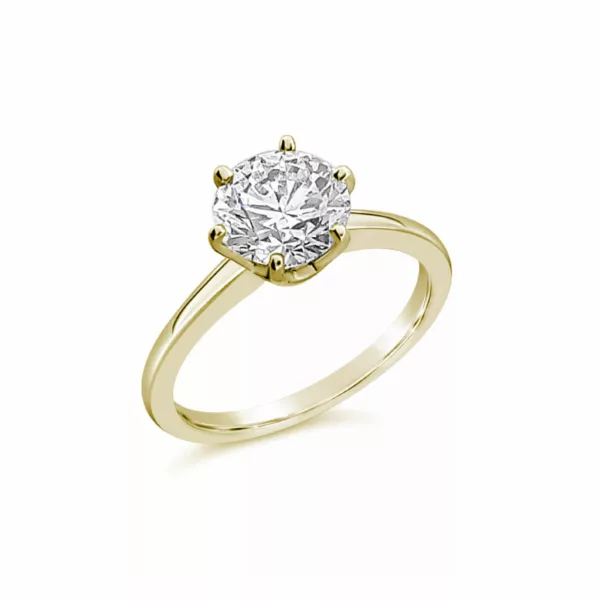
0.50 carat Six prongs labgrown diamond engagement ring

965,00 (incl. VAT)

Lab Grown Diamond Engagement Rings

0.74 ct Lab Grown Round, D VS1, White Gold

1 195,00 (incl. VAT)

Lab Grown Diamond Engagement Rings

0.70 carat Six prongs labgrown diamond engagement ring

1 195,00 (incl. VAT)

Lab Grown Diamond Engagement Rings

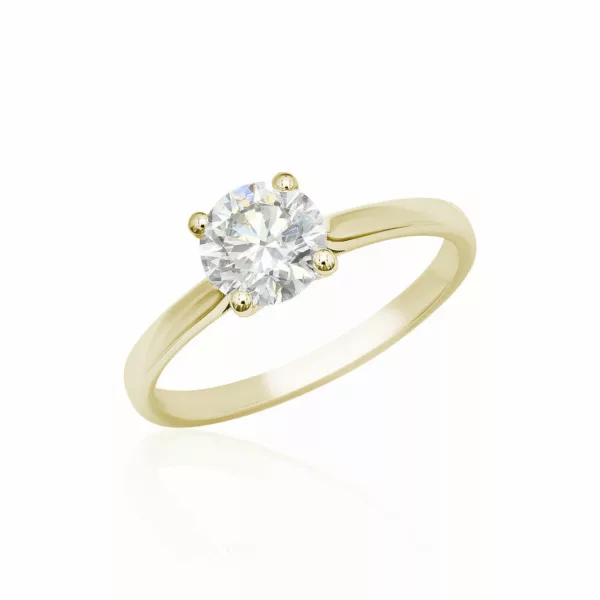
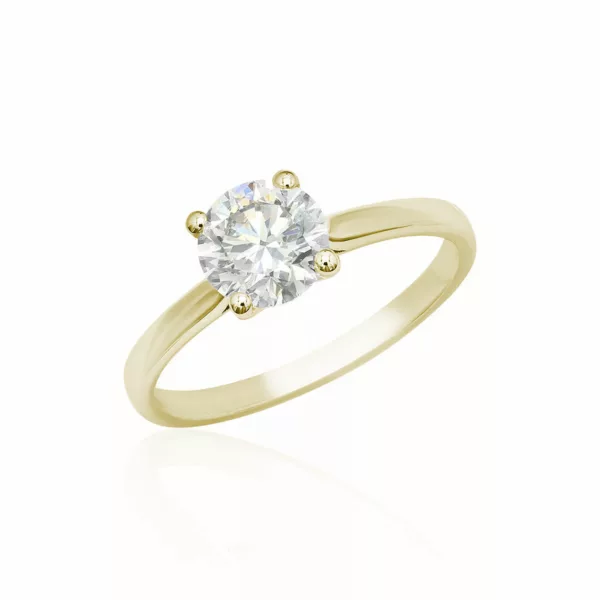
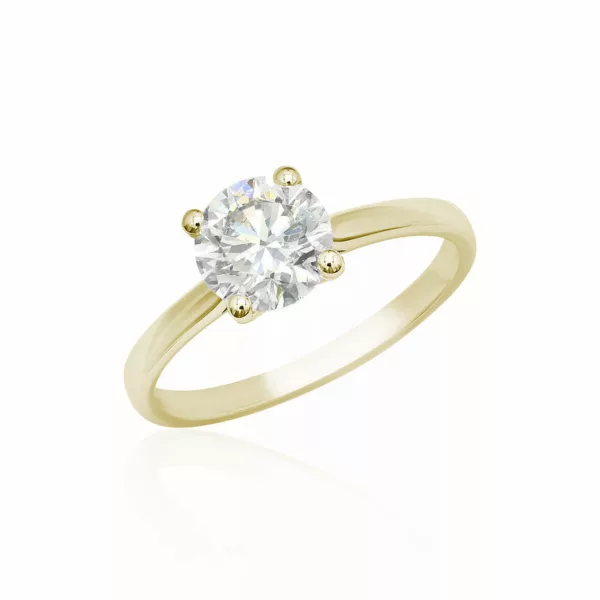
0.72 ct Lab Grown Solitaire D VVS2, Yellow

1 195,00 (incl. VAT)

Lab Grown Diamond Engagement Rings

0.73 ct Lab Grown Oval, D VS2, White Gold

1 195,00 (incl. VAT)
1 225,00 (incl. VAT)

Lab Grown Diamond Engagement Rings

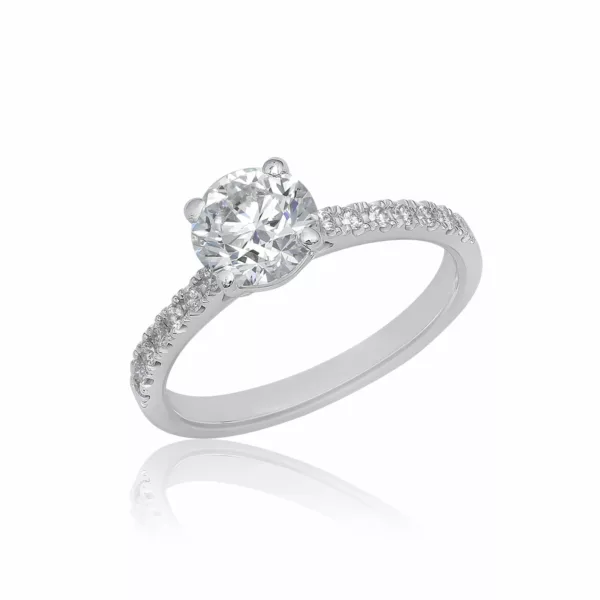
0.51 ct Lab Grown Round D VS1, Pavé Band

1 225,00 (incl. VAT)

Lab Grown Diamond Engagement Rings

1.03 ct Lab Grown Round, D VVS2, White Gold

1 350,00 (incl. VAT)

Lab Grown Diamond Engagement Rings

1.00 carat Six prongs labgrown diamond engagement ring

1 350,00 (incl. VAT)

Lab Grown Diamond Engagement Rings

1.06 ct Lab Grown Round, D VS1, Yellow Gold

1 350,00 (incl. VAT)

Lab Grown Diamond Engagement Rings

1.04 ct Lab Grown Oval Solitaire, D VVS1

1 350,00 (incl. VAT)
1 410,00 (incl. VAT)

Lab grown diamond engagement rings, made in Antwerp

Every ring in this collection is set by hand in our own workshop, a few streets from the Antwerp diamond district, around a laboratory-grown diamond certified by IGI, the International Gemological Institute. Solitaires, hidden halos, three-stone and pavé designs, in 18K white, yellow and rose gold, from half a carat upwards.

If you want a shape, a carat weight or a setting you do not see here, we build it. See tailor-made engagement rings.

Lab grown, lab created, laboratory grown — the same stone under different names

The vocabulary around these diamonds is a mess, and it costs people money because they end up comparing things that are not comparable. Here is the plain version.

Lab grown, lab-created, laboratory-grown, man-made and cultivated all mean exactly the same thing: a real diamond, grown in a machine instead of in the earth. There is no difference in the product behind these words — only in the marketing department that chose them.

Synthetic diamond is the older technical term and still the most searched one in several European languages. It is accurate in the scientific sense — synthesised rather than mined — but the trade has moved away from it, because most people hear “synthetic” and think “fake”. It is not fake. It is carbon, crystallised in the cubic system, exactly like the stone in your grandmother’s ring.

Diamond simulants are a different thing entirely. Moissanite, cubic zirconia and white sapphire look like diamond and are not diamond — different chemistry, different hardness, different behaviour in light. A lab grown diamond is a diamond. A simulant only resembles one. If a price looks impossible, this is usually the reason.

Are lab grown diamonds real diamonds?

Yes. A laboratory-grown diamond is pure crystallised carbon with the same cubic structure as a mined one: hardness 10 on the Mohs scale, the same refractive index, the same dispersion, the same behaviour under a loupe. It is not a copy of a diamond, it is a diamond that formed somewhere else.

The distinction is one of origin, not of nature. A gemmologist cannot tell them apart by eye, by loupe, or by any standard jeweller’s test. It takes specialised laboratory equipment reading growth patterns and trace elements — which is precisely what the certificate is for.

How they are made: CVD and HPHT

Two methods dominate, and the certificate will usually name one.

HPHT (High Pressure High Temperature) reproduces the conditions under a continent: a carbon source under roughly 1,500 °C and 5 GPa of pressure, with a small diamond seed for the carbon to build onto. It is the older process.

CVD (Chemical Vapour Deposition) works the other way: a carbon-rich gas in a vacuum chamber is broken into plasma and the carbon settles onto a seed plate, layer by layer, over several weeks. Most of the larger, cleaner stones on the market today are CVD.

Neither method is inherently better. The grades on the report are what matter.

Lab grown versus natural: the honest comparison

We sell both, so we have no reason to talk you into either one.

Where lab grown wins: size and quality for the money. At the same budget you are typically looking at two to three times the carat weight, or the same weight at a considerably higher colour and clarity. If what you want is a large, very white, very clean stone, this is the shorter route to it.

Where natural wins: scarcity, and what follows from it. A mined diamond is geologically finite; laboratory production is not, and prices have fallen steadily as capacity has grown. That is excellent news if you are buying and poor news if you are hoping to resell. Do not buy a lab grown diamond as an investment. Buy it because you want the most beautiful stone your budget allows on the day you propose.

If the origin of the stone matters to you in the other direction, read how we source our mined stones: conflict-free natural diamonds, or browse our natural diamond engagement rings.

Certification: what the report says

Every stone here is graded by an independent laboratory, in our case IGI, the International Gemological Institute, which grades the large majority of the world’s laboratory-grown diamonds. The report grades colour, clarity, cut and carat on the same scales used for mined diamonds, and states the origin explicitly — the wording is laboratory-grown diamond, and the growth method, CVD or HPHT, is usually noted.

Laboratory-grown stones are also laser-inscribed on the girdle with the report number and an origin marking, readable under magnification. Ask us to show it to you.

Choosing yours

Start from the shape, then decide between size and grade — on a lab grown stone you rarely have to give up much of either. Then the metal: 18K white gold keeps a very white stone reading cold and bright, yellow gold warms it slightly and lets you drop a colour grade or two without it showing.

The rest of the collection: lab grown diamond earrings, necklaces, and the full lab grown diamond jewellery range, including our Verdissimi collection.

Insured delivery is free throughout Europe, and every ring leaves us with its laboratory report and the Orogem jewellery certificate.

Frequently asked questions about lab grown diamond engagement rings

Are lab grown diamonds real diamonds?

Yes. A lab grown diamond is pure crystallised carbon with the same cubic structure, the same hardness of 10 on the Mohs scale and the same optical properties as a mined diamond. It is graded on the same 4Cs by the same laboratories. The only difference is that it crystallised in a machine rather than underground. This is what separates it from a simulant such as moissanite or cubic zirconia, which merely resembles diamond and is a different material.

How much less does a lab grown diamond cost?

As a rule of thumb, expect to pay roughly a third of the price of a mined diamond of comparable size and grade, although the gap varies by shape and by size and has widened as production capacity has grown. In practice this means two to three times the carat weight for the same budget, or the same weight at a noticeably higher colour and clarity.

Can a jeweller tell the difference?

Not by eye, not with a loupe, and not with a standard thermal diamond tester, because both stones are diamond. Distinguishing them requires specialised laboratory instruments that read growth patterns, fluorescence behaviour and trace elements. This is exactly why the certificate matters: it states the origin so nobody has to guess.

Do lab grown diamonds hold their value?

No, and any jeweller who tells you otherwise is selling. Laboratory production is not limited by geology, capacity has increased sharply and prices have fallen accordingly. A lab grown diamond should be bought for the stone you get today, not as a store of value. If resale value is part of your thinking, a natural diamond is the honest answer.

Are lab grown diamonds certified?

Yes. Every lab grown stone we set comes with an independent report, from IGI, the International Gemological Institute, grading colour, clarity, cut and carat exactly as for a mined diamond. The report states the origin as laboratory-grown and usually names the growth method, CVD or HPHT. The stone itself is laser-inscribed on the girdle with the report number.

Are lab grown diamonds more ethical?

They avoid the questions attached to mining, and their footprint depends heavily on the energy used to grow them, which varies a great deal between producers. It is fairer to call them a different set of trade-offs rather than a straightforwardly better one. Our mined stones are sourced through the Kimberley Process and our own checks; you can read about that on our conflict-free natural diamonds page.