Nederlands
 Français
 Italiano
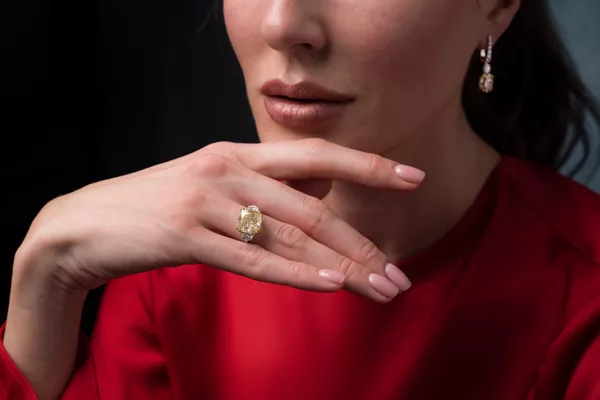

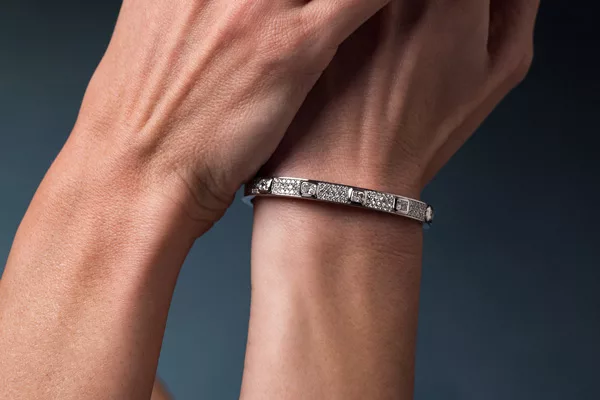
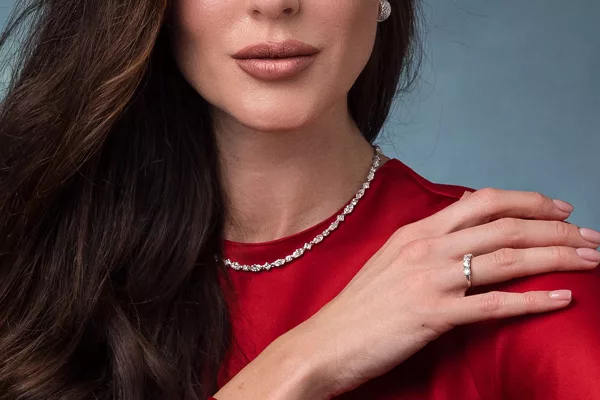




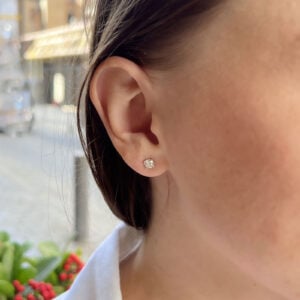
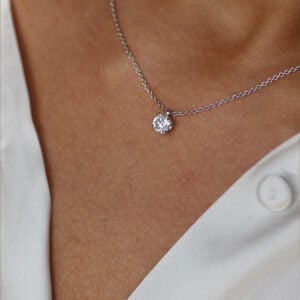
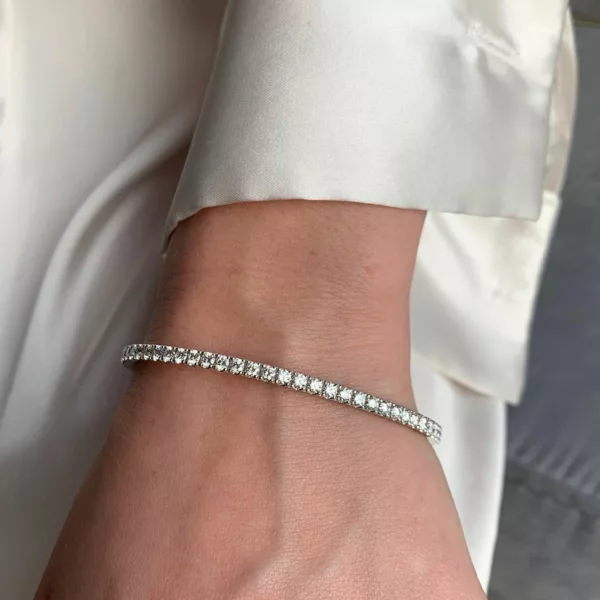
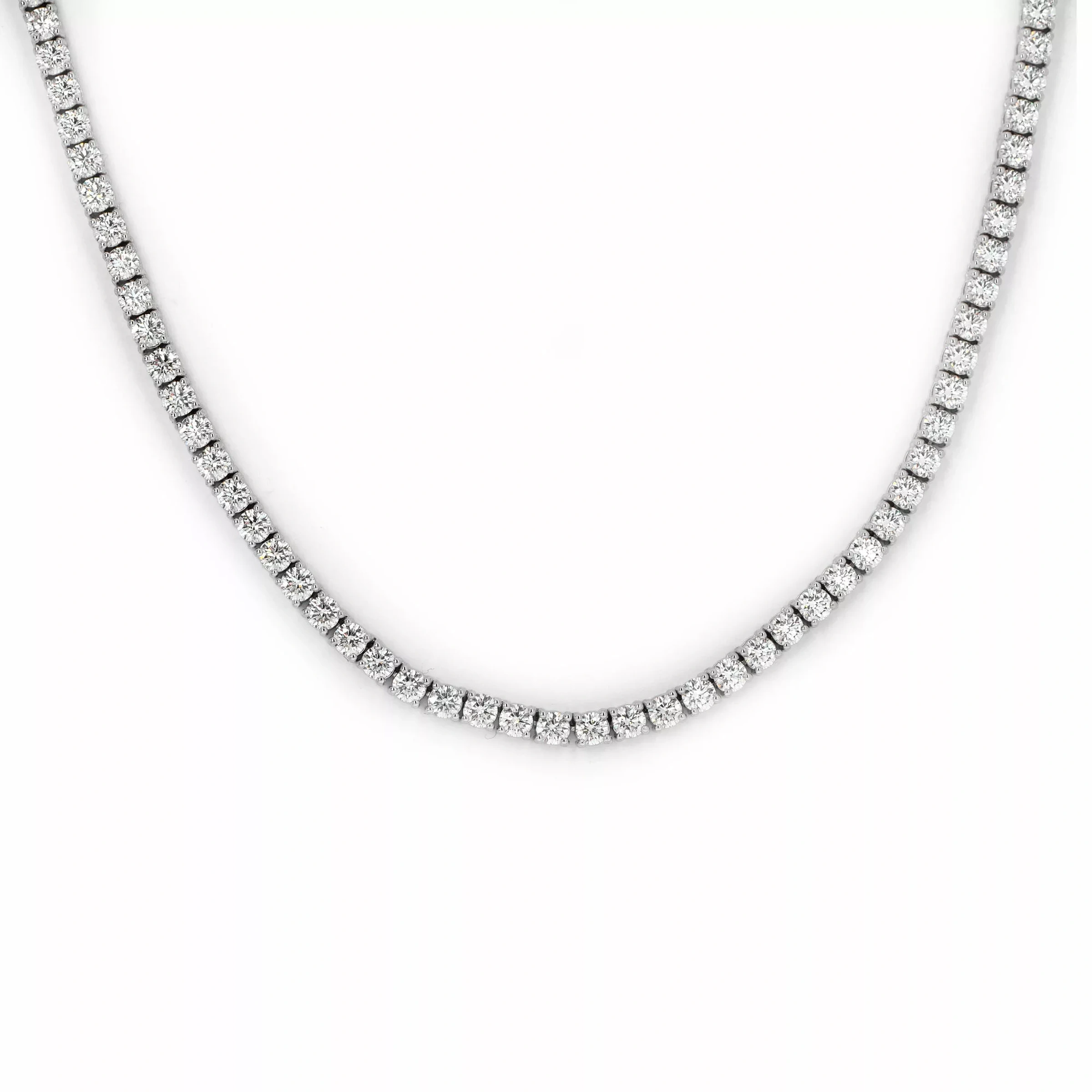
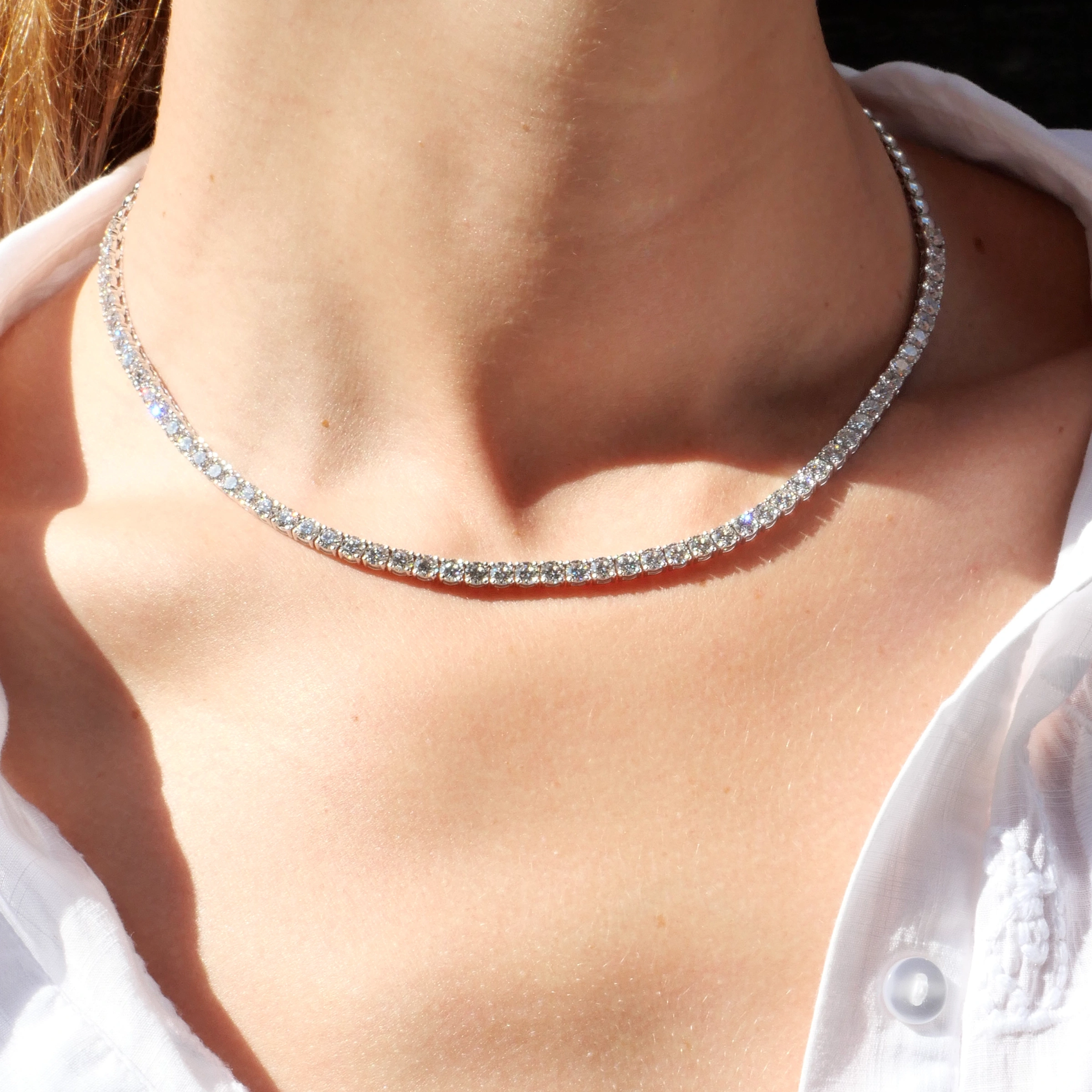

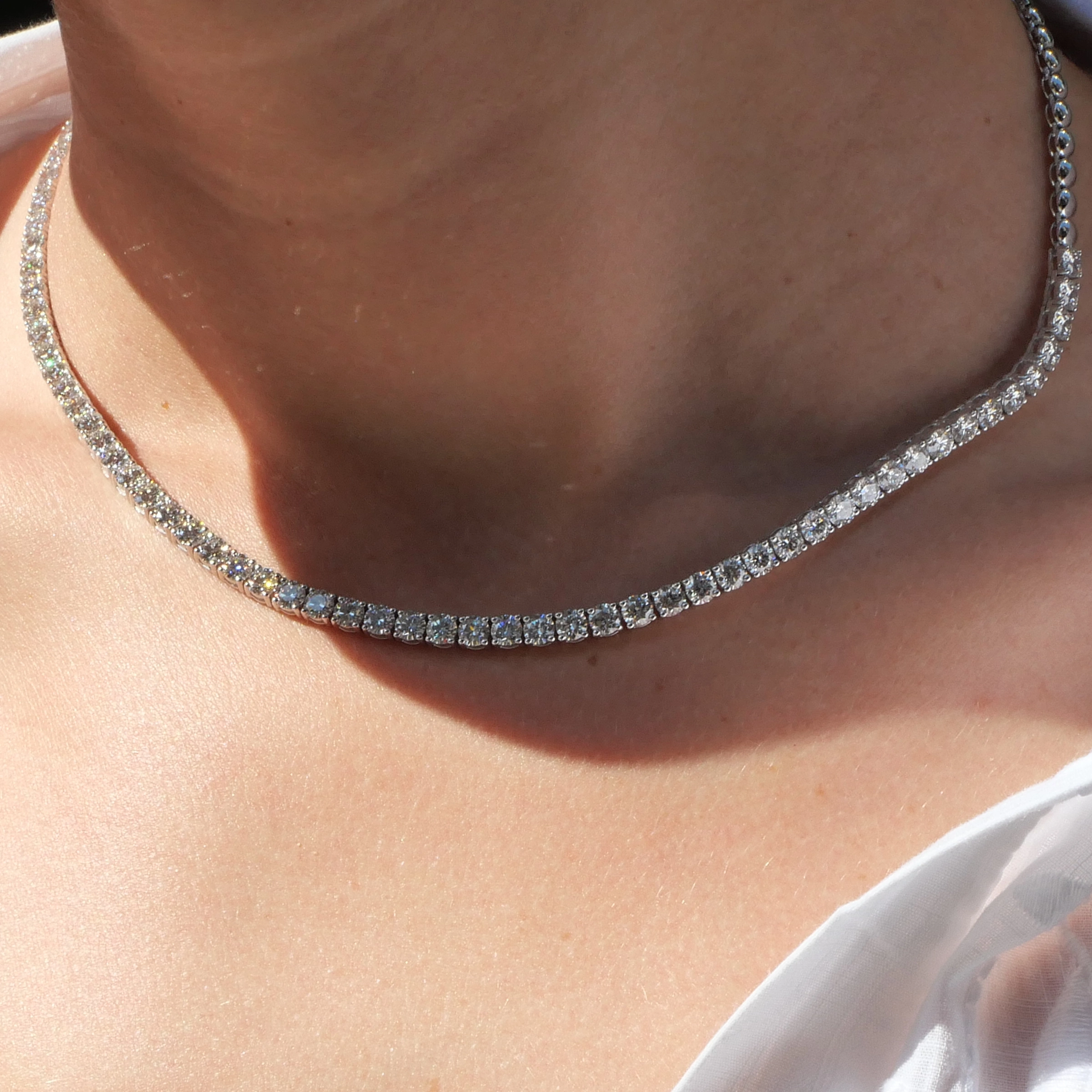

Diamond tennis necklace, 11.40 ct E–F VS/VVS, 18K white gold, 43 cm
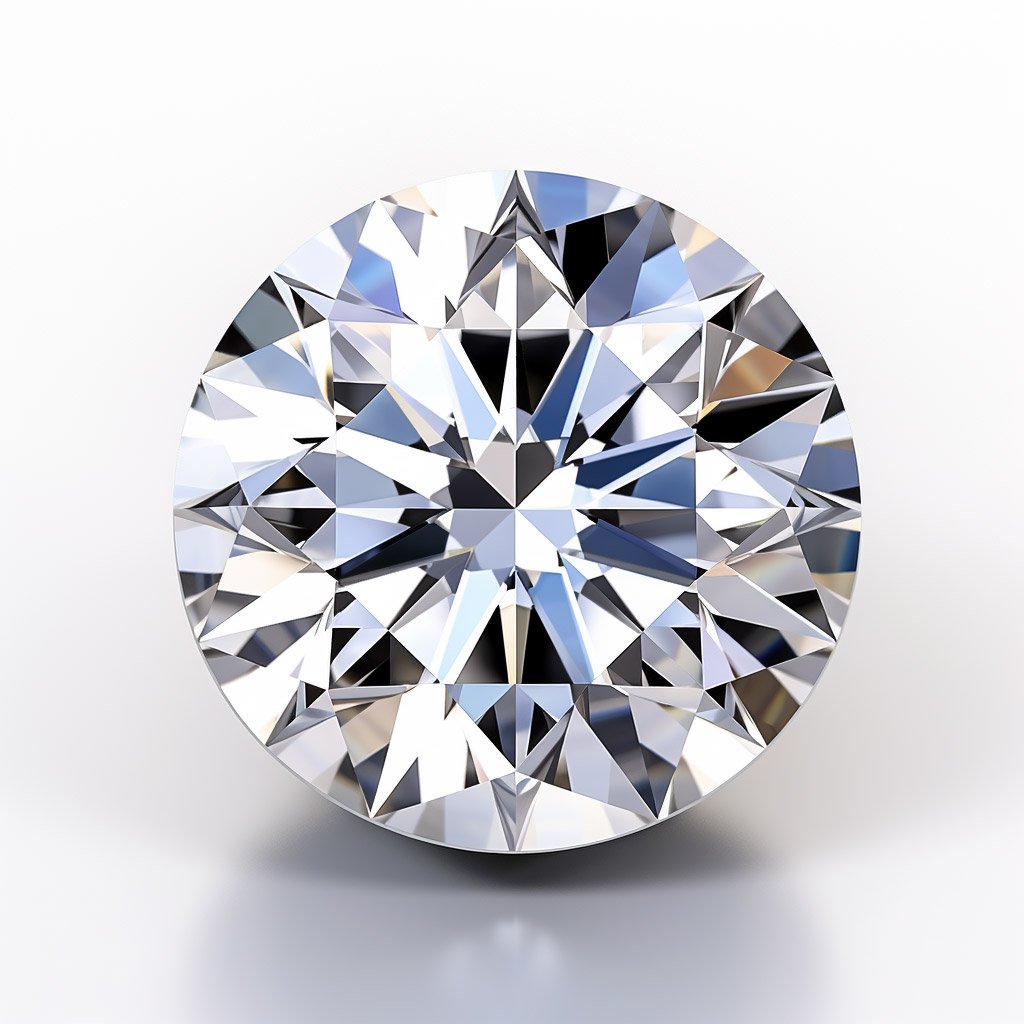
A line of natural round brilliant diamonds totalling 11.40 ct, colour E–F, clarity VS to VVS, each stone held in four claws on 18K white gold. Every diamond individually GIA certified. 43 cm. Made in Antwerp.
Every single diamond is GIA certified — individually
Not the necklace as a whole. Not a representative sample. Each stone in this line was submitted to the Gemological Institute of America and graded on its own before it was set. That is why there is no certificate number listed on this page: there are more than a hundred of them.
It is worth understanding how unusual that is. Tennis necklaces are normally sold on a parcel grade — the seller states a colour and clarity range for the batch, and you take their word for it. Here the E–F colour and VS–VVS clarity are not our assessment; they are the range across a hundred-plus independent laboratory reports. It costs considerably more to build a necklace this way, and it is the reason this piece sits where it does in price.
Why this costs more than our 10 carat
We hold a 10.01 ct tennis necklace in the same metal at a little under €19,000. This one carries 1.39 ct more and costs around €4,000 more — and most of that gap is not weight. It is the clarity range reaching into VVS, and it is the individual certification. If you are choosing between the two, you are not choosing a size.
Three quarters diamonds, one quarter gold beads
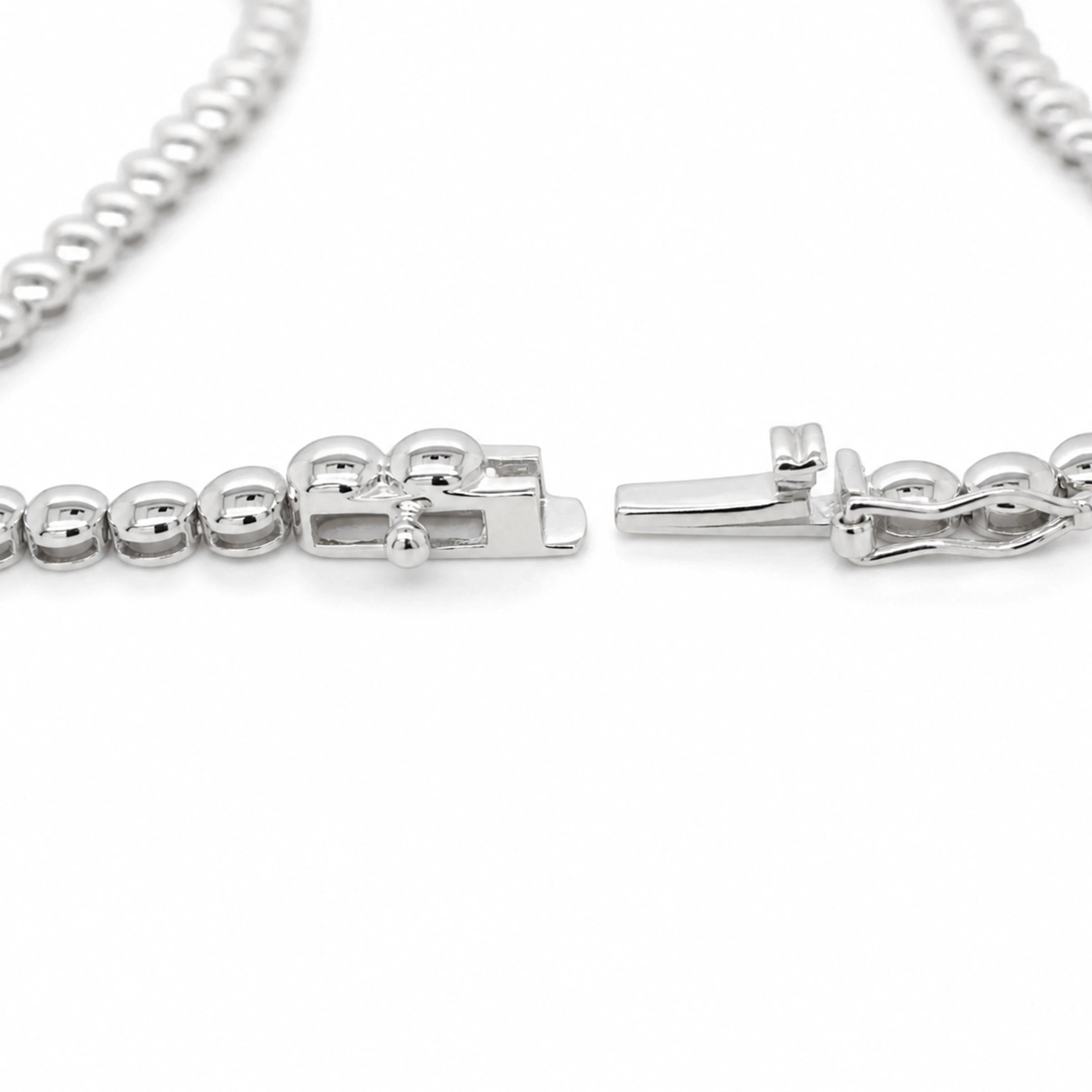
The diamond line runs across the front and around both sides — roughly three quarters of the 43 cm. The final quarter, the section that sits at the nape under your hair and inside your collar, is made of polished 18K gold beads.
This is a deliberate construction, not a saving dressed up as one, and there are three reasons for it. Nobody sees the back of a necklace, so every euro of the budget goes into stones that are actually visible. It takes real weight off the neck, which is what makes a piece of this size comfortable to wear for a whole evening rather than for an hour. And the rounded beads lie flat and smooth against the skin, where a continuation of claw settings would catch hair and press into the neck when you lean back. A fully set 43 cm line at this quality would cost roughly a third more and would be worn less often.
Colour consistency is the hardest part of a tennis necklace
In a solitaire, colour is judged against nothing. In a line of a hundred diamonds, every stone is judged against its neighbours, and one warmer stone in the row is visible immediately — it reads as a dull spot in a bright line. Matching a run of this length within E–F takes a large parcel to draw from and a great many stones set aside. It is why two tennis necklaces of identical stated weight and grade can look completely different on the neck.
43 cm, and why the length is the real decision
Tennis necklaces are offered at 40, 42, 43 and 45 cm, and the difference between them is larger than the numbers suggest. At 40 cm the line sits high on the throat, close to a collar. At 45 cm it drops below the collarbone and moves when you move. 43 cm settles into the hollow just above the collarbone and stays there: visible with an open collar, clear of a crew neckline, and the one length that layers cleanly under a longer chain or a pendant. It is the length we sell most and the one we would suggest if you are buying without trying it on.
Four claws per stone, open gallery, safety clasp
Every diamond sits in its own four-claw head with the metal left open underneath, so light reaches each stone from below as well as above and the line stays alive against skin instead of going flat. The open gallery also means the necklace can be cleaned properly — closed settings trap everything a piece collects over a decade. The closure is a box clasp with a figure-of-eight safety catch: the tongue clicks into the box, then the secondary catch folds over it. Two independent closures, which is what we insist on at this value.
Care and service
White gold is rhodium plated; we refresh the plating and check every claw free of charge for the life of the necklace. Bring any tennis piece back once a year — a line of a hundred settings has a hundred chances to loosen, and catching one is the difference between a repair and a loss.