Nederlands
 Français
 Italiano






Green Sapphire Engagement Rings
Green sapphire is the quiet outsider of the coloured-stone world: the same mineral as blue sapphire, the same hardness of 9 on the Mohs scale, but in tones that run from soft mint and sea-glass teal to deep forest green. It reads as natural and understated rather than showy, which is exactly why a growing number of couples choose it.
Green sapphires are also among the most honest stones we sell: the vast majority reach us unheated and untreated, unlike emerald, which is almost always oiled. At OROGEM Jewelers we set them in 18K white, yellow and rose gold with conflict-free natural diamonds, made in our Antwerp workshop.
Every ring below can be adjusted in stone size, setting and metal, or built entirely to your design. Free shipping across Europe.

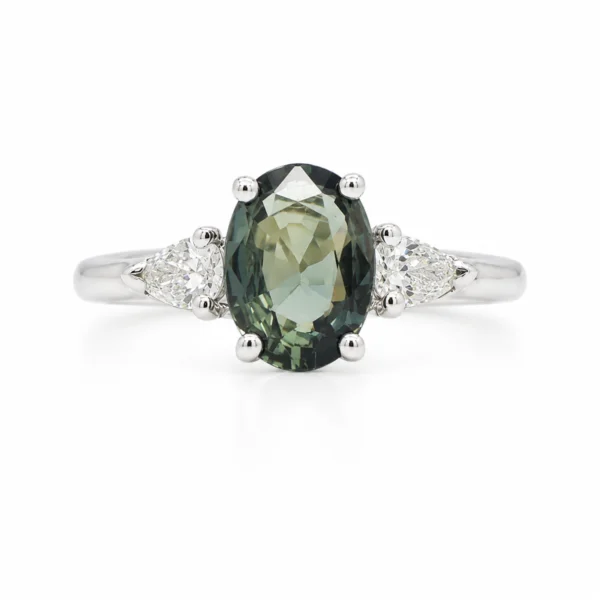
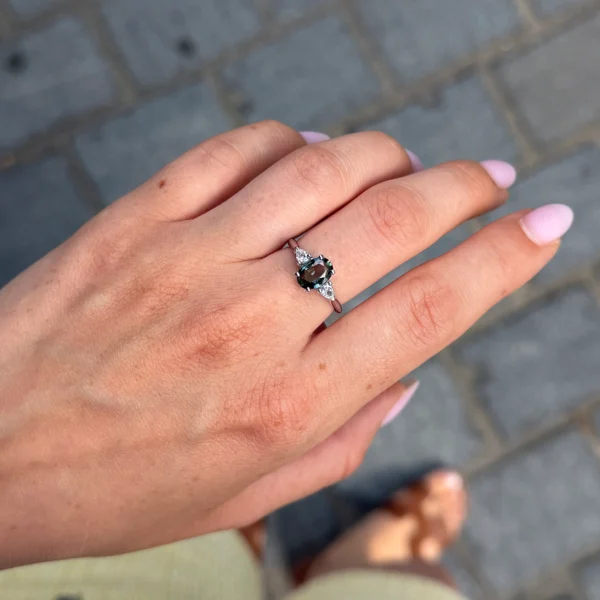
€1 890,00 (incl. VAT)


Gemstone Rings
Oval Green Sapphire and Diamond Halo Ring in 18K Yellow Gold
€1 790,00 (incl. VAT)
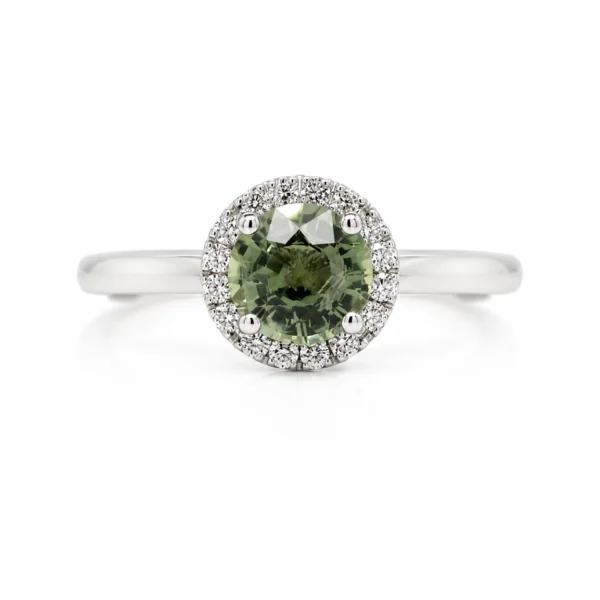
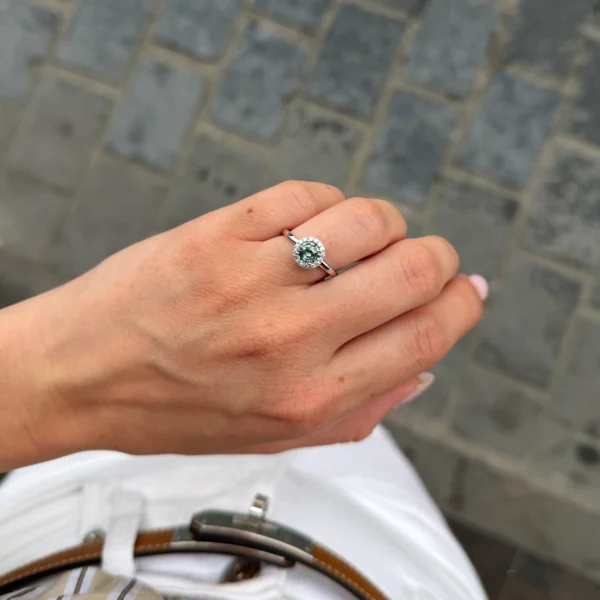
€1 990,00 (incl. VAT)
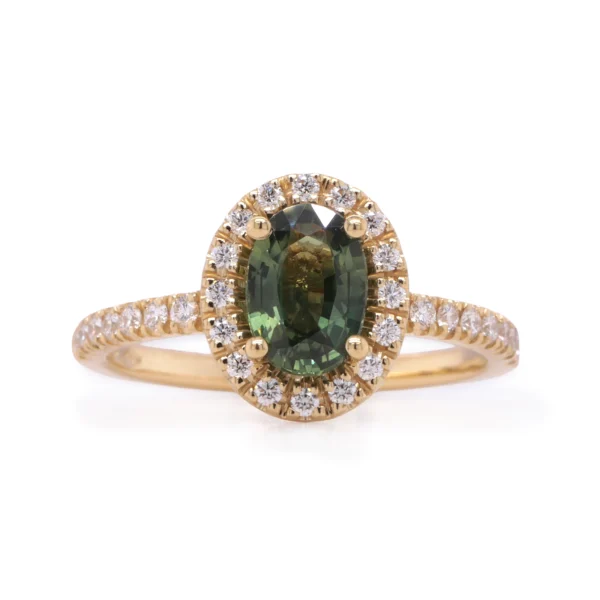
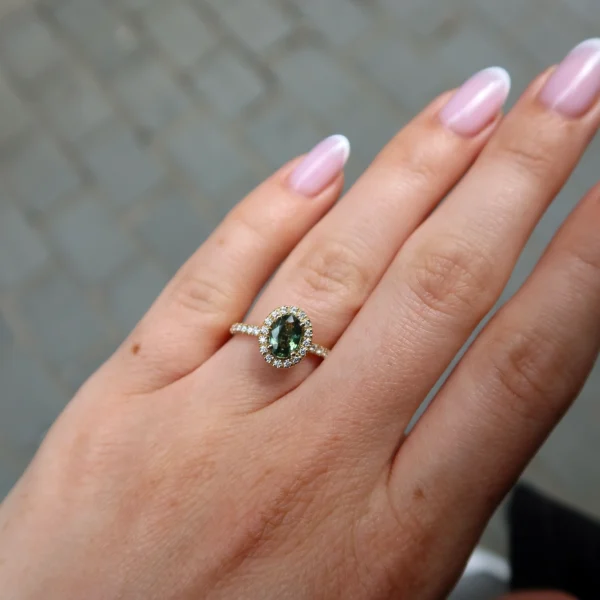
Gemstone Rings
€2 170,00 (incl. VAT)


Gemstone Rings
€1 275,00 (incl. VAT)
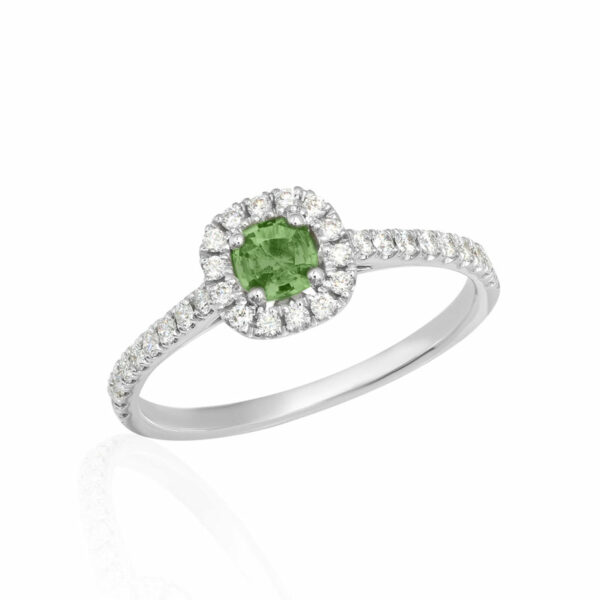
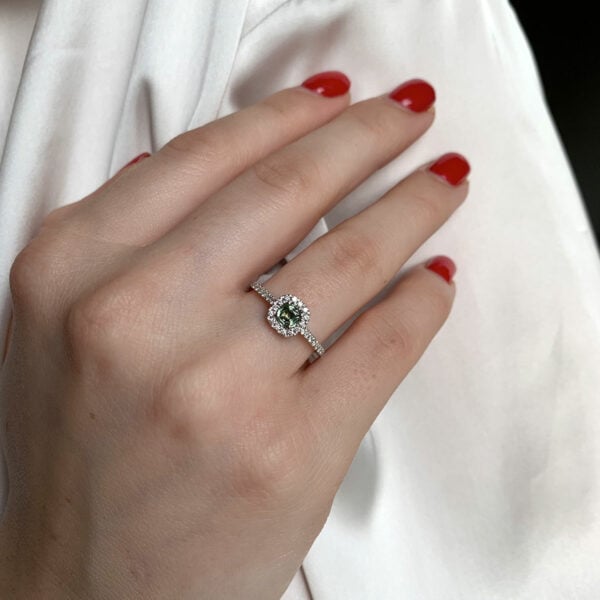
Gemstone Rings
€1 165,00 (incl. VAT)
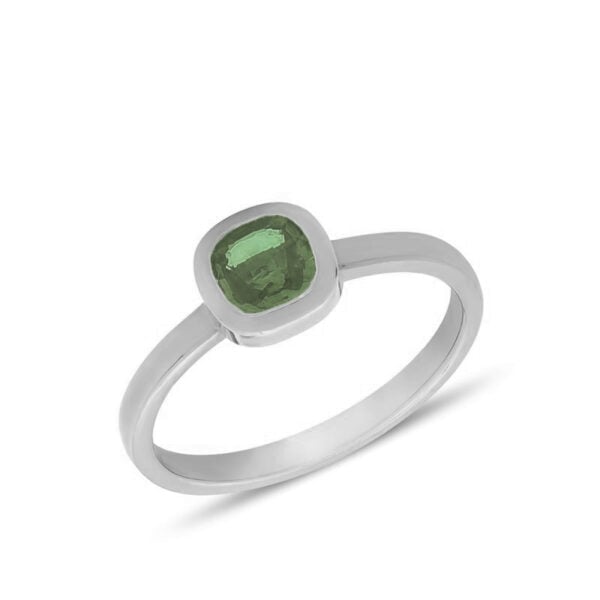
Gemstone Rings
€695,00 (incl. VAT)
How to choose a green sapphire engagement ring
The centre stone is what makes a green sapphire engagement ring. Green sapphires are not graded on a single universal scale, so value comes down to colour first, then clarity, cut and carat weight.
Colour: mint, teal and forest green
Green in sapphire comes from a mix of iron and, in some material, traces of the same elements that colour blue and yellow stones. That mix is why green sapphires so often show a secondary tone. The main looks are mint or sea-glass green, pale and cool and very easy to wear; teal, sitting between blue and green and currently the most in demand; and deep forest green, saturated and dramatic. Many green sapphires are parti sapphires, showing distinct zones of green, blue and yellow in a single stone. No two are alike, and that is the appeal.
Clarity and cut
Fine needle inclusions, called silk, are normal in natural sapphire and are a sign the stone has not been synthesised. What matters is whether inclusions are visible without magnification and whether they interrupt the colour. Cut matters just as much: green sapphires are cut to bring out colour rather than to fixed proportions, so a good stone shows even colour across the whole face with no dark centre and no washed-out window.
Carat weight and size on the hand
Sapphire is denser than diamond, so compare millimetres rather than carats. A 6.5 mm round sapphire weighs roughly 1.30 ct, while a 6.5 mm round diamond weighs about 1.00 ct. Green sapphire is often available in larger sizes for the money than blue, which is one reason it appeals to buyers who want presence on the hand.
Treatment: usually none
Unlike blue sapphire, where gentle heating is routine, most green sapphire on the market is unheated, because heat tends to push green material towards yellow or blue rather than improve it. Independent laboratories such as the GIA report both colour and treatment. We state the treatment for every stone we sell.
Settings and metals for a green sapphire
Green is a cooler, more muted colour than blue or pink, so the metal you choose has an unusually large effect on how the stone reads.
- Yellow gold – the natural partner. Warm gold against cool green is the combination most people picture when they think of a green sapphire ring, and it flatters mint and teal tones especially.
- White gold and platinum – keep the green crisp and modern, and suit deeper forest tones.
- Rose gold – the most unexpected of the three, and striking with sea-glass and mint stones.
For the setting itself, a halo of pavé diamonds makes a green centre stone read larger and adds the sparkle that green sapphire alone does not provide. A three-stone design with diamond side stones is the most classic option, while a solitaire or bezel puts all the attention on the colour. A diamond band adds light along the shank without competing with the stone.
How much does a green sapphire engagement ring cost?
Green sapphire is one of the best value coloured stones in fine jewellery. At OROGEM Jewelers our green sapphire rings currently run from around €695 to €2 200:
- Around €700 – petite green sapphire rings, ideal as a first coloured-stone piece or a stacking ring.
- €1 100 – €1 500 – cushion green sapphire engagement rings with a pavé diamond halo in 18K gold.
- €1 700 – €2 200 – oval green sapphire halo rings and three-stone designs with larger centre stones.
Compare that with a diamond of the same millimetre size and the difference is substantial, which is why green sapphire lets you buy visibly more stone for the same budget. All prices shown include VAT. If you are weighing up stone, setting and budget, our engagement ring buying guide walks through the whole process.
Where green sapphires come from
Australia is the historic source of deep green and teal sapphire, particularly the Anakie and Inverell fields in Queensland and New South Wales. Madagascar produces a wide range of greens, from mint to olive. Montana in the United States is known for the soft teal and blue-green material that has driven much of the recent interest, and Sri Lanka, Thailand, Nigeria and Tanzania all contribute. Because green sapphire is rarely treated, origin matters less than it does for blue: judge the individual stone.
Caring for a green sapphire ring
A green sapphire engagement ring is made for daily wear. At 9 on the Mohs scale, sapphire is the hardest gemstone after diamond – a decisive advantage over emerald, which shares the colour family but chips and scratches far more easily. Clean it in warm water with a drop of washing-up liquid and a soft brush, take it off for sport, gardening and swimming, and have the setting checked once a year. OROGEM offers free cleaning and inspection for rings bought from us.
Green sapphire or emerald?
This is the question we are asked most often. Emerald has the more famous green and a deeper, warmer saturation, but it is a fragile stone: typically included, almost always oil-treated, and around 7.5 to 8 on the Mohs scale. Green sapphire is harder, usually untreated, easier to clean and considerably less expensive at comparable sizes. If you love the colour but want a ring that will survive daily life without special handling, green sapphire is the practical choice. If nothing but true emerald green will do, see our emerald engagement rings.
Other sapphire colours
Sapphire occurs in every colour except red, which is called ruby. Alongside green we also offer blue sapphire engagement rings, pink sapphire engagement rings and yellow and orange fancy colour sapphires. If none of our ready-made designs is quite right, we create tailor-made engagement rings around a sapphire of your choice.
Green sapphire, the understated alternative
The same mineral as the blue sapphires worn by royalty, in a colour almost nobody else will be wearing. Green sapphire is hard enough for a lifetime of daily wear, almost always untreated, and no two stones are the same.
Frequently asked questions about green sapphire engagement rings
Are green sapphires real sapphires?
Yes. Sapphire is the gem variety of the mineral corundum, and it occurs in every colour except red, which is called ruby. A green sapphire is chemically and physically identical to a blue one; only the trace elements that create the colour differ.
Are green sapphires rare?
Fine green sapphire is rarer than fine blue sapphire, but it attracts less demand, which is why prices stay reasonable. Vivid, evenly coloured greens and clean teal stones are the hardest to find; olive and pale greens are more common.
Is a green sapphire a good engagement ring stone?
Yes. At 9 on the Mohs scale it is the hardest gemstone after diamond, so it stands up to daily wear far better than emerald, tourmaline or peridot, which are the other common green options. It is also almost always untreated and costs a fraction of a diamond of the same size.
What is a teal sapphire?
A teal sapphire sits between blue and green, often shifting between the two depending on the light. Much of the finest teal material comes from Montana and Australia. Teal is currently the most sought-after green sapphire look, particularly in oval and hexagon cuts.
What is a parti sapphire?
A parti sapphire shows two or three distinct colour zones in one stone, typically green with blue and yellow. They are natural, unheated and completely individual, which makes them popular for couples who want a ring nobody else has.
Are green sapphires treated or heated?
Most are not. Heating a green sapphire tends to shift it towards yellow or blue rather than improve it, so the great majority on the market are entirely untreated. We state the treatment status of every stone we sell.
Green sapphire or emerald – which should I choose?
Green sapphire if you want a ring you can wear every day without thinking about it: harder, untreated, easier to clean and less expensive. Emerald if the specific deep warm green is essential to you and you accept the extra care it needs, since emerald is softer and nearly always oil-treated.
What metal looks best with a green sapphire?
Yellow gold is the classic pairing and flatters mint and teal stones especially. White gold and platinum keep the colour crisp and modern and suit deeper forest greens. Rose gold is the boldest option and works beautifully with pale sea-glass tones.
What does a green sapphire symbolise?
Green sapphire has traditionally been associated with loyalty, trust and integrity, and in some traditions with wisdom and calm. Like all sapphires it carries the broader symbolism of fidelity, which is why the family has been used in engagement rings for centuries.
How much does a green sapphire engagement ring cost?
Our green sapphire rings run from around €695 for a petite design to roughly €2 200 for larger oval halo and three-stone rings. Most green sapphire engagement rings with a diamond halo in 18K gold sit between €1 100 and €2 200. All prices shown include VAT.
Where do green sapphires come from?
Mainly Australia, Madagascar, Montana in the United States, Sri Lanka, Thailand, Nigeria and Tanzania. Australia and Montana are particularly associated with the deep green and teal material.
Can I have a green sapphire engagement ring made to my own design?
Yes. Every ring on this page can be adjusted in stone size, setting and metal, and our Antwerp workshop also creates fully bespoke pieces. We source the sapphire, show you the options before setting, and ship free of charge across Europe.