Nederlands
 Français
 Italiano

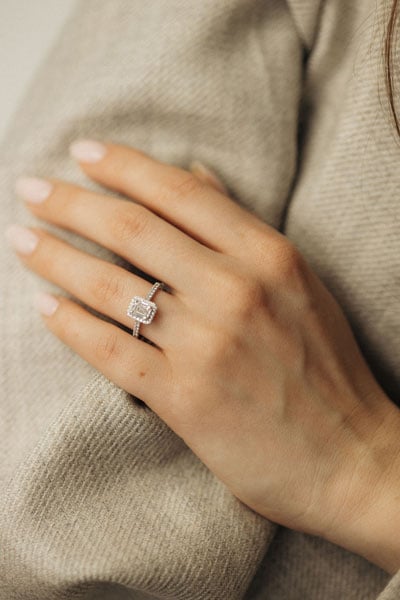





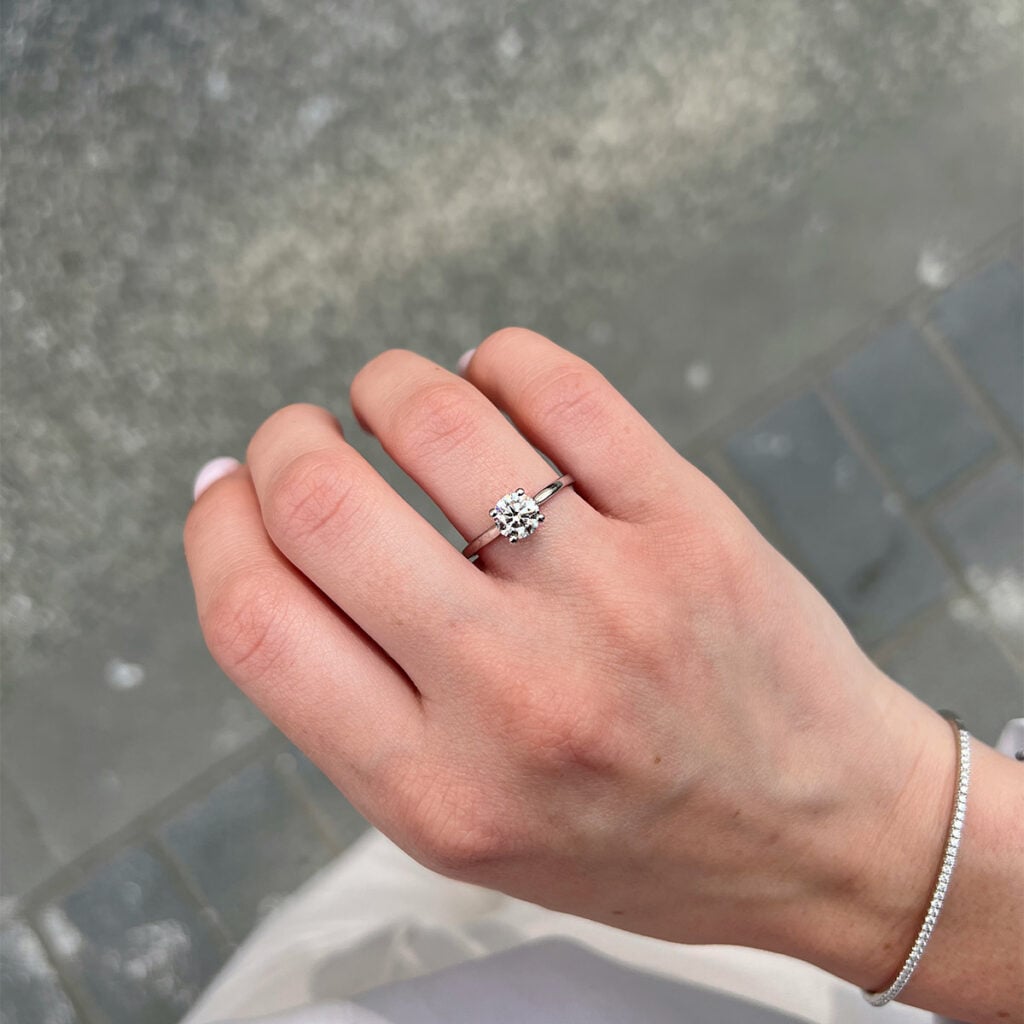
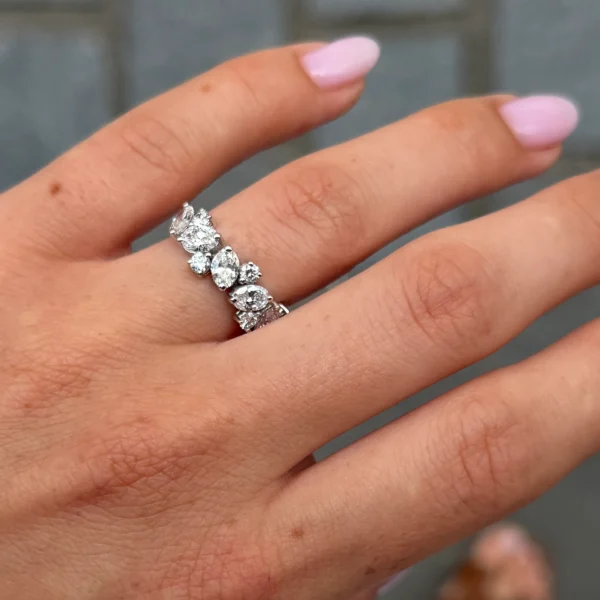
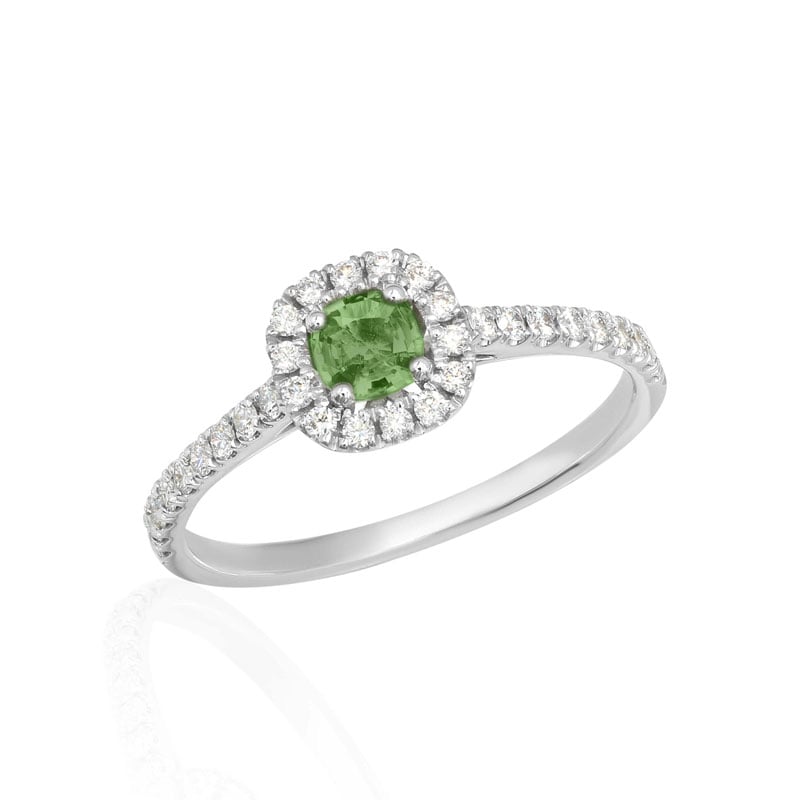

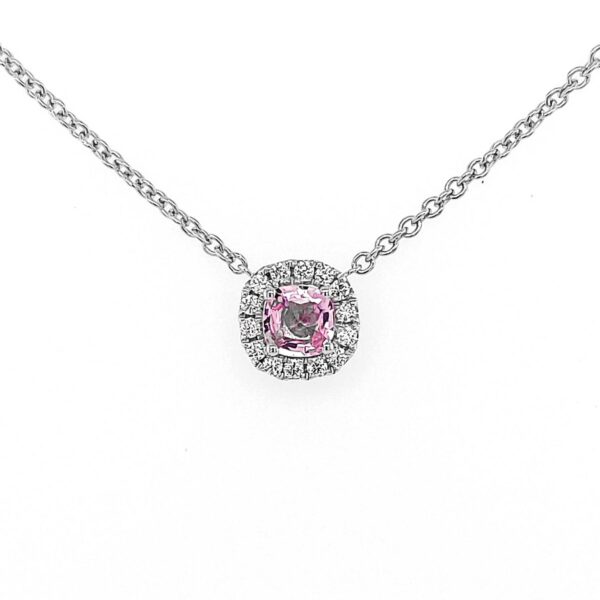
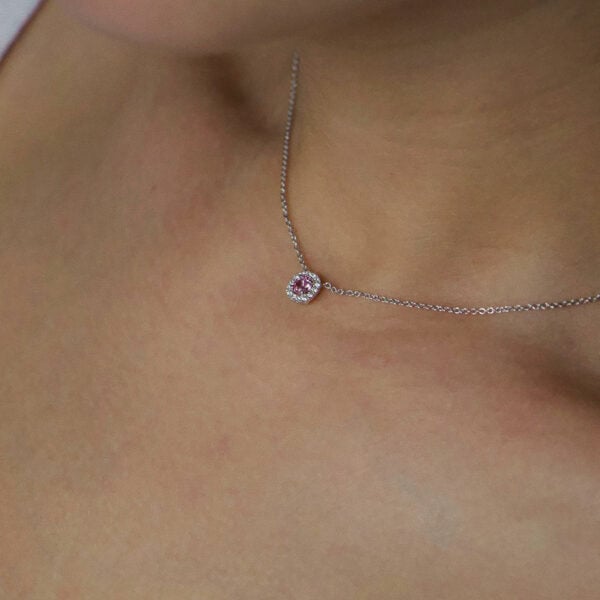
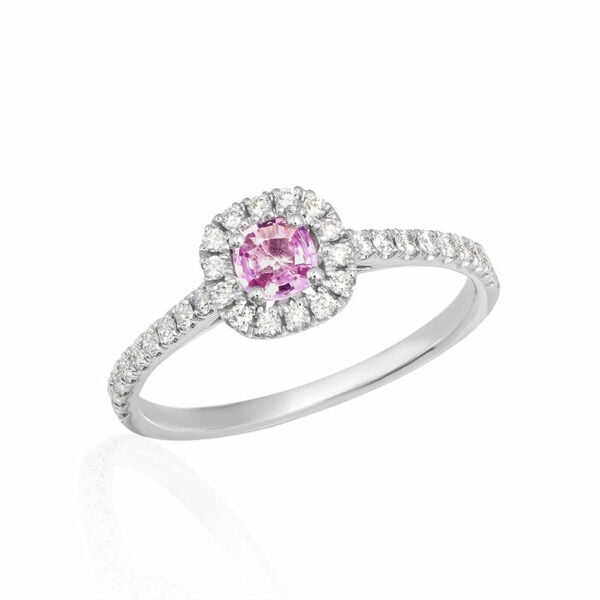
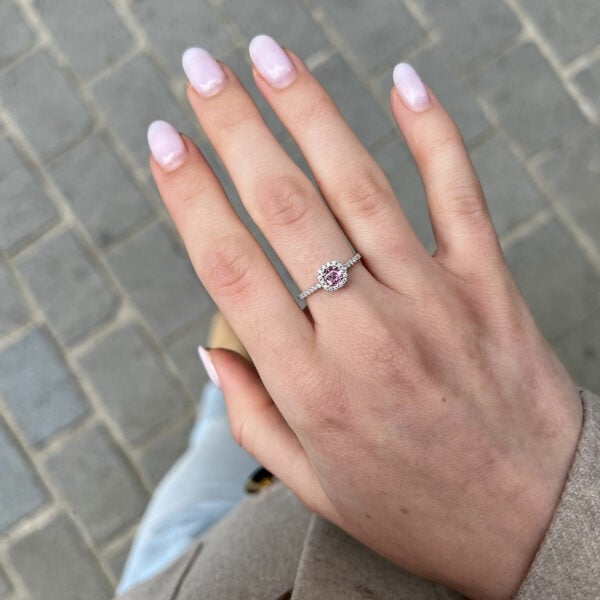
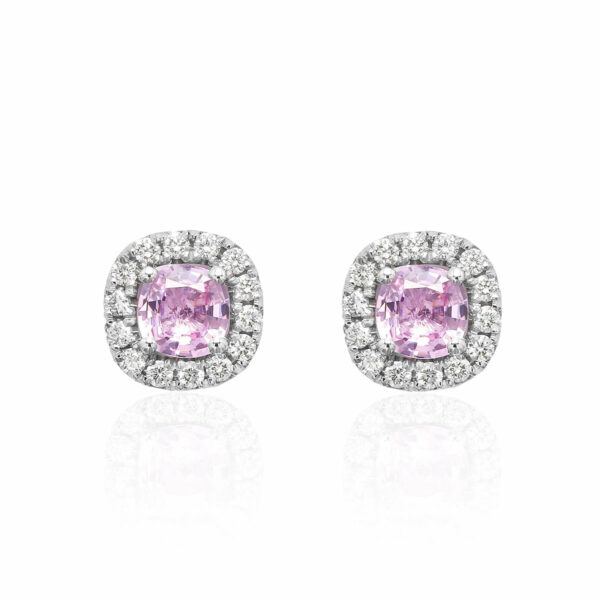
A 0.34 carat cushion-cut green sapphire, held in four prongs within a halo and pavé totalling 0.21 carat of D–F VS diamonds, in 18K white gold.
Green sapphire is the same mineral as blue sapphire and as ruby: corundum, aluminium oxide, which is colourless when pure. Everything you see is trace chemistry. Iron together with titanium gives blue; chromium gives red, and the stone is then called a ruby; iron on its own gives the yellows and greens. One crystal species, three names, and the difference is a few atoms per million.
That matters commercially. Blue is what the market asks for, so blue is what the market prices; green corundum is the same hardness, the same durability and the same optical family, at a fraction of the cost. At Mohs 9 it is second only to diamond, which makes it one of the very few coloured stones genuinely suited to a ring worn every day.
The diamonds around it are D–F VS — the colourless range. Setting white stones against a coloured centre sharpens the colour by contrast, which is why a halo is used here rather than a plain bezel.
Deeper in tone, and heavier: 0.45 ct dark green sapphire halo ring.