Nederlands
 Français
 Italiano


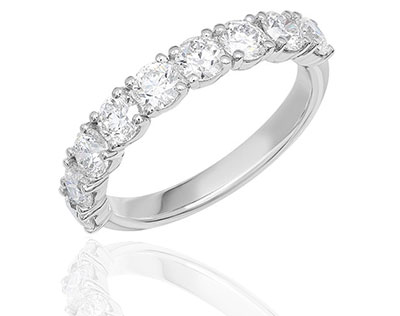

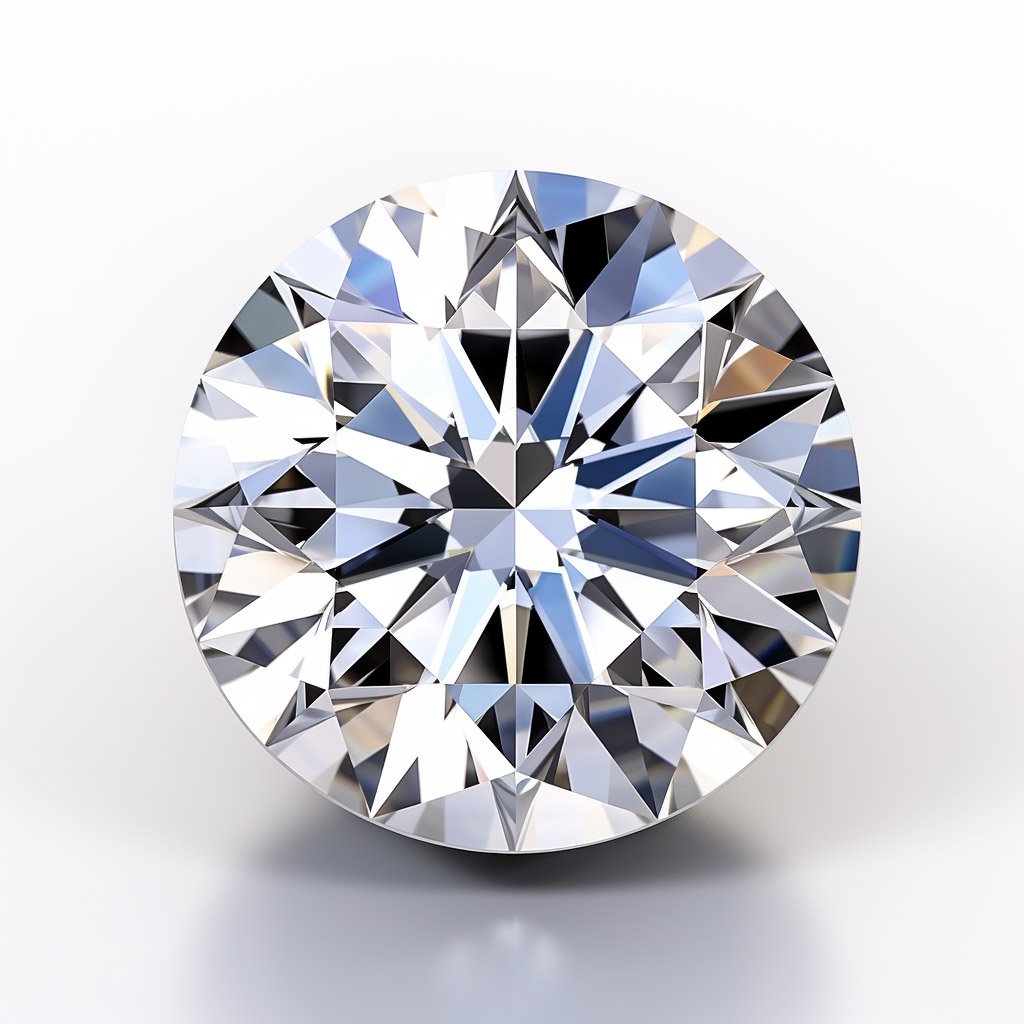



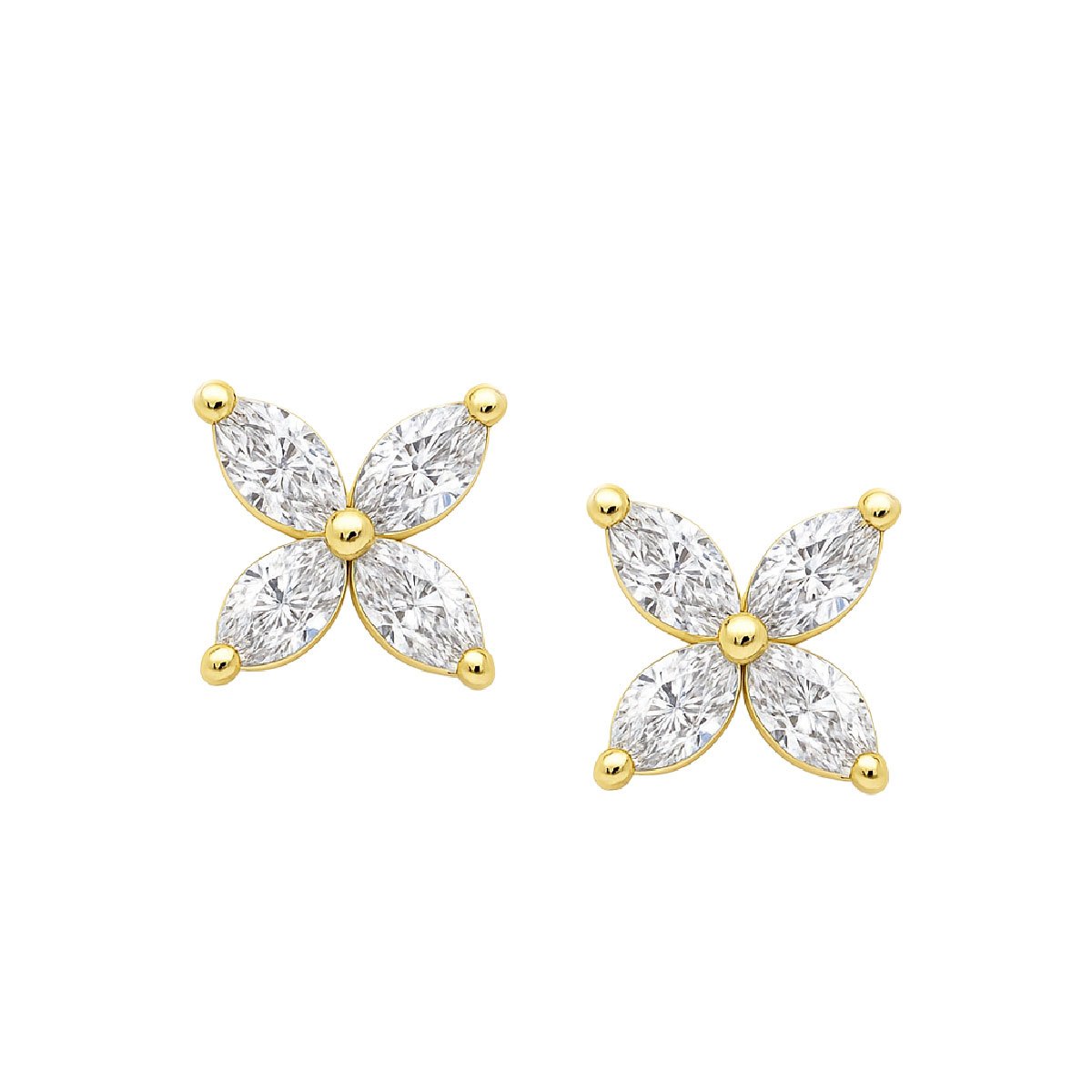


0.78 ct total, F colour, VS clarity, 18K yellow gold
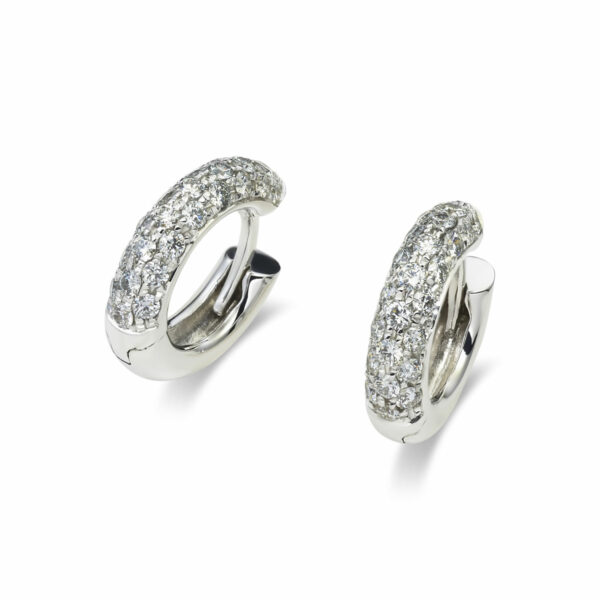
A pair of earrings built from marquise cut natural diamonds arranged as petals, 0.78 carat in total, colour F, clarity VS. 18K yellow gold. The same design as our white gold version, in warm metal.
A marquise has a direction. A round stone does not.
This sounds trivial and it is the whole difficulty of building anything from marquise stones.
Set a round brilliant and there is one decision: where. Rotate it and nothing changes — it looks the same from every angle around its own axis. A marquise is not symmetrical that way. It has a long axis and two points, so every stone carries an orientation, and the setter has to choose that orientation for each one.
In a four-petal flower the stones sit at roughly ninety degrees to each other, radiating from a centre. Because the eye reads the whole arrangement at once rather than each stone separately, small errors in those angles do not hide. A petal set two or three degrees off looks like a flower that is falling over, and you will see it without being able to name it.
The pair problem, which is twice as hard
Now do it again, identically, on the second earring.
There are two legitimate ways to make a pair of directional clusters. The earrings can be identical — both flowers oriented the same way — or mirrored, so the left and the right reflect each other. Mirroring is the more considered build: seen from the front with both ears visible, a mirrored pair reads as one symmetrical composition, while an identical pair reads as the same object twice.
Neither is wrong. What is wrong is a pair that is almost one or the other — where the flowers are rotated slightly differently for no reason. Hold both earrings side by side, front up, and compare the petal axes. They should correspond, one way or the other, exactly.
And look at the hub
The inner points of four marquise stones all converge at the centre of the flower. That convergence is the hardest part of the setting: the points are the thinnest, most fragile part of each stone, they have to sit close enough to read as a continuous form, and they must not touch. Look for an even, deliberate centre — not a gap on one side and a crowd on the other.
Why yellow gold changes more here than on a solitaire
On a single-stone earring the metal is a claw or two and a post. In a cluster the metal runs between and around eight stones, so it is a far larger share of what you actually see. The choice of colour is correspondingly more visible: yellow gold reads the whole flower warm, and an F-colour stone against it sits a little softer than the same stone in white. That is a preference, not a fault — but on this design it is a real decision rather than a detail.
Specification
- Stones: natural diamonds, marquise cut, 0.78 ct total
- Colour: F Clarity: VS range
- Metal: 18K yellow gold
The same design elsewhere
In cool metal: the 0.78 ct marquise earrings in 18K white gold, where the arithmetic of face-up spread is set out. Larger: the 1.51 ct marquise earrings. All in diamond earrings.
Buying from Antwerp
In stock at our workshop in the Antwerp diamond district. Shipped insured and boxed.