Nederlands
 Français
 Italiano






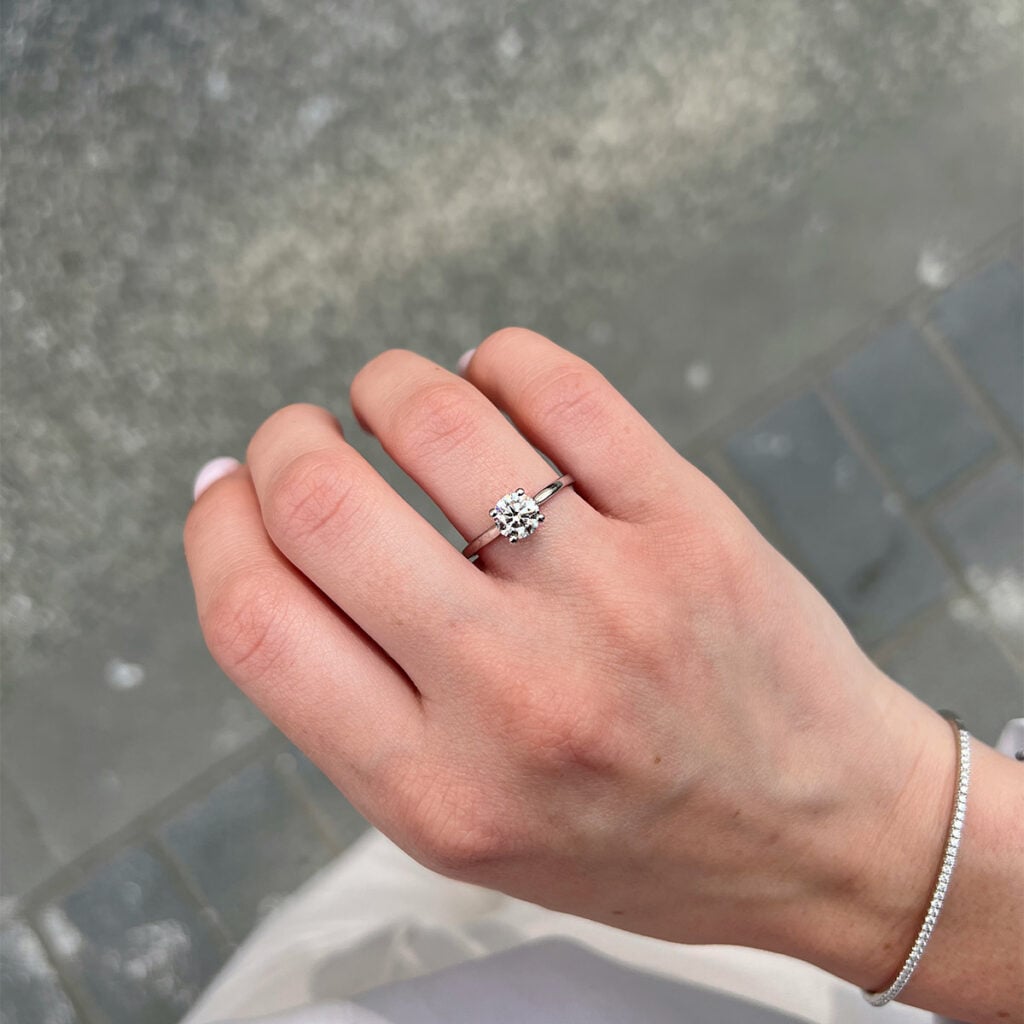
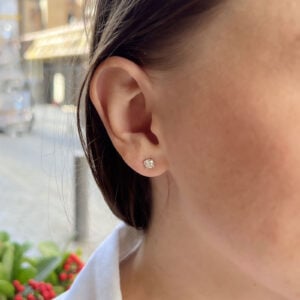
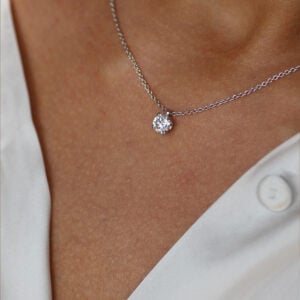
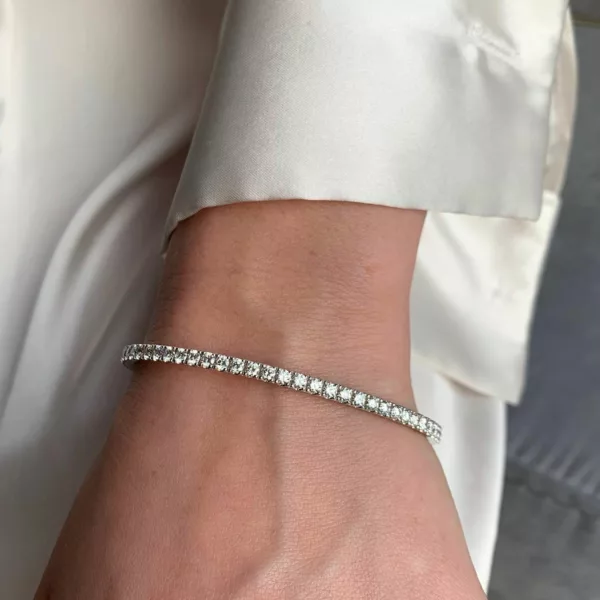

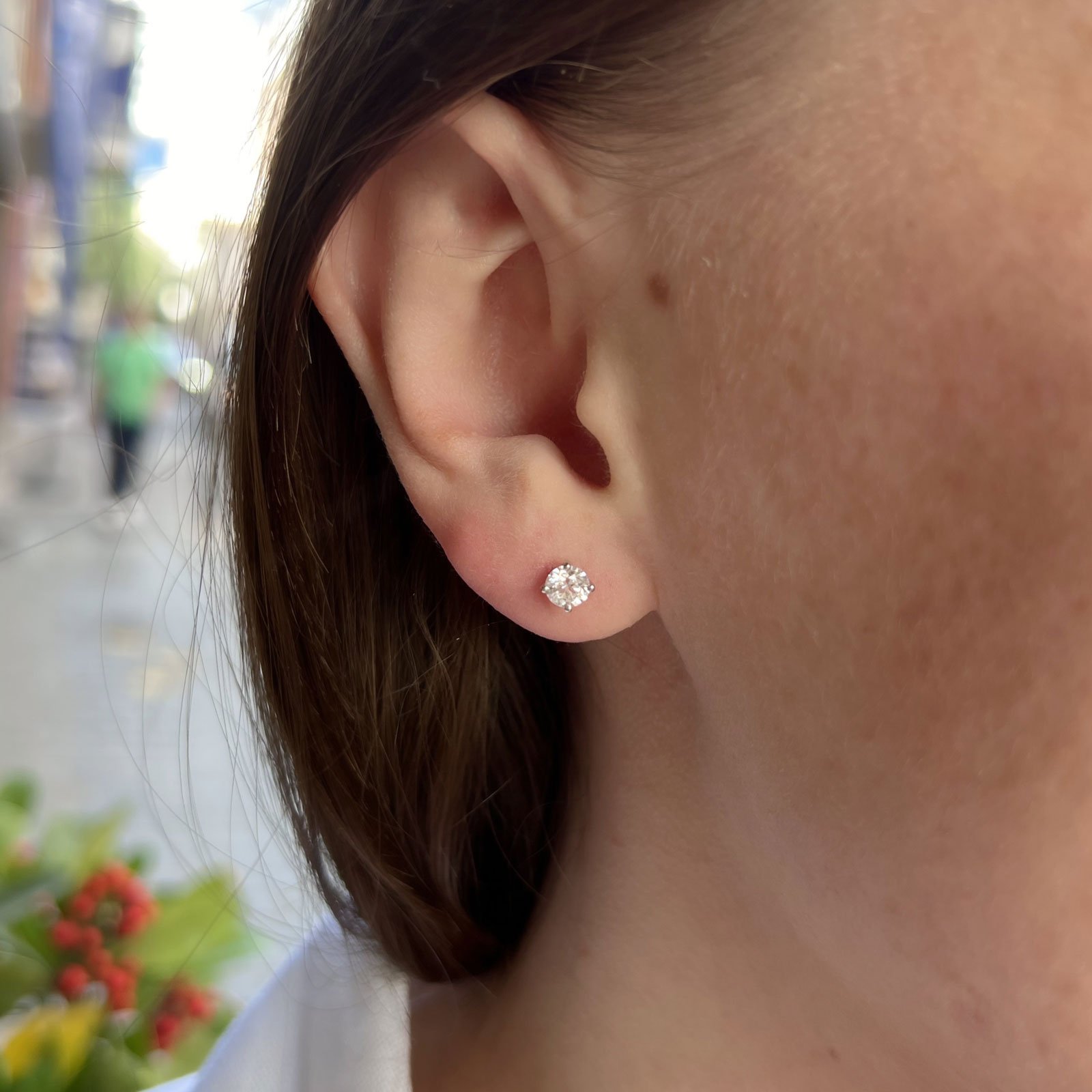
0.80 ct total weight, D VVS2, GIA certified, 18K white gold
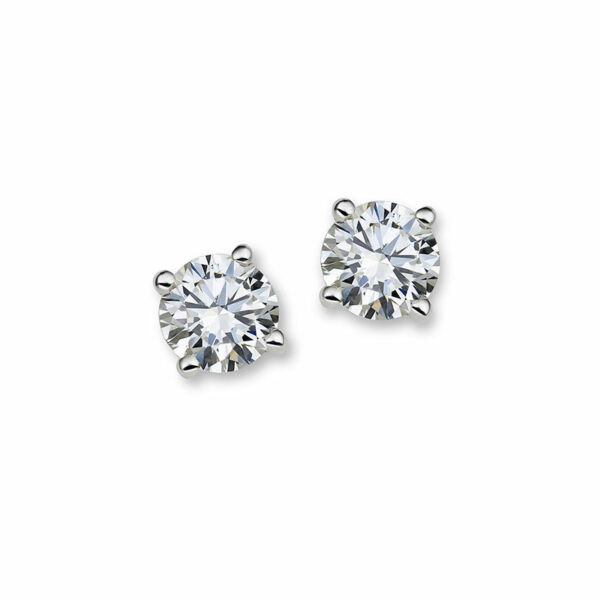
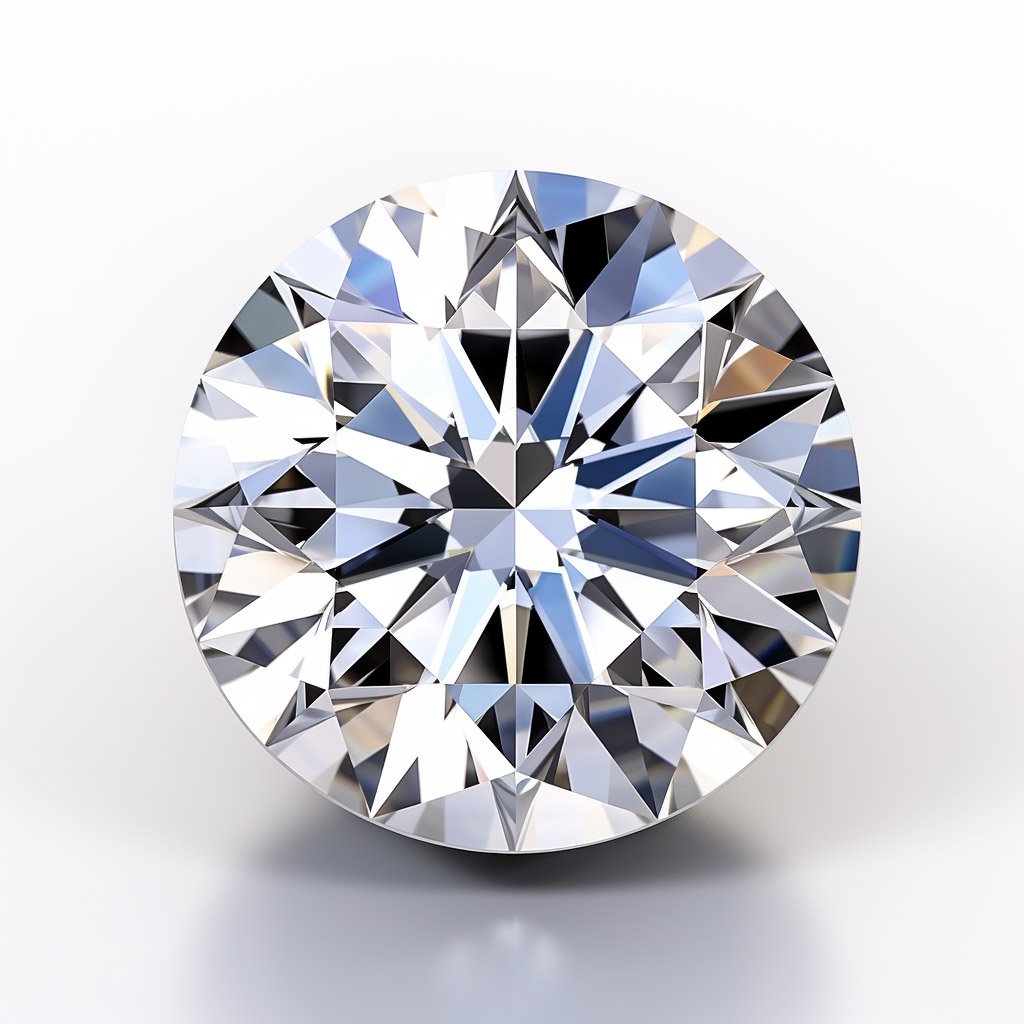
A pair of natural round brilliant diamonds, 0.40 carat each for 0.80 ct total, colour D, clarity VVS2, in 18K white gold studs. GIA report 5536344174. This is the top of our natural solitaire stud range: the highest colour grade that exists, paired with a clarity grade at which inclusions are difficult to find at 10× magnification.
Fluorescence: the most misread line on a GIA report — and it matters most at D
Somewhere between a quarter and a third of natural diamonds glow, usually blue, under ultraviolet light. GIA records this on the report as None, Faint, Medium, Strong or Very Strong. Almost everyone who reads a report for the first time reads that line as a fifth grade, sitting alongside the four Cs. It is not one.
Fluorescence is a description, not a quality judgement. On the report it sits under additional identifying characteristics, with the measurements and the inscription — the part that describes what the stone is, not how good it is. Nothing about it is a fault.
Why the trade treats it as one anyway
Because the market discounts it. A strongly fluorescent stone in the colourless range typically trades below an otherwise identical non-fluorescent one, sometimes substantially. That discount is old, it is real, and it shapes what dealers tell you — but it is not the same thing as a visible difference.
GIA published research on exactly this question, asking trained graders and ordinary observers to compare stones face-up in normal viewing conditions. The broad finding was that the average observer did not see a meaningful difference. In lower colour grades, blue fluorescence was sometimes preferred, because blue counteracts the faint yellow those stones carry.
There is a genuine exception worth naming. A small minority of Very Strong stones can look slightly hazy or milky in strong, UV-rich daylight. That is rare, it is confined to the top of the scale, and — crucially — it is something you can simply look at.
So why raise it on a D stone
Because D is exactly where the question bites from both ends. You are paying a premium for absolute colourlessness, so the one optical effect that could make a top-colour stone read less crisp in daylight is worth knowing about. And the market discount is steepest here, which means a strongly fluorescent D can be either a bargain or a compromise depending entirely on the individual stone.
Our position is simple: ask us to read you the fluorescence line on GIA 5536344174 before you buy, and we will tell you plainly which way it cuts for this particular pair. We would rather you check than assume — in either direction.
What D VVS2 means in a stud
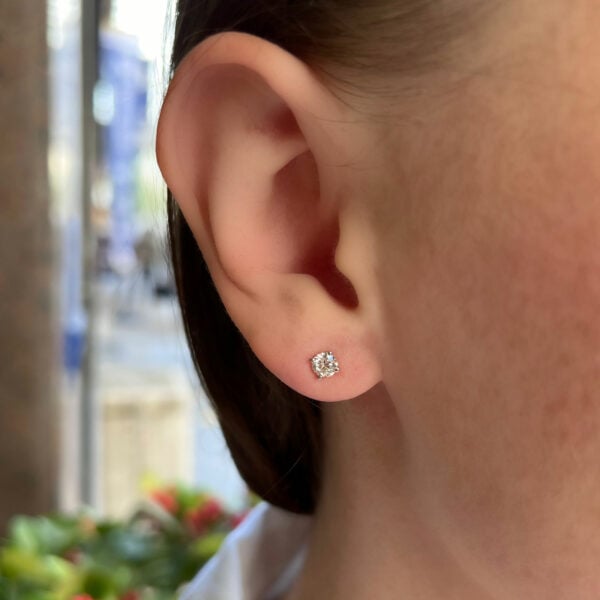
At this specification the stone has no visible body colour against any background and no inclusion you could find without magnification and patience. In an earring — seen at a distance, in motion, against skin and hair — that buys you a stone that will never look tinted next to anything else you own. It is the specification that stops asking questions.
Specification
- Stones: two natural diamonds, round brilliant, 0.40 ct each, 0.80 ct total
- Colour: D Clarity: VVS2
- Certificate: GIA 5536344174
- Metal: 18K white gold
The step below is the 0.60 ct ladder — five pairs from €1,495 to €2,395, compared on the F SI1 page. All of them in diamond earrings.
Buying from Antwerp
In stock at our workshop in the Antwerp diamond district. Shipped insured, boxed, with the GIA report.