Nederlands
 Français
 Italiano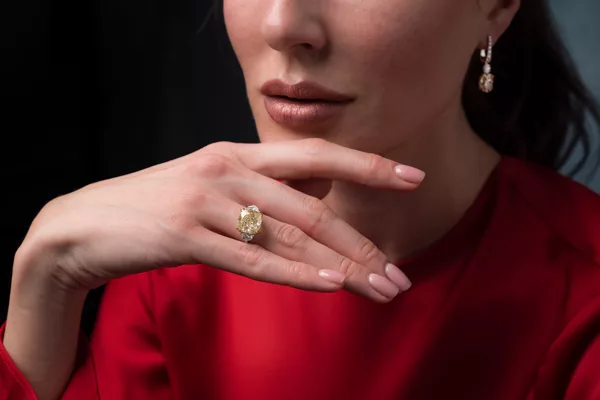






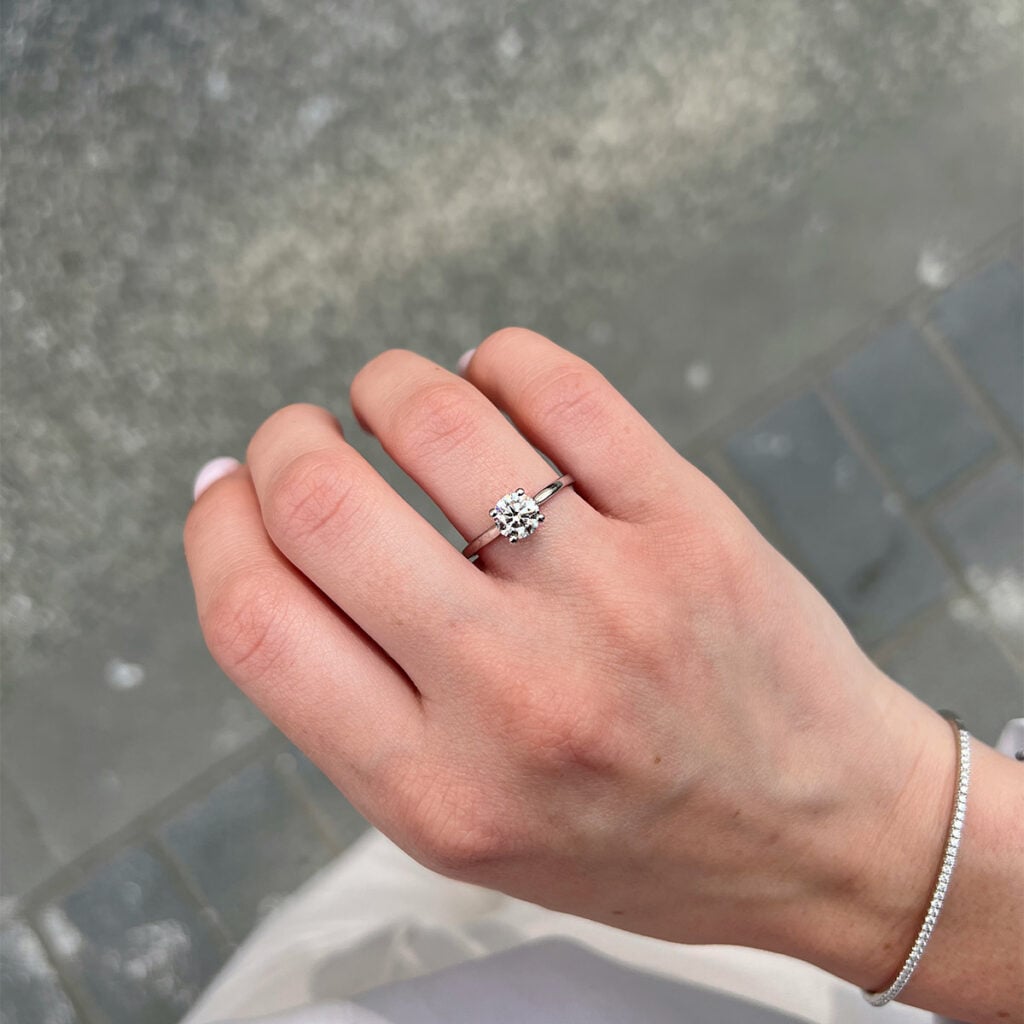
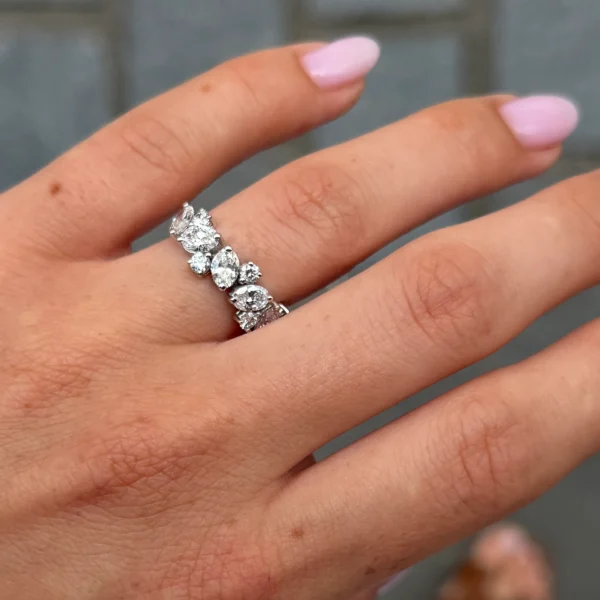
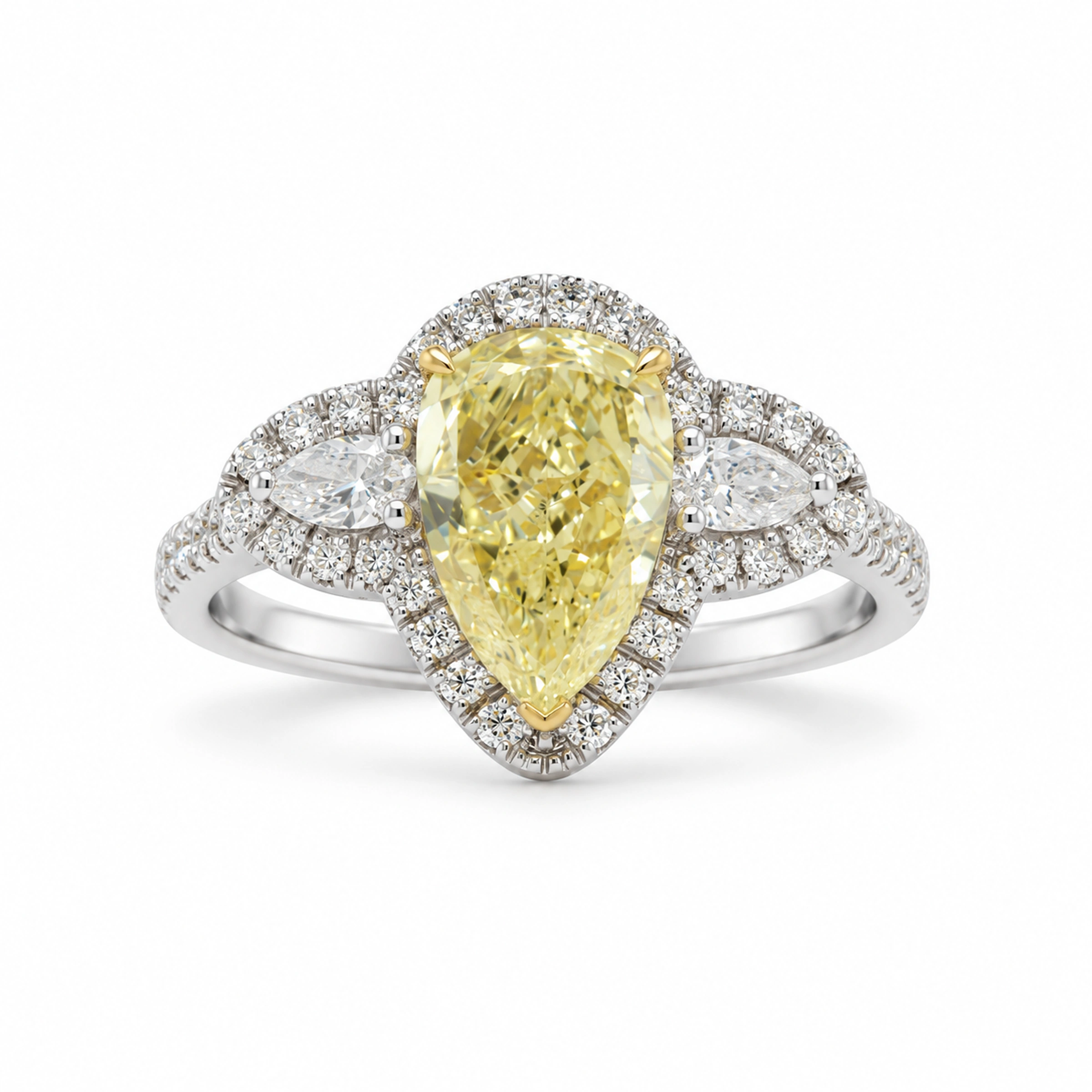
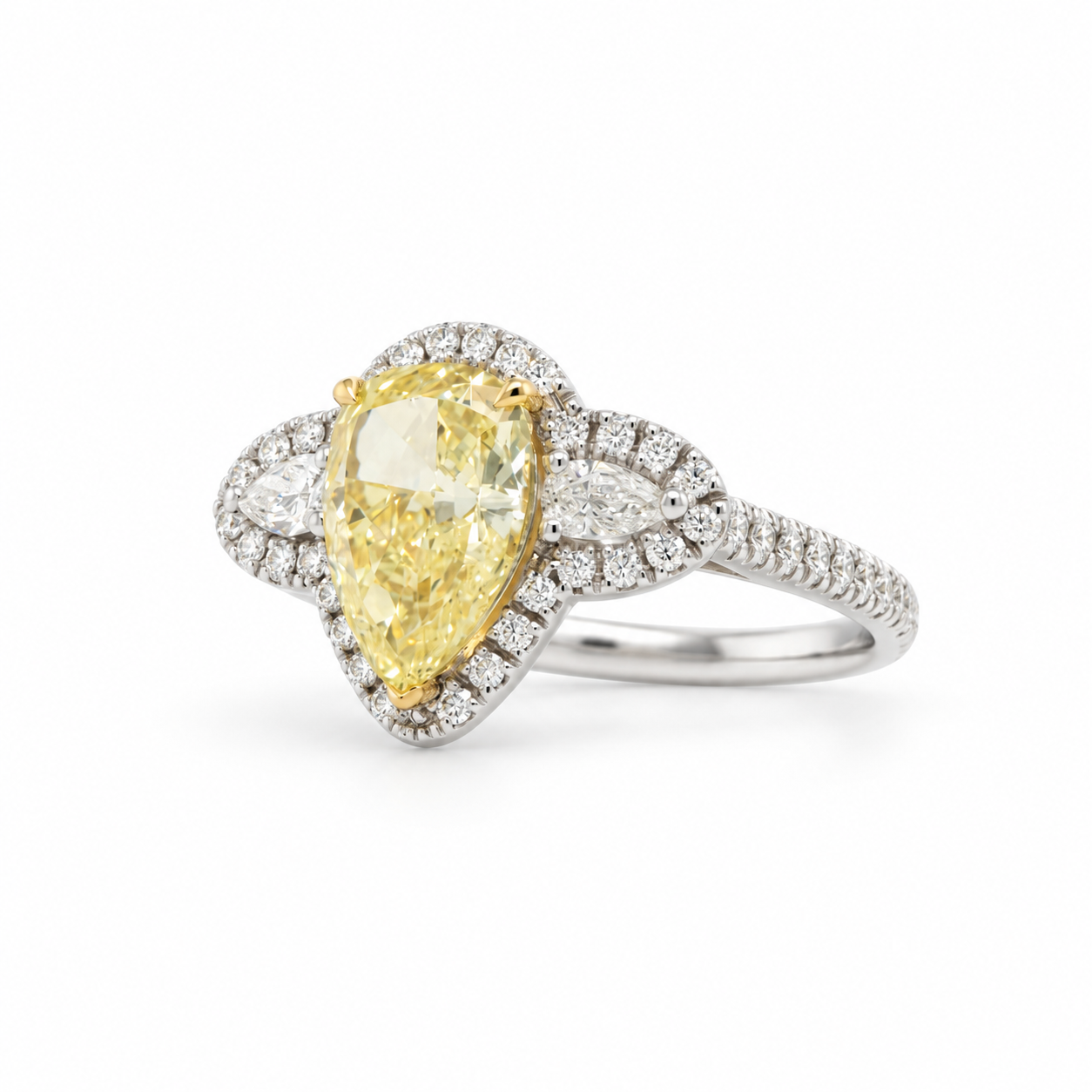
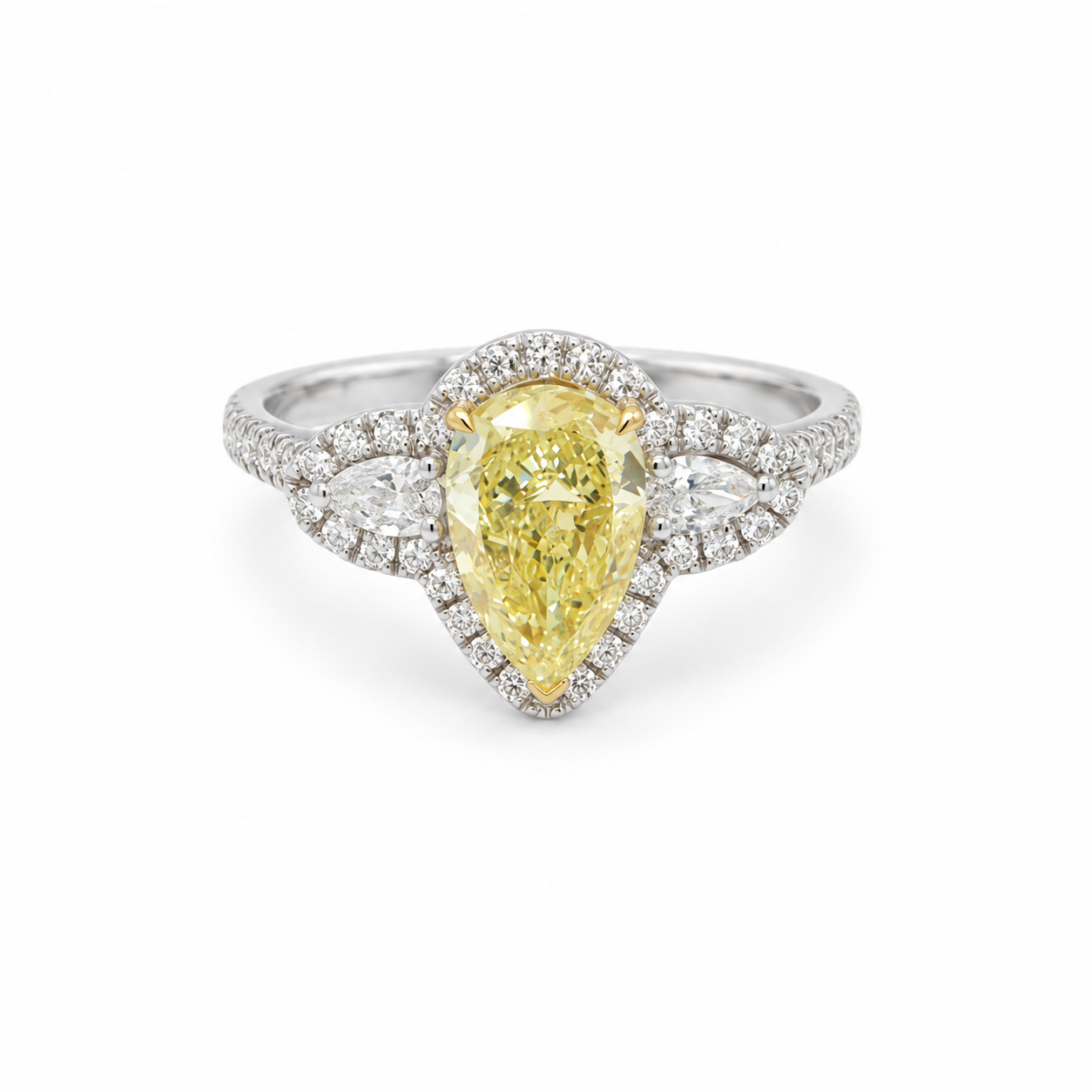
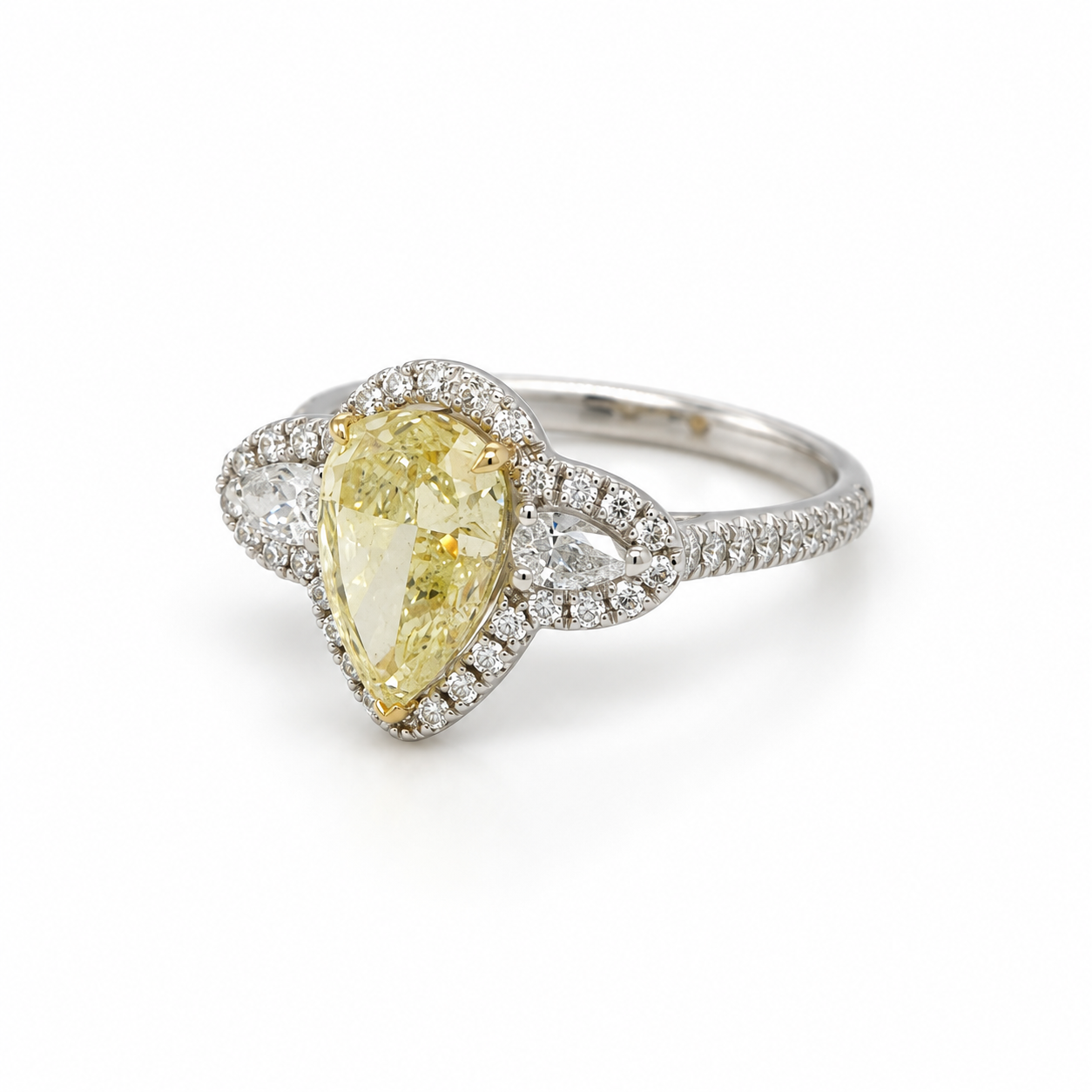
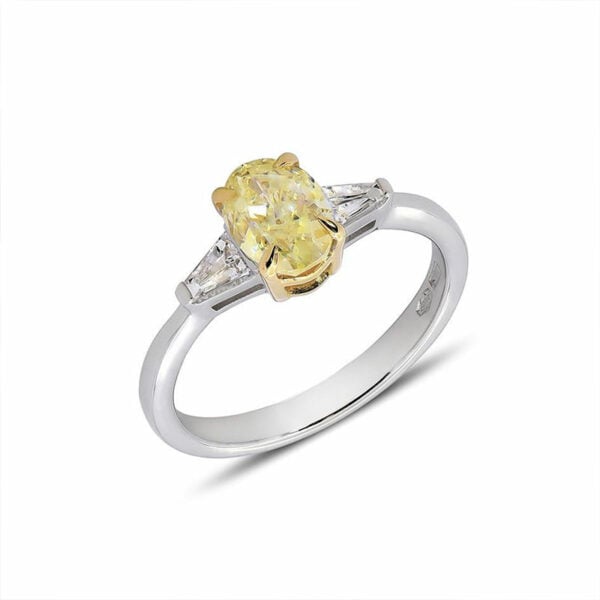
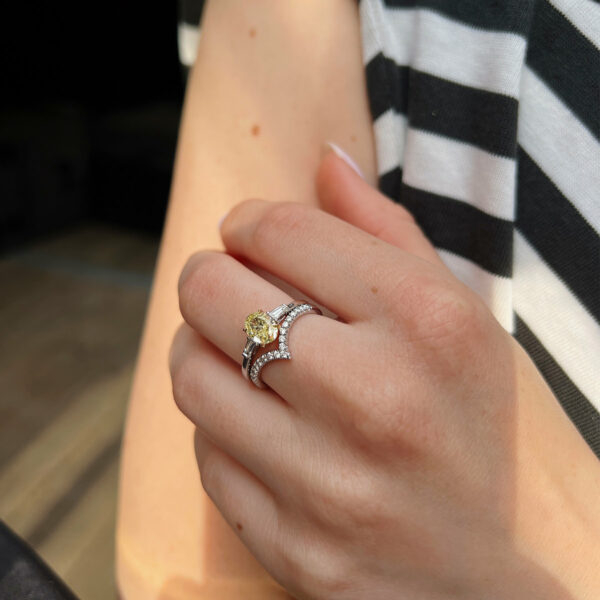
1.41 ct Fancy Yellow pear diamond, three-stone with halo, in 18K white and yellow gold
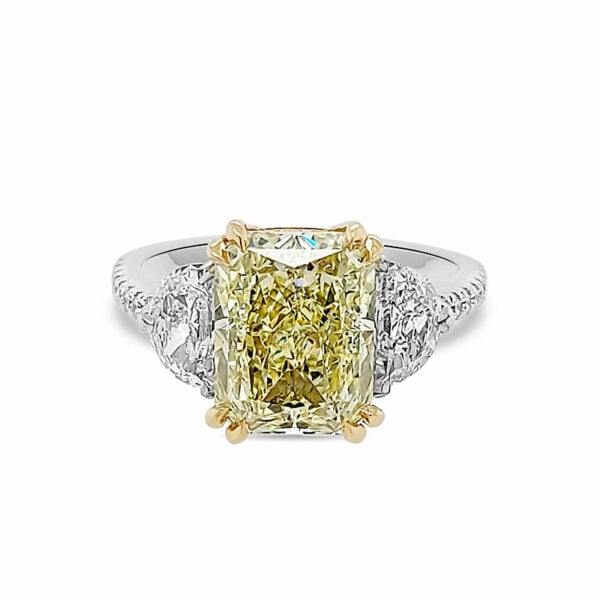
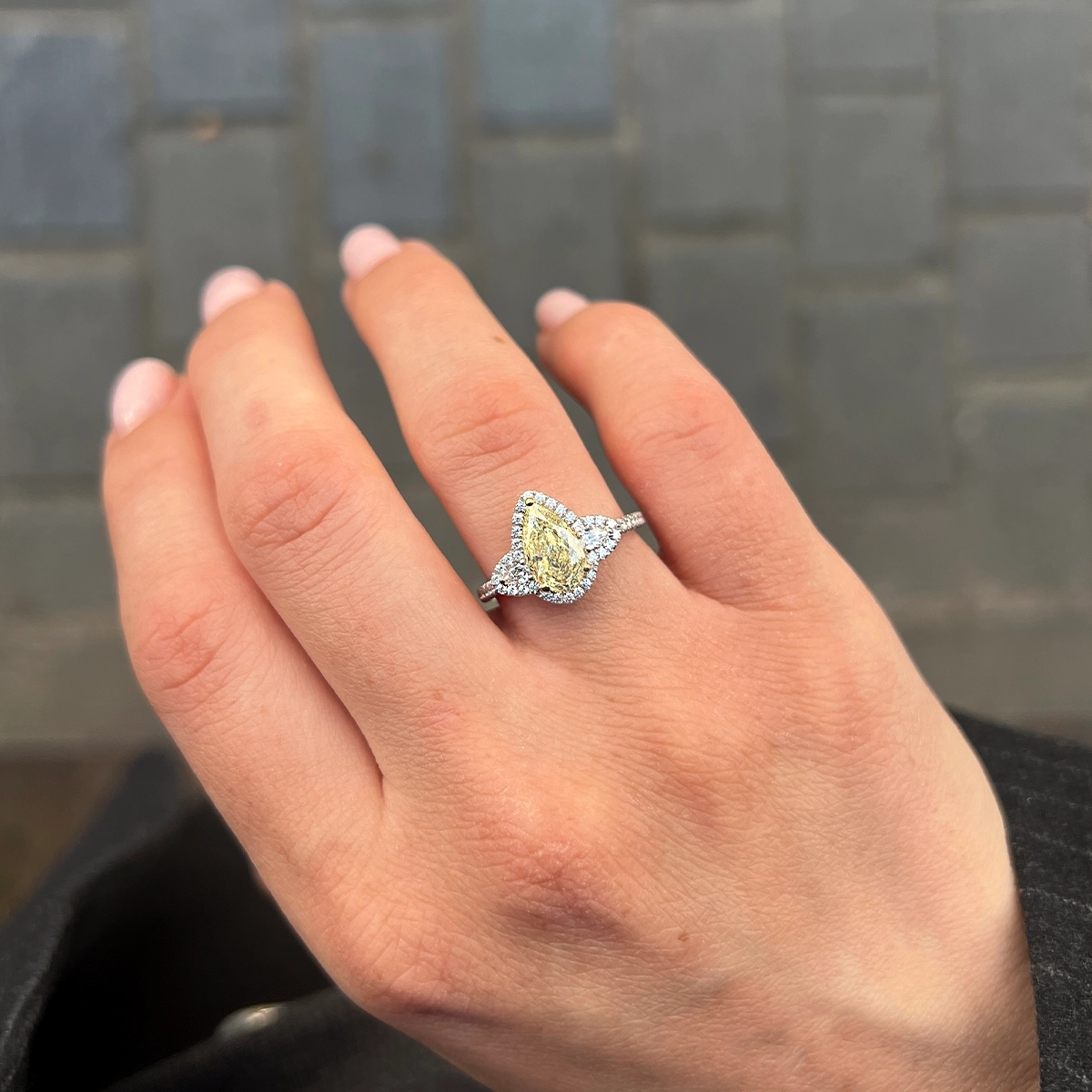
A natural Fancy Yellow diamond of 1.41 carat in pear shape, GIA certified, set in yellow gold inside a halo of white brilliants. A pear-shaped side stone sits either side, each haloed in turn, on a split pavé band in 18K white gold. Side stones 0.45 ct together, colour D–F. GIA report 2245001389. One of it.
Fancy Yellow is a colour grade, not a description
In colourless diamond the scale runs D to Z and less colour is better. A yellow diamond falls off that scale and is judged on its own, where more colour is worth more. That scale runs from Faint and Very Light through Fancy Light to Fancy, Fancy Intense and Fancy Vivid.
This stone grades Fancy Yellow — one step above Fancy Light. In words the difference is small; in the hand it is obvious. Fancy Light reads as a warm cast in an otherwise pale stone; Fancy Yellow reads as yellow. It is also the grade at which the price moves noticeably, which is why the distinction is worth keeping sharp.
Why SI2 weighs differently here
Clarity is SI2. In a colourless diamond that would be a consideration, because in a pale stone the eye has nothing else to look at. In a saturated yellow stone clarity behaves differently: the colour itself, the denser return of light and the busy faceting of a pear make inclusions far harder to see. In fancy colours, colour sets the value and clarity follows; insisting on VS in a yellow diamond is paying for something this stone barely shows.
Come and look, and judge it yourself — you can, because there is only one.
Two metals, and why that is not a styling choice here
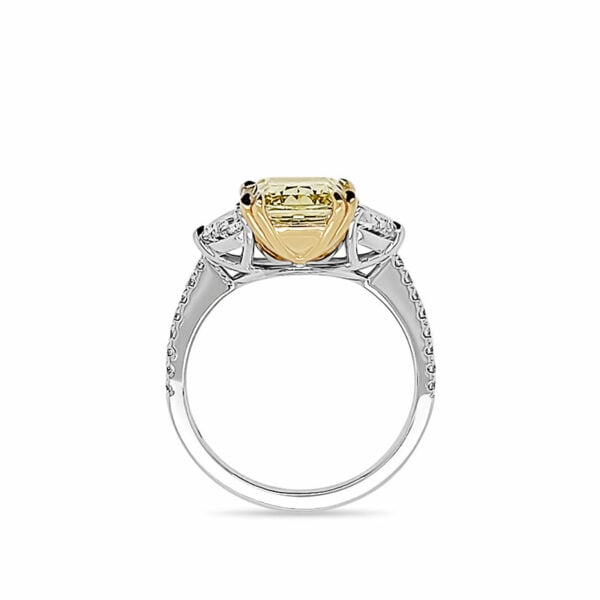
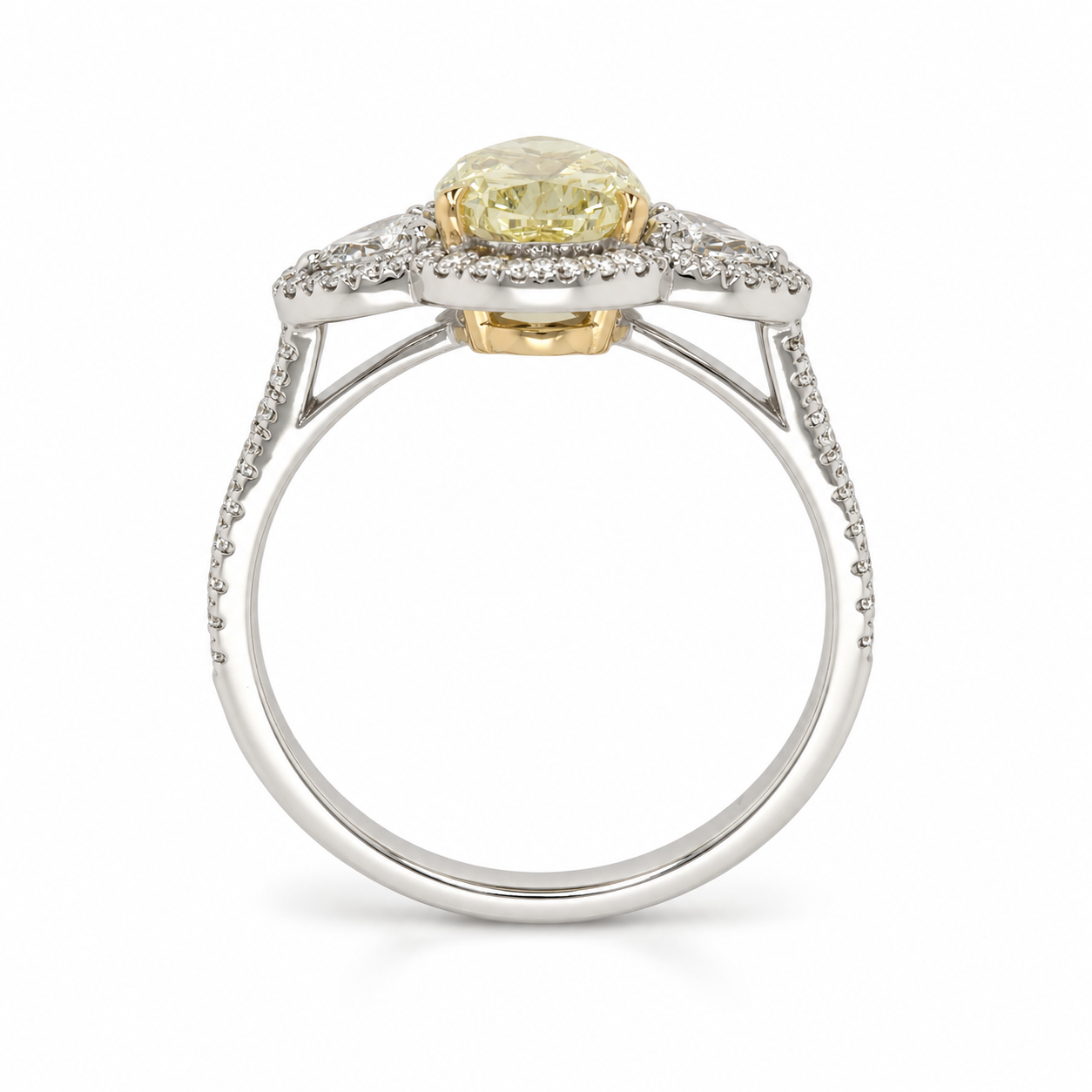
The centre stone sits in yellow gold, everything around it in white gold. That is engineering, not decoration. Yellow metal beneath a yellow diamond throws its own colour back into the stone and deepens the saturation; white metal beneath it would wash it out. The halo needs the opposite: the white brilliants around it must stay colourless, and those are set in white gold. Each metal sits where it helps the stone it carries.
The pear and the three-stone
The pear is the most directional cut: it has a point, and therefore a top and a bottom, and it lengthens the finger. In a yellow diamond it has a further advantage — colour concentrates towards the point, so the stone reads deepest where it is narrowest.
The two pear side stones repeat that shape at smaller scale and make this a three-stone rather than a solitaire with accents. Each of the three carries its own halo; the split band runs in pavé up to the setting and lets light under the stones.
Natural and GIA certified
A natural diamond, not laboratory-grown and not colour-treated — in fancy colours that distinction is the whole of the value, which is why it is stated on the report. GIA report 2245001389, covering colour grade, origin of colour, clarity and weight.
A one-off from Antwerp
Hand-set in our workshop. Resizing included, insured delivery free throughout Europe. Once this one is gone it does not come back.