Nederlands
 Français
 Italiano







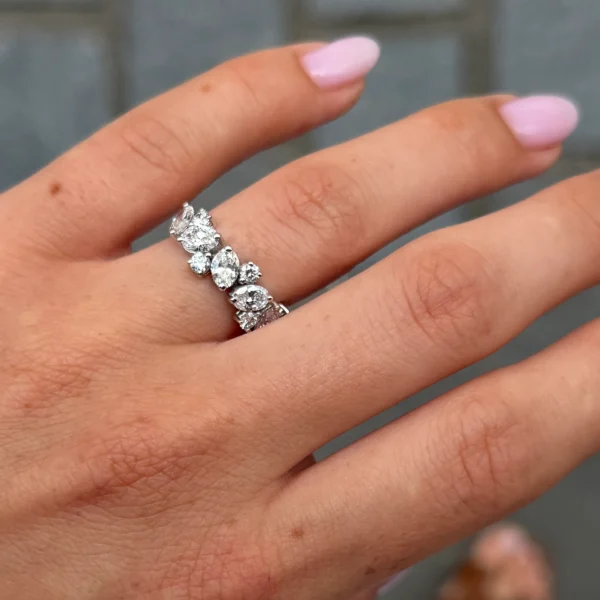
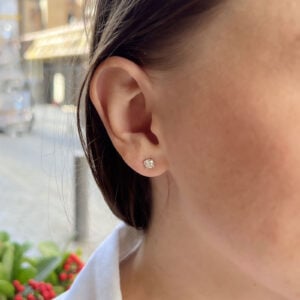
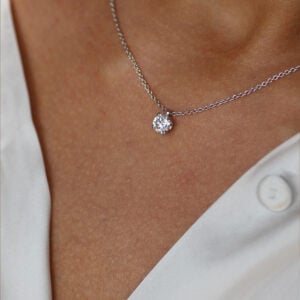
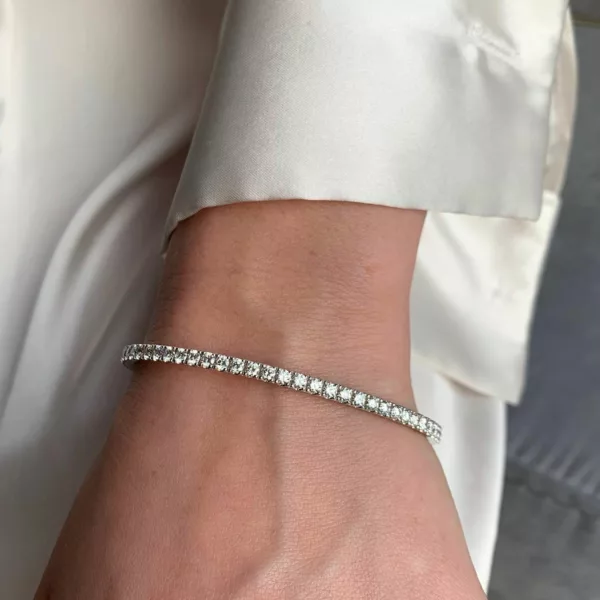
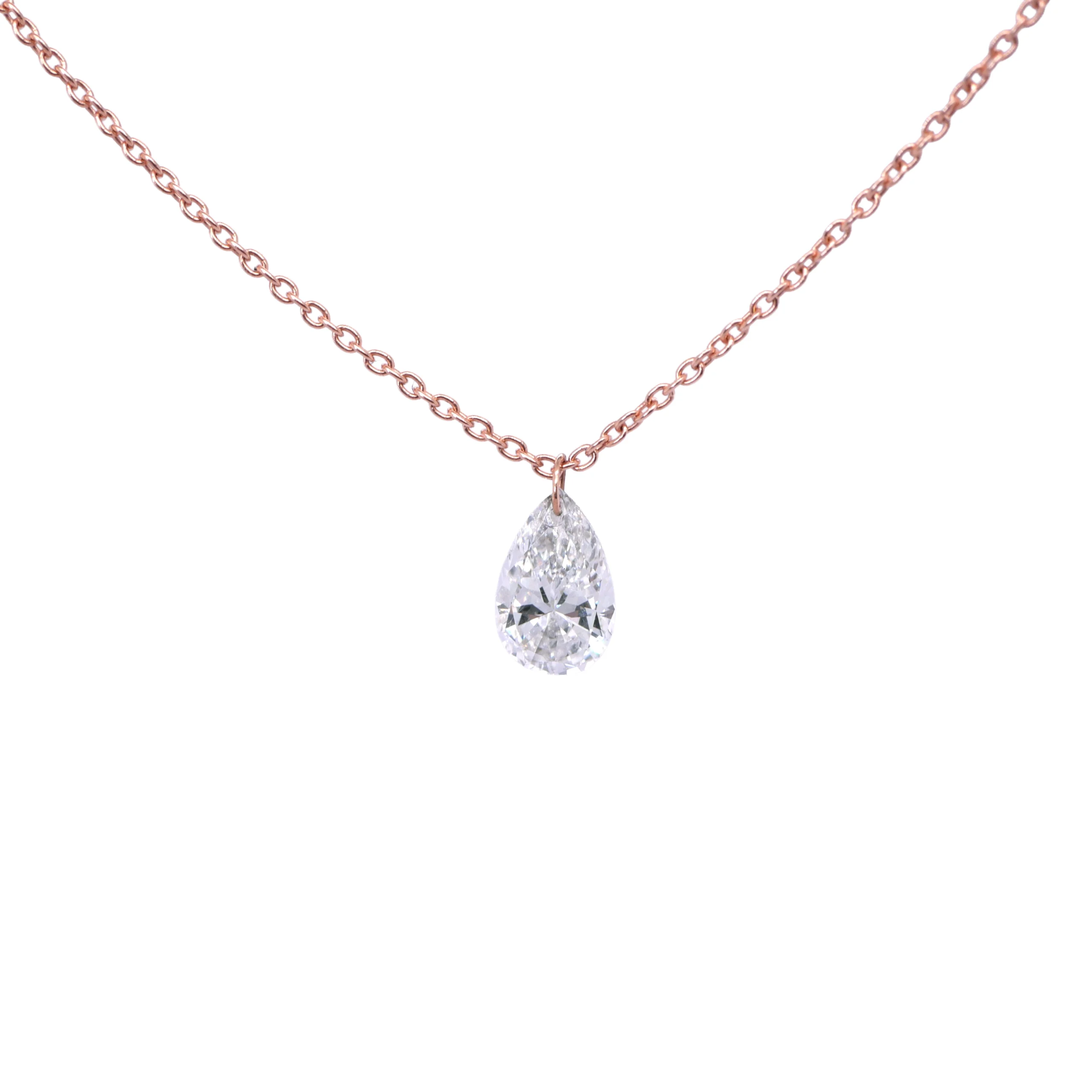
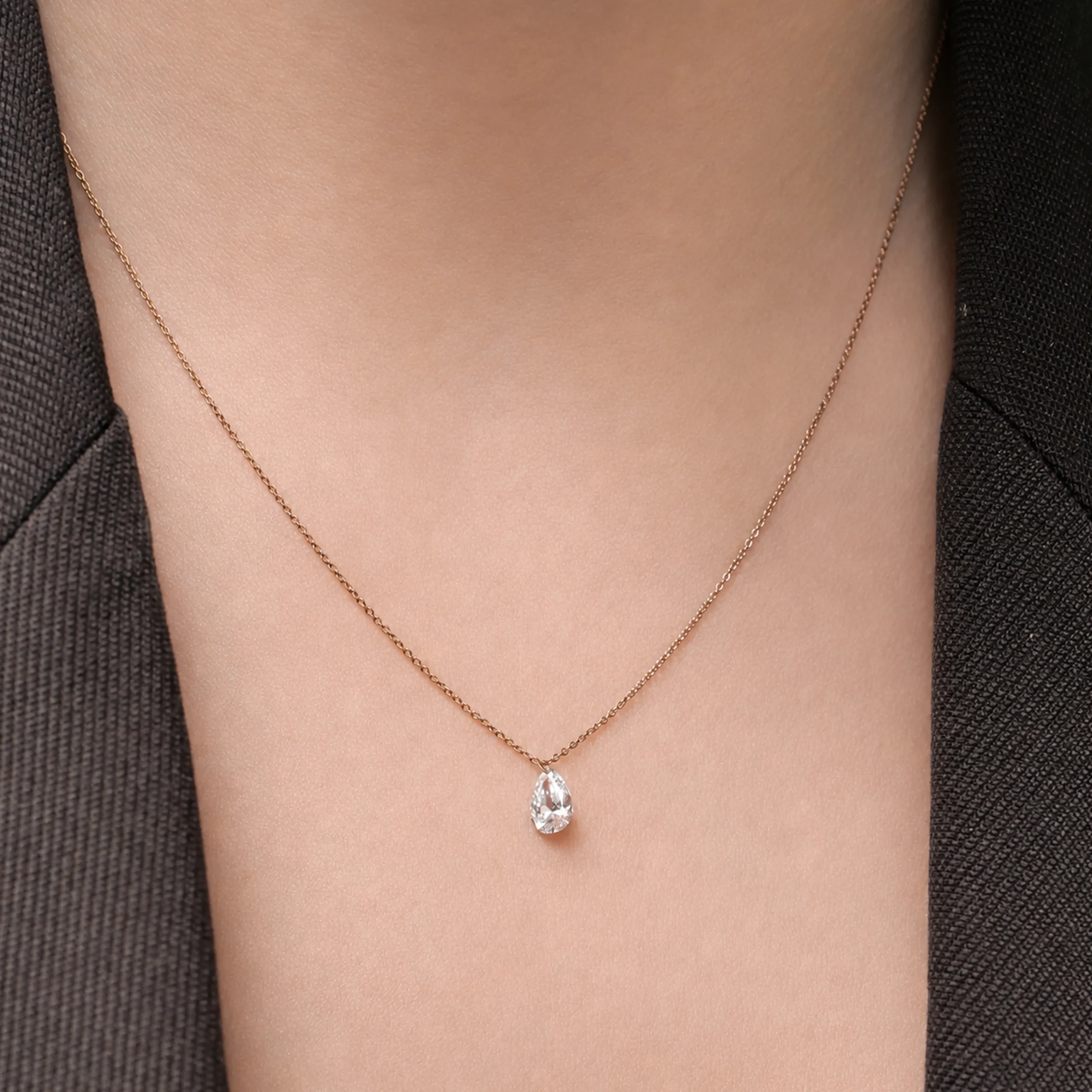
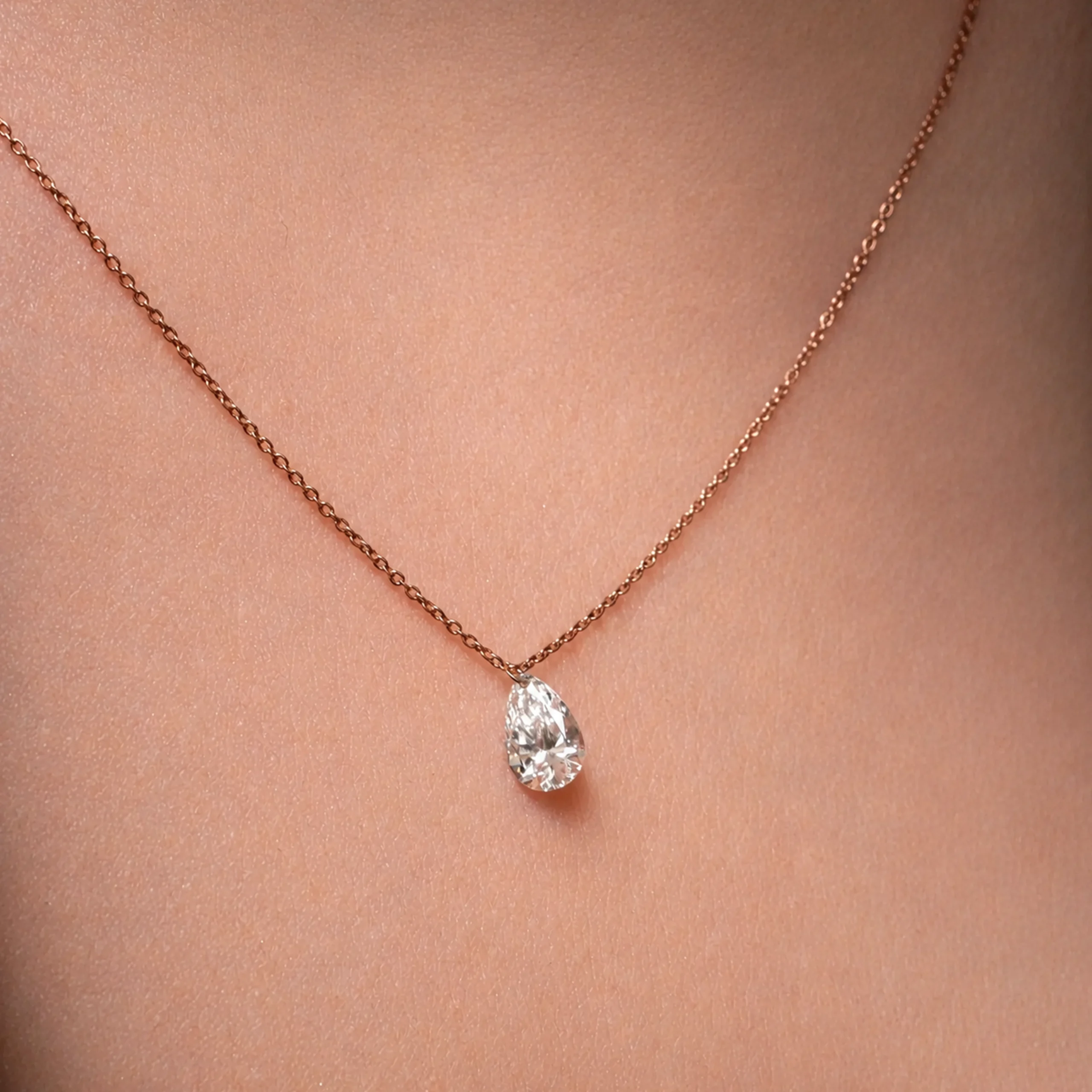
Drilled pear diamond pendant, 0.50 ct lab grown, 18K rose gold
A 0.50 ct lab grown pear cut diamond, F colour, VS clarity, pierced through the shoulder and threaded onto an 18K rose gold cable chain. One piece, made in our Antwerp workshop.
The diamond is drilled and the gold goes through it
There are no claws on this piece, no bezel, no cup, no metal touching the face of the stone anywhere. Each diamond is pierced with a laser and a length of 18K gold passes straight through the body of the crystal. The stone is not held by the setting — the stone is the setting, a structural part of the piece, carrying its own weight on the gold that runs through it.
Why this is difficult
Diamond is the hardest material there is, a 10 on the Mohs scale, and it is also brittle along its cleavage planes. Drilling one means vaporising a channel through it with a focused laser, slowly, without generating the thermal stress that would split the stone. The hole has to run perfectly perpendicular to the girdle and dead through the centre of mass, because a channel even slightly off axis makes the diamond hang crooked for the rest of its life and there is no correcting it afterwards. Stones are selected for this: any inclusion sitting near the drill path is a reason to reject the stone before work starts.
What you get for the trouble
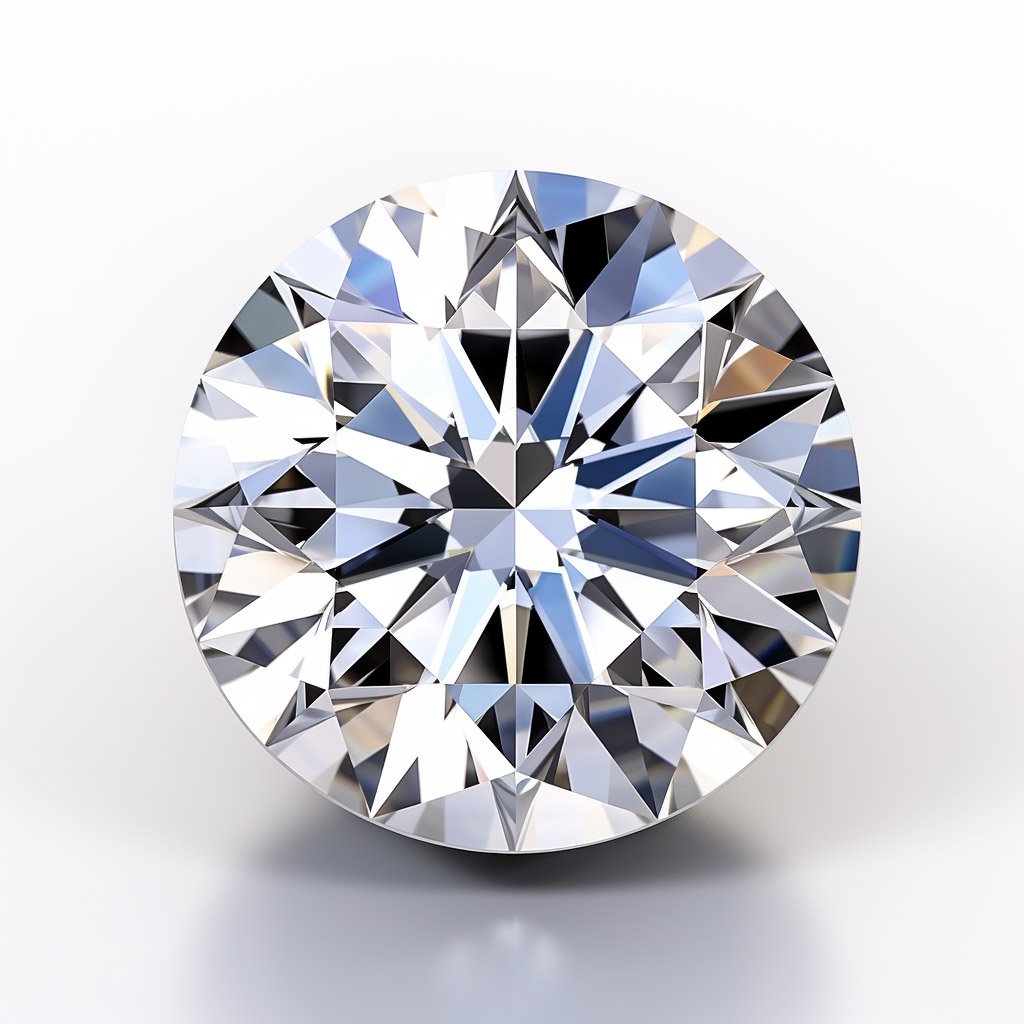
Two things a set stone cannot give you. First, light: a claw or bezel always covers part of the crown and shadows part of the pavilion, and here nothing does. The whole surface of the diamond is exposed, so it returns light from every angle including from behind. Second, movement: with a single point of contact the stone pivots freely as you move, and the piece flickers continuously instead of sitting still.
Wearing it
A drilled diamond is as durable as any other — the channel removes a negligible amount of material and sits in the thickest part of the stone. The practical difference is that there is no metal rim protecting the girdle, so this is jewellery to treat as jewellery: take it off before sport or heavy work, as you would any diamond piece. The gold link through the stone is checked and, if needed, tightened free of charge whenever the piece comes back to us.
The tip is the point of a pear, so we leave it alone
Conventional pear pendants hang from the tip, which means a claw or a cap has to cover it — and the tip is the single feature that distinguishes a pear from an oval. Drilled through the shoulder instead, the point hangs free and completely uncovered. What you see is the whole teardrop, not most of a teardrop with metal on the end of it.
It hangs true
Suspended from one link running through the broadest part of the stone, the pear finds its own vertical. Gravity keeps the point straight down and it stays there, which is not the case with bail-hung pears — those tend to swing off axis and sit at an angle against the chest.
A quiet piece
0.50 ct on a fine 42 cm rose gold chain is jewellery to wear rather than to consider. Nothing protrudes, nothing catches on a jumper, and there is no plating to renew. At 42 cm the stone sits just below the collarbone, high enough to stay visible above a neckline.
Related — the drilled diamond collection
Every piece in this collection is built the same way: the diamond is pierced and the gold runs through it.