Nederlands
 Français
 Italiano

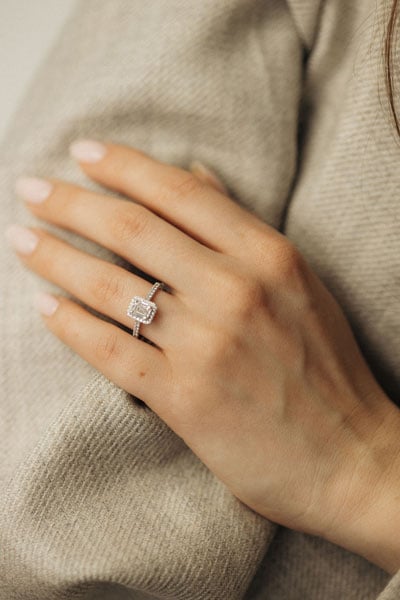

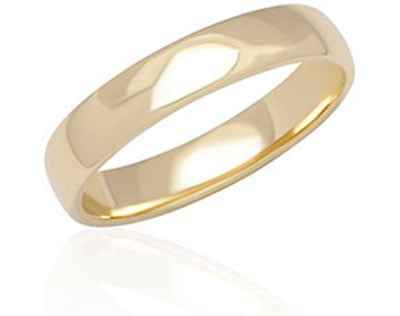
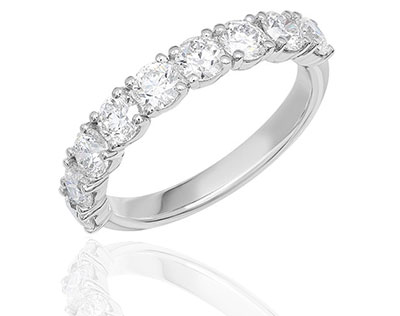

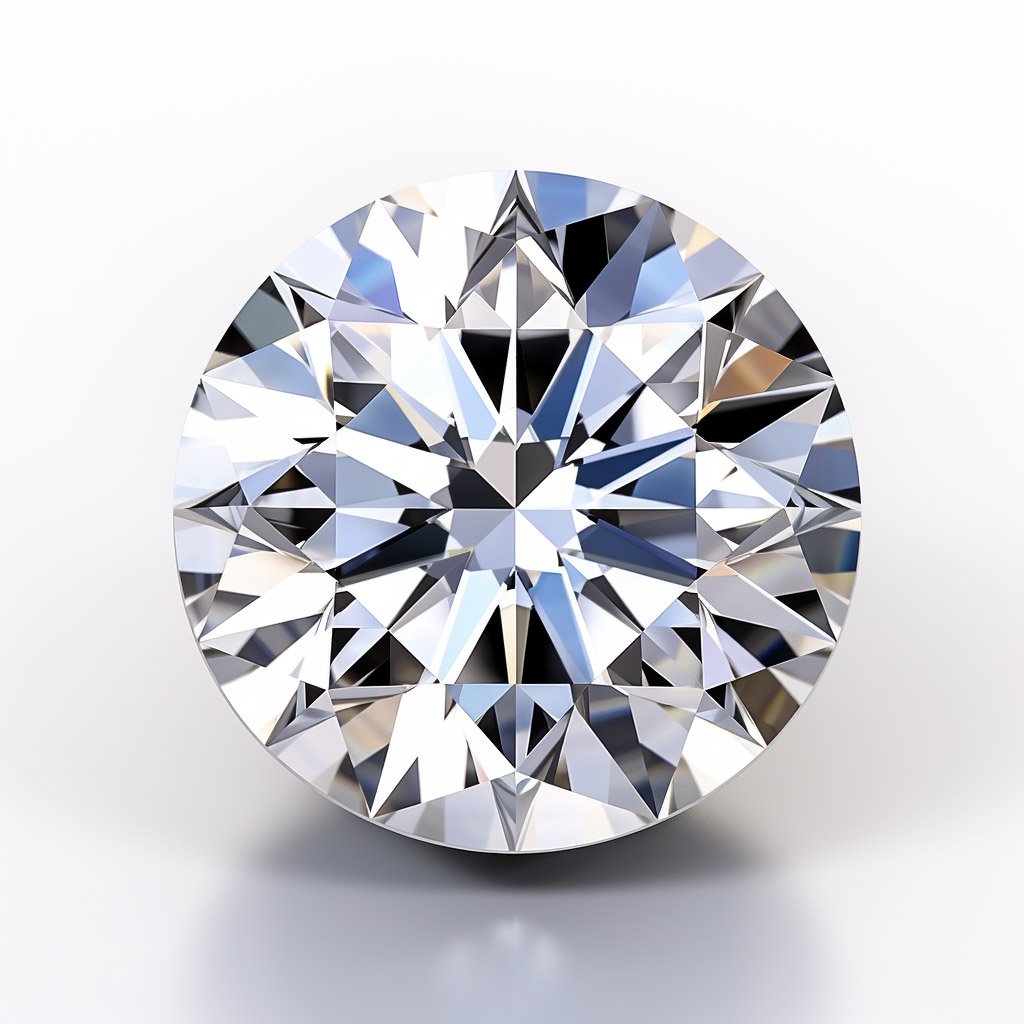



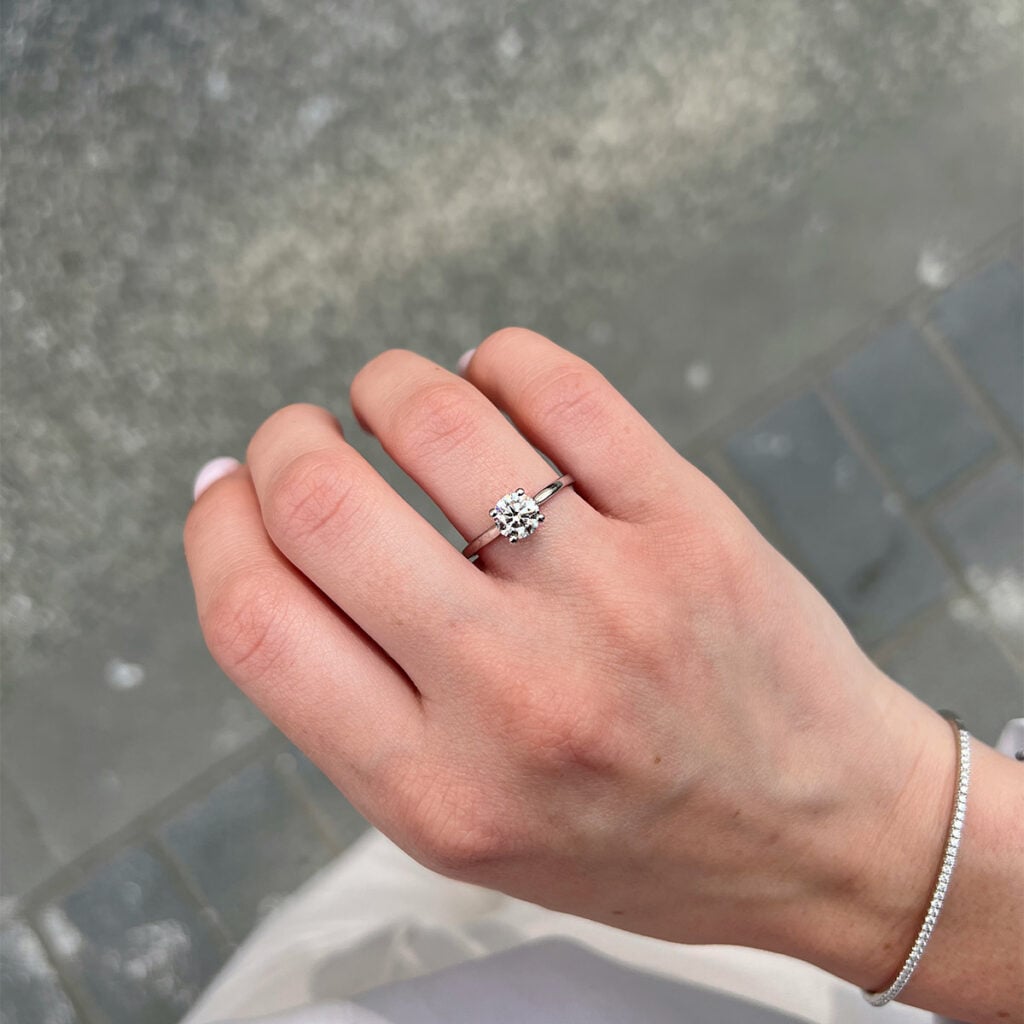
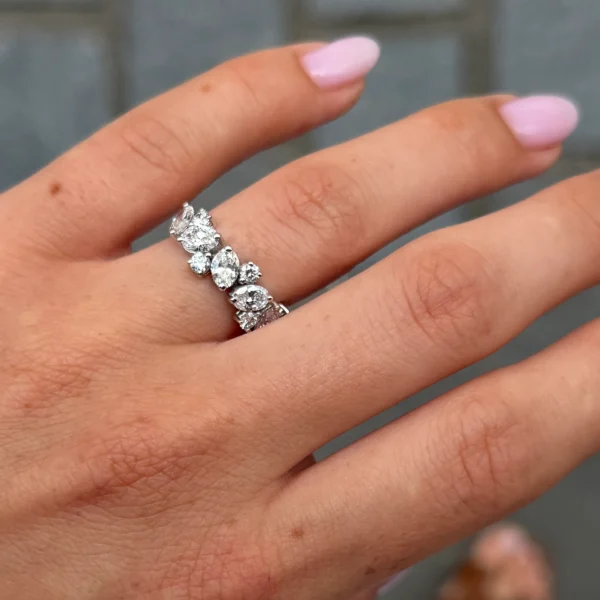
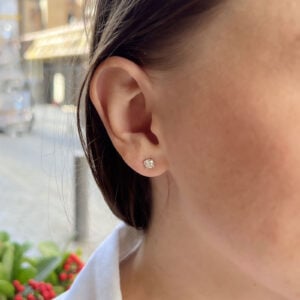
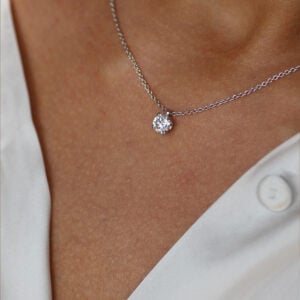
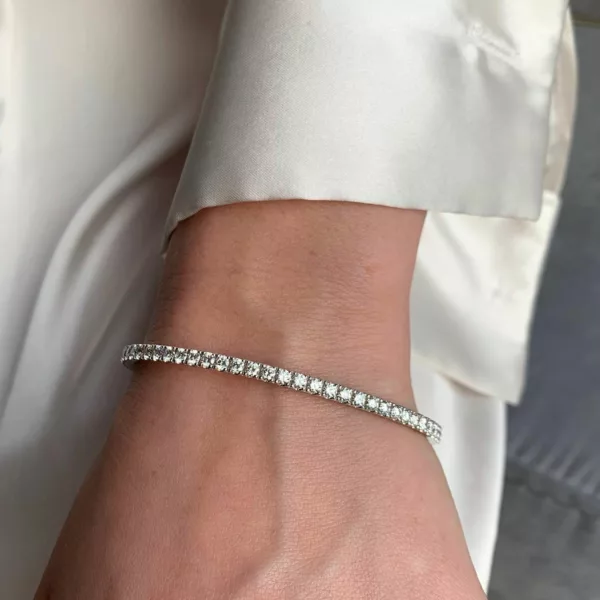
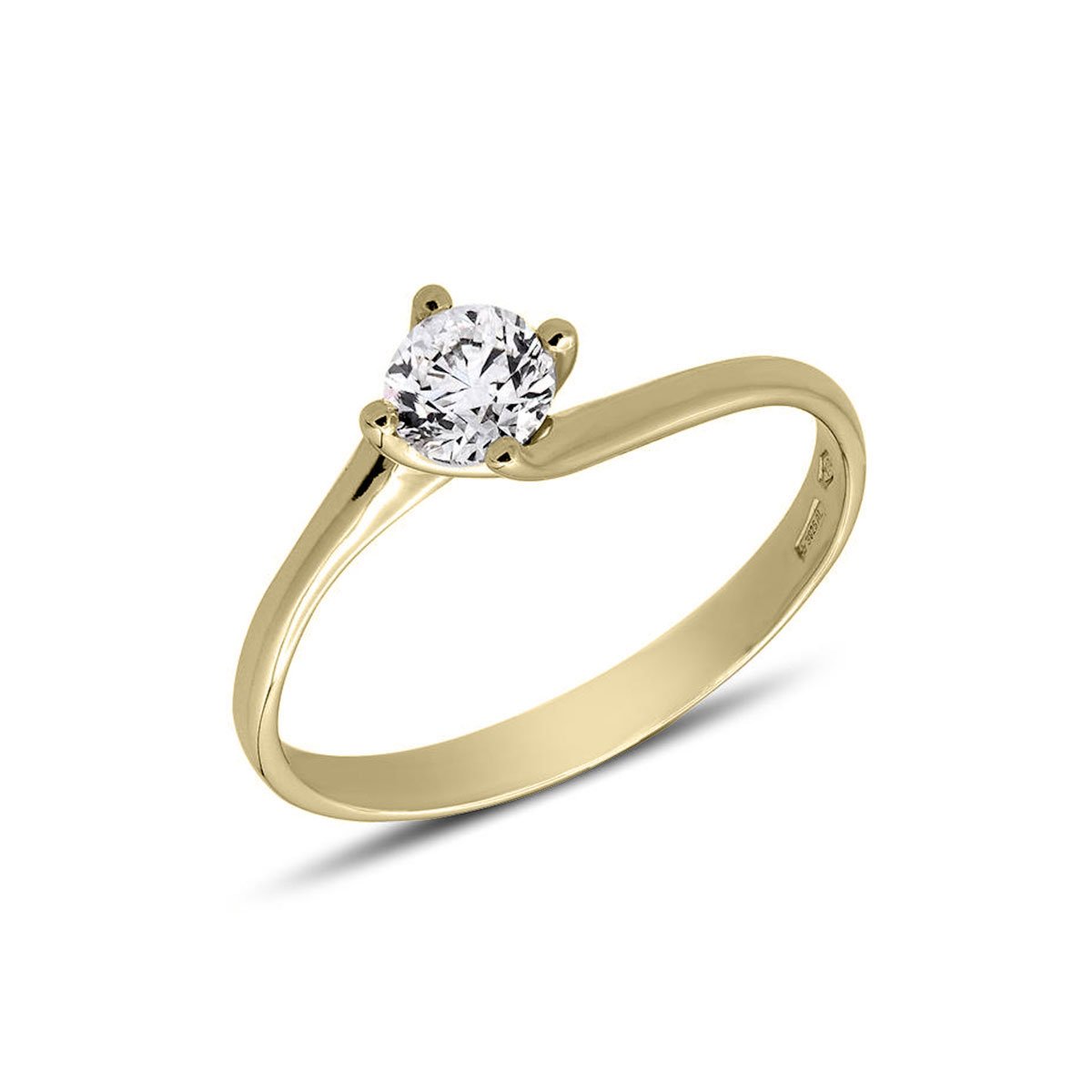
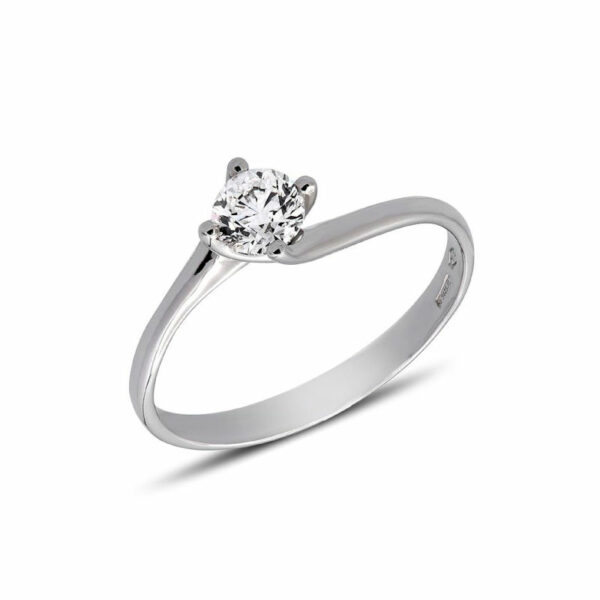
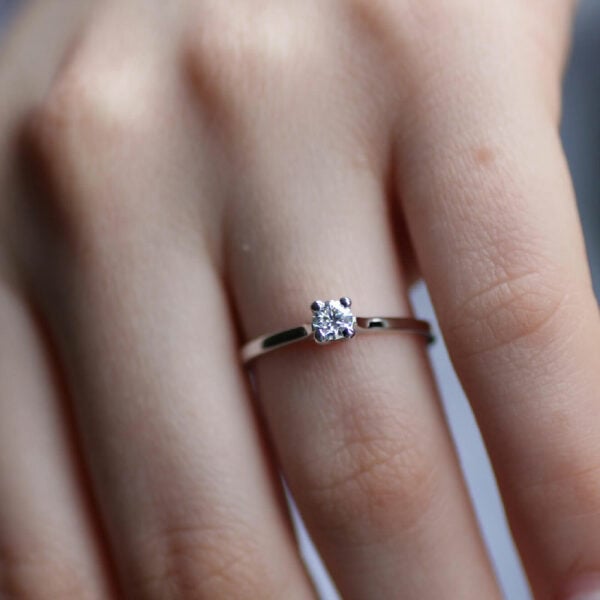
0.40 ct round brilliant, F VS2, GIA, on a twist band in yellow gold
One natural round brilliant diamond of 0.40 carat, GIA graded colour F and clarity VS2, in four claws on a twisted band in 18K yellow gold. GIA report 2556096929.
What a twist band does, and what it does not
A twist band is not decoration you buy on top. It changes three things, and none of them has to do with the stone.
It moves light. A plain band has one continuous surface and therefore returns one broad reflection. A twisted band has a different slope at every point, so some part of it always faces the light while another faces away. That makes the band live with the hand rather than sit still — and in yellow gold, which already reflects warmly, the effect is stronger than in white metal.
It hides wear. This is the argument almost nobody makes and the one that matters most in practice. Every ring picks up fine scratches underneath over the years. On a plain band they catch light as a dull patch and are visible; on a twisted surface they disappear between the turns. A twist band ages visibly more slowly than a plain one in the same gold.
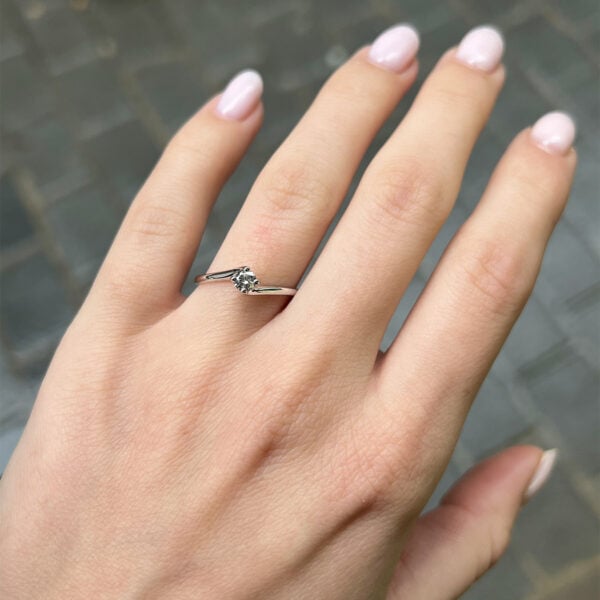
It reads wider without being heavier. The twist gives the band an optical width it does not have in metal. That sits well on the hand — and it is exactly why you should know what you give up for it.
The other side, honestly
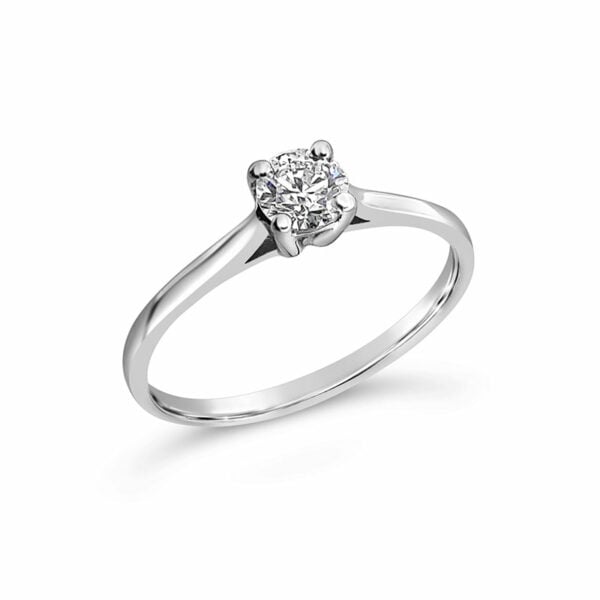
A twist band does not make the stone look larger; rather the opposite. Because the band reads optically wider, the stone has more beside it to be measured against — and 0.40 carat looks slightly more modest on a twist band than on a slim plain one. If you want the opposite, the same stone on a thin plain band is the choice: 0.40 ct, F, VS2, yellow gold, exactly the same specification. Only the shank differs.
Resizing is also less free on a twist than on a plain band: the pattern has to run continuously, so large jumps in size take more work. Within a few sizes it is no trouble.
F VS2 at 0.40 carat
F is the last grade of the colourless range, which in yellow gold is a deliberate choice: warm metal always throws something back into the stone, so anyone wanting colourless does better staying within D–F. VS2 means inclusions can be found under ten times magnification and not with the naked eye — on a stone of about 4.8 millimetres, comfortably below the threshold of visibility.
Certified and set in Antwerp
GIA report 2556096929, laser-inscribed on the girdle. Hand-set in our workshop. Insured delivery free throughout Europe.