Nederlands
 Français
 Italiano

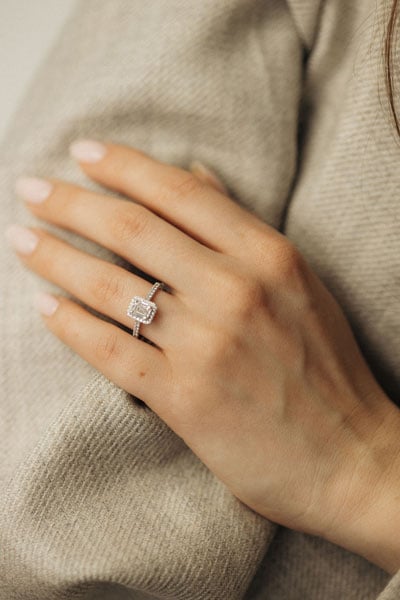

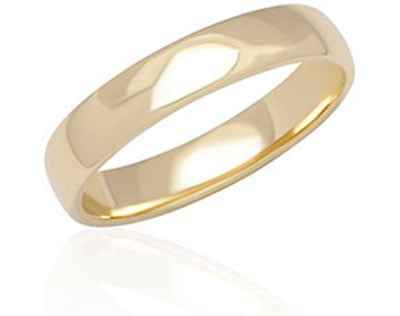
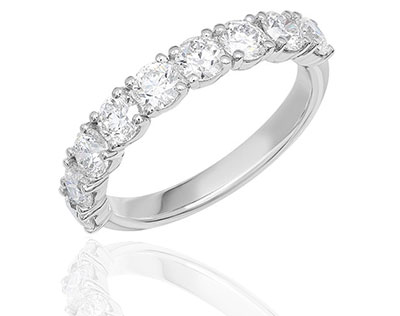

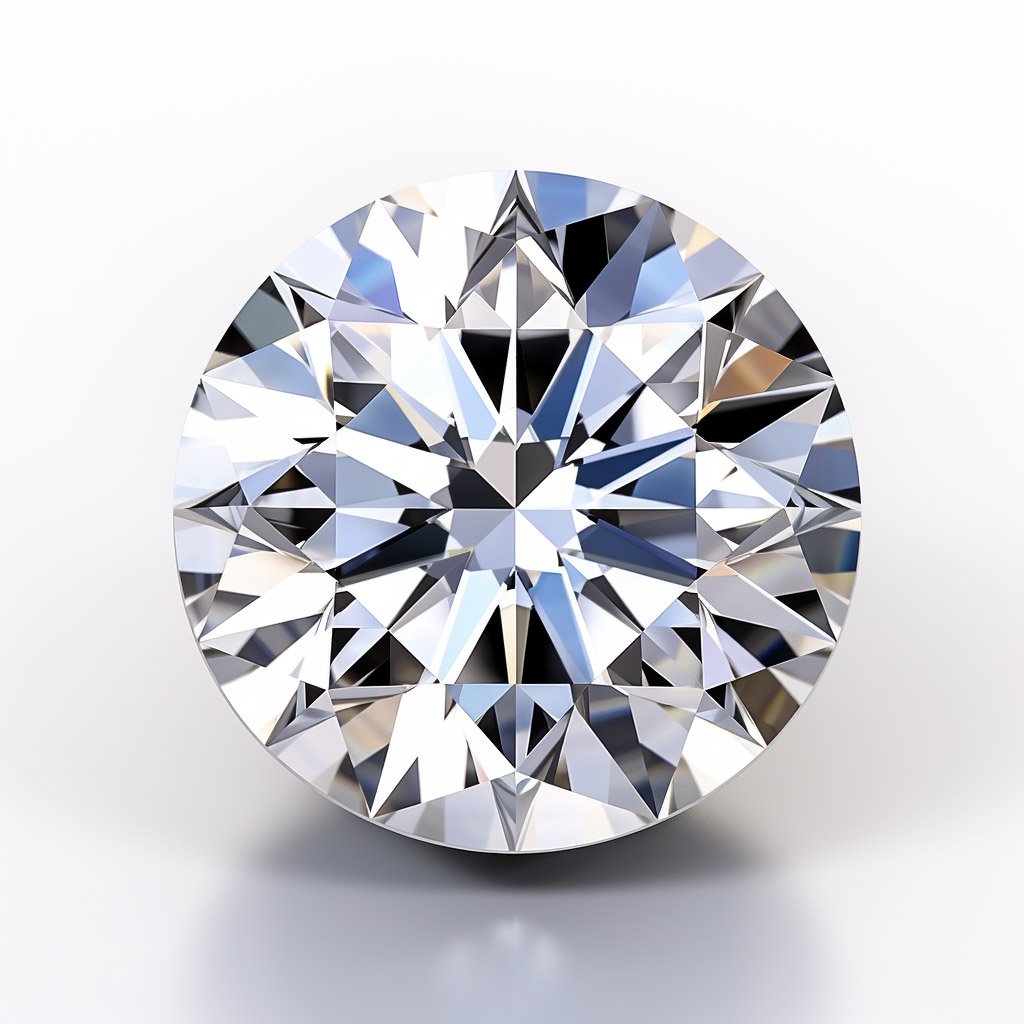



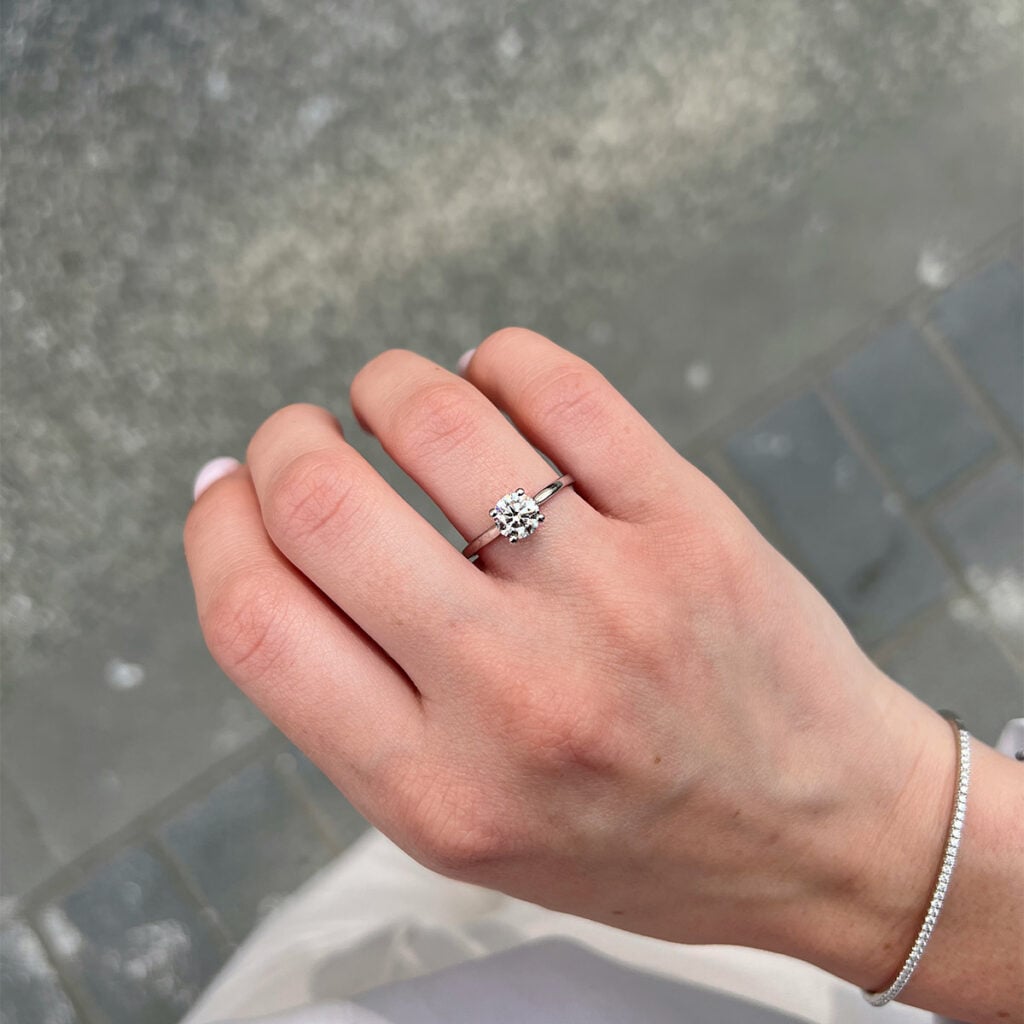
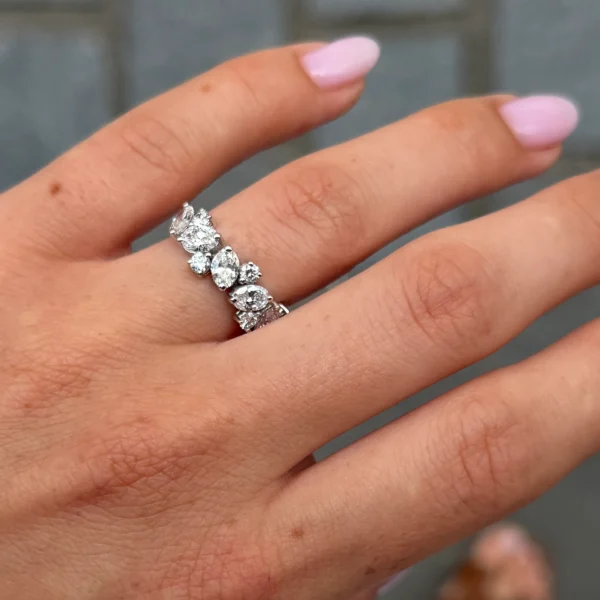
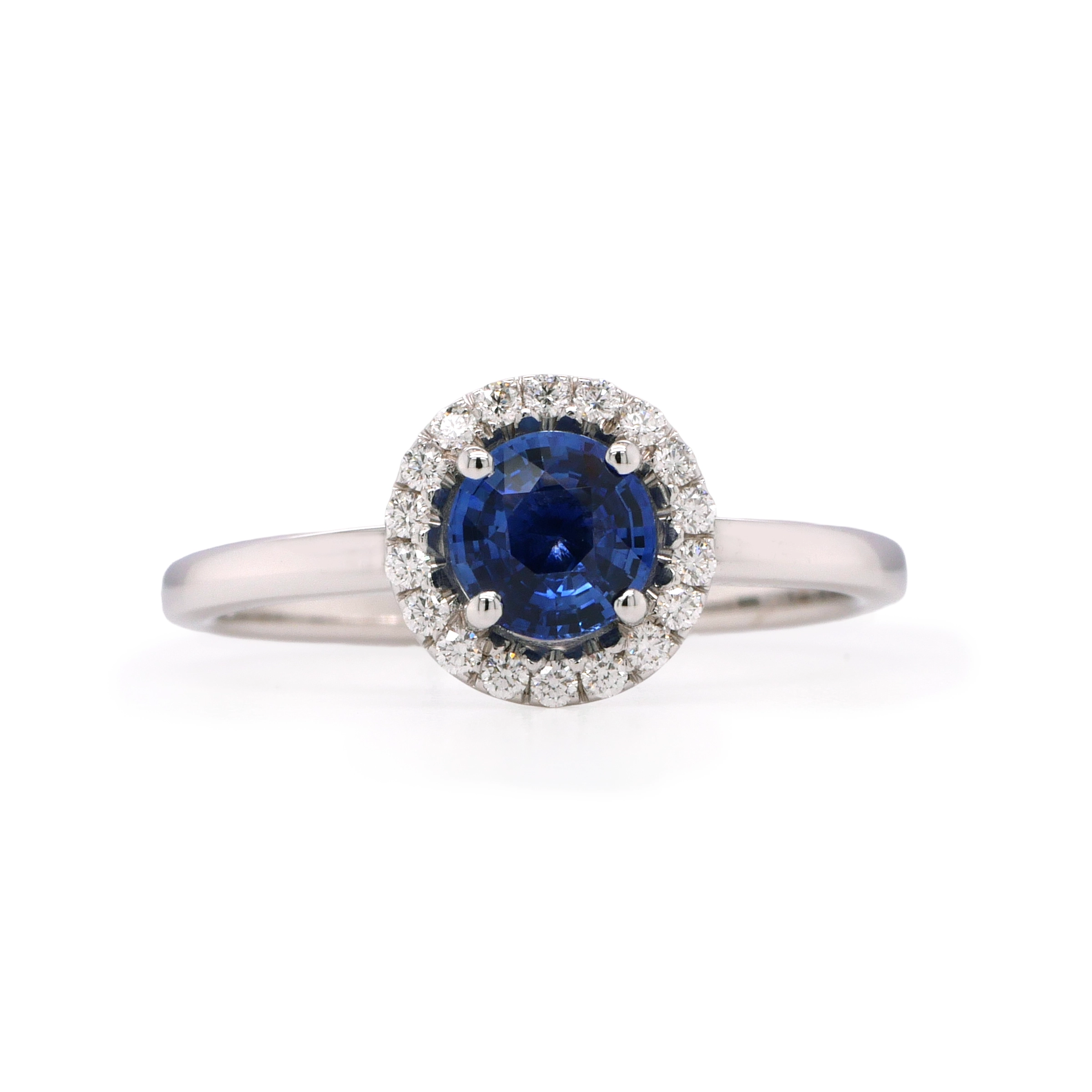
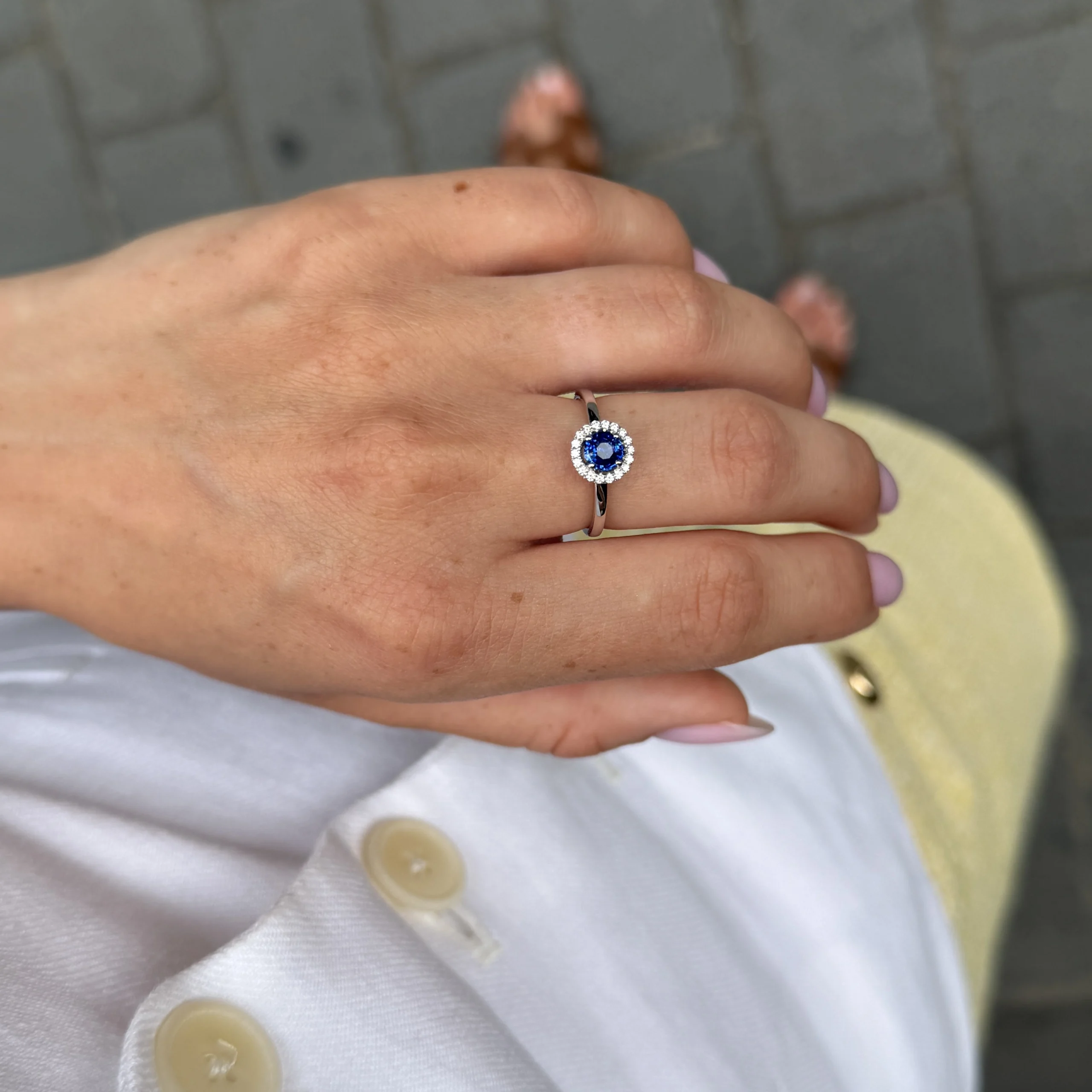
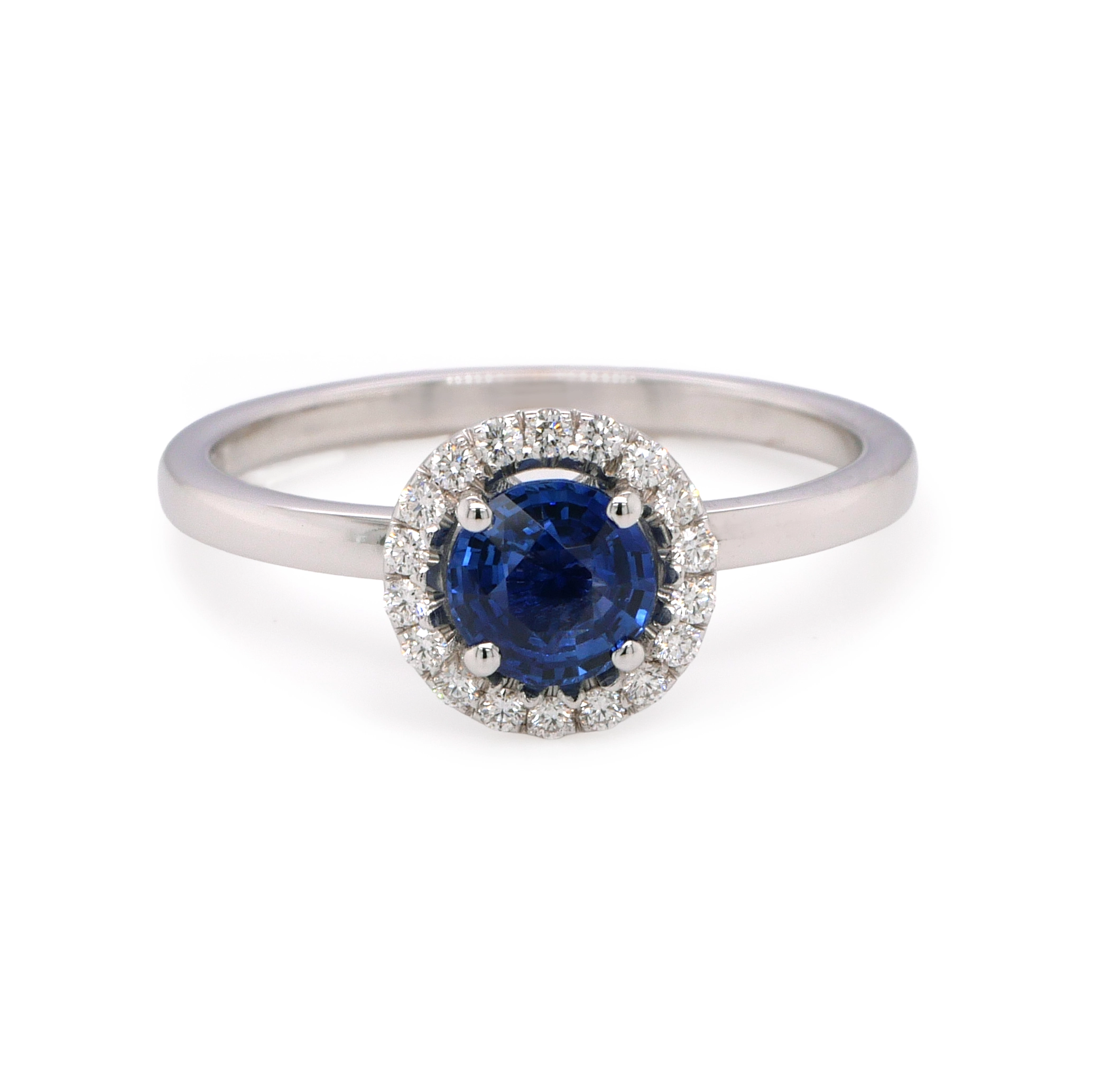
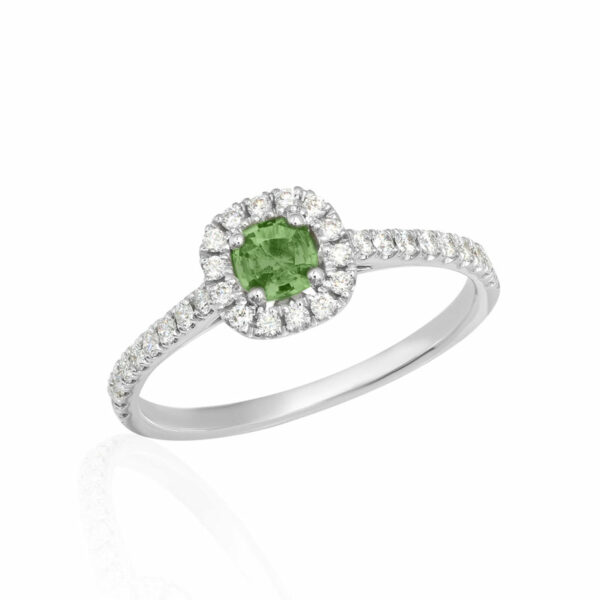
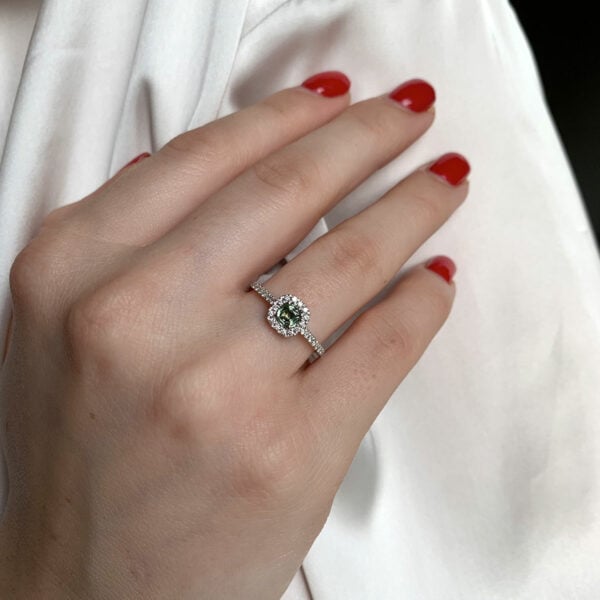
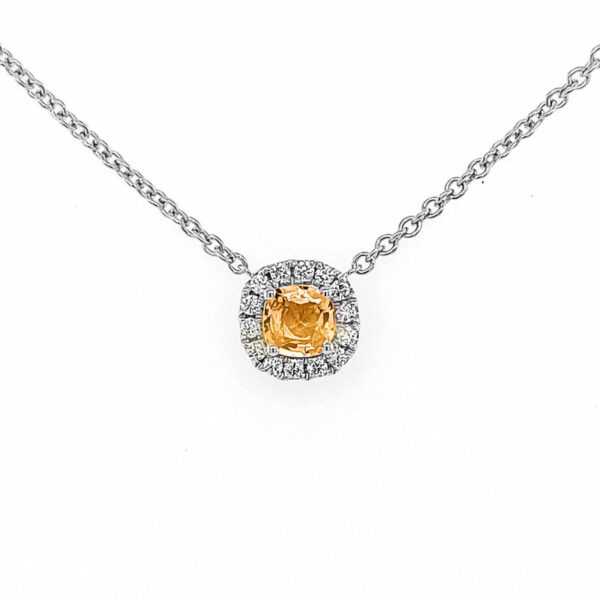
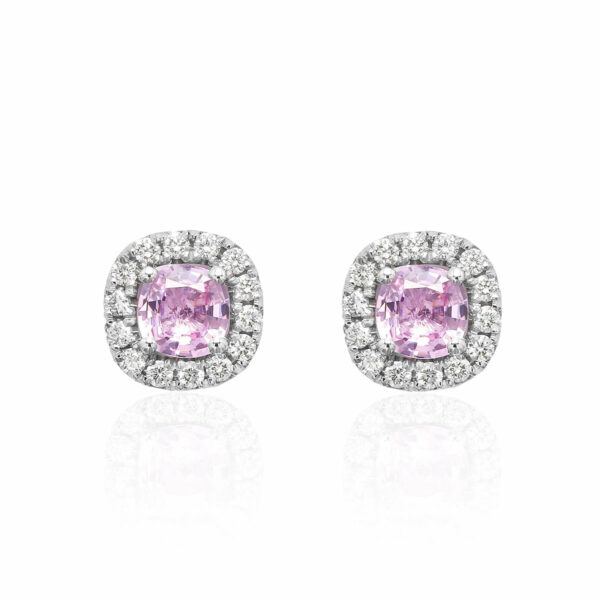
A 0.55 carat round blue sapphire, four-prong set within a halo of 0.10 carat of D–F VS diamonds, in 18K white gold.
Blue in sapphire is not a pigment sitting in the stone. It comes from two different trace elements working together: an iron atom and a titanium atom sitting side by side in the crystal lattice, exchanging an electron between them. That exchange absorbs light from the yellow and red end of the spectrum, and what passes through is blue. Neither element alone would do it — iron by itself gives yellows and greens, titanium alone gives nothing at all. The colour exists only in the interaction.
It is also why blue sapphire varies so widely. The intensity depends on how many of those paired sites formed during growth, which is a matter of what was dissolved in the fluid the crystal grew from.
The halo is set in D–F, the colourless range, and in white metal. Both choices sharpen the blue by contrast rather than softening it; warm metal beside a blue stone drags it toward grey.
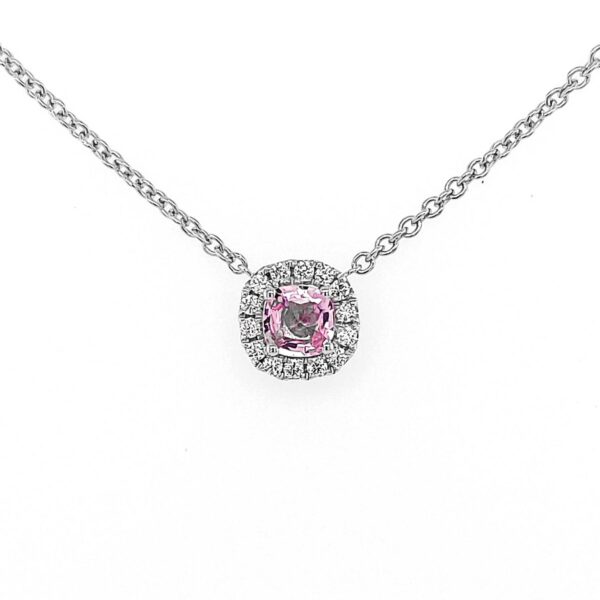
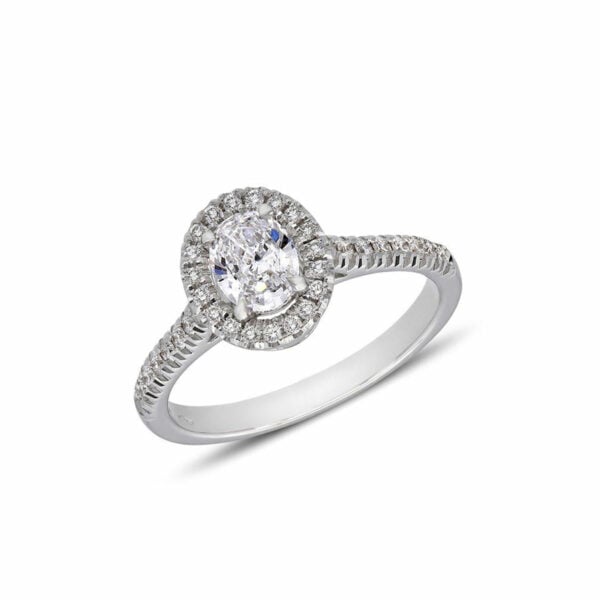
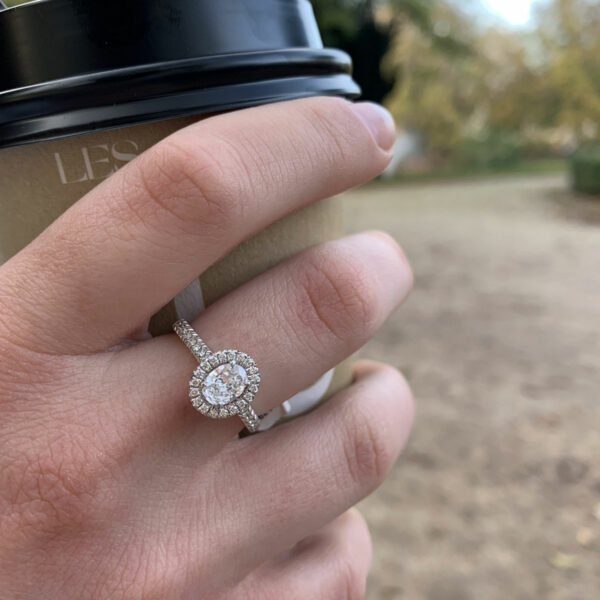
The same stone without a halo: 0.58 ct round blue sapphire. Oval, with micropavé: 0.48 ct.