Nederlands
 Français
 Italiano






1.05 carat, D, VVS2 — and what the grade below the top is worth
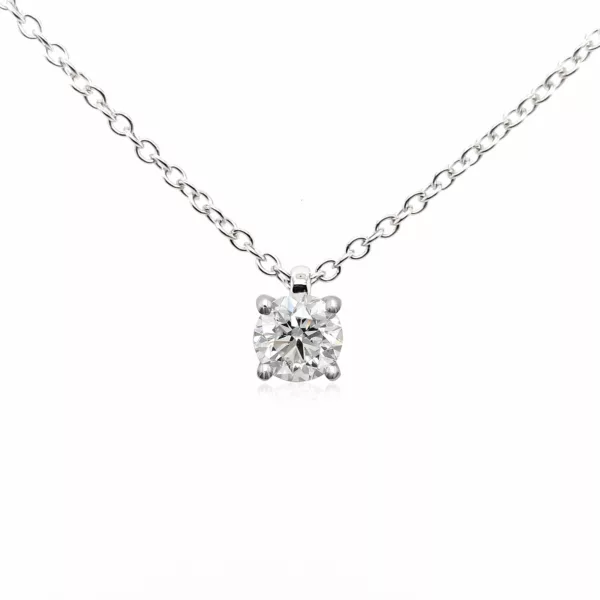
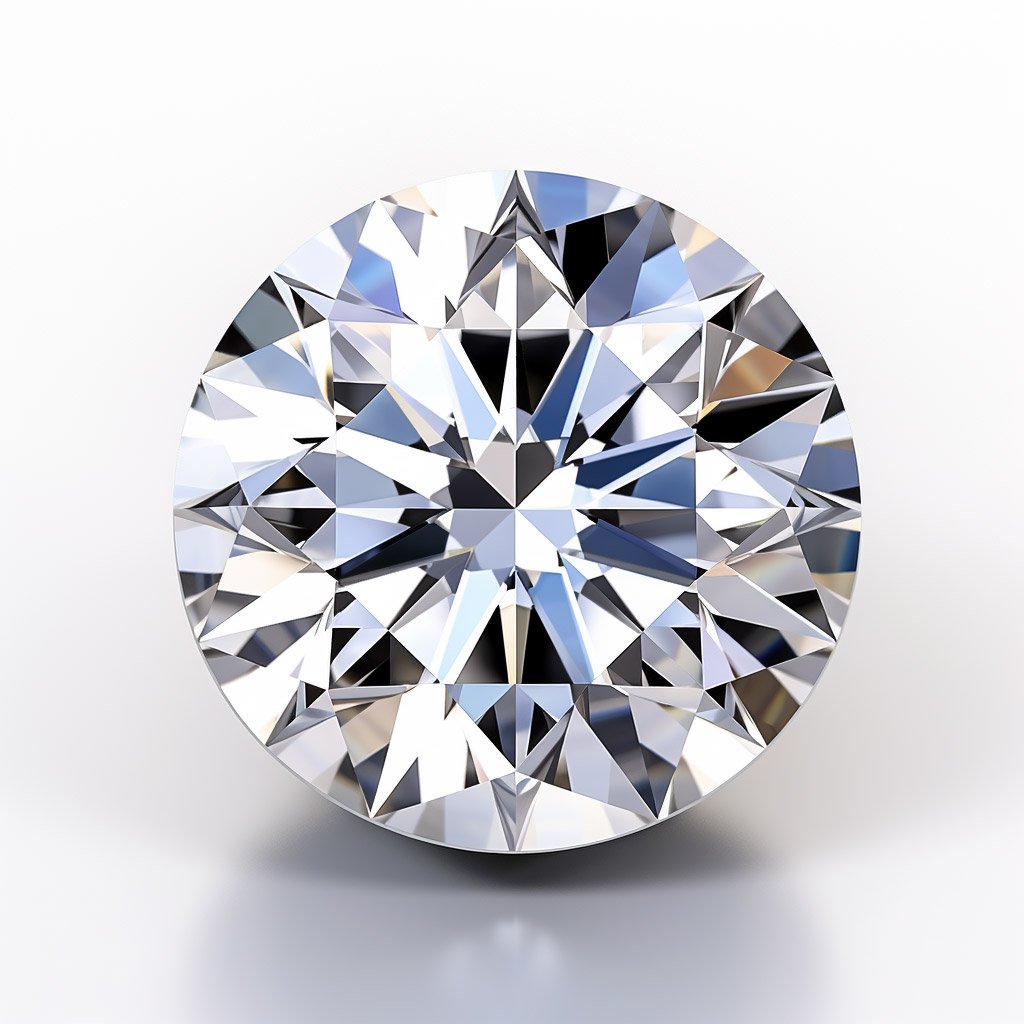
An IGI-certified laboratory-grown brilliant of 1.05 carat, about 6.5 mm across, colour D, clarity VVS2, held in four claws on a fine 18K white gold cable chain. VVS2 sits one step below the top of the practical clarity range. The useful question is not whether you can see that step — you cannot — but what it is worth in diamond. Here it is worth a great deal, and we can price it from our own shelf.
What one invisible grade buys, in our own stock
VVS means very, very slightly included. In both VVS1 and VVS2 the inclusions are so small that a grader needs ten times magnification and good light to find them at all. The line between the two is not size but where the grader has to look: in VVS2 the feature can be reached from the crown, the top of the stone; in VVS1 it is detectable only from the pavilion, underneath. That is the entire distinction — a statement about the difficulty of a laboratory operation, not about anything anyone will ever see on a neck.
Now put a price on it. Our 0.75 carat solitaire pendant at D VVS1 — same white gold, same four claws — is €1,045. This one, at D VVS2, is €1,250. The €205 between them does not buy clarity you can see. It buys 0.30 carat: forty per cent more diamond.
Per carat the direction is the same — €1,393 for the VVS1 stone against €1,190 for this one. And in the dimension that actually shows, the 0.75 measures about 5.8 mm against 6.5 mm here, roughly a quarter more face-up area. You are trading a grade nobody can resolve for a size difference everybody can.
The second photograph settles it
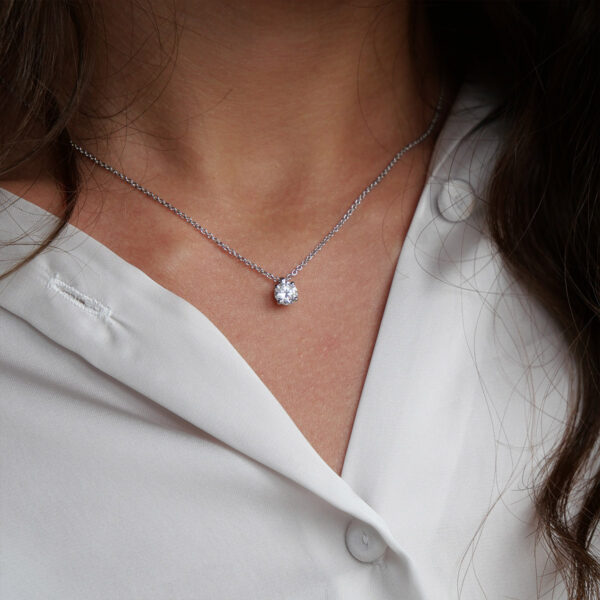
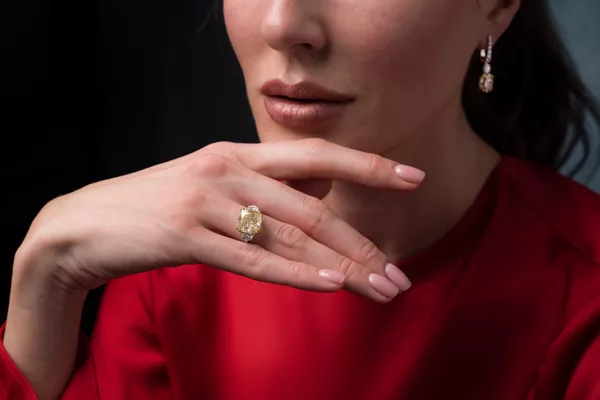
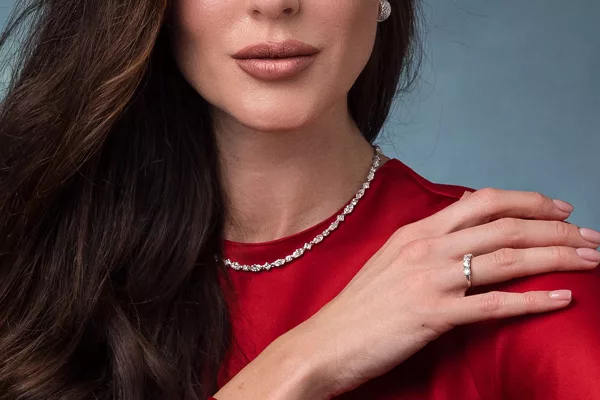
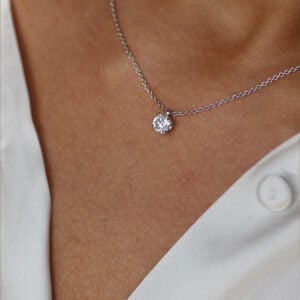
Look at the worn image: daylight, open neckline, the pendant at the base of the throat. At that range the eye resolves two things — how wide the stone is, and how brightly it returns light. It does not resolve inclusions, and at VVS it would not resolve them with a loupe held at arm’s length either. Diameter is the only variable on this page your eye can actually read, which is precisely why it is the one worth spending on.
The diamond and the mount
1.05 carat, round brilliant, about 6.5 mm. Four claws grip the girdle only, so light enters the pavilion from every side and nothing is masked from behind. The chain runs through the bail rather than being soldered to it, so the pendant slides to the lowest point and re-centres itself every time it is put on — the reason it hangs straight in the photograph instead of sitting off to one side.
Laboratory grown, certified by IGI
Crystallised carbon, hardness 10, chemically and optically identical to mined diamond, grown in a reactor instead of dug out of the ground. IGI report LG769608526. The LG prefix is IGI’s designation for laboratory-grown; the report states the origin explicitly and grades colour, clarity and carat on the same scales used for mined stones. When one of our lab-grown diamonds is certified, the report is always IGI’s.
The same stone, a yellow gold chain, at the same money
The 1.00 carat solitaire pendant on an 18K yellow gold chain is also D, also VVS2, and also €1,250. Within five hundredths of a carat these two are the same diamond at the same price, which makes the decision unusually clean: it is a choice of chain, not of stone. That piece keeps its claws and bail in white gold, so the stone reads exactly as clean as this one — the page explains why.
The sizes either side
Below this, the 0.75 carat discussed above. Above it, the 1.51 carat in the same white gold. All of them sit in lab-grown diamond necklaces.
Buying from Antwerp
In stock at our workshop in the Antwerp diamond district. Insured delivery throughout Europe, boxed, with the IGI report. Come and see it at the neck in ordinary daylight if you can — it is the only test that matters.