Nederlands
 Français
 Italiano

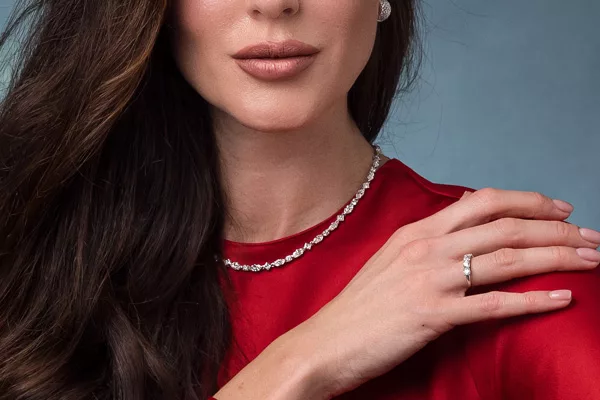
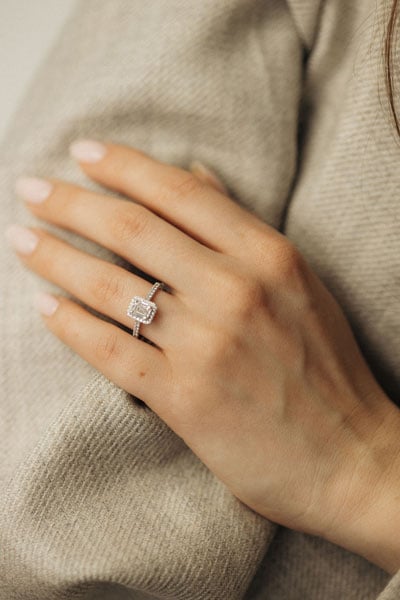


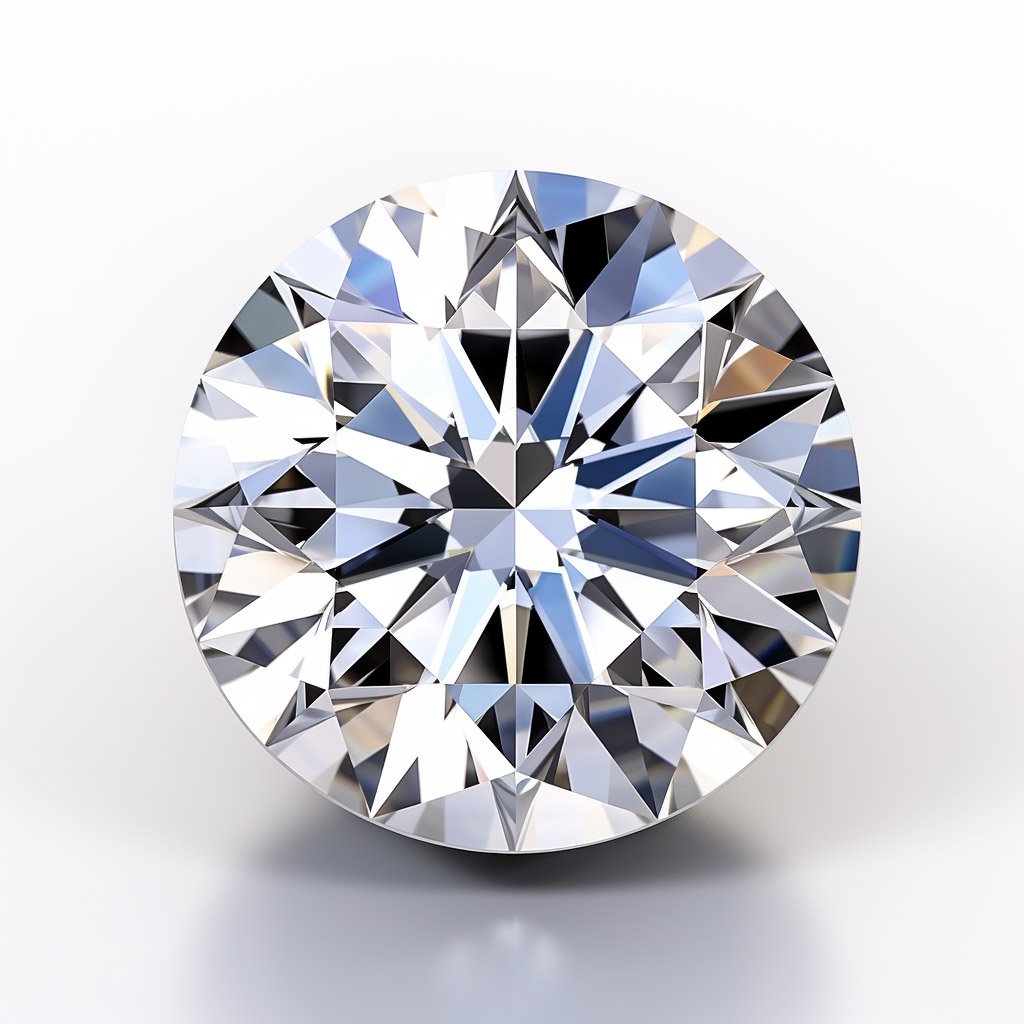



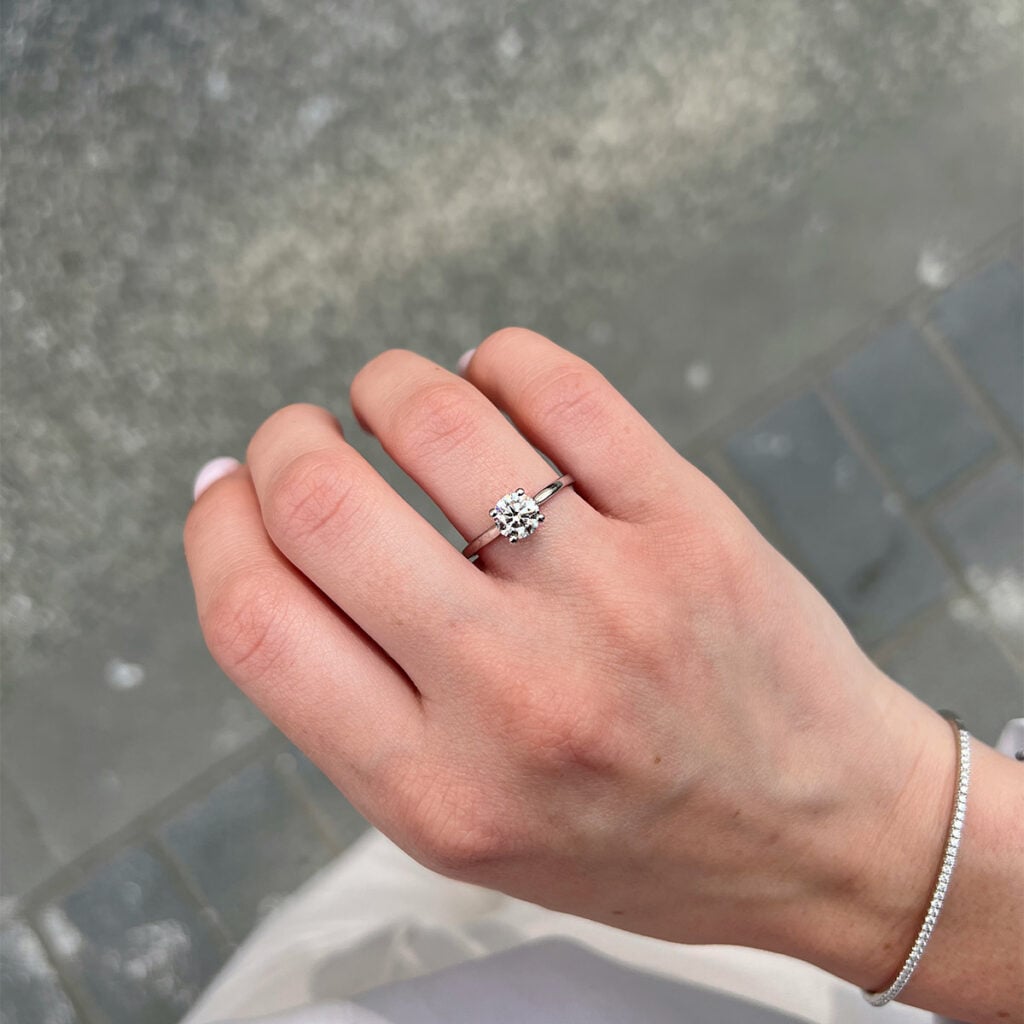


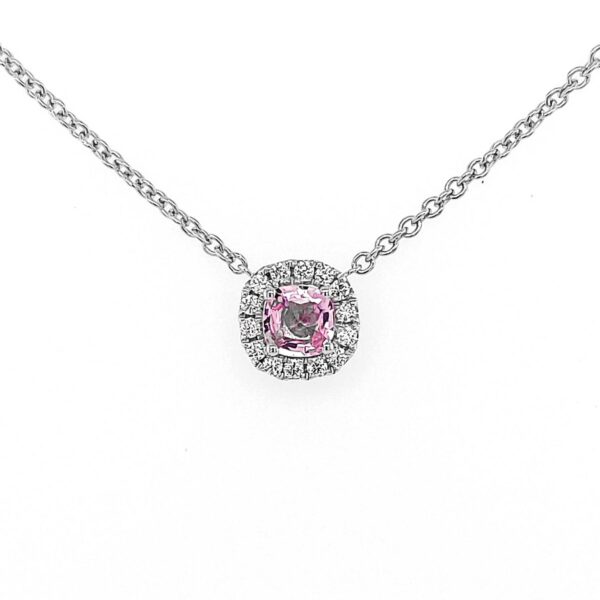
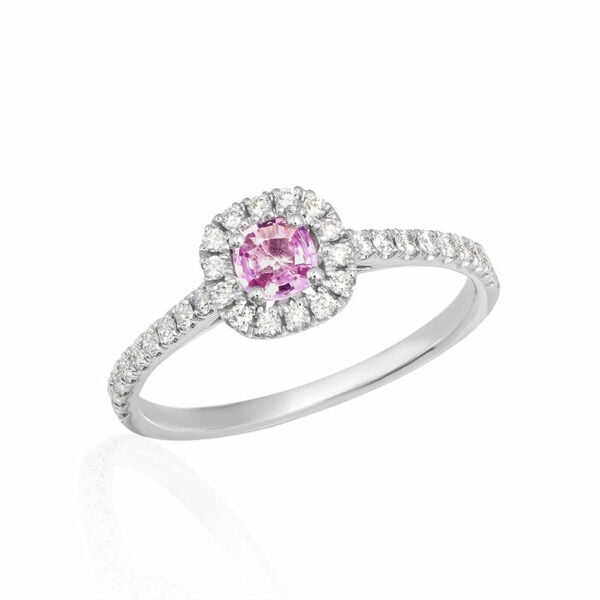
A 0.25 carat round-cut emerald, held in four prongs at the centre of a halo and pavé totalling 0.22 carat of D–F diamonds, in 18K white gold.
Emerald is beryl, not corundum, and that changes what a setting has to do. At 7.5 to 8 on the Mohs scale it is meaningfully softer than sapphire at 9 or diamond at 10, and more importantly it is a stone that grows with internal fissures — the inclusions the trade calls the jardin. Those fissures are what make emerald beautiful and what make it comparatively fragile. Here the halo is not only there to enlarge the stone; the ring of diamonds and metal sits proud of the emerald’s girdle and takes the knocks it would otherwise take itself.
Two practical consequences. Virtually all emeralds on the market are treated with oil or resin to fill surface-reaching fissures — this is normal, accepted trade practice rather than a defect, and it has been done for centuries. And because that filling can be driven out, an emerald should never go into an ultrasonic cleaner. Warm water and a soft brush, nothing more.
A harder green stone for daily wear: 0.34 ct green sapphire halo ring.