Nederlands
 Français
 Italiano


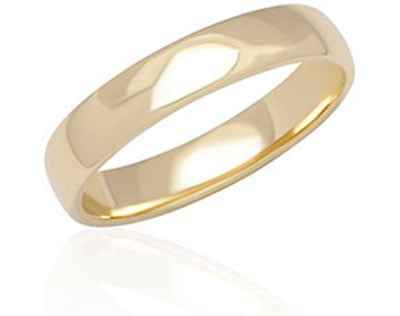
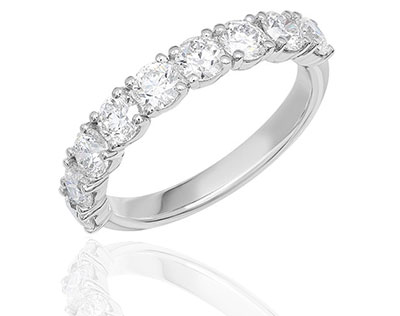




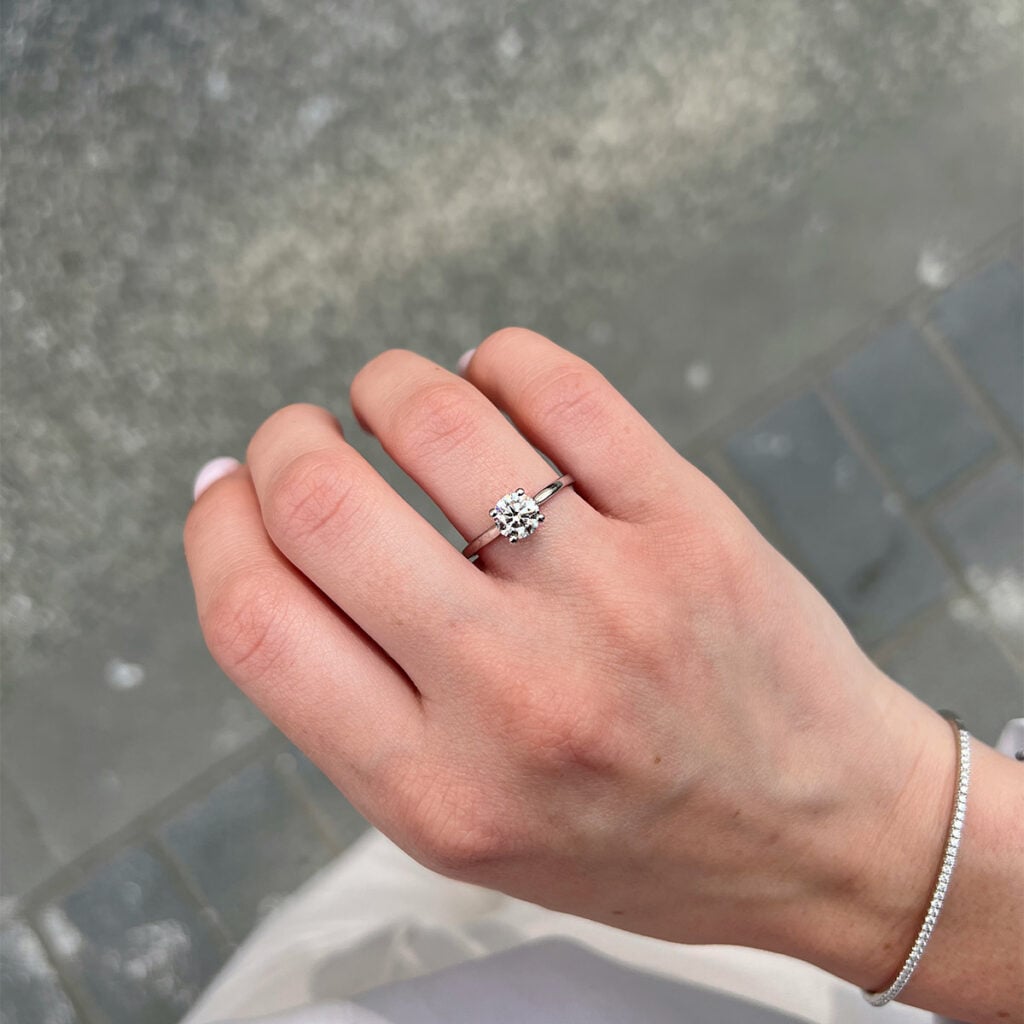
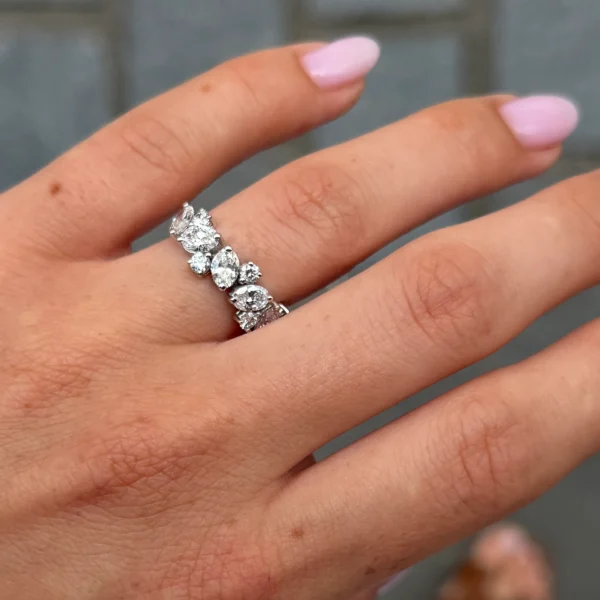
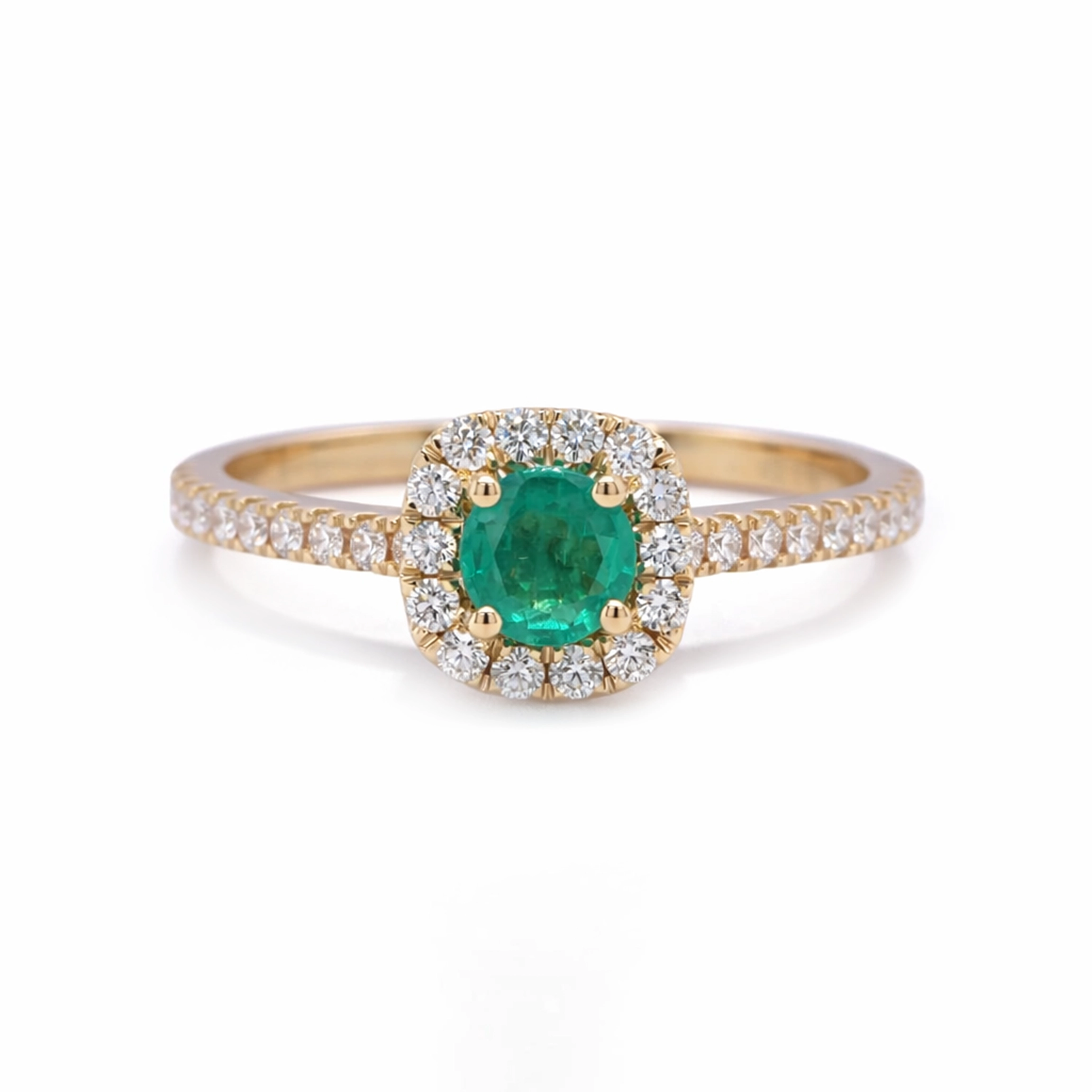
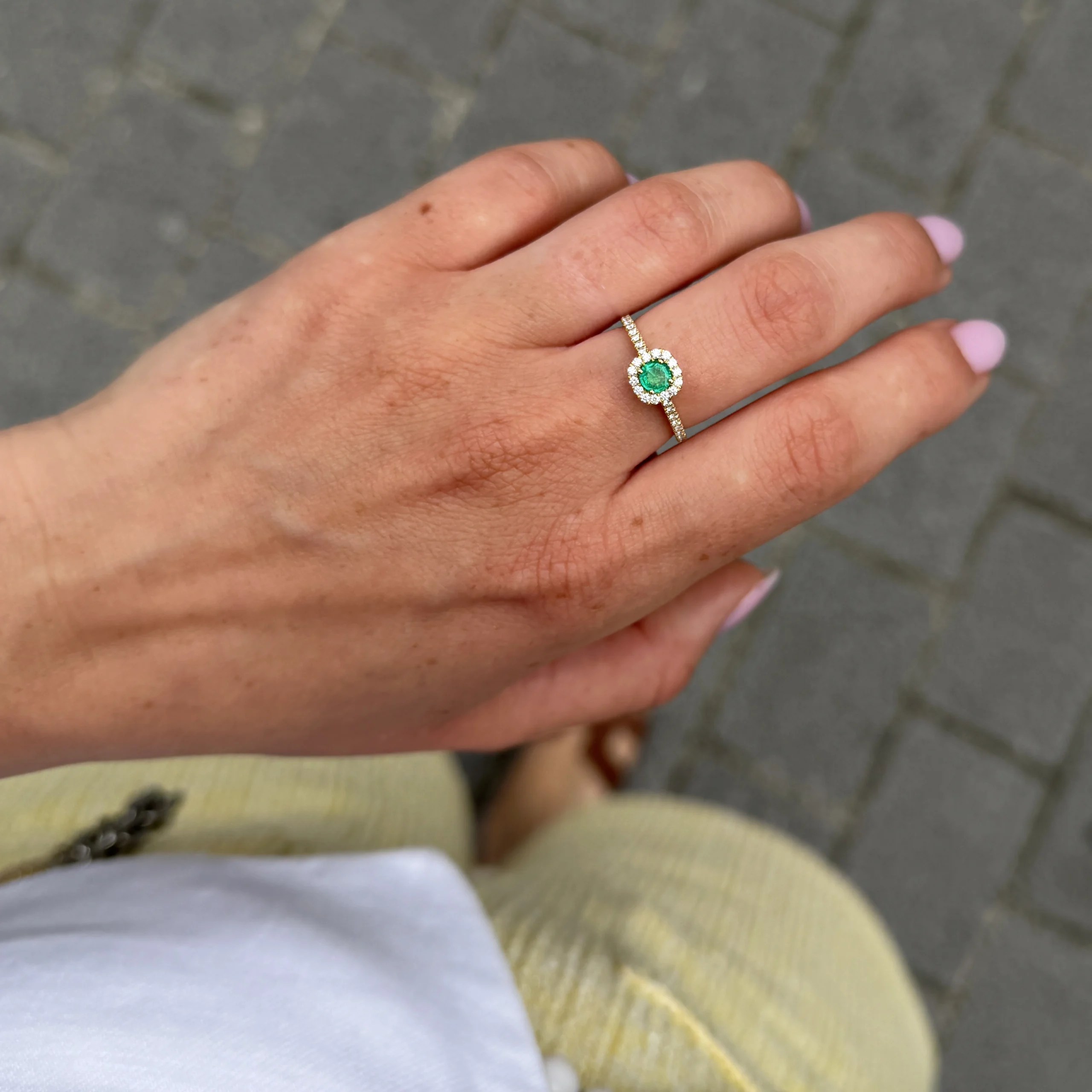
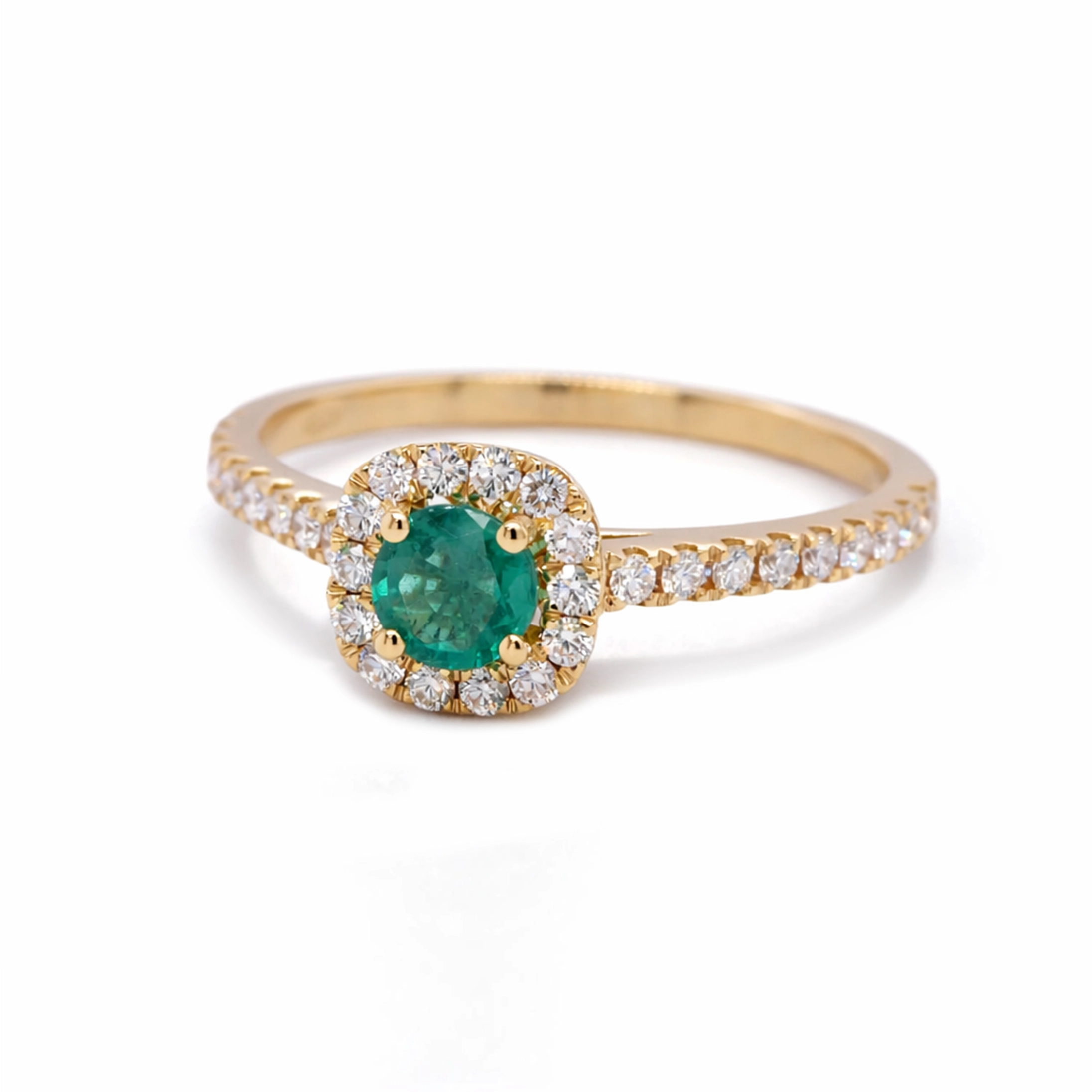
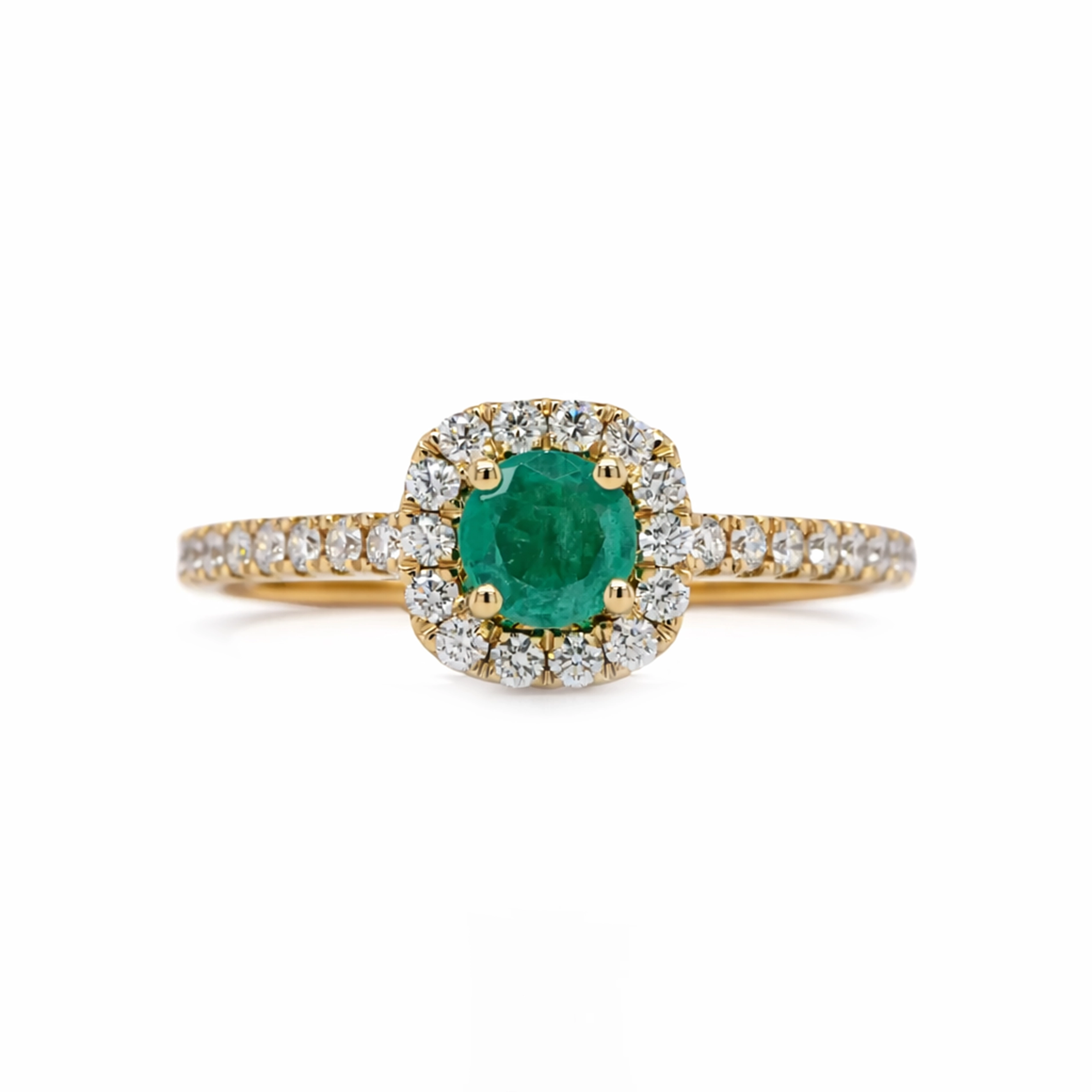
A 0.27 carat round emerald, four-prong set within a halo and pavé totalling 0.29 carat of D–F VS diamonds, in 18K yellow gold.
The diamonds here outweigh the emerald: 0.29 carat of them against 0.27 in the centre. That inversion is unusual and it is deliberate. Emerald is a soft stone by ring standards — 7.5 to 8 on the Mohs scale against corundum’s 9 — and one that grows with internal fissures. Surrounding it generously does structural work, not only visual: the ring of diamonds and metal stands proud of the emerald’s girdle and intercepts the knocks.
Yellow gold is the other half of the decision. Green and yellow sit close together on the spectrum, so warm metal does not fight an emerald the way it fights a blue stone; it reads as a continuation rather than a contrast. The colourless halo then provides the break between the two, which is why it is set in D–F rather than in something warmer.
As with every emerald: almost all are treated with oil or resin to fill surface-reaching fissures — long-established trade practice, not a defect — and none should ever go into an ultrasonic cleaner.
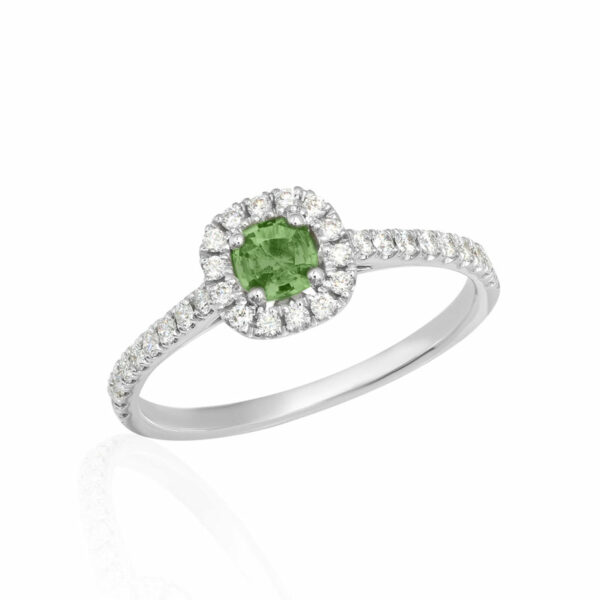
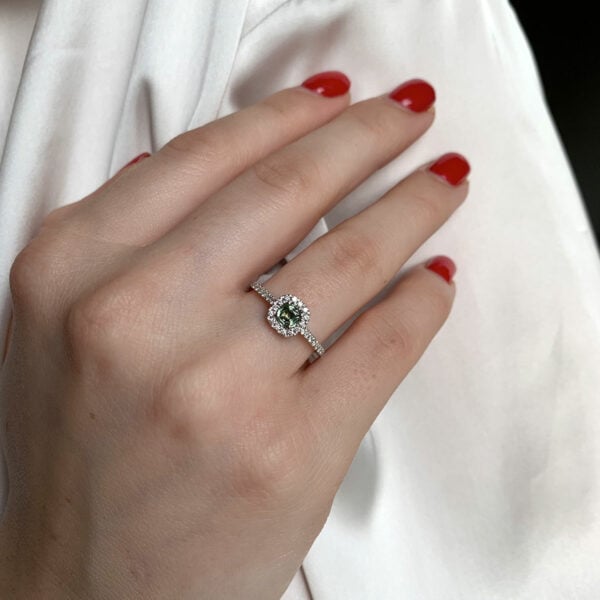
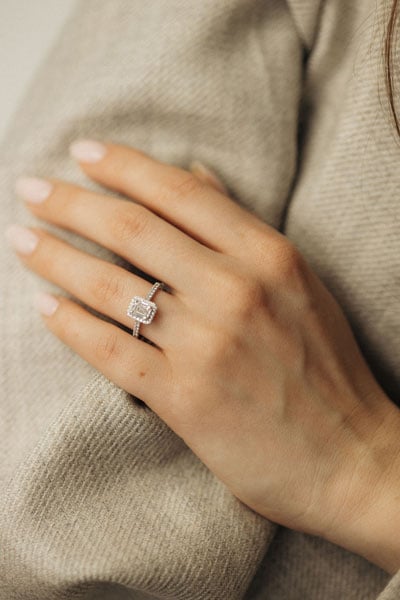
The same stone in cool metal: 0.25 ct emerald halo in white gold.