Nederlands
 Français
 Italiano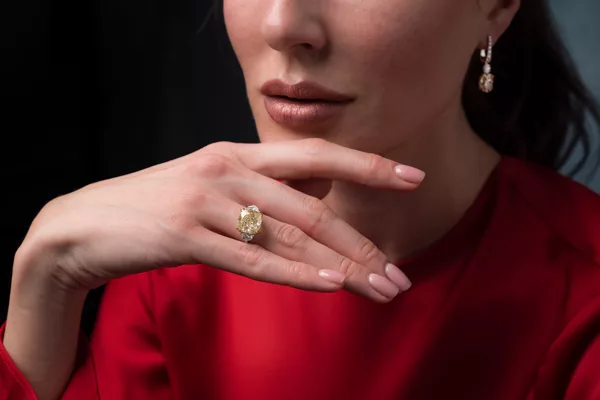

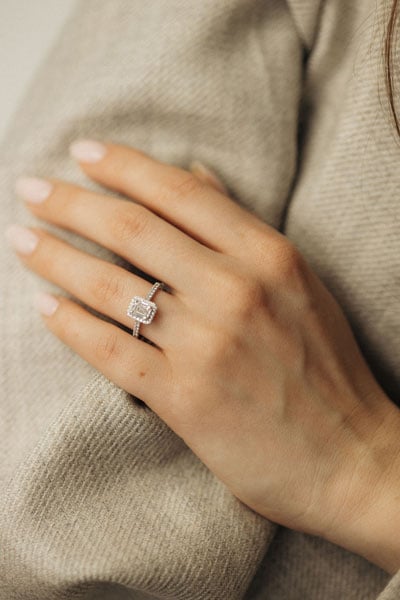

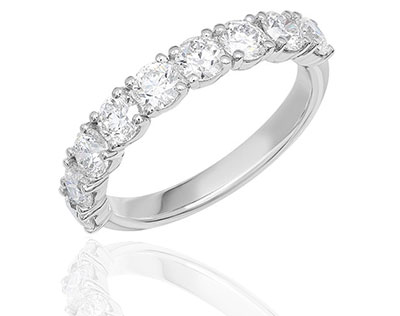



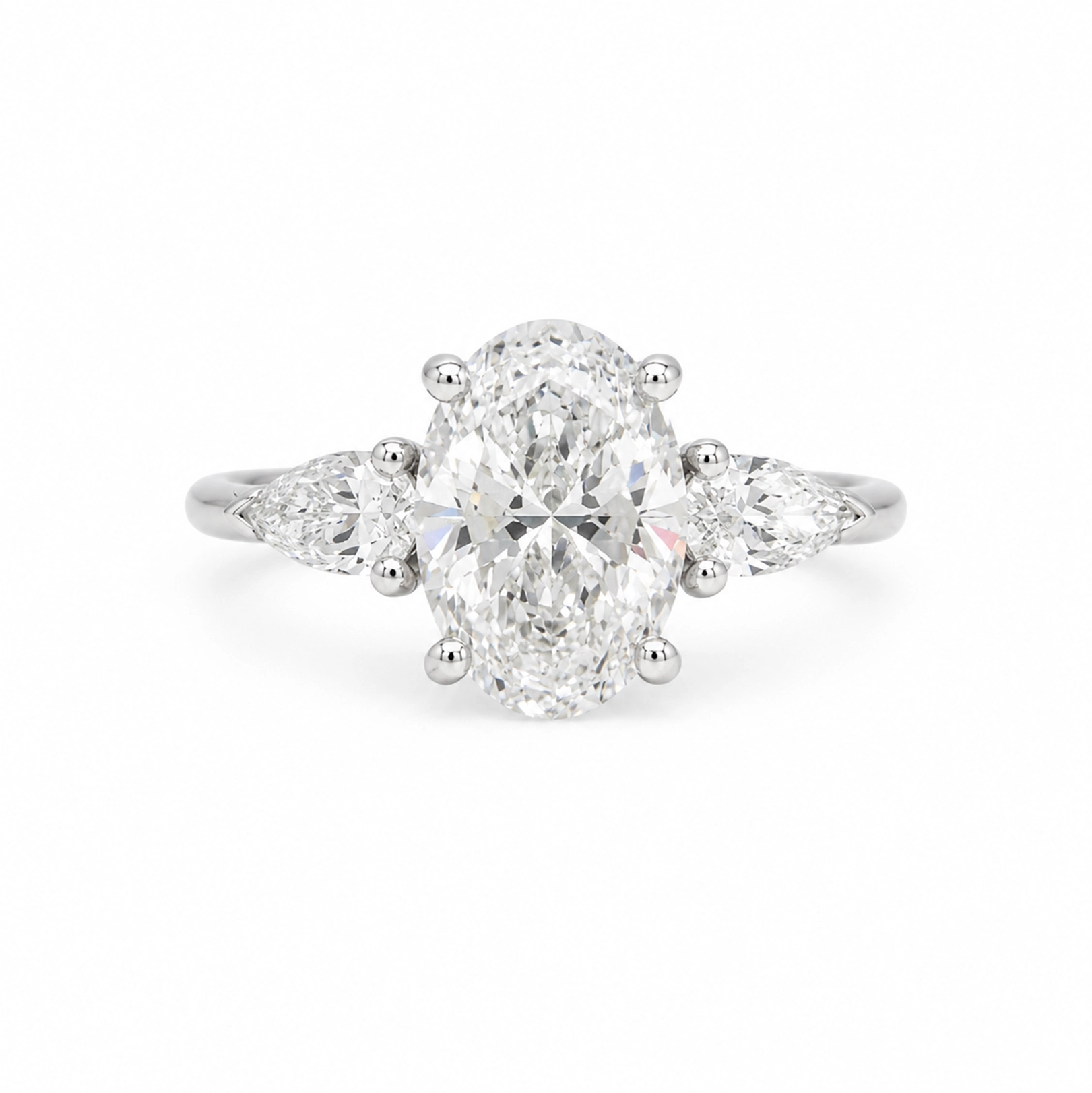
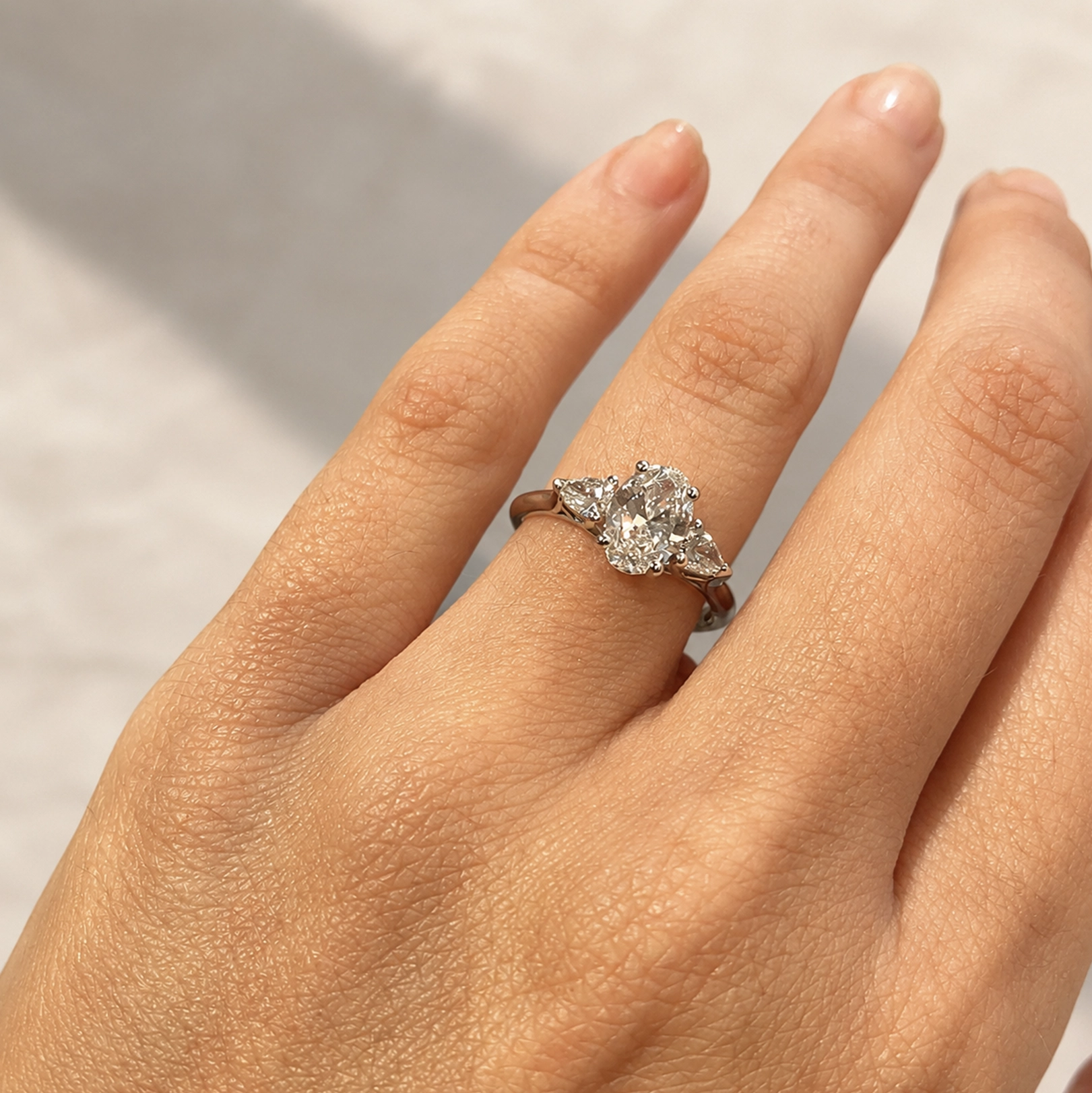
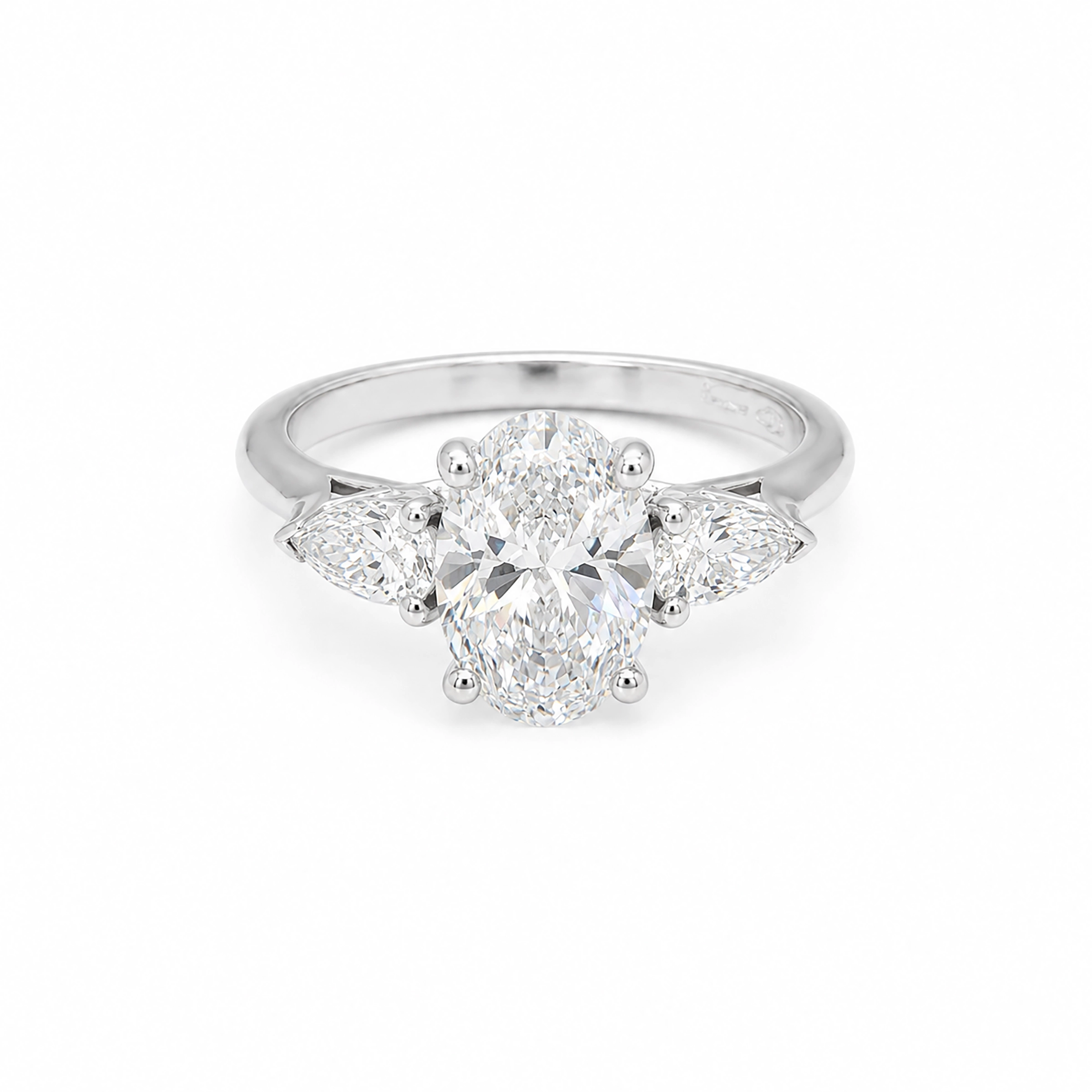
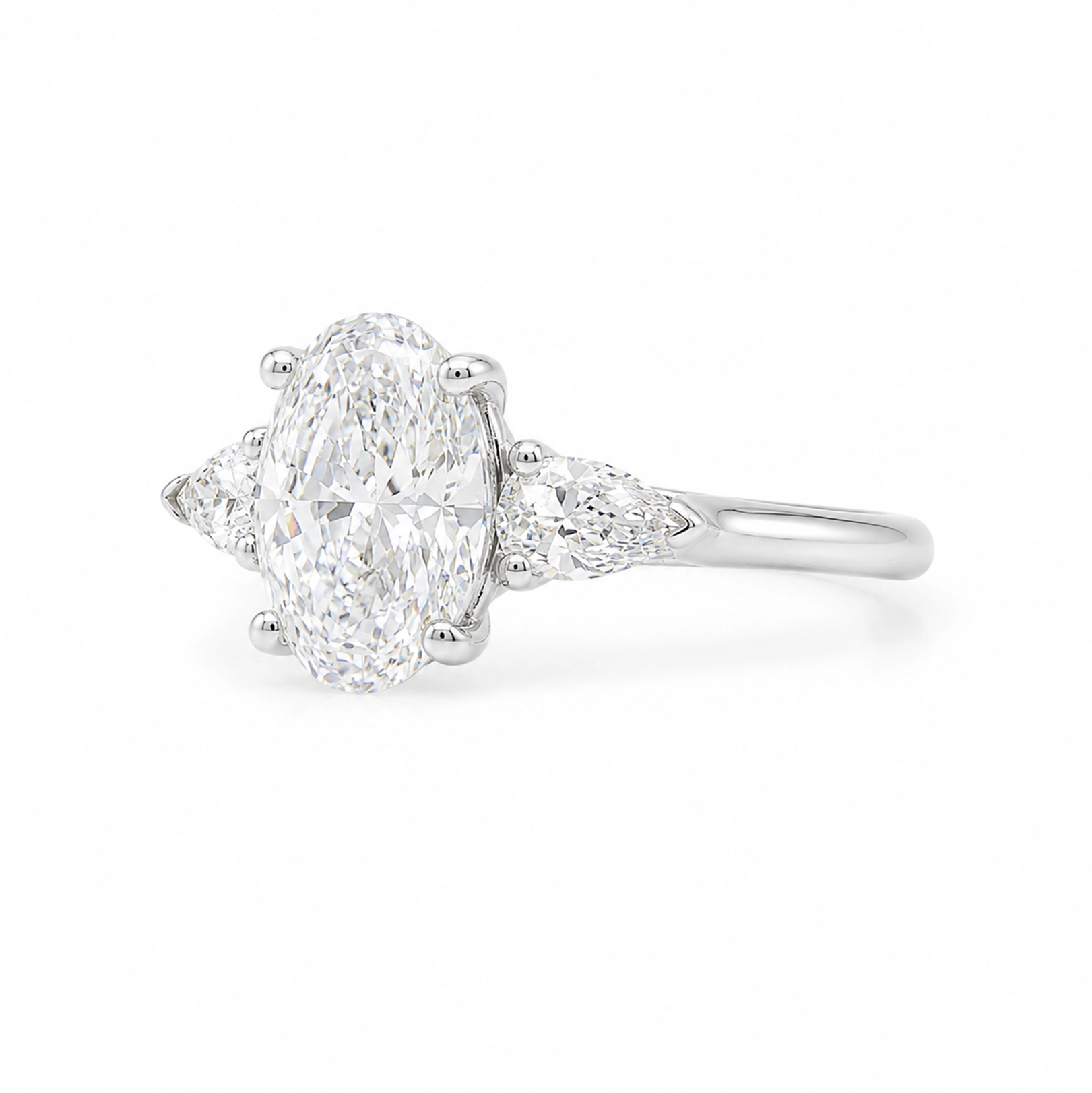
2.03 ct oval lab grown diamond, D VVS1, with pear side stones in 18K white gold
An oval lab grown diamond of 2.03 carat, colour D, clarity VVS1, certified by IGI under report LG807628389, set between two pear-cut lab grown diamonds totalling 0.37 ct — colour E, VS range. Total weight 2.40 ct, in 18K white gold.
It is a three-stone ring, but not the kind most people picture
The phrase “three-stone” covers two very different rings, and the difference is a single number: what the side stones weigh relative to the centre.
Here the two pears come to 0.37 ct together — roughly 0.185 ct each, about 9% of the centre stone. A classic statement trilogy runs nearer 40–50%: side stones half the size of the middle one, three stones of comparable presence, a ring that reads as a trio.
At 9% the sides are not competing. They are punctuation. From arm’s length this reads as a two-carat oval solitaire with a flash of light on either side — the centre keeps all of the visual weight, and the pears do what a well-placed accent does: they lead the eye inward to the oval rather than drawing it outward.
Why that ratio is a practical decision, not just an aesthetic one
Three consequences follow from keeping the sides small, and they all matter more than they sound:
- It sits flat against a wedding band. A big-shouldered trilogy has stones sitting wide and low on both sides of the centre, and a straight band often cannot close against it without a gap or a notch cut into it. Small pears tuck in tight to the centre setting, so a plain band meets this ring cleanly.
- The centre still looks its size. Put substantial stones either side of a 2 ct oval and the eye measures the middle stone against its neighbours — it starts to look smaller than it is. Keep the sides at under a tenth and nothing argues with the centre.
- Less to catch and less to check. Two small pears in tight settings have far less exposed girdle than two half-carat shoulder stones, which means fewer snags on clothing and fewer settings to have looked at over the years.
If you want a ring where three stones share the stage — the past-present-future reading — this is the wrong proportion and we would show you something else. If you want an oval solitaire that is not quite plain, this is exactly the proportion that does it.
Pears, and which way they point
Pear side stones are directional in a way round or princess sides are not: each has a point and a shoulder, and the pair must mirror each other rather than merely match in weight. Set points-inward, toward the centre, they act as arrows and compress the oval. Set points-outward, as here, they extend the line of the finger and make the whole head read longer — which is the same reason an oval centre is chosen over a round one in the first place. The two decisions reinforce each other.
On the grading
D VVS1 is a serious specification: the top of the colour scale, and a clarity grade at which an experienced grader needs magnification and time to locate anything at all. IGI’s report LG807628389 covers the centre stone.
The pears are described by range — colour E, VS clarity — rather than individually graded. At 0.185 ct each they sit just below the weight at which laboratories routinely issue separate reports, so what we can tell you is the selection standard they were bought to, not a document. We would rather state that plainly.
Every lab grown diamond set in an engagement ring here is IGI-certified.
Specification
- Centre stone: lab grown diamond, oval cut, 2.03 ct
- Colour: D Clarity: VVS1
- Certificate: IGI LG807628389
- Side stones: two lab grown diamonds, pear cut, 0.37 ct total, colour E, VS range
- Total weight: 2.40 ct
- Metal: 18K white gold
More in lab grown diamond engagement rings.
Buying from Antwerp
In stock at our workshop in the Antwerp diamond district. Resizing, and the IGI report supplied with the ring. Shipped insured.